

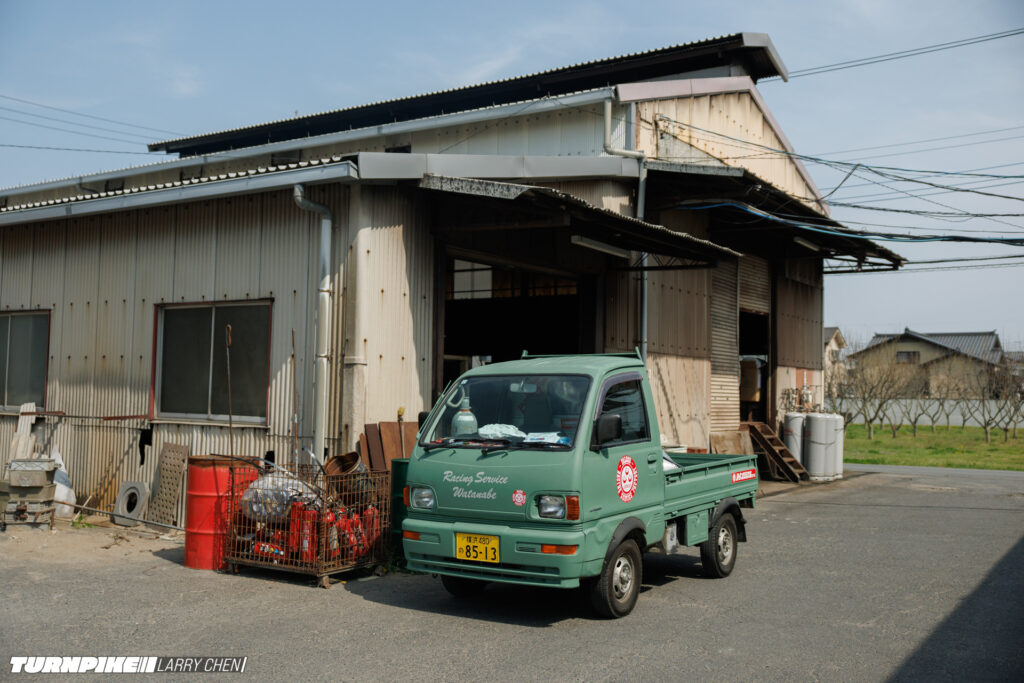
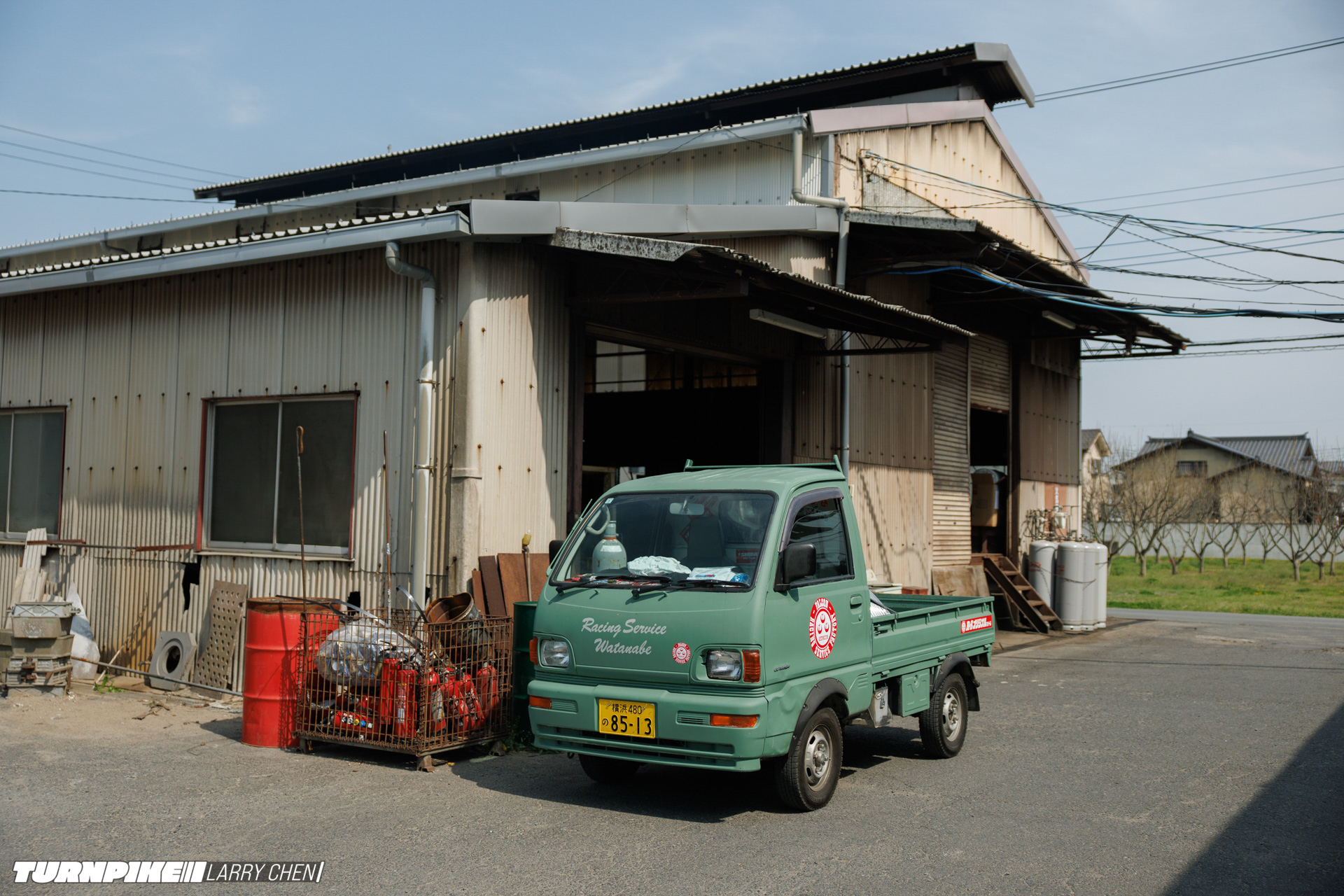
There are very few places left in the automotive world where time genuinely stands still. Racing Service Watanabe – known globally as RS Watanabe – is one of them.
Founded in 1965, the company still builds wheels exactly as it did nearly six decades ago: entirely in-house, by hand, using techniques that feel closer to samurai sword-making than modern manufacturing.

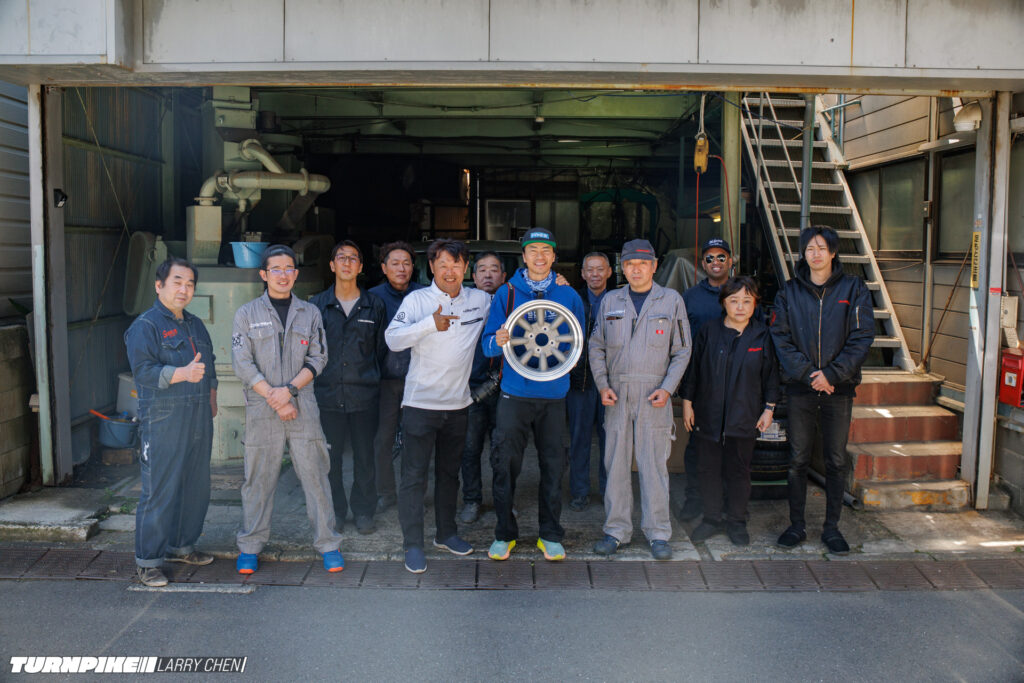




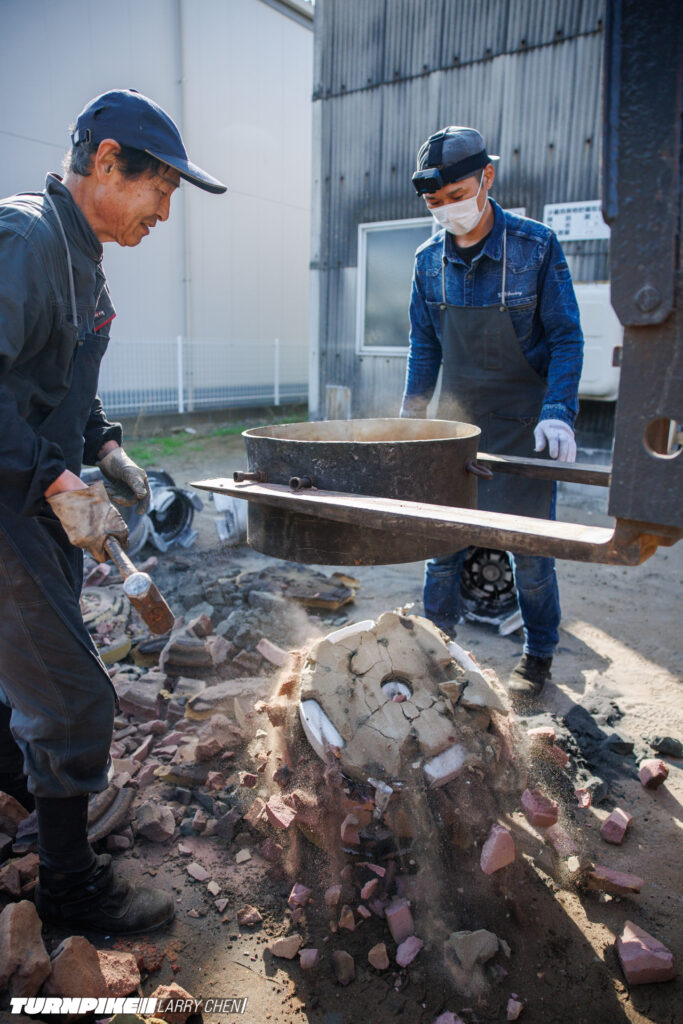
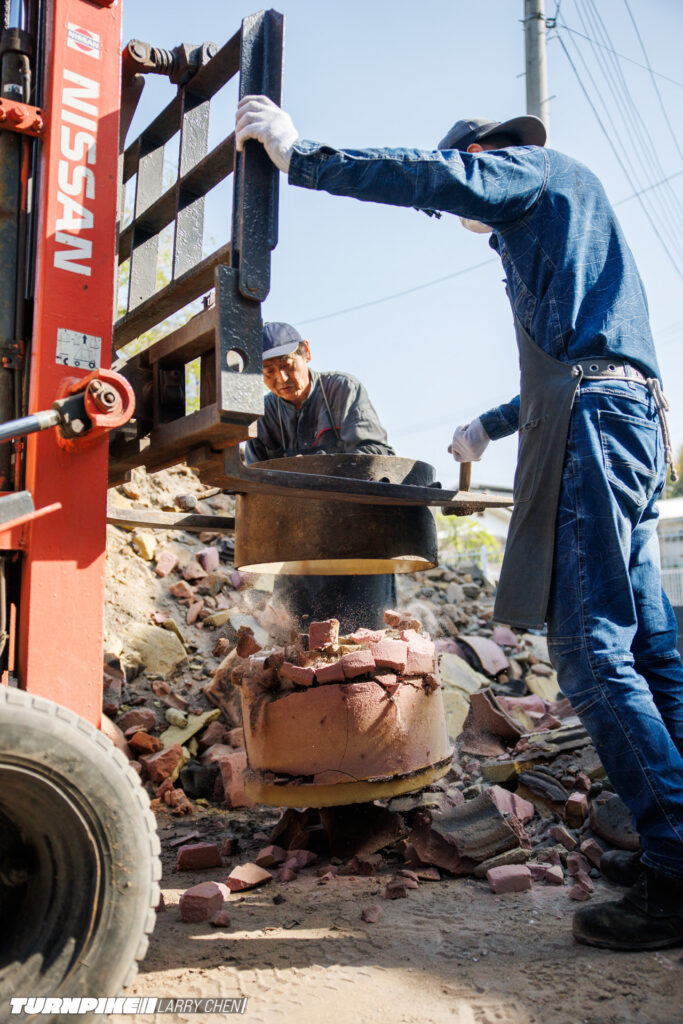
Thanks to my good friend Rasel, we were granted unprecedented access to the most closely guarded part of their operation: the sand-casting foundry. No outsiders had ever been allowed to film inside. Until now.
What we witnessed wasn’t manufacturing. It was craftsmanship, legacy, and honestly, it was one of the most impressive things I’ve seen in 20 years of documenting car culture.

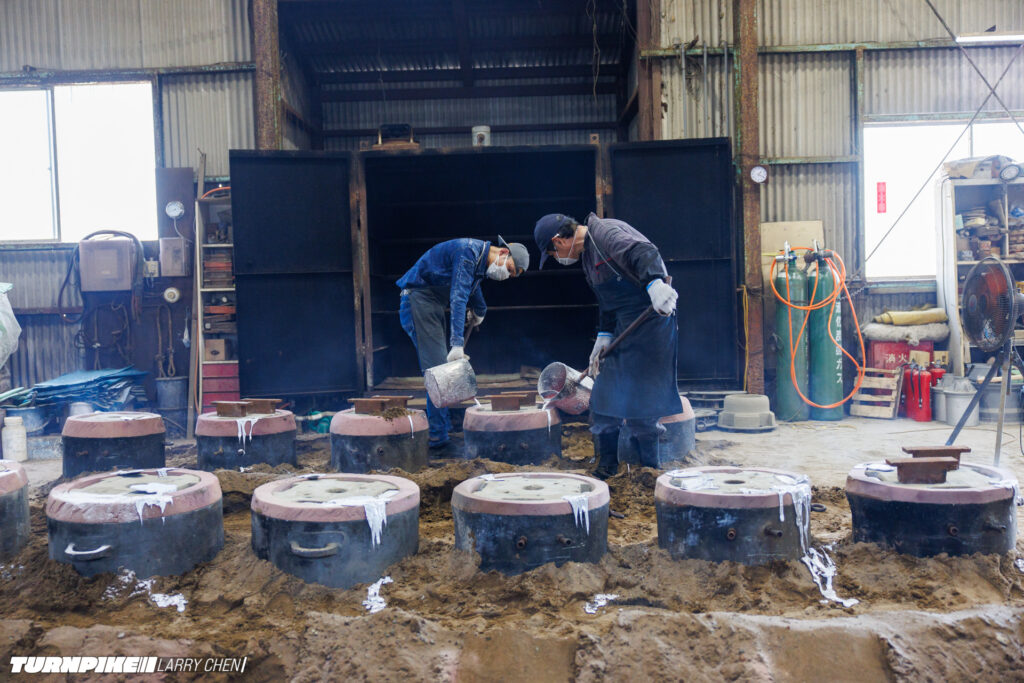

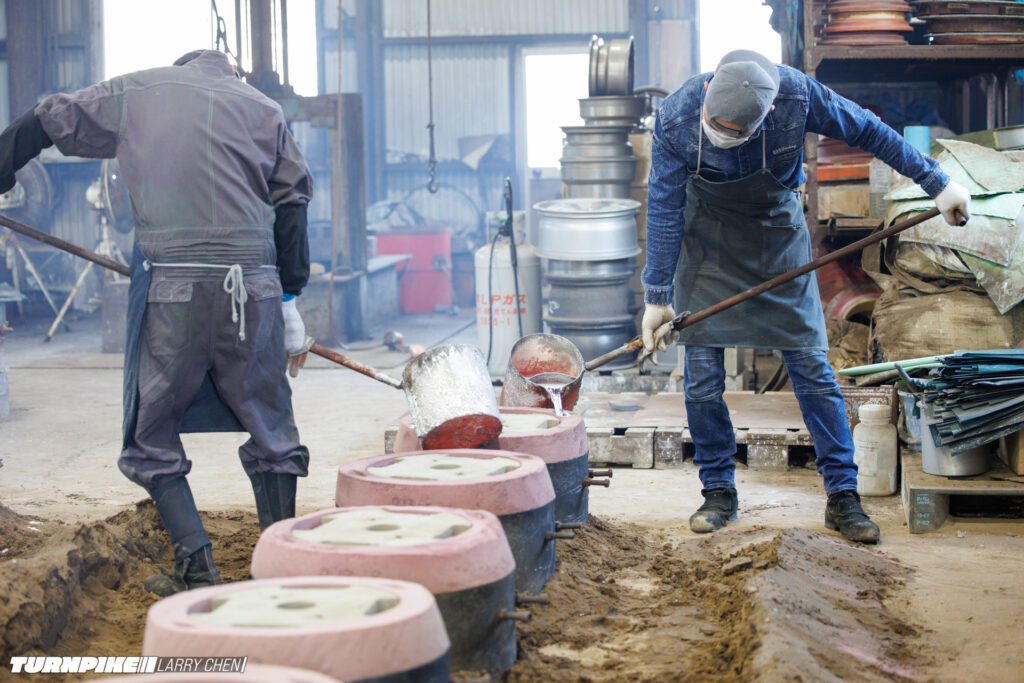
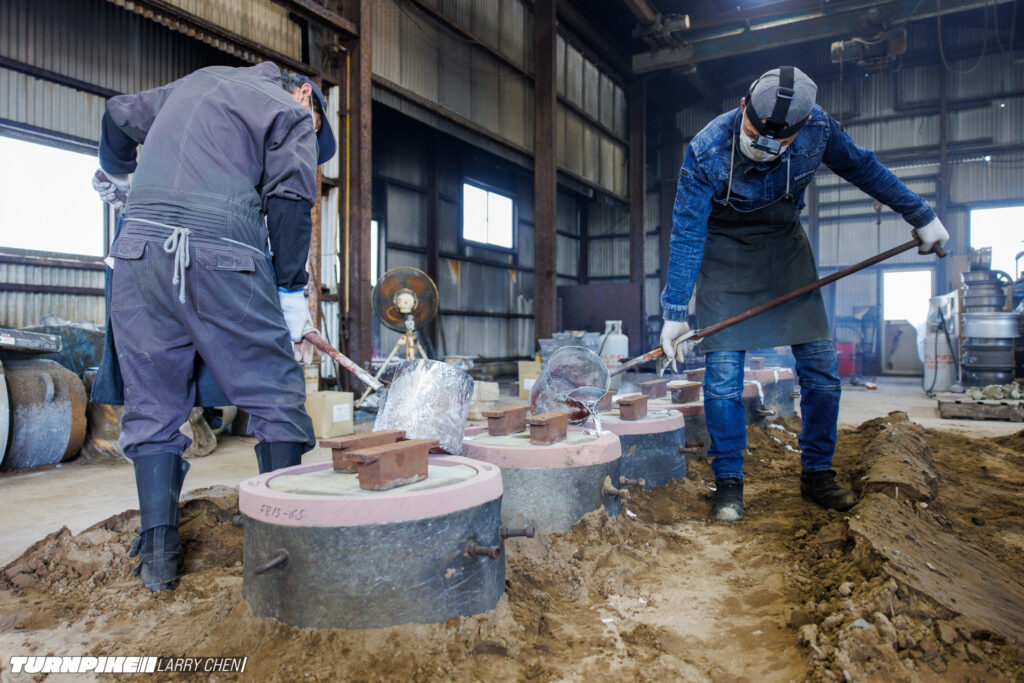
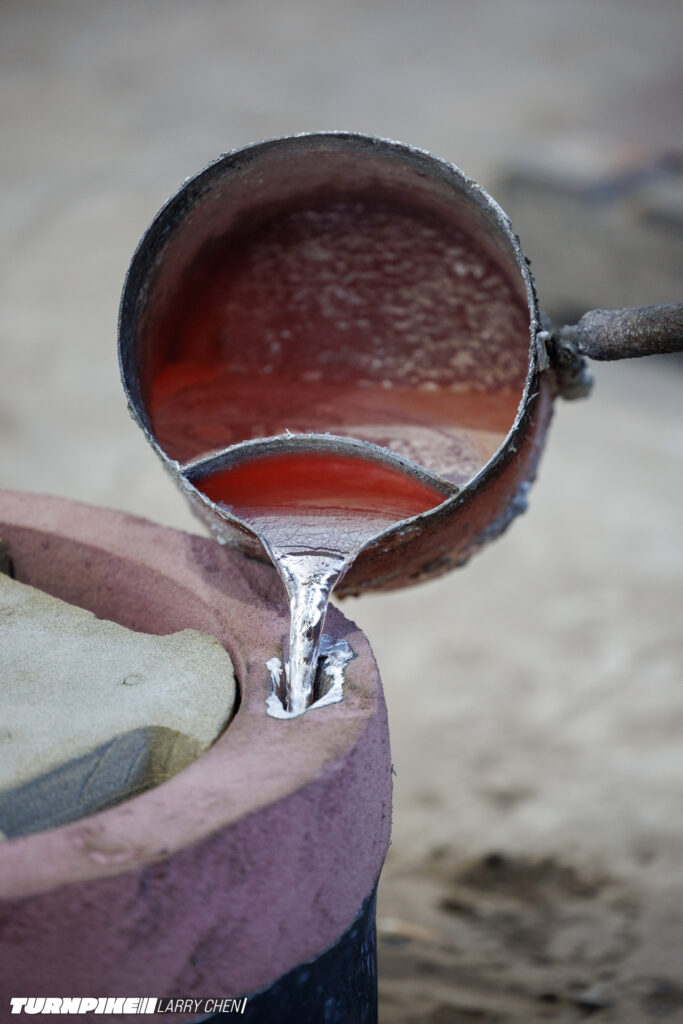

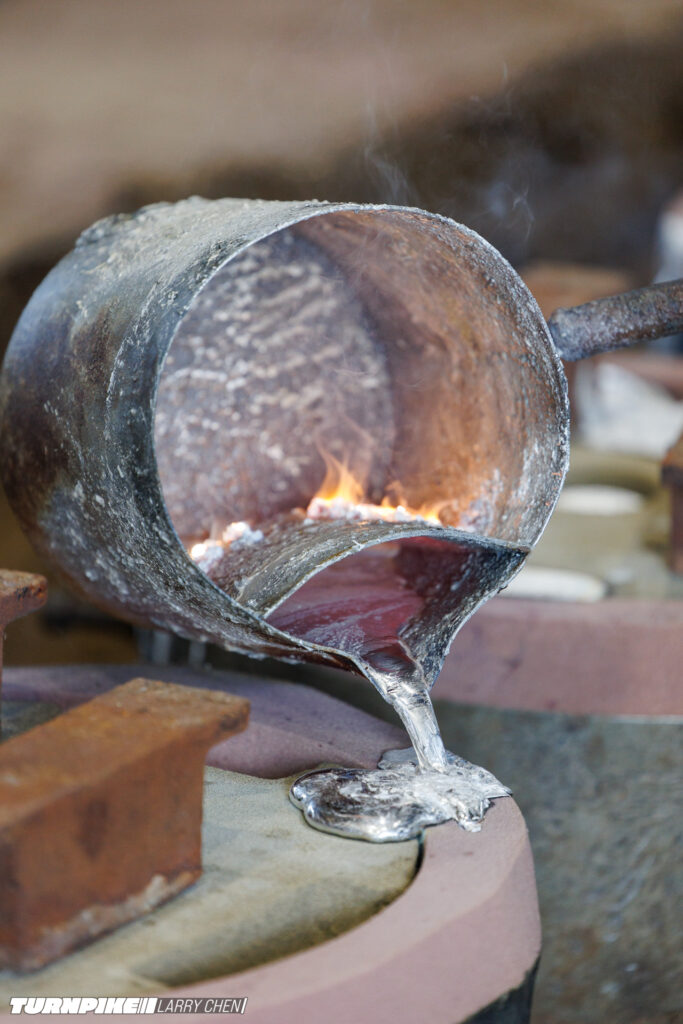
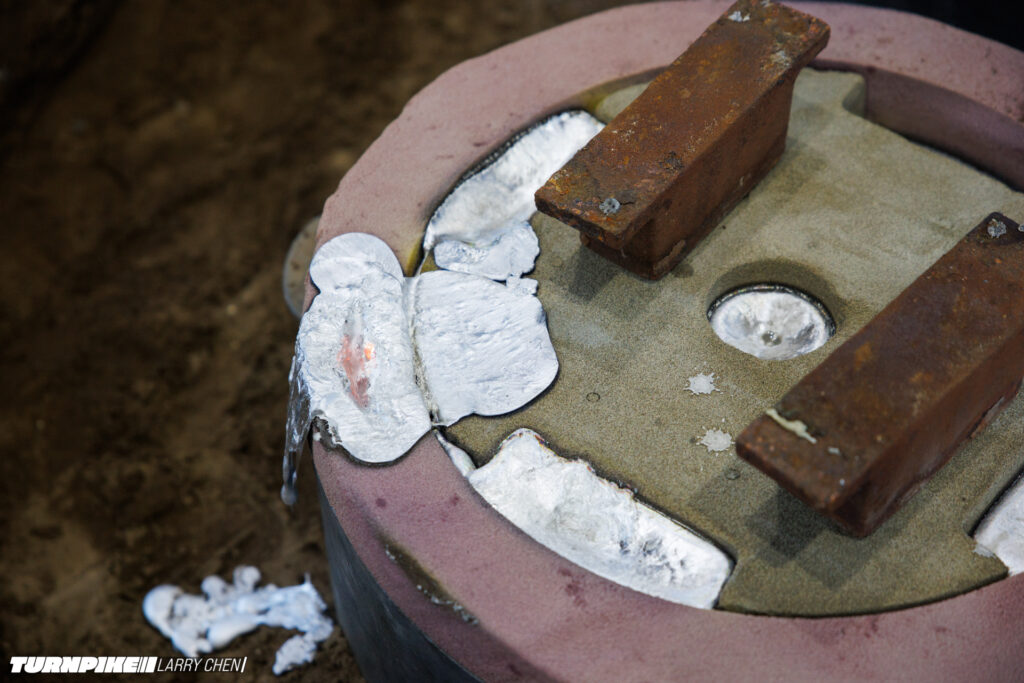
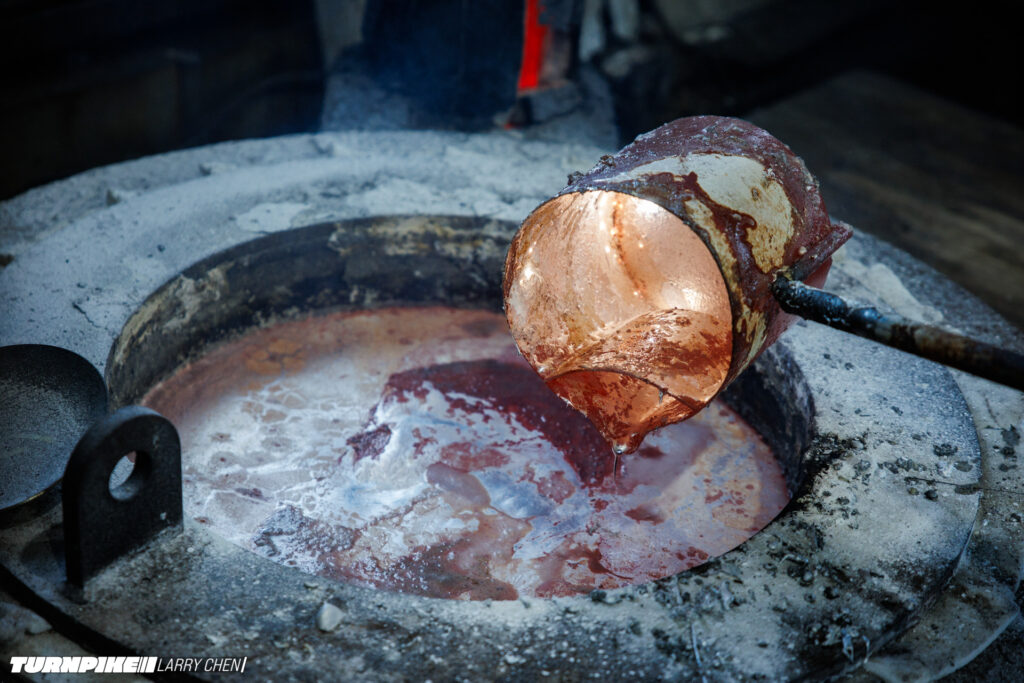
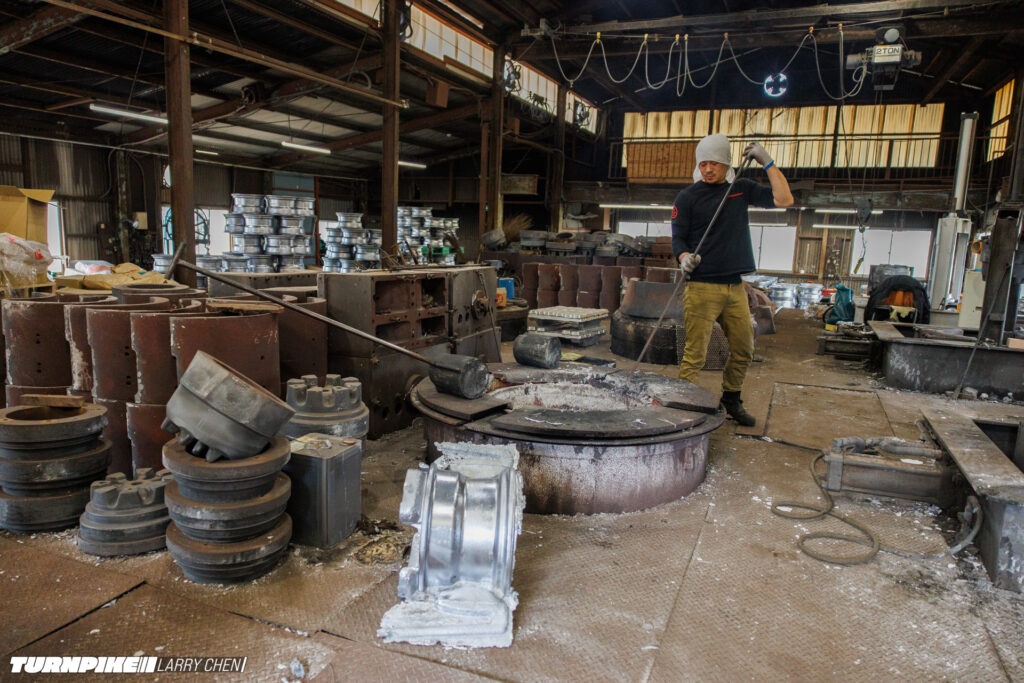
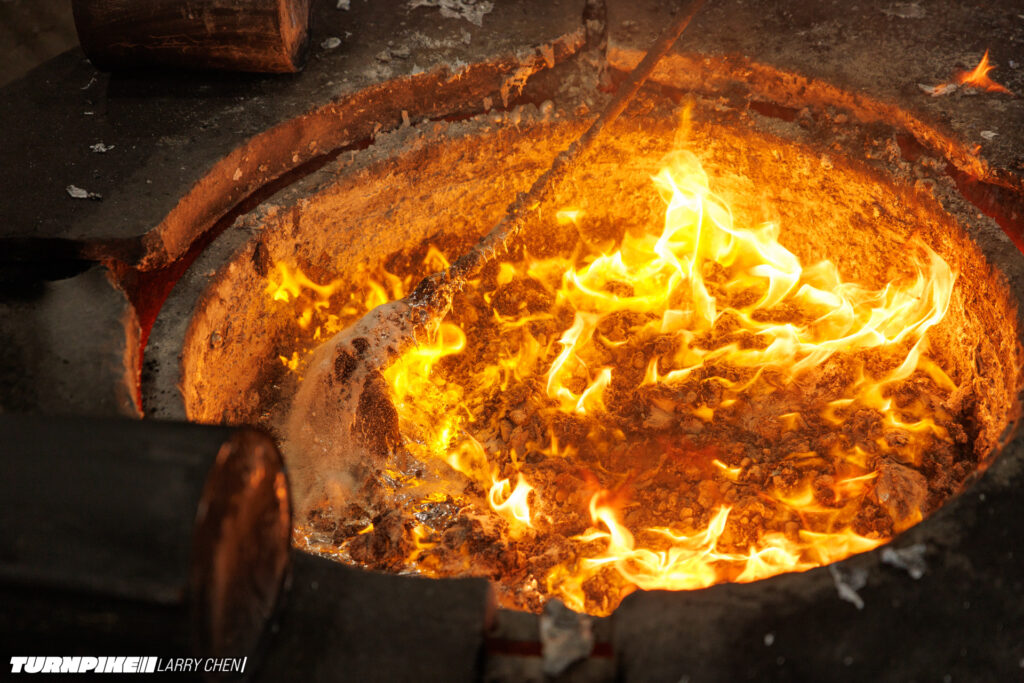
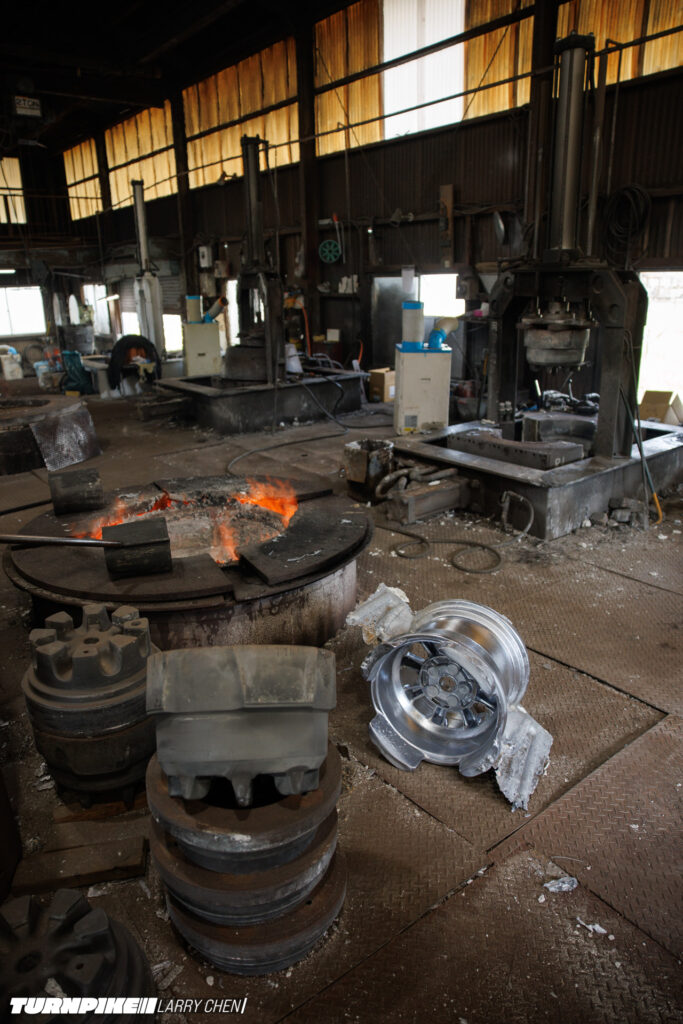
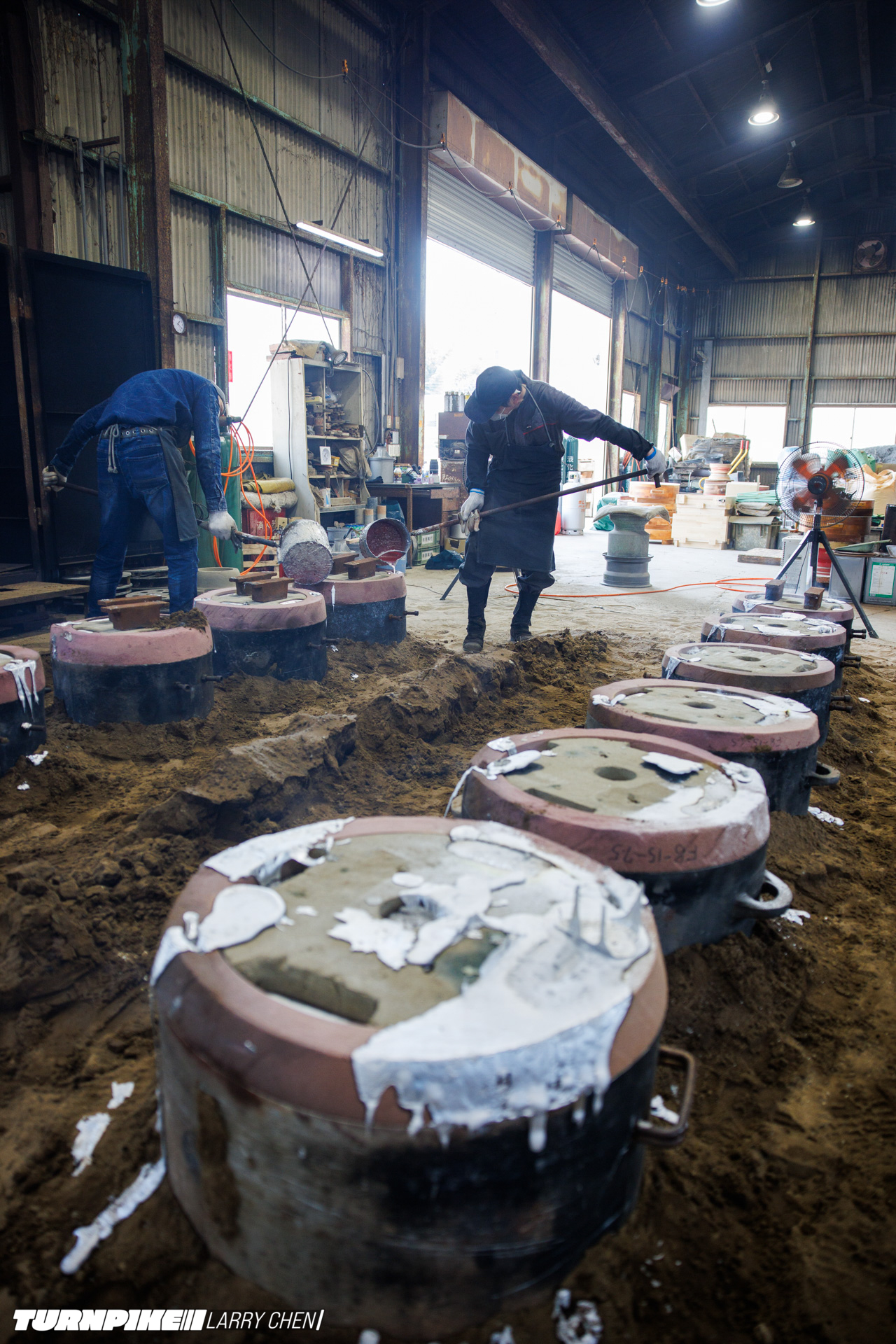
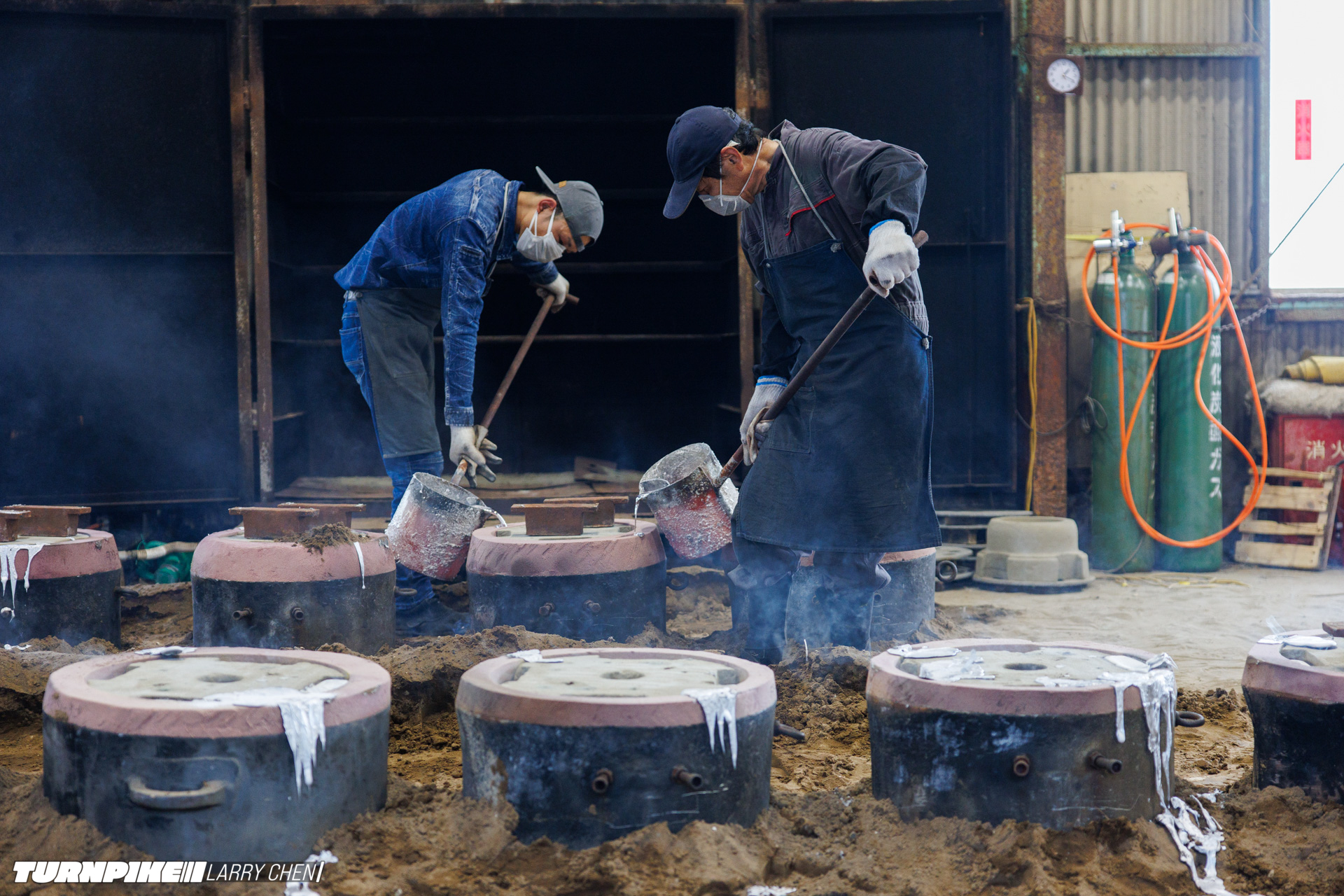
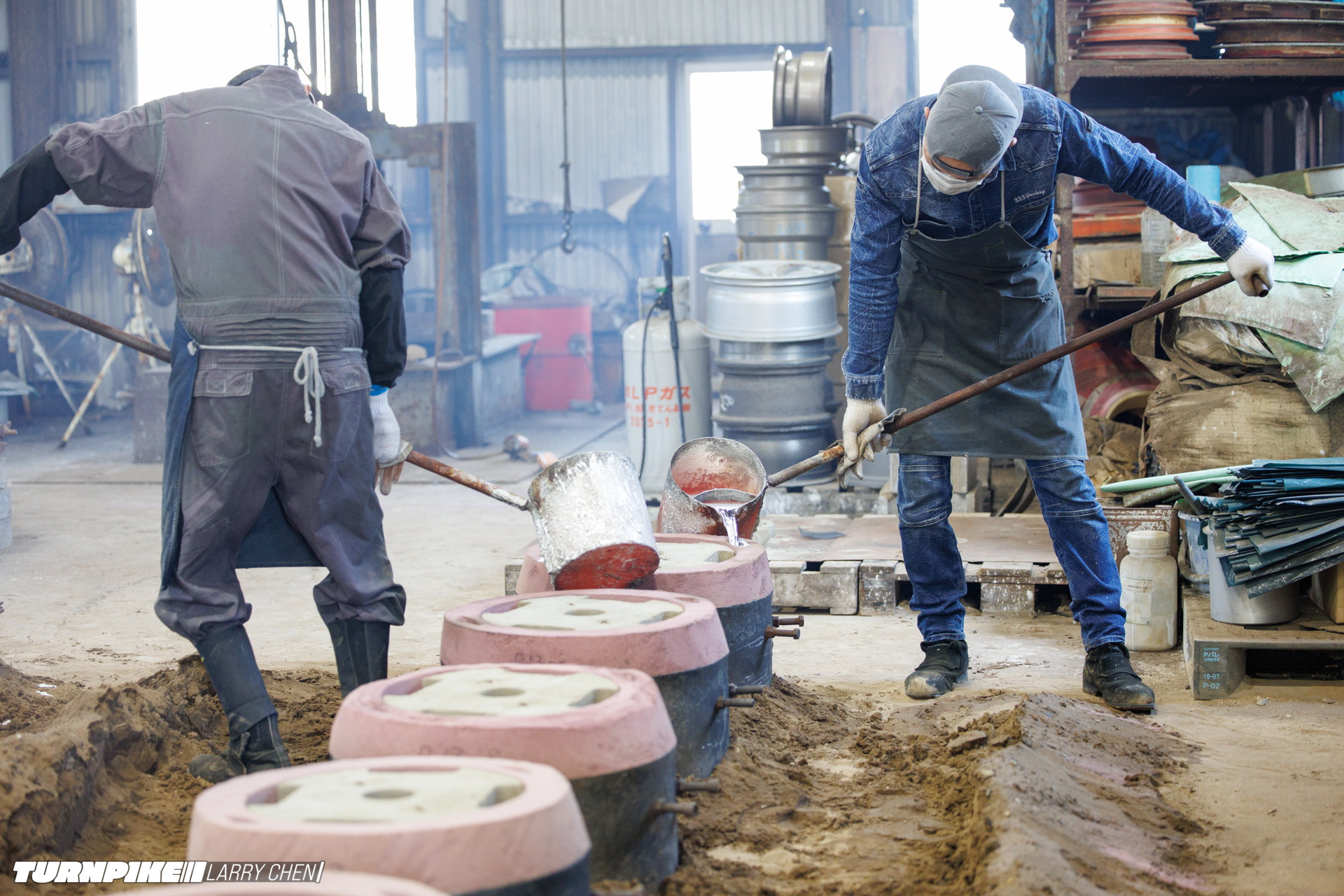
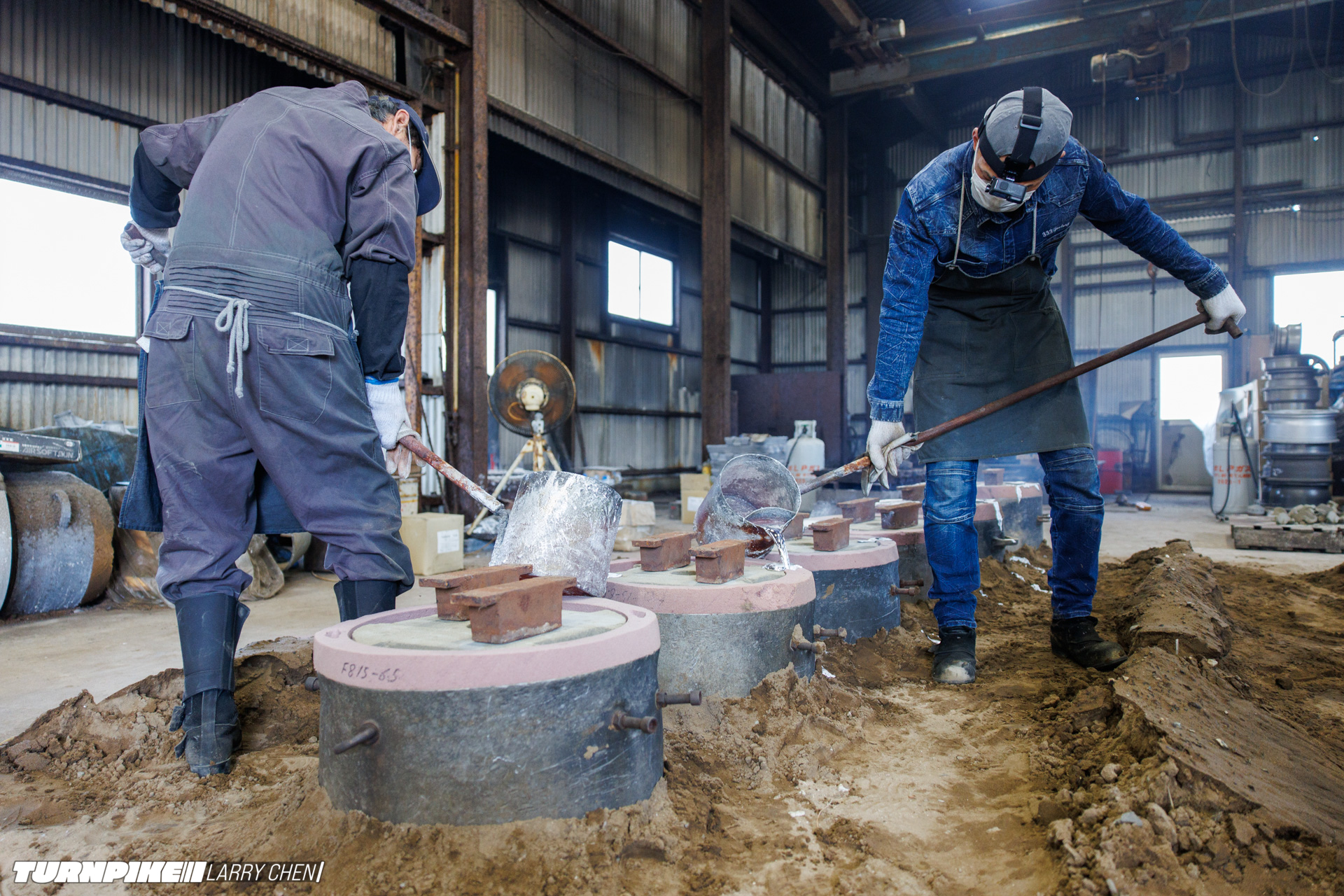
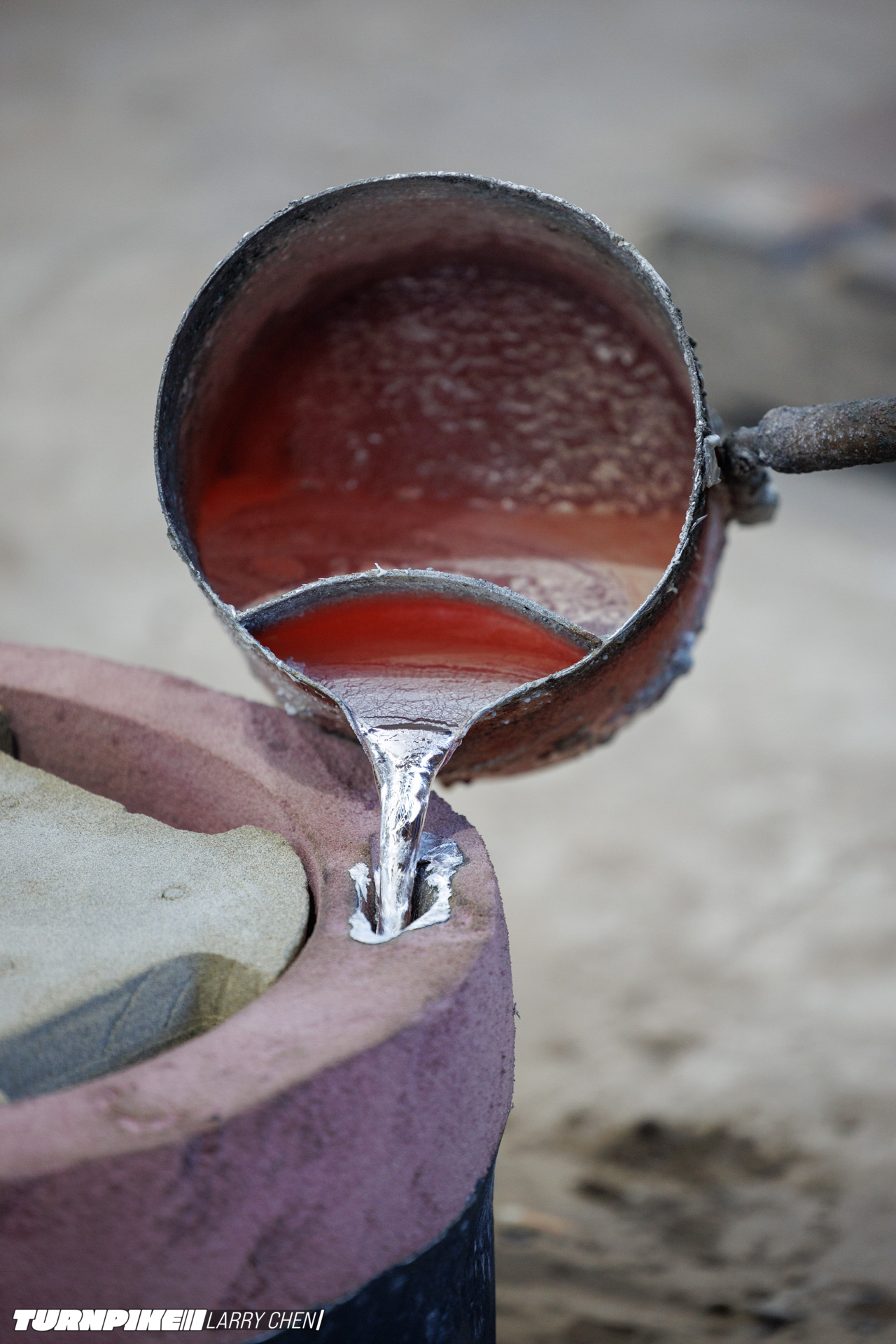
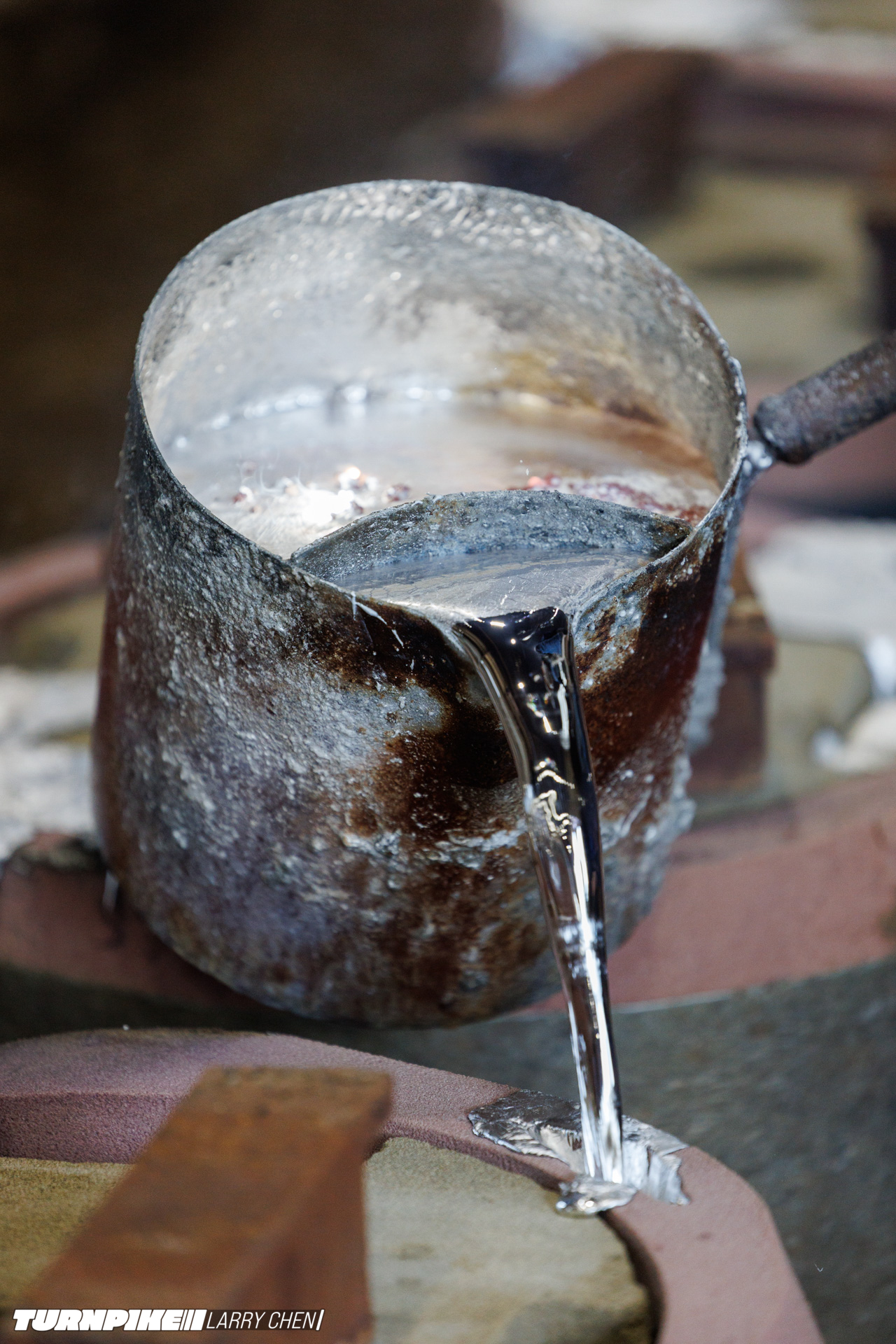
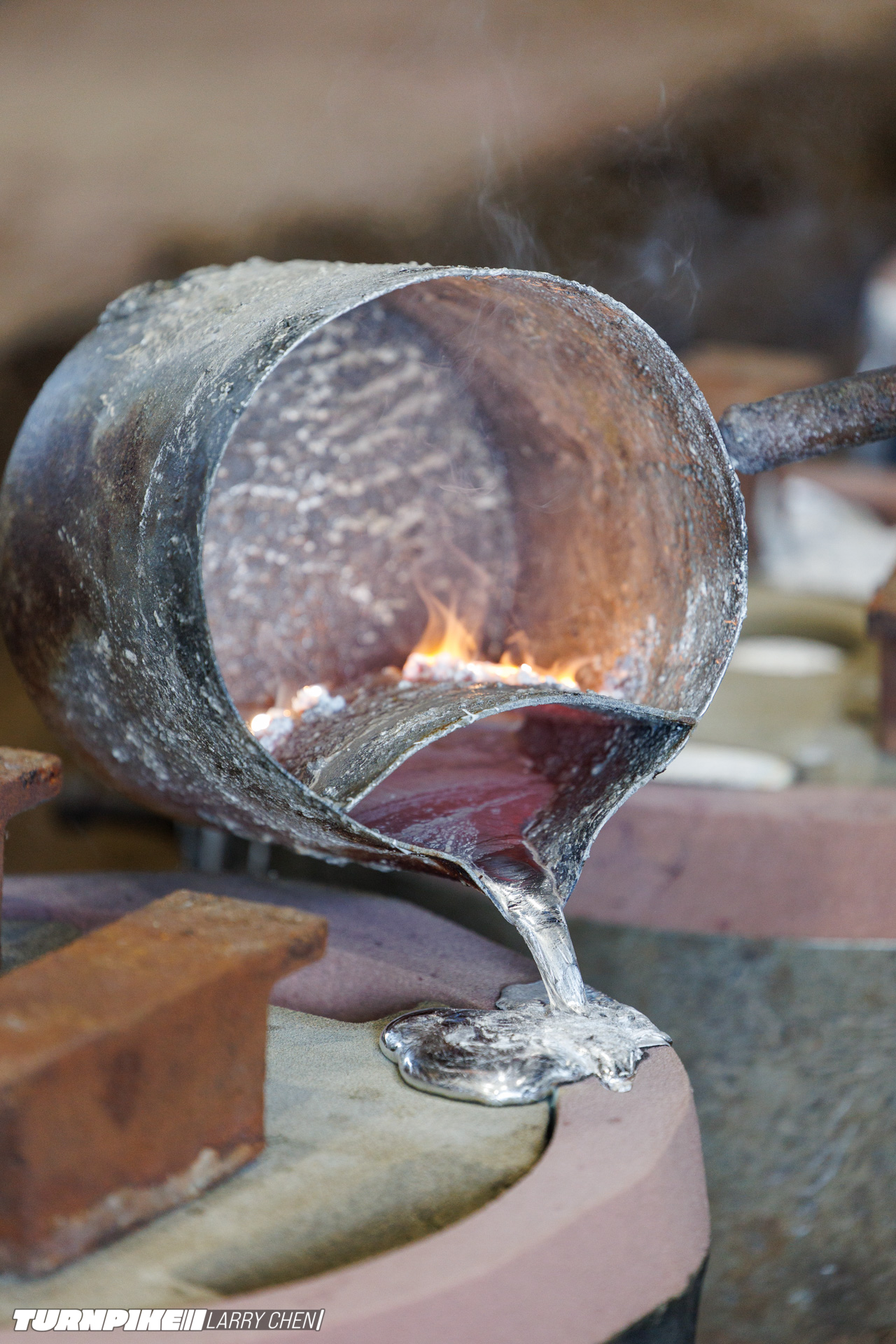
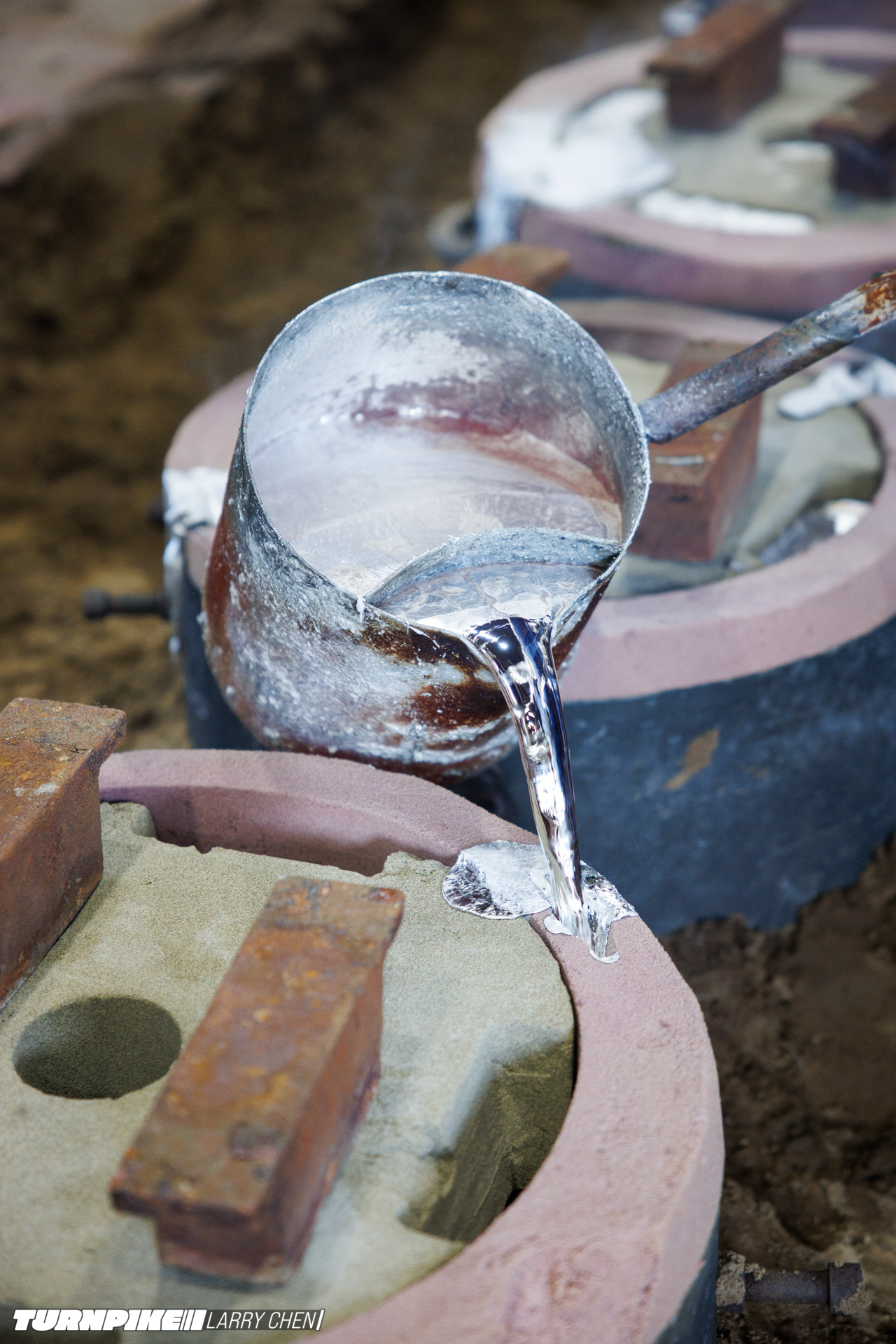
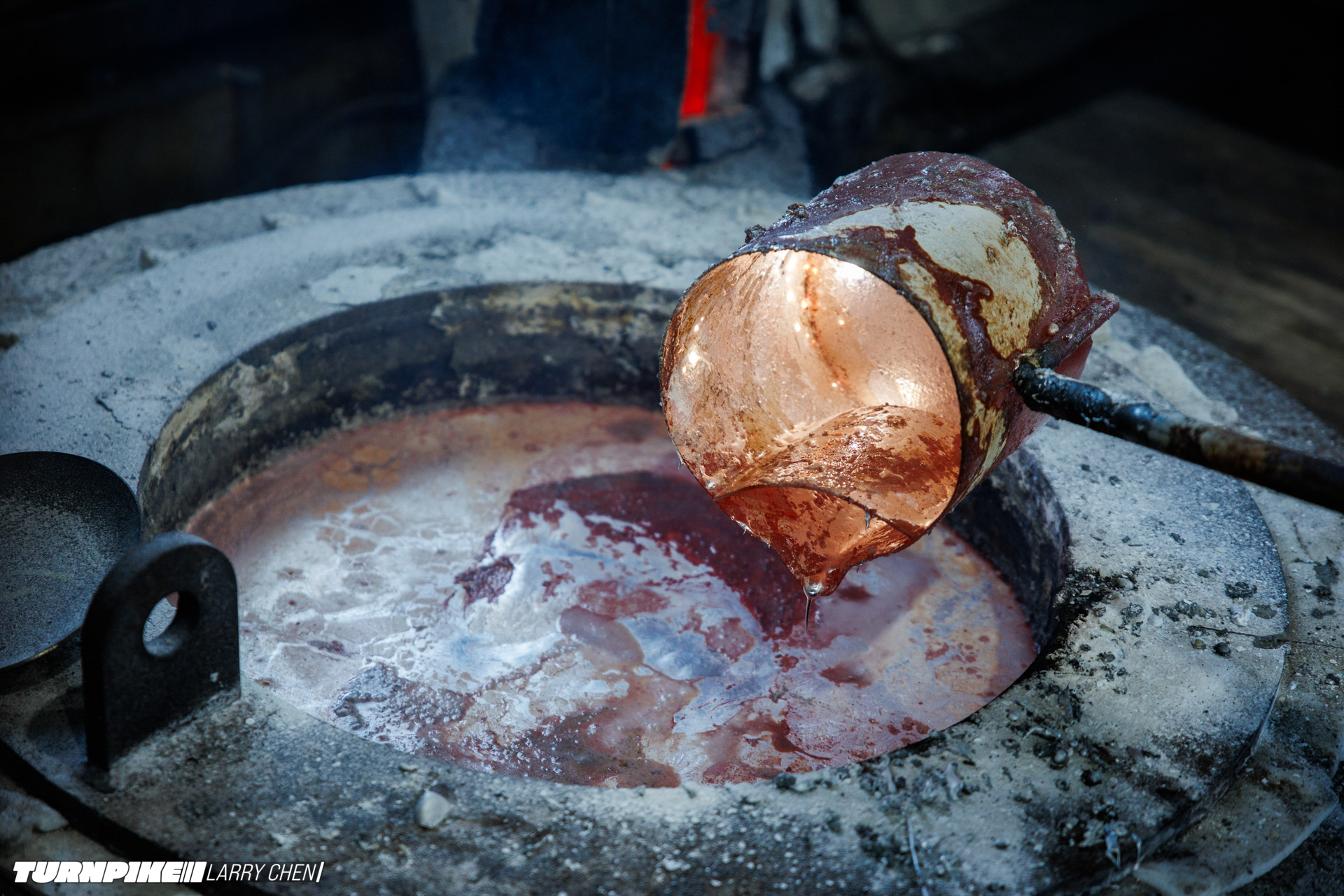
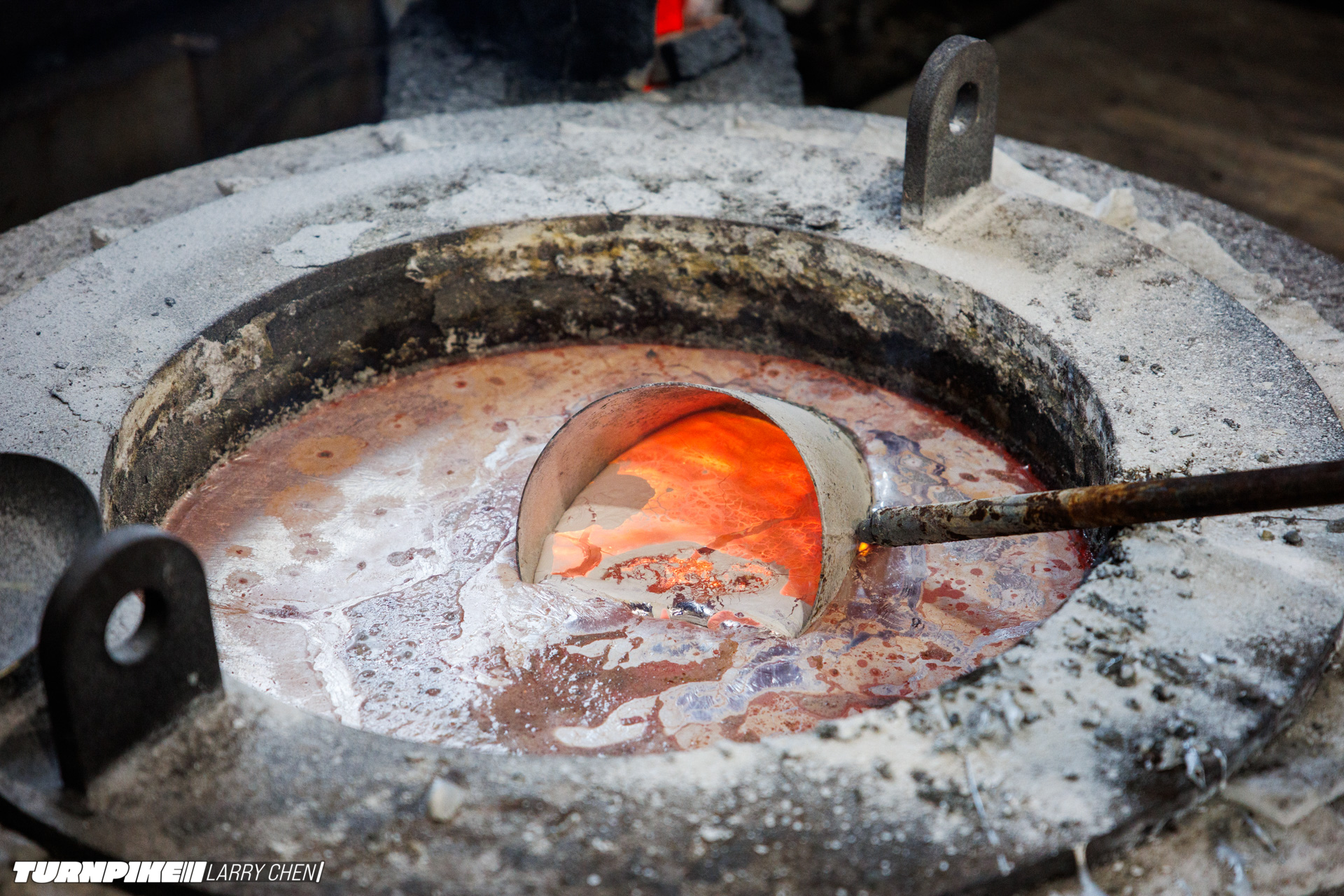
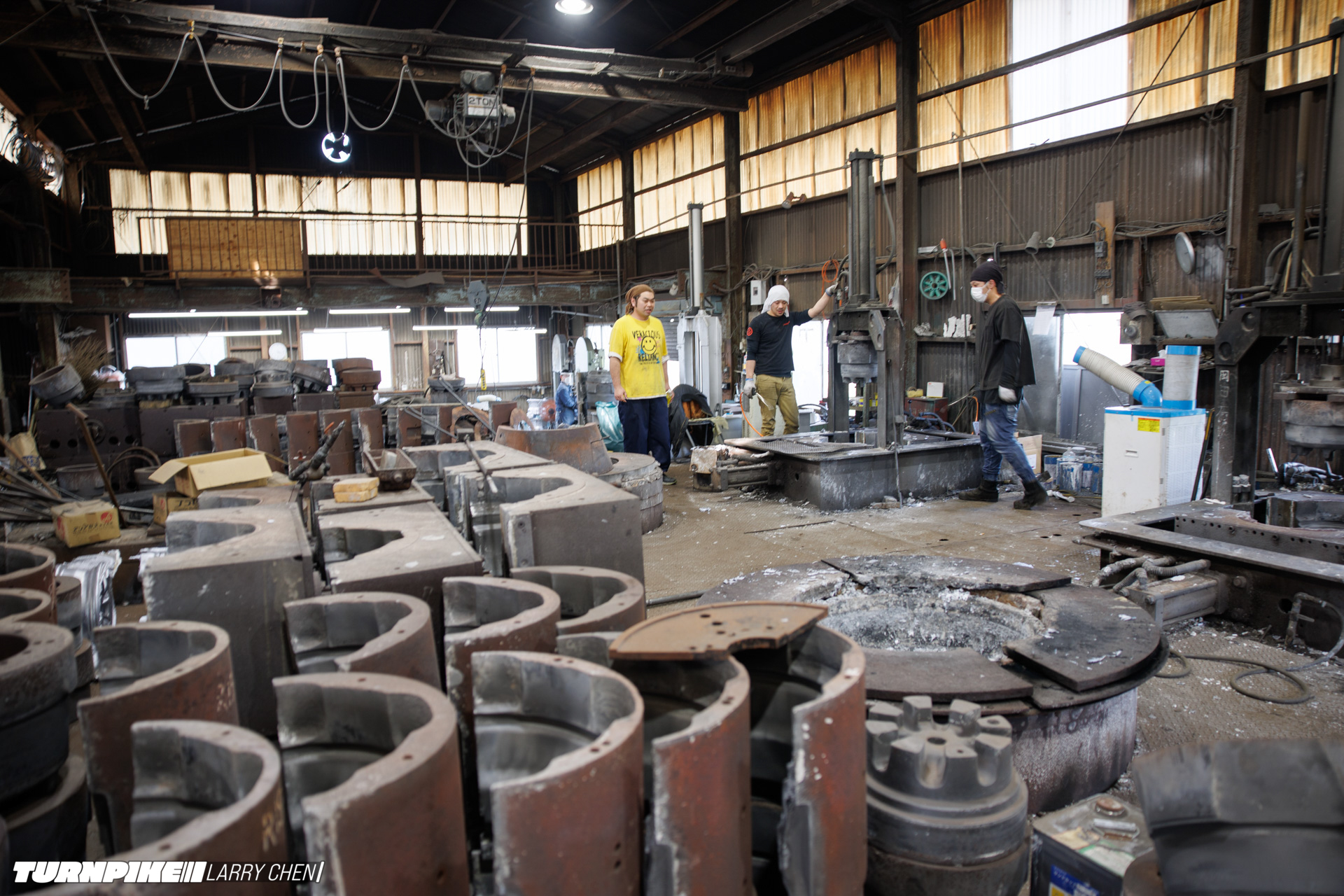
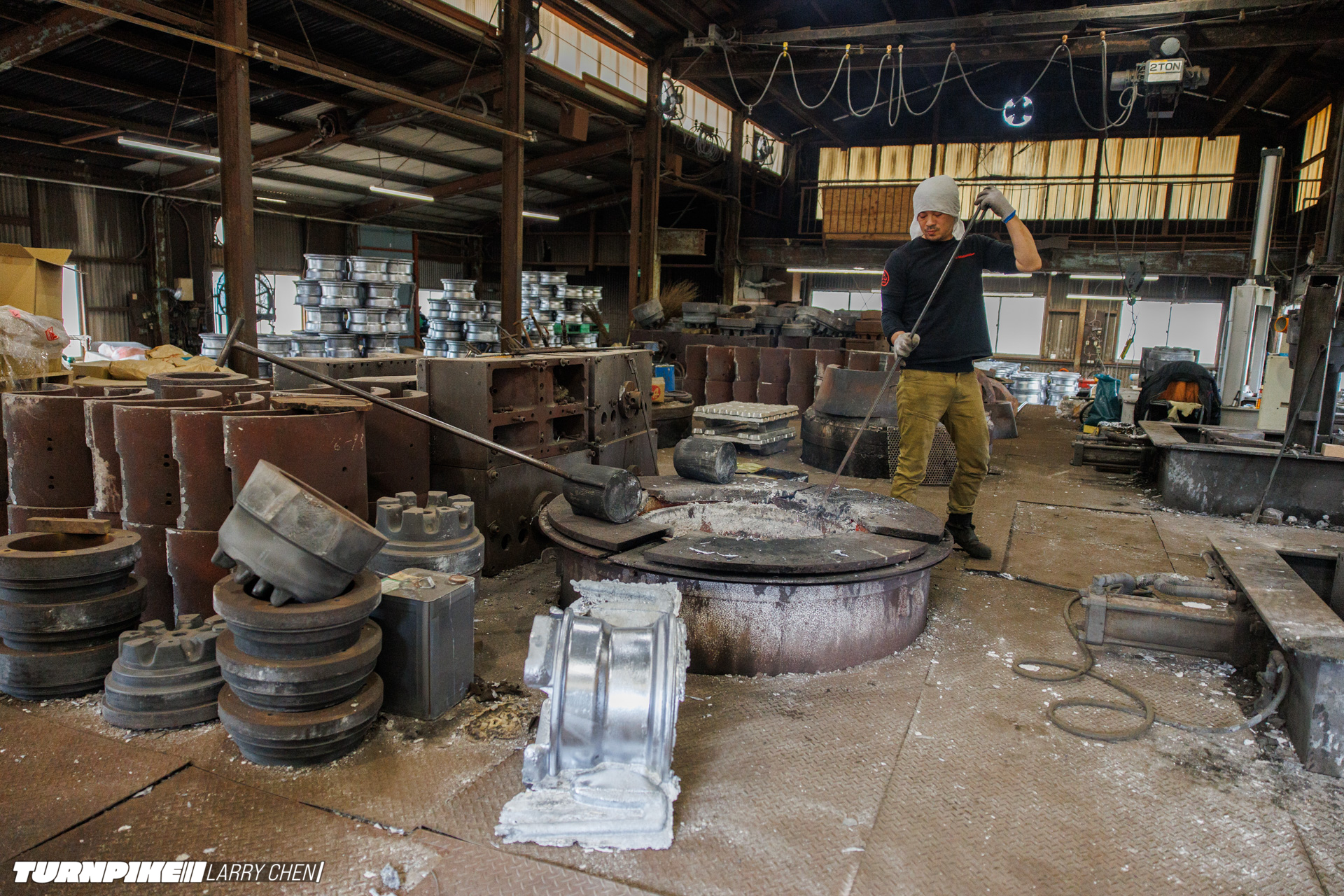
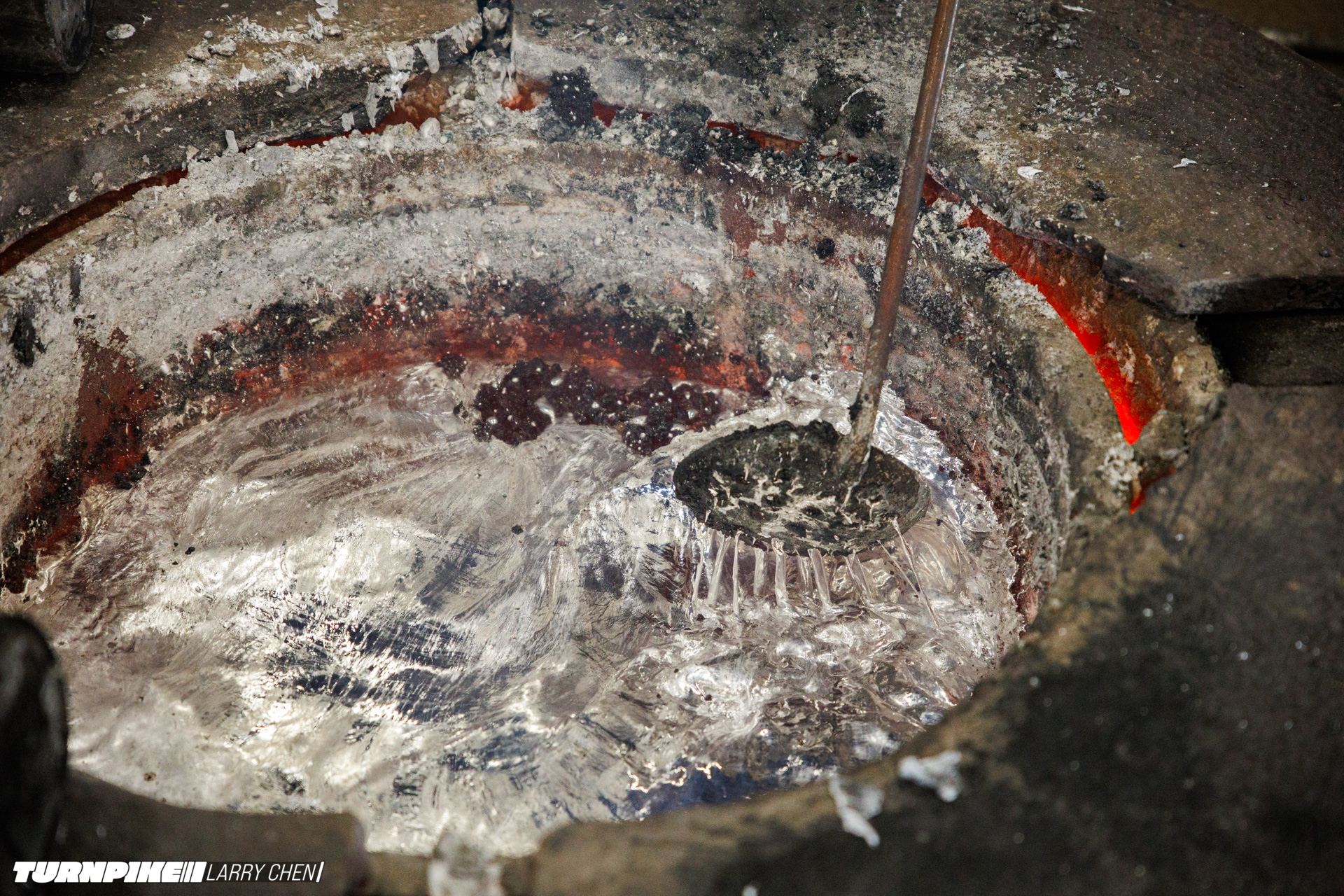
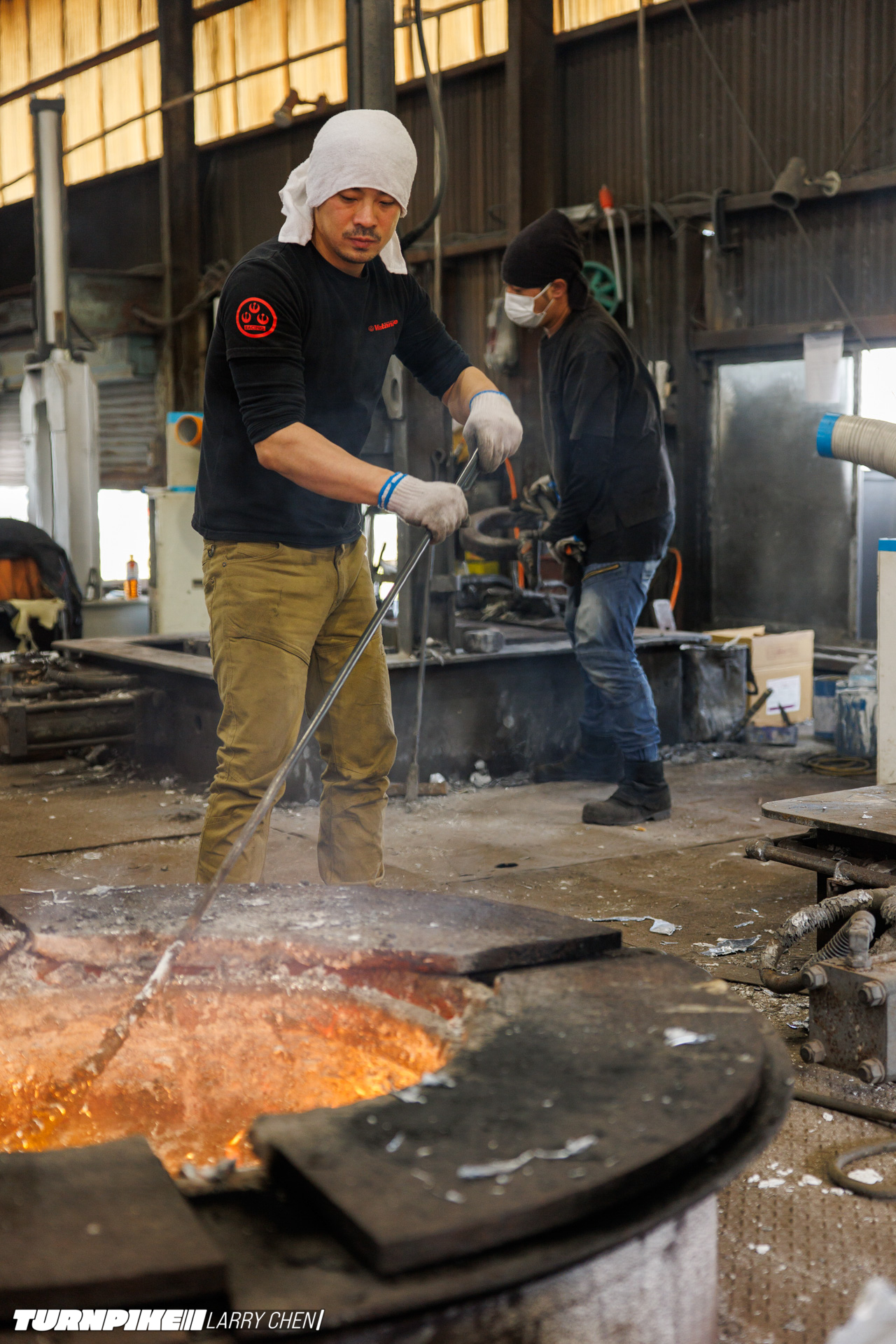
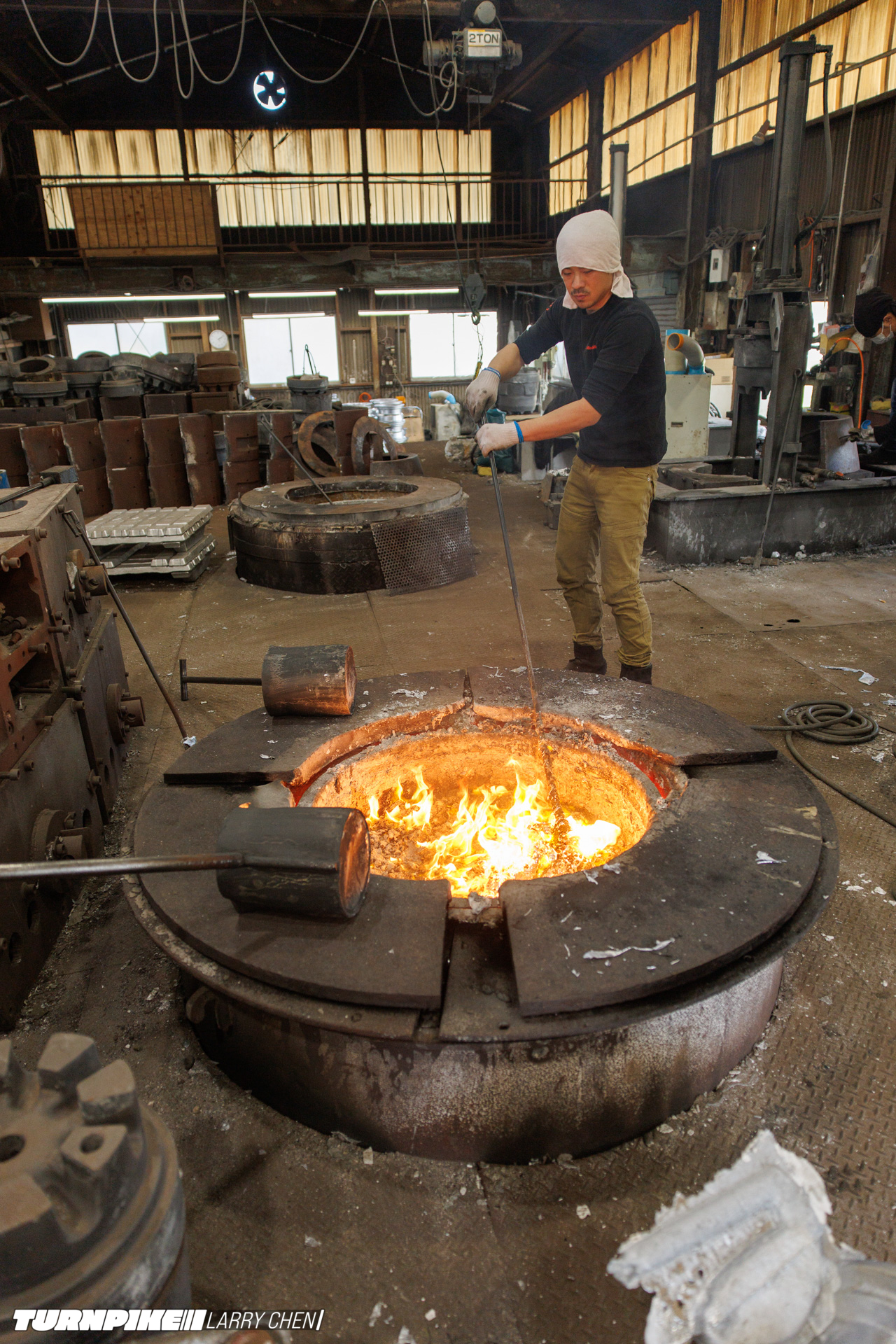
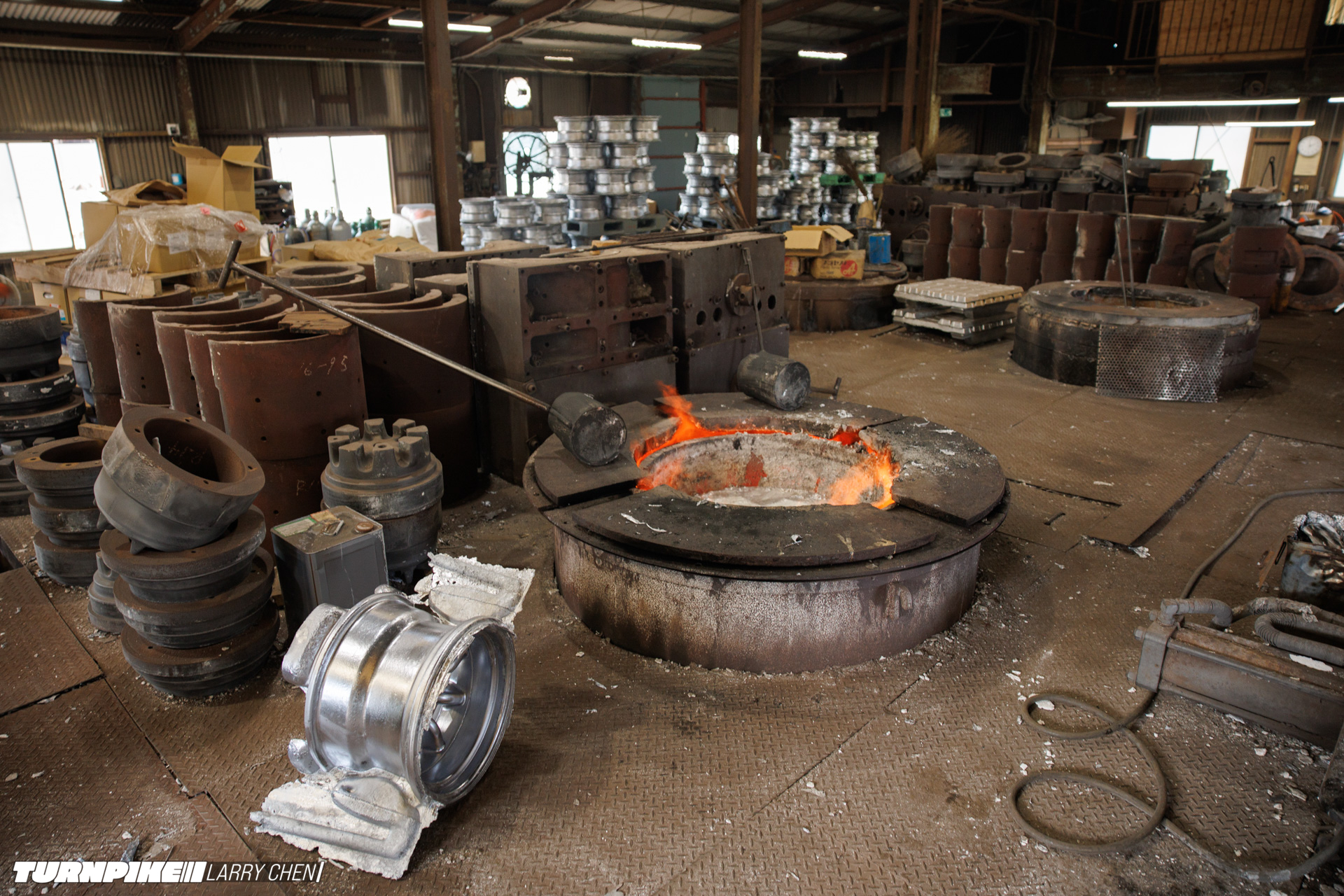
Our tour began in the aluminum casting room, where common-size wheels are poured from molten metal heated to 750°C. It’s a two-man operation: one scoops the liquid aluminum with practiced ease, while the other directs the flow with almost ritual precision.
The heat was brutal. Standing beside the crucible felt like leaning face-first into an oven. For a moment, I considered asking to help pour the metal, but that thought vanished the second I saw the process up close. These craftsmen work in conditions that seem dangerous to any outsider, yet they move with the confidence that comes from decades of experience.
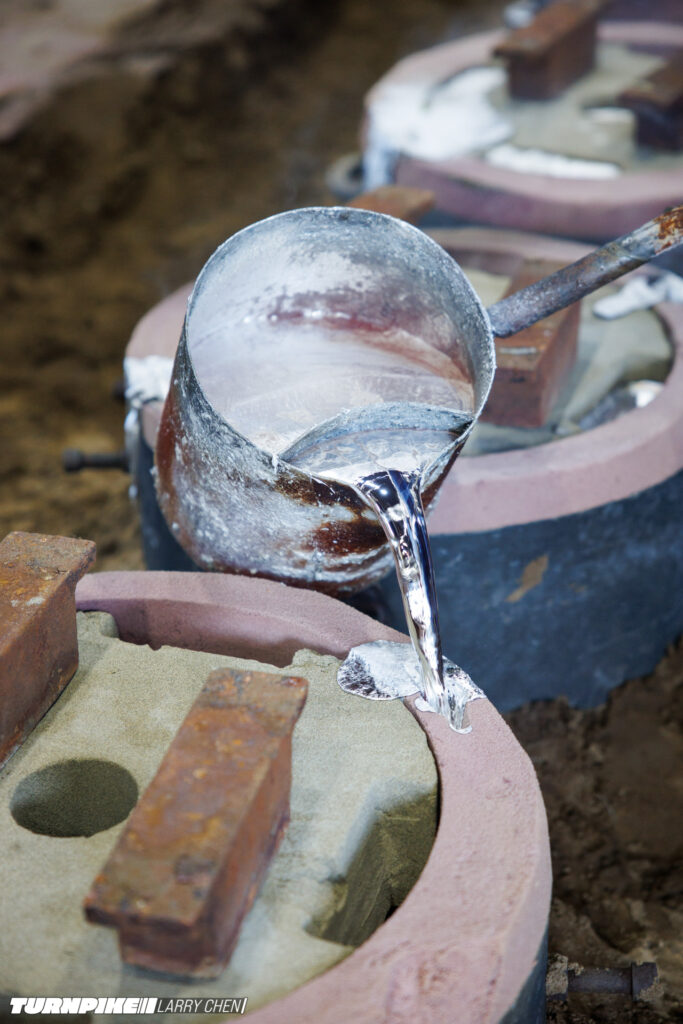




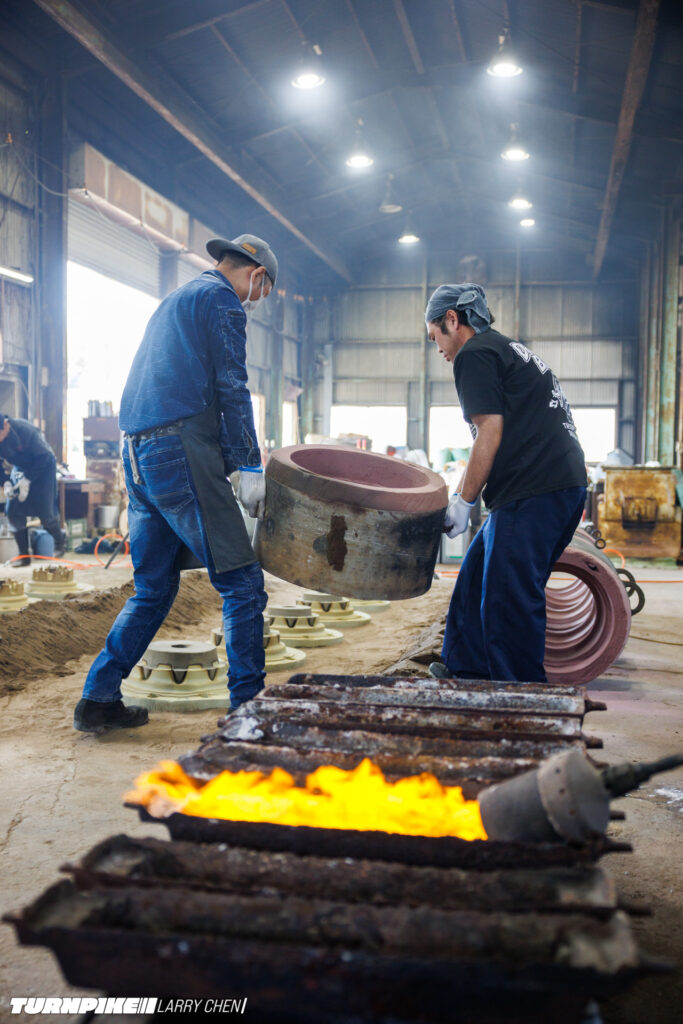

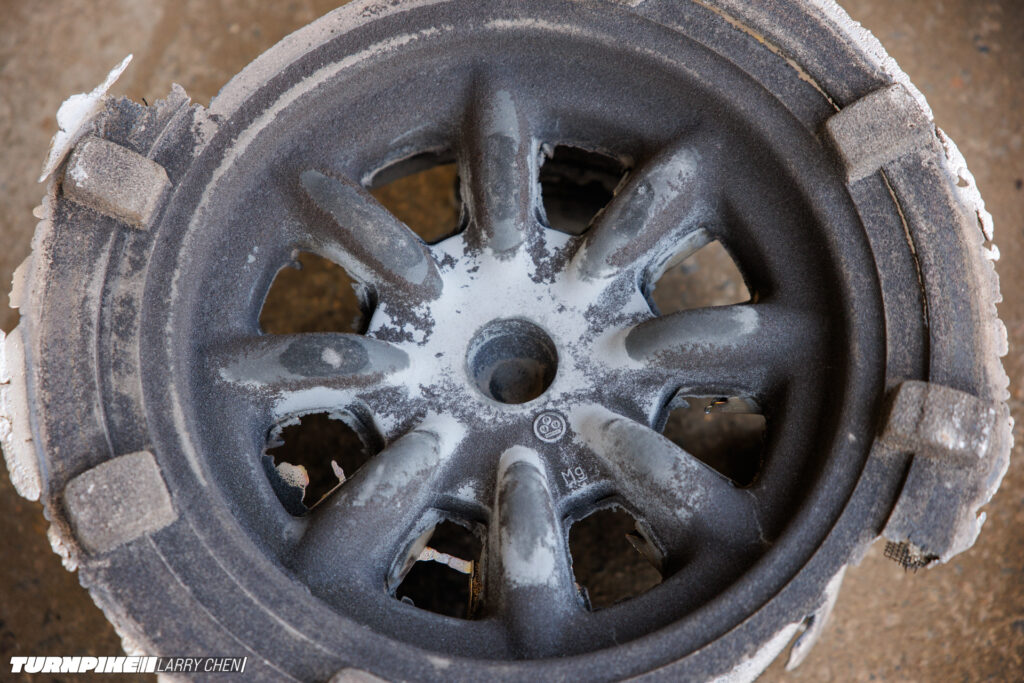
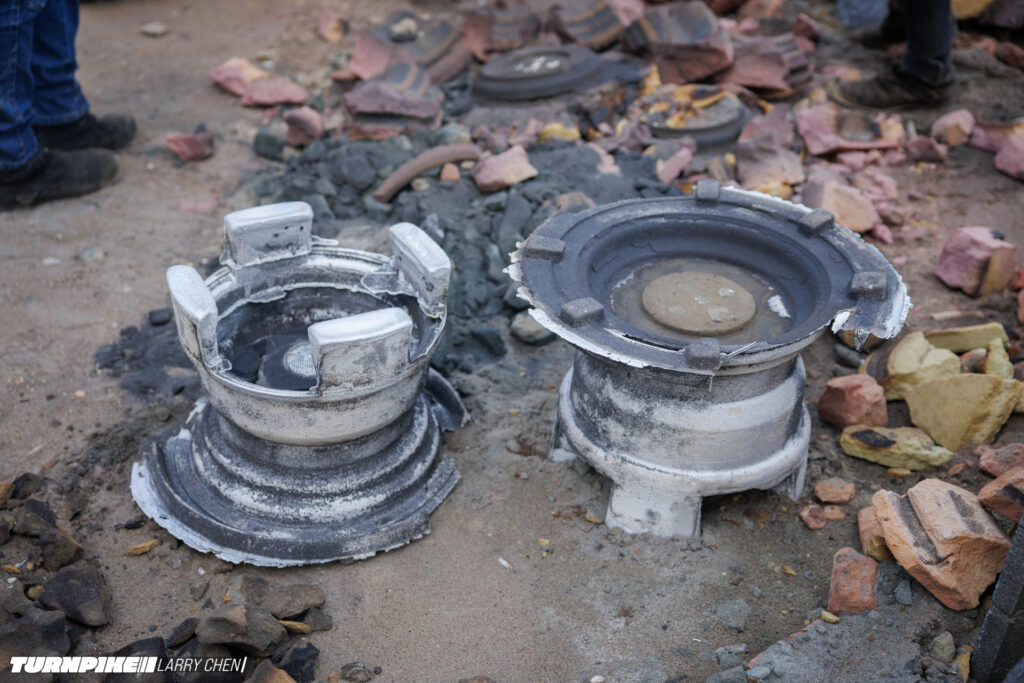
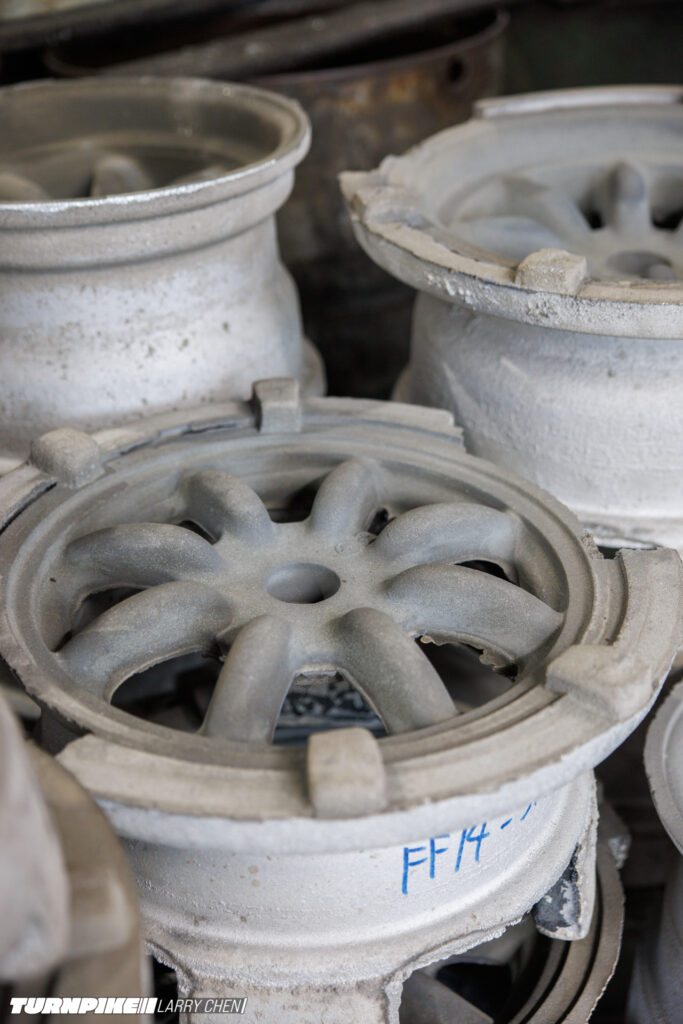
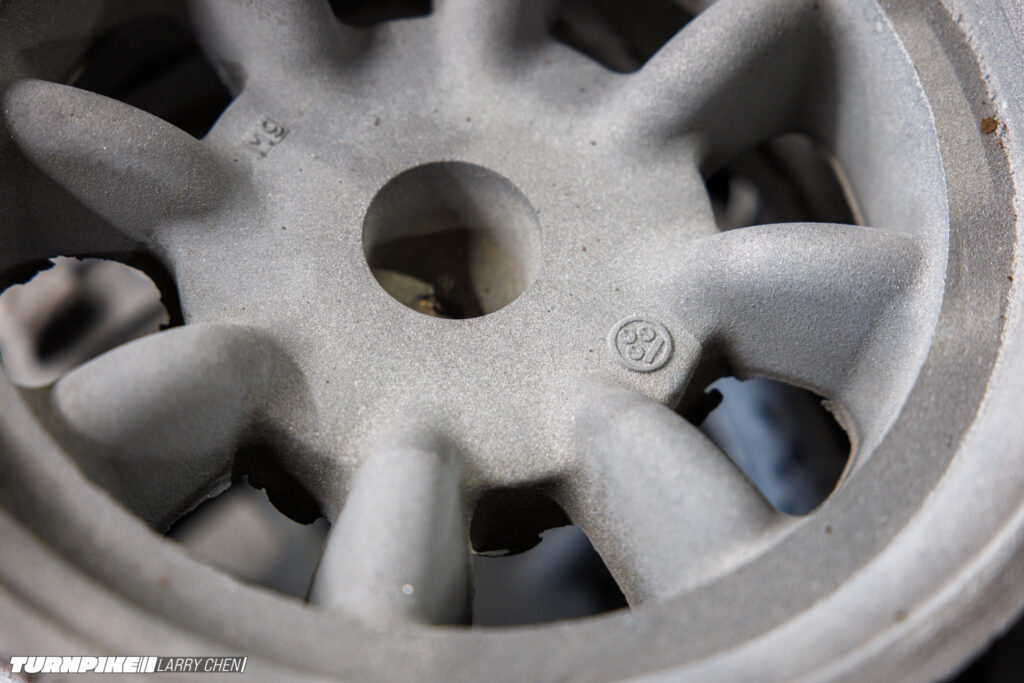
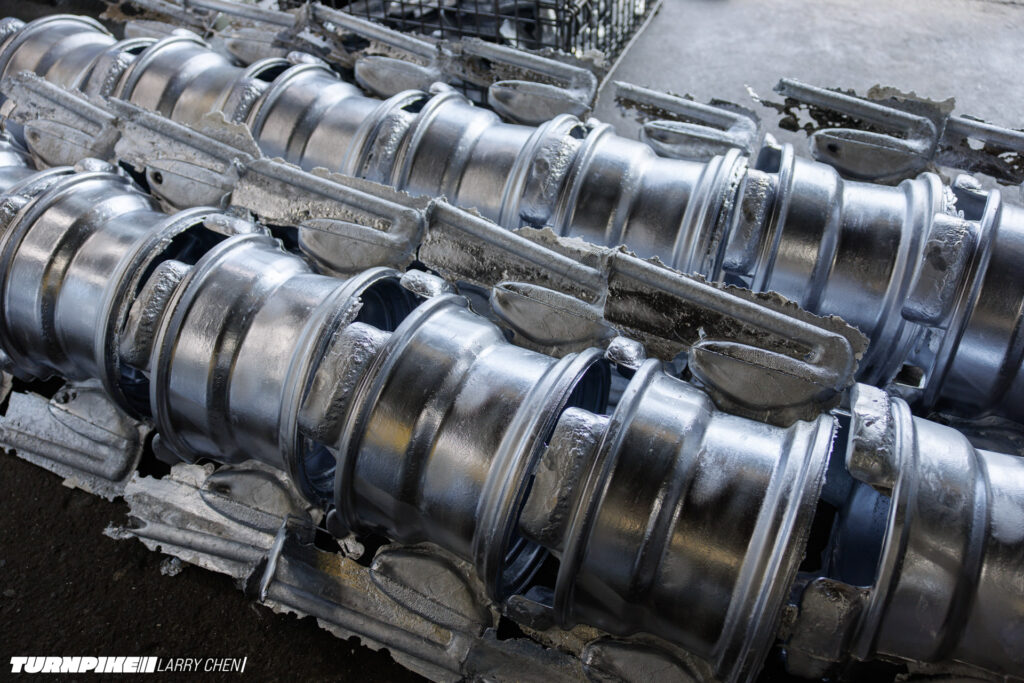
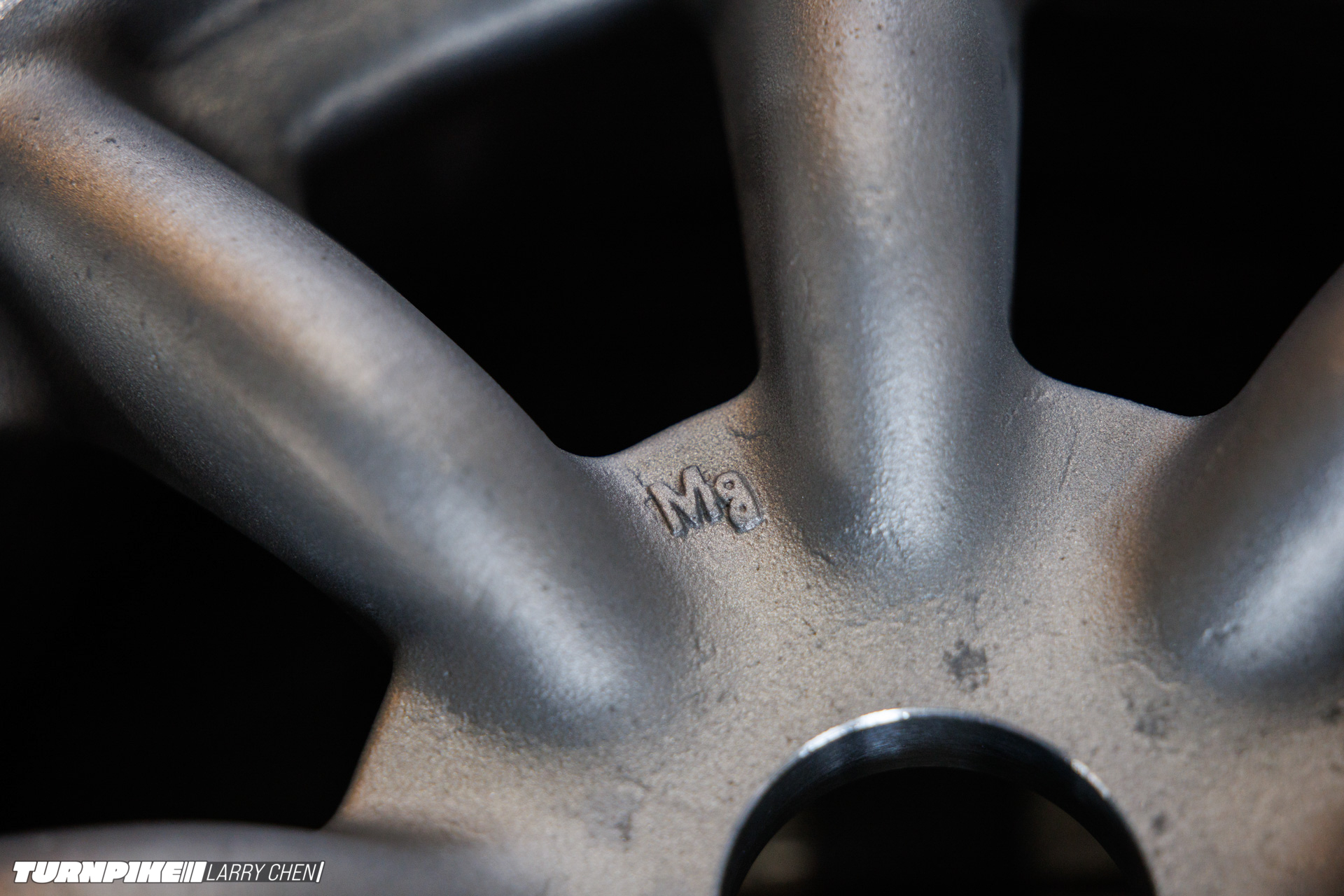
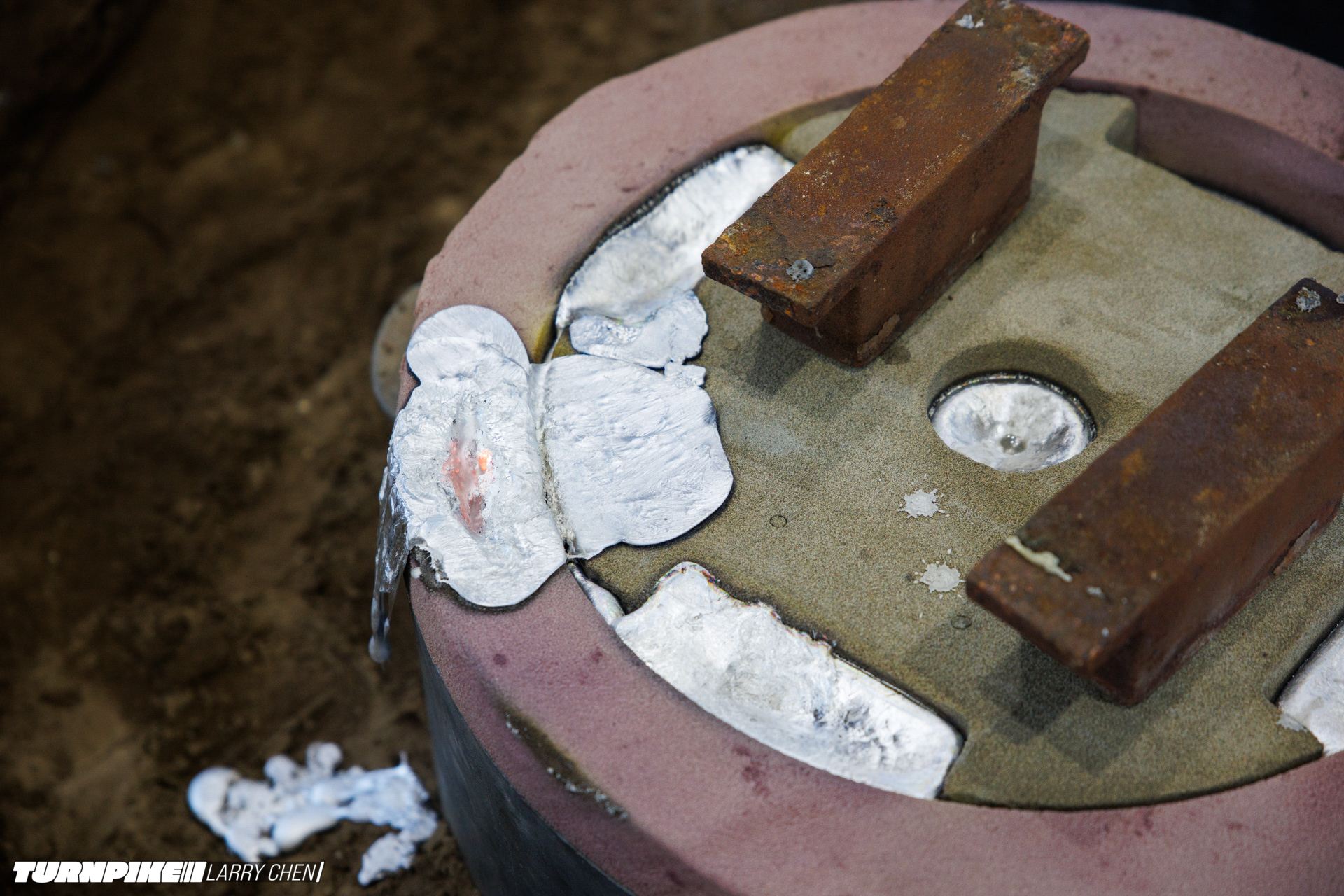
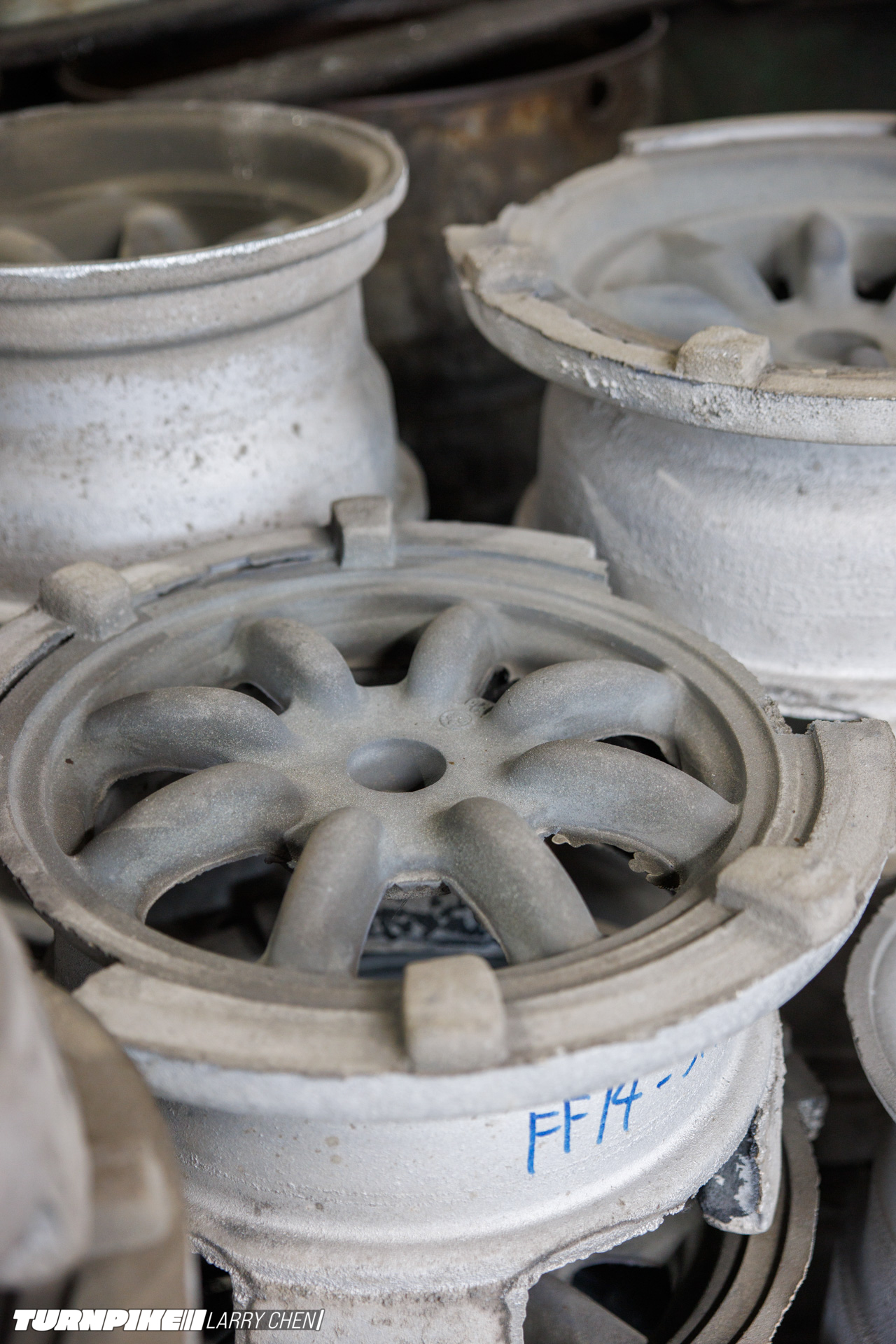
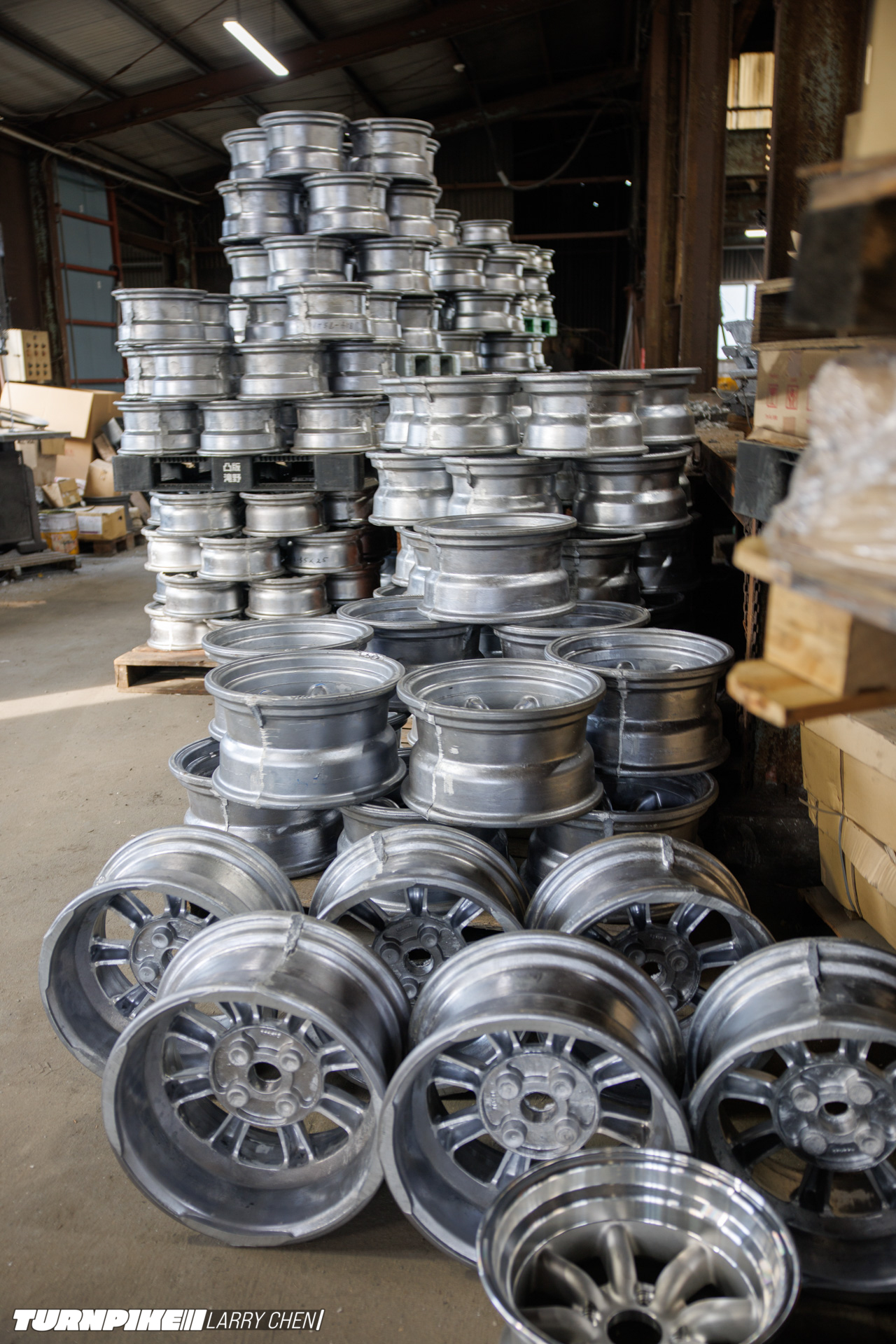
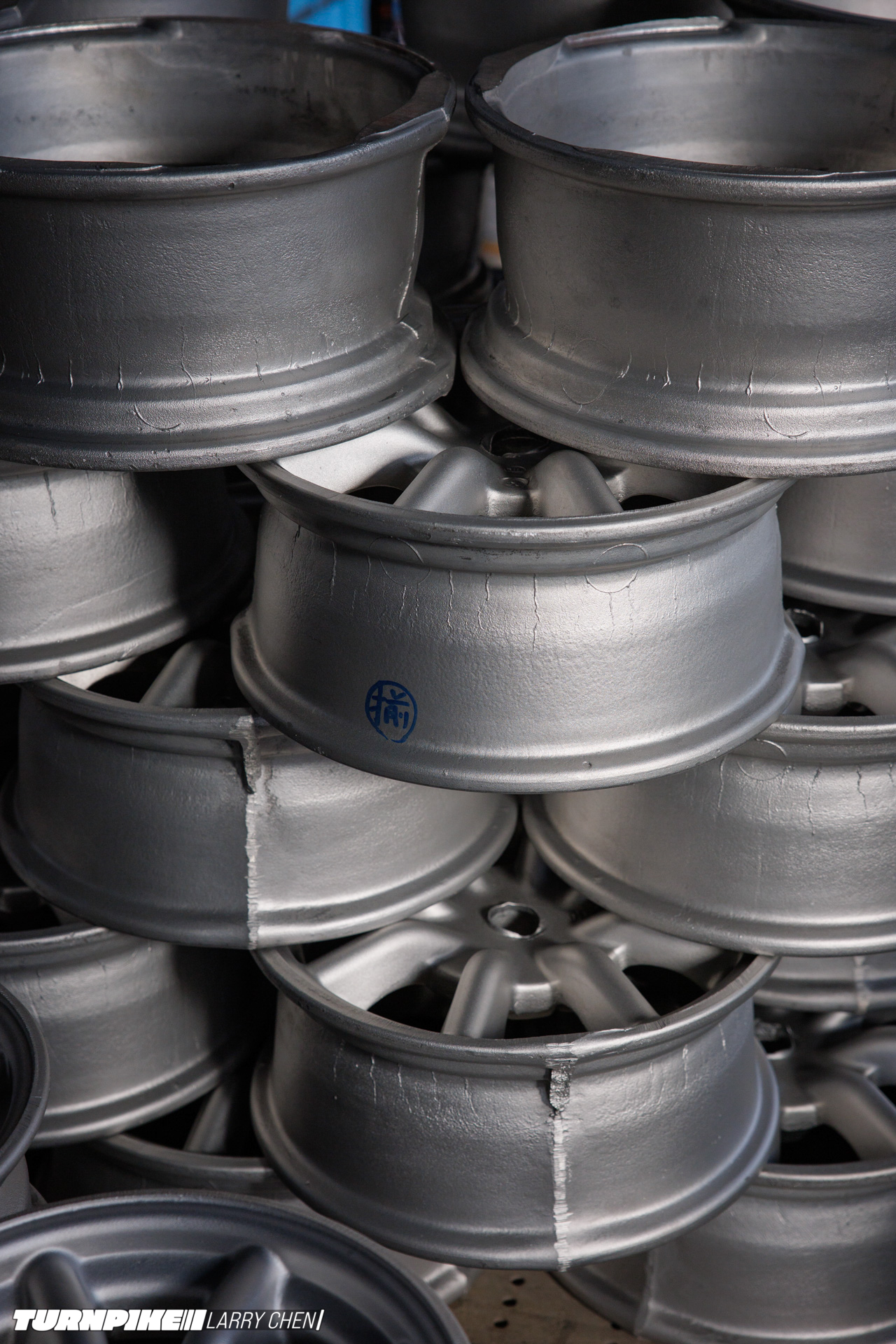
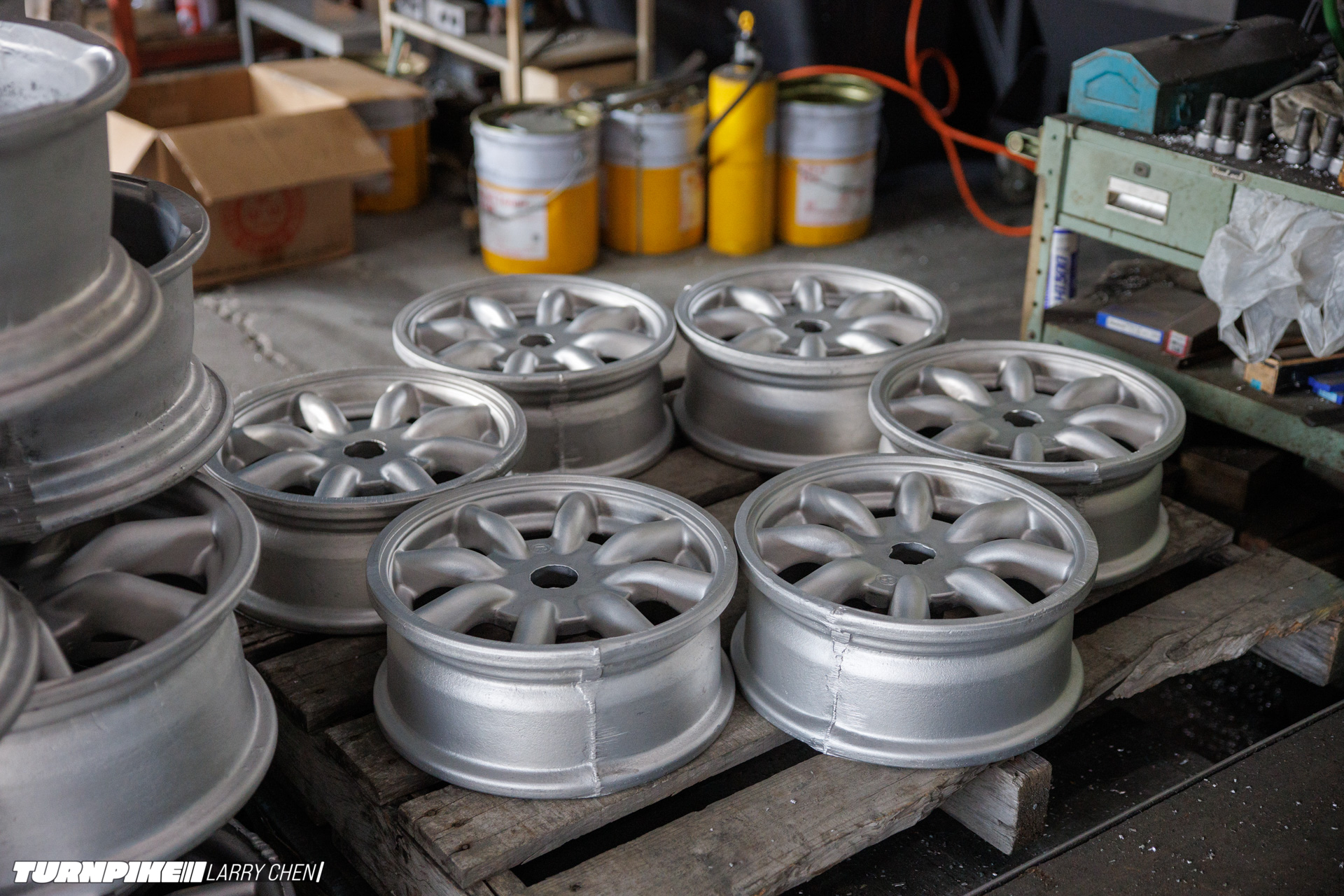
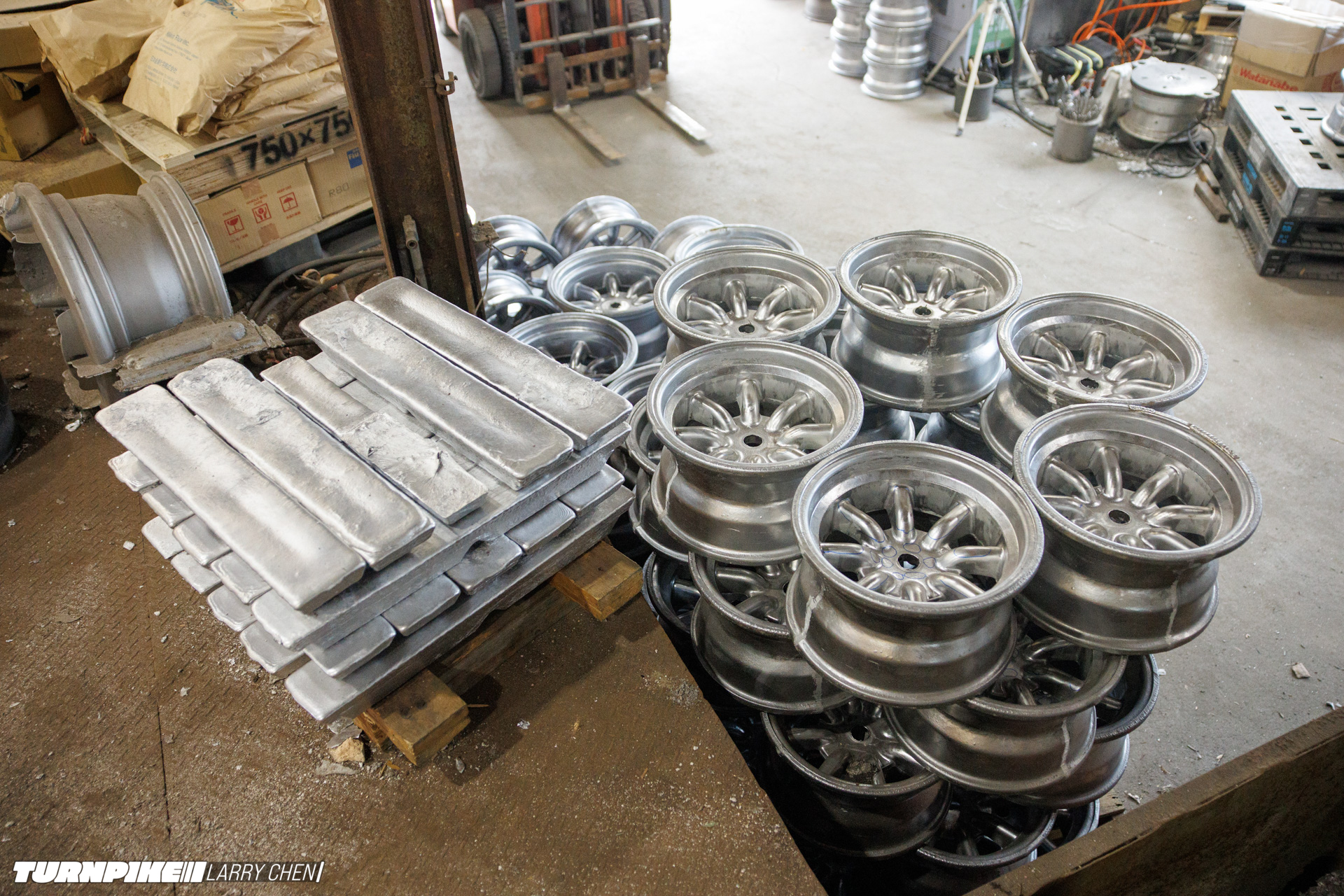
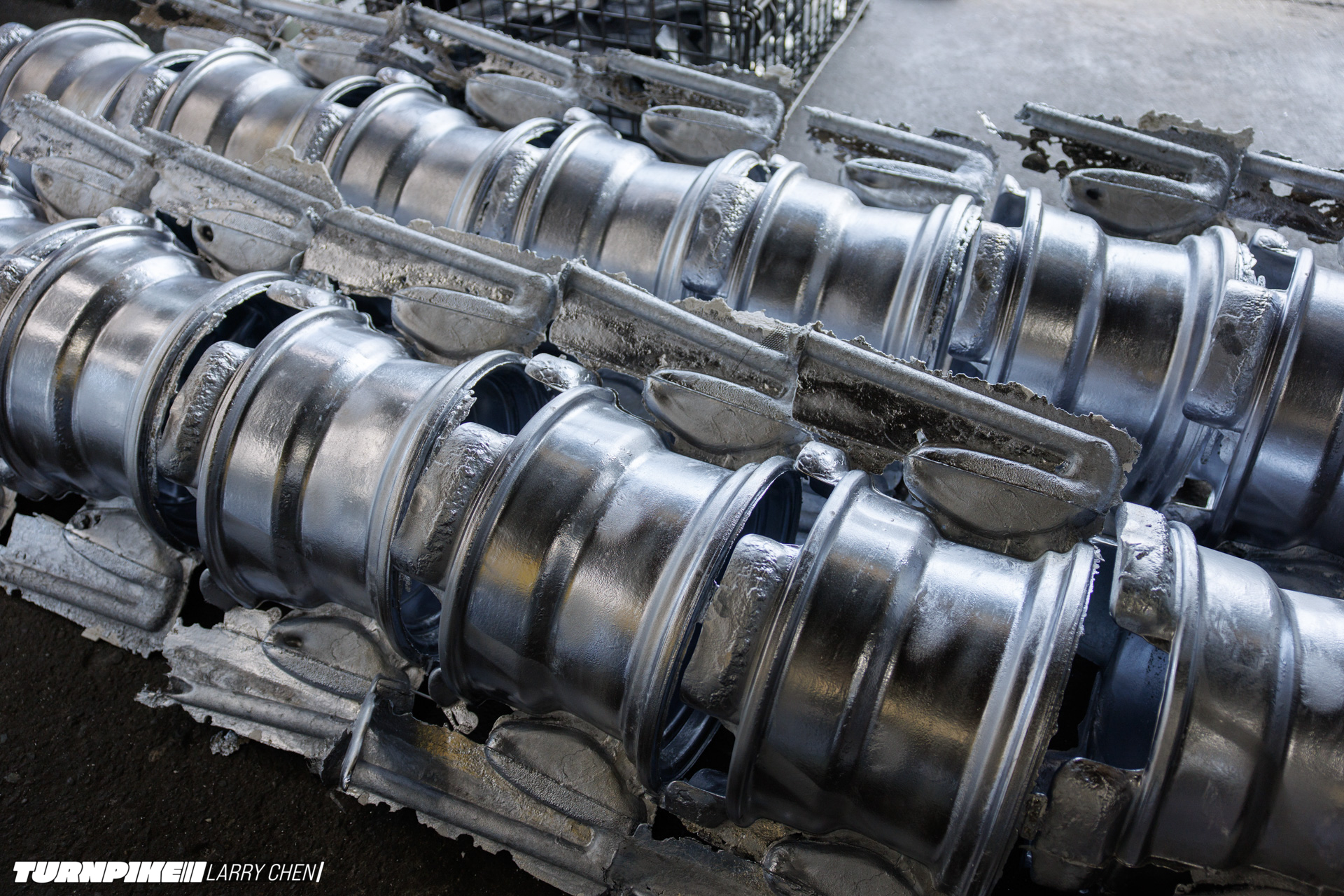
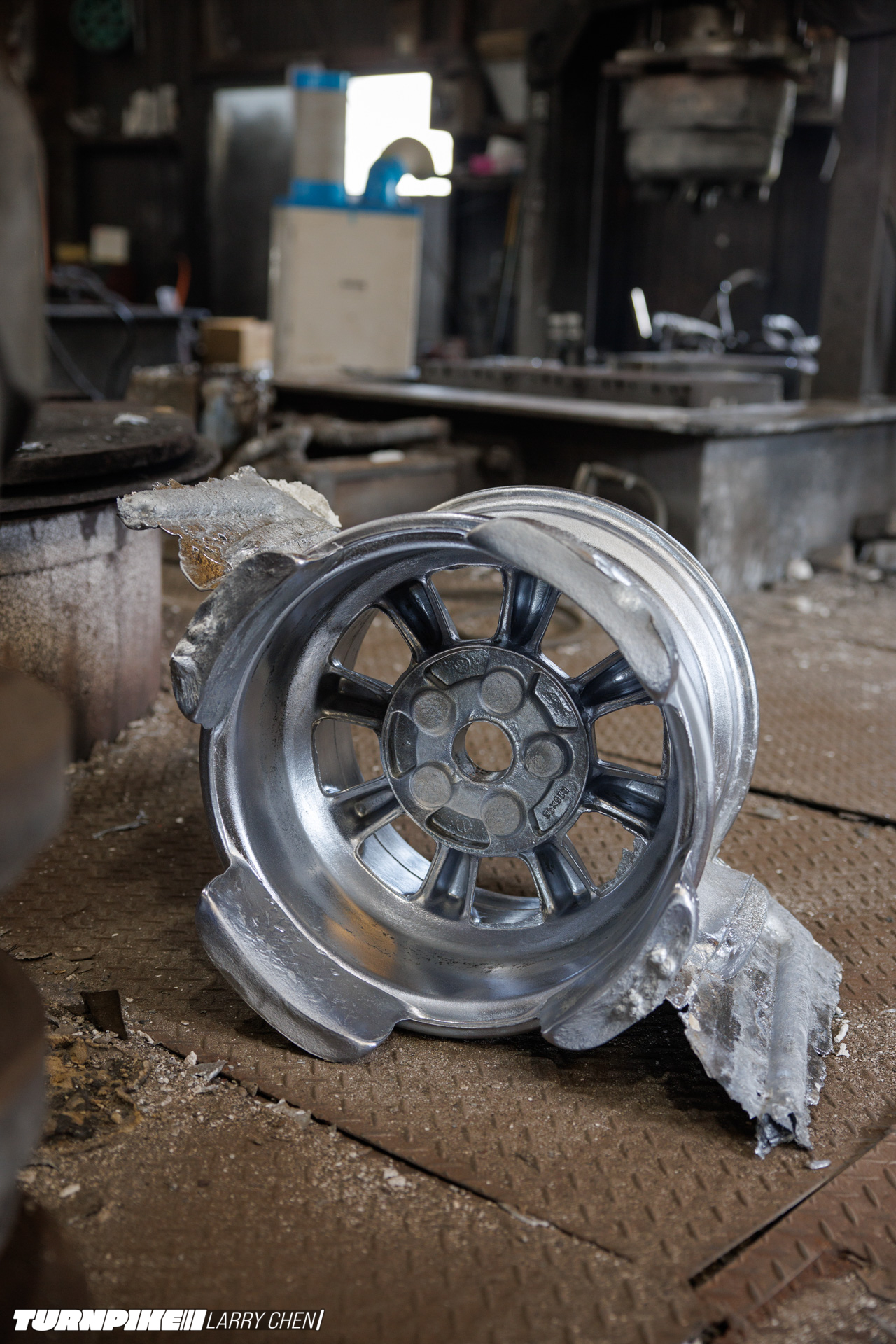
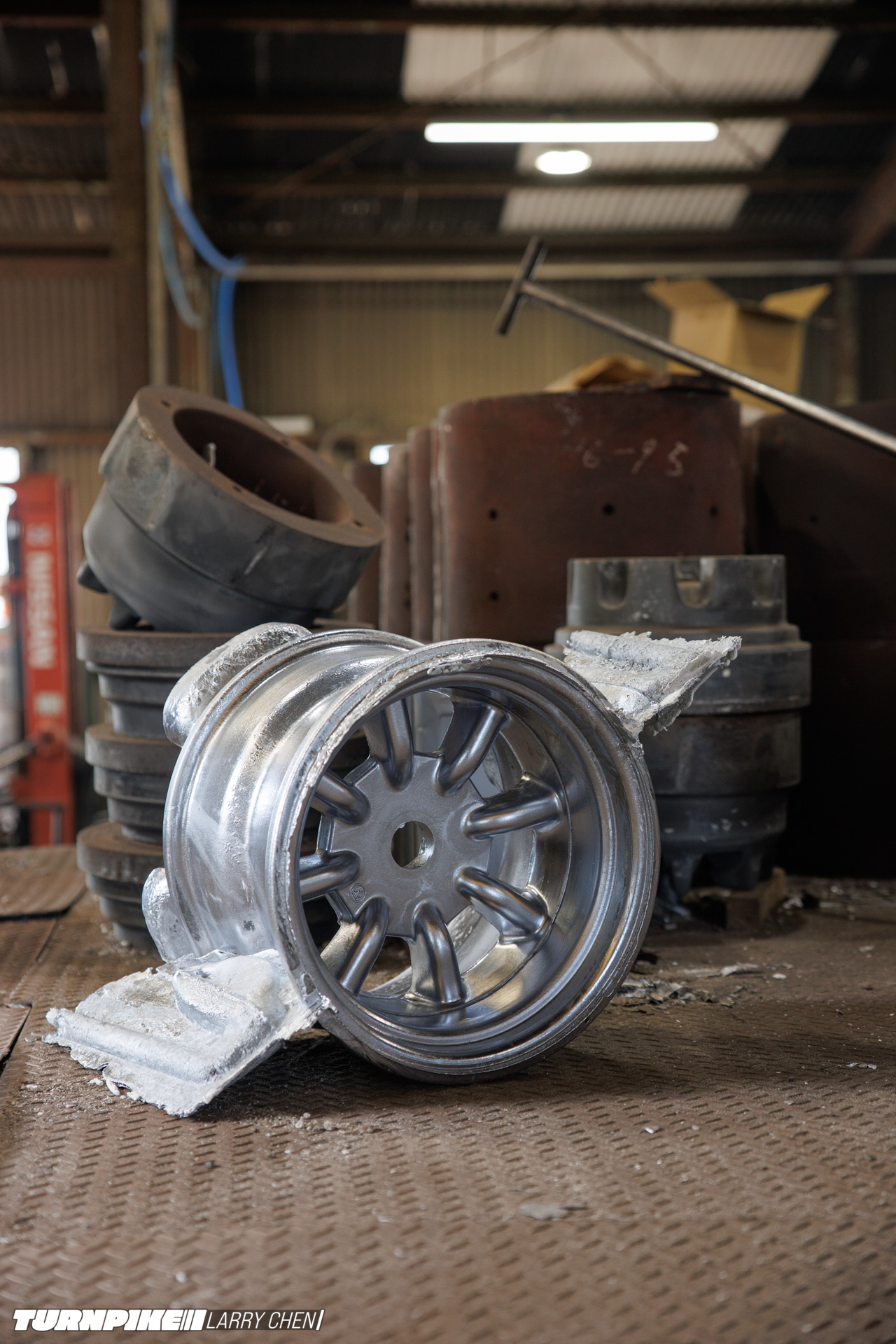
Once the castings had cooled enough to handle, the texture was unbelievable – raw, natural, untouched. Most wheel companies cast aluminum in a similar way, but RS Watanabe does something almost no one else on Earth still attempts.
They sandcast wheels. By hand. From scratch. And that’s where things become truly wild.

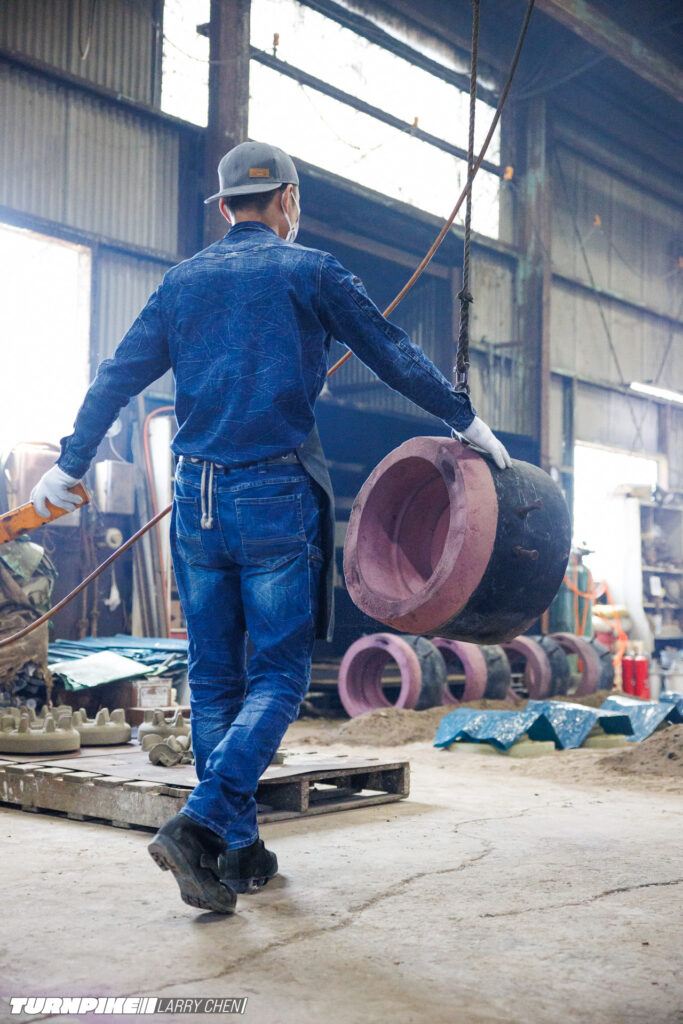
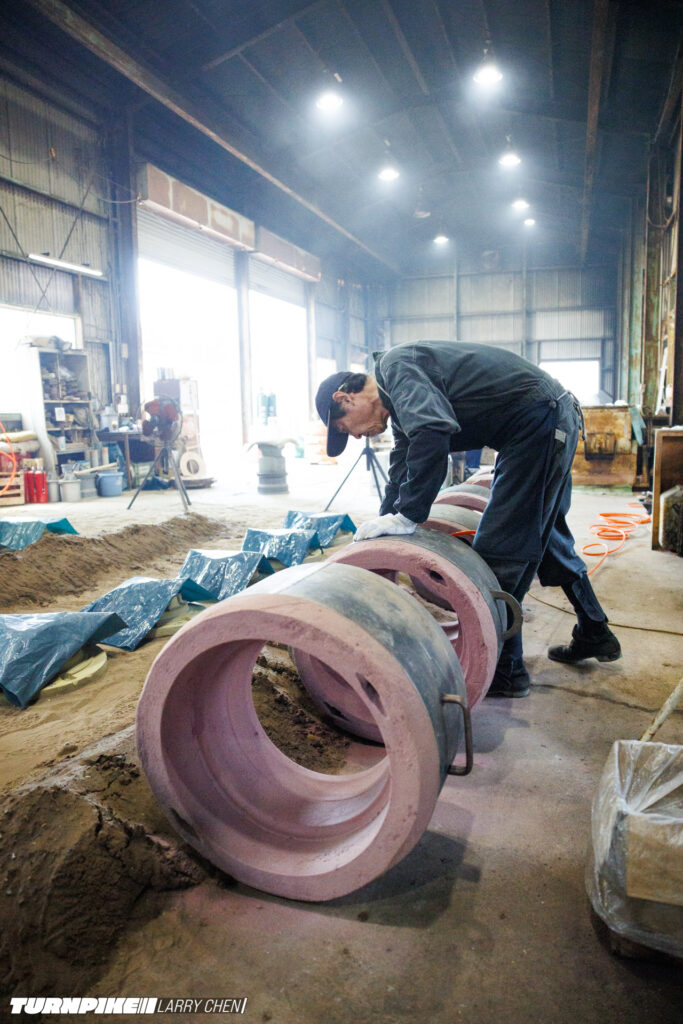
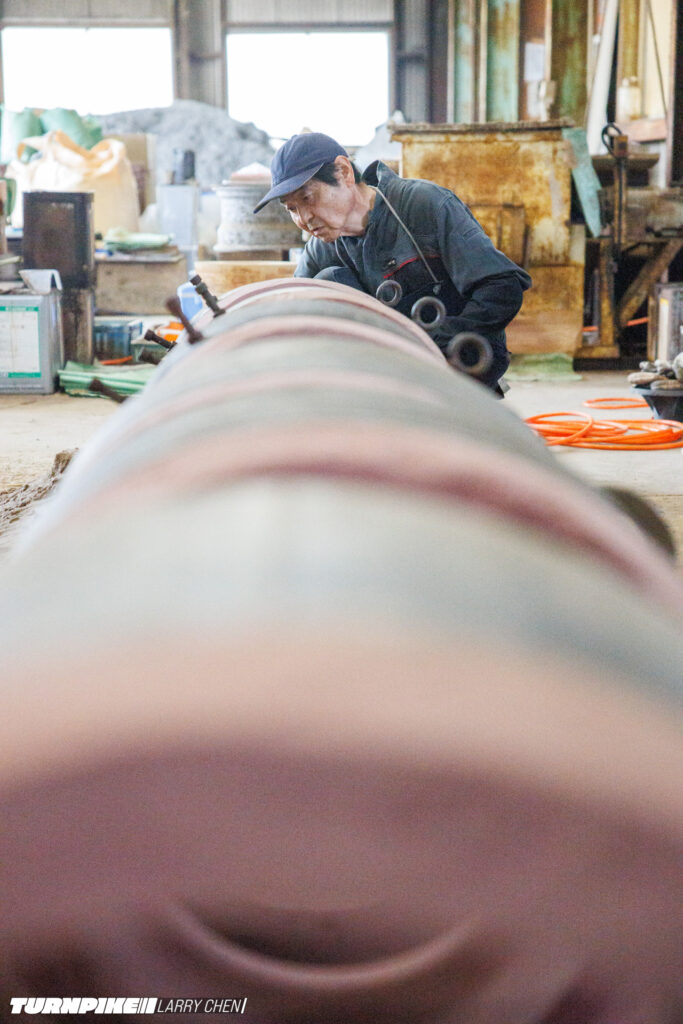
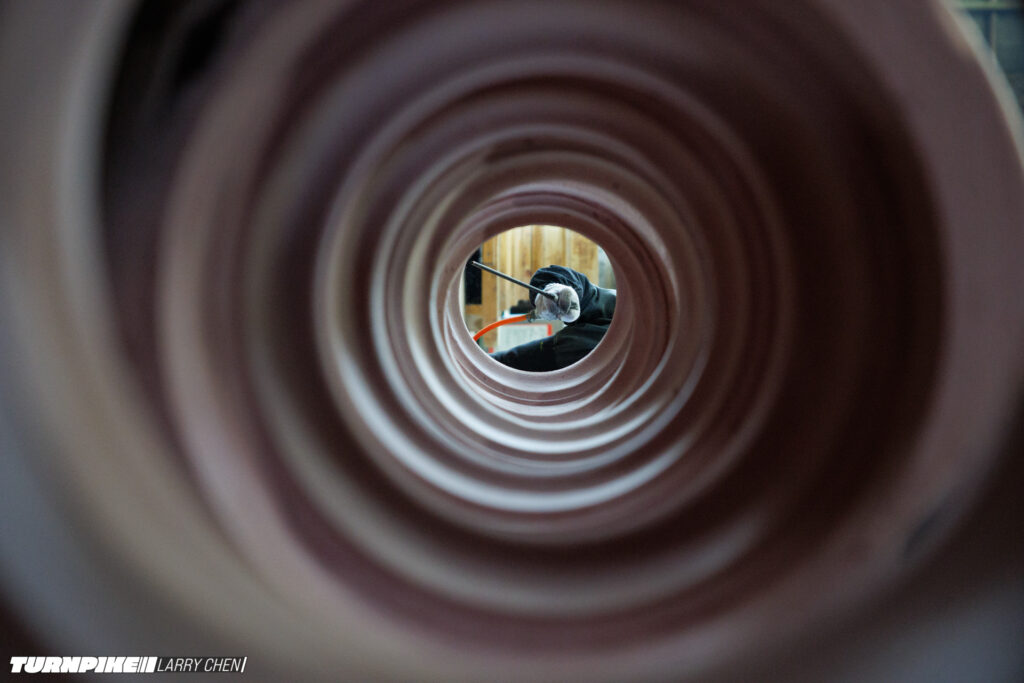
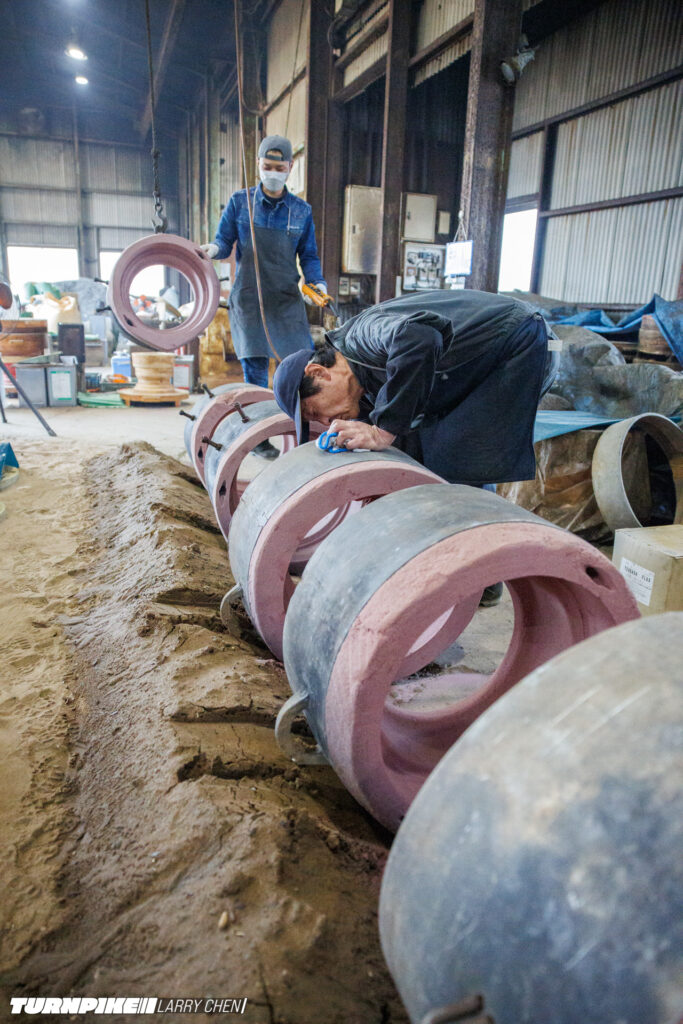
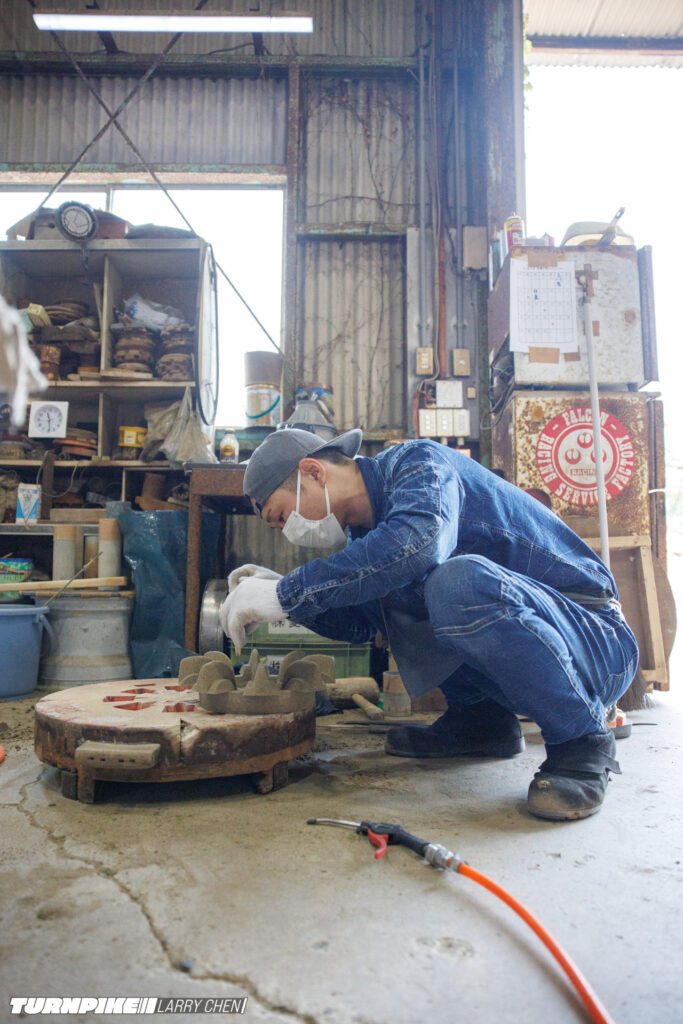
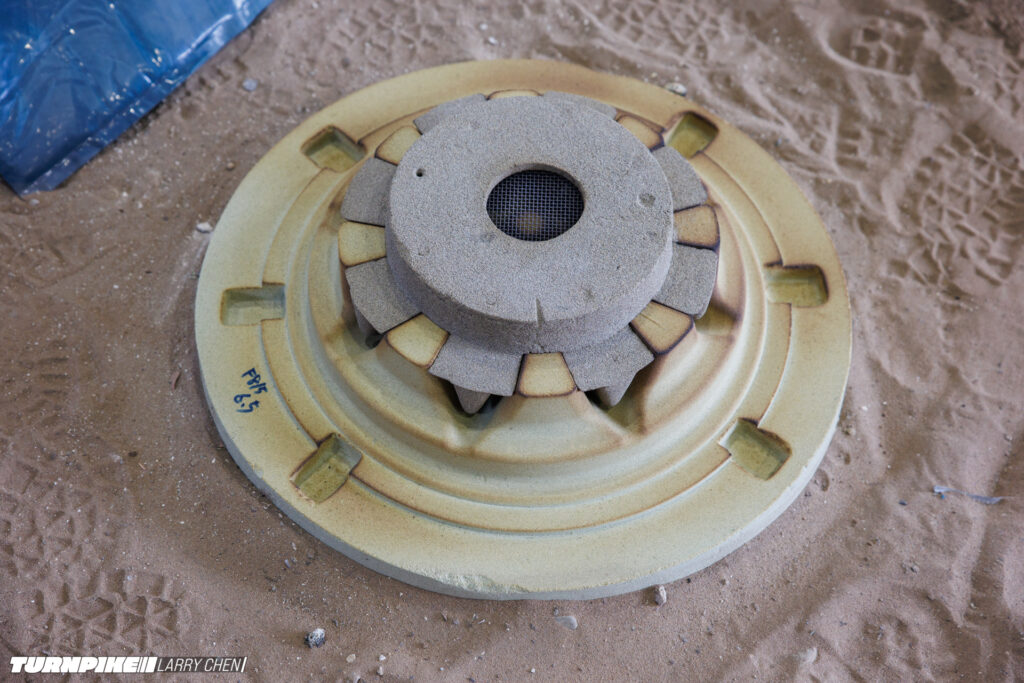

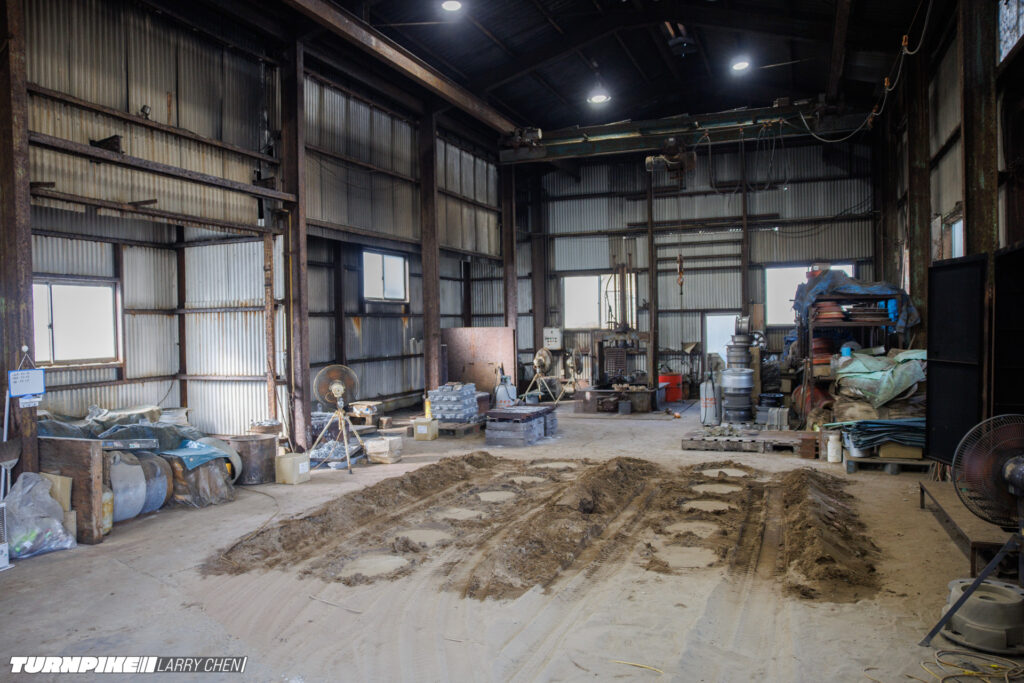
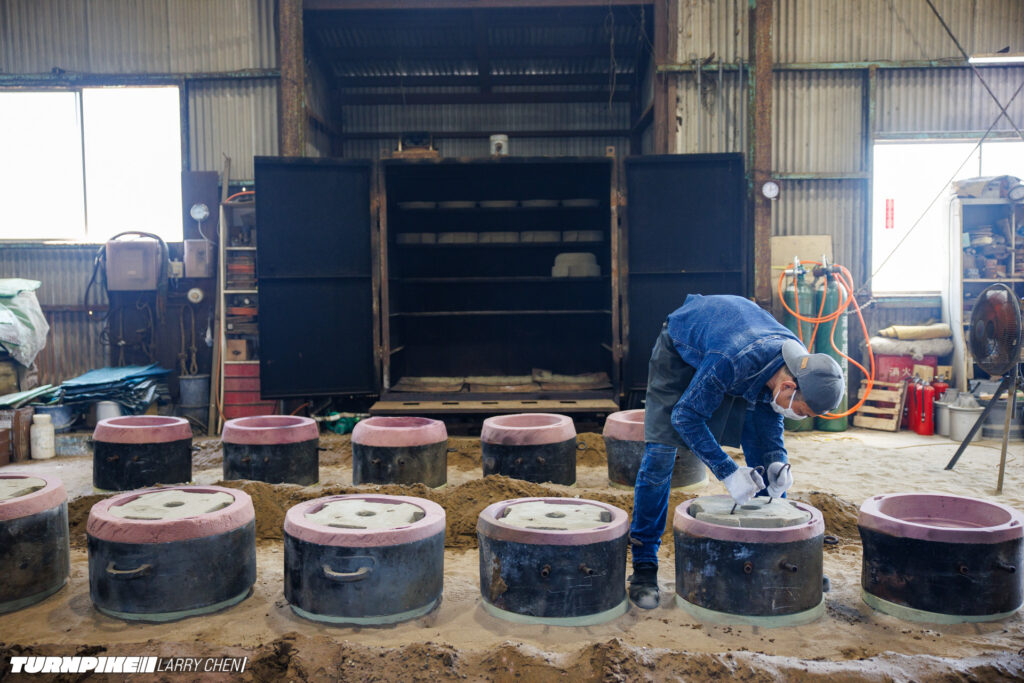
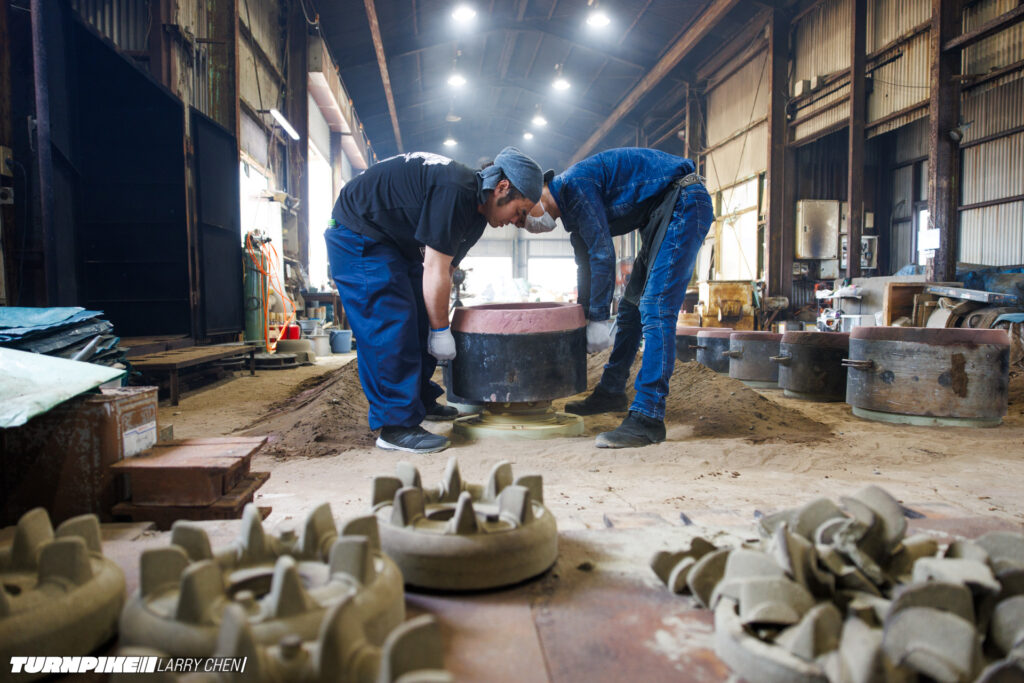
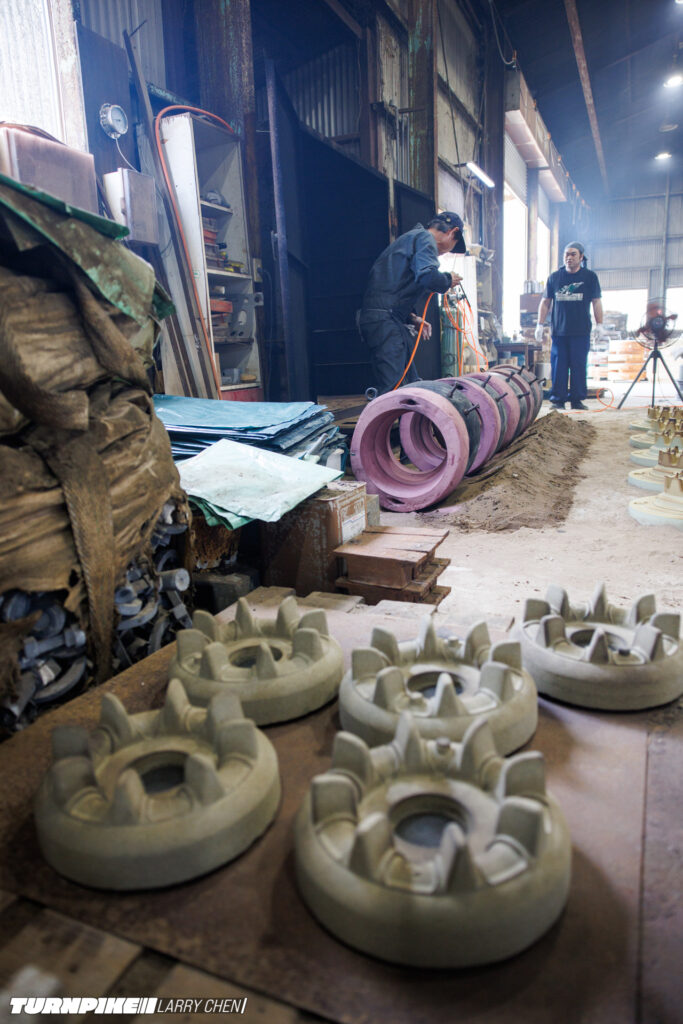
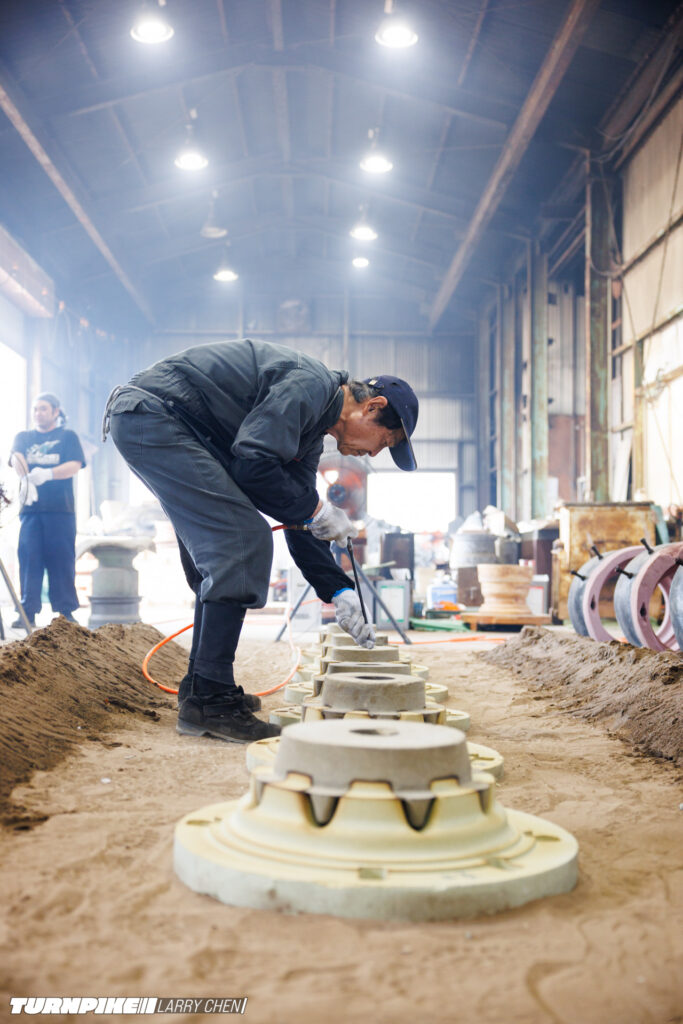
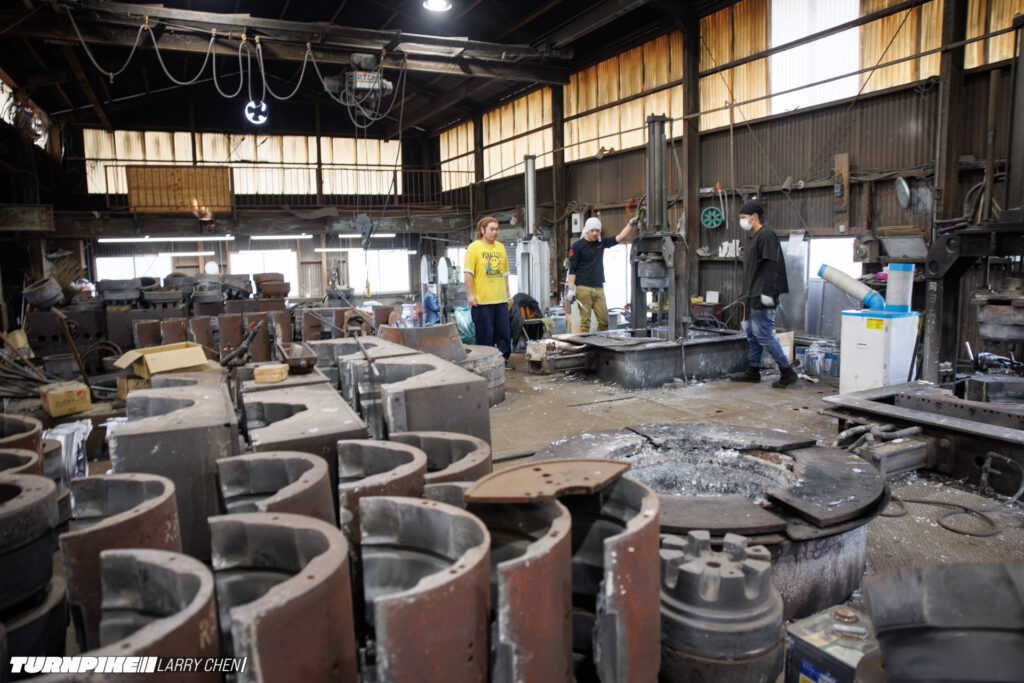
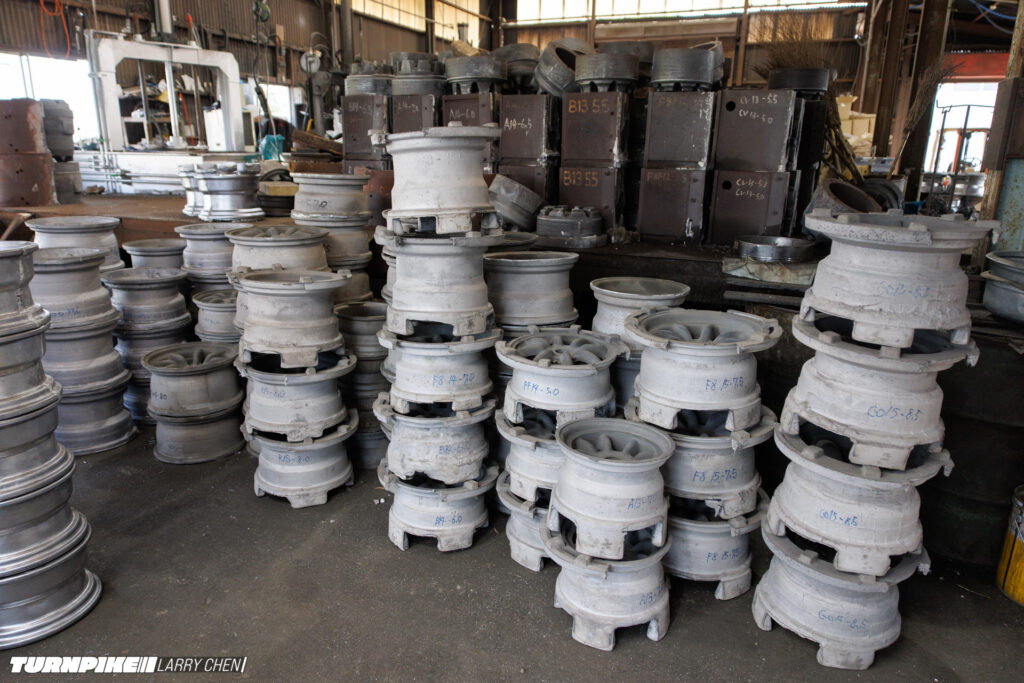
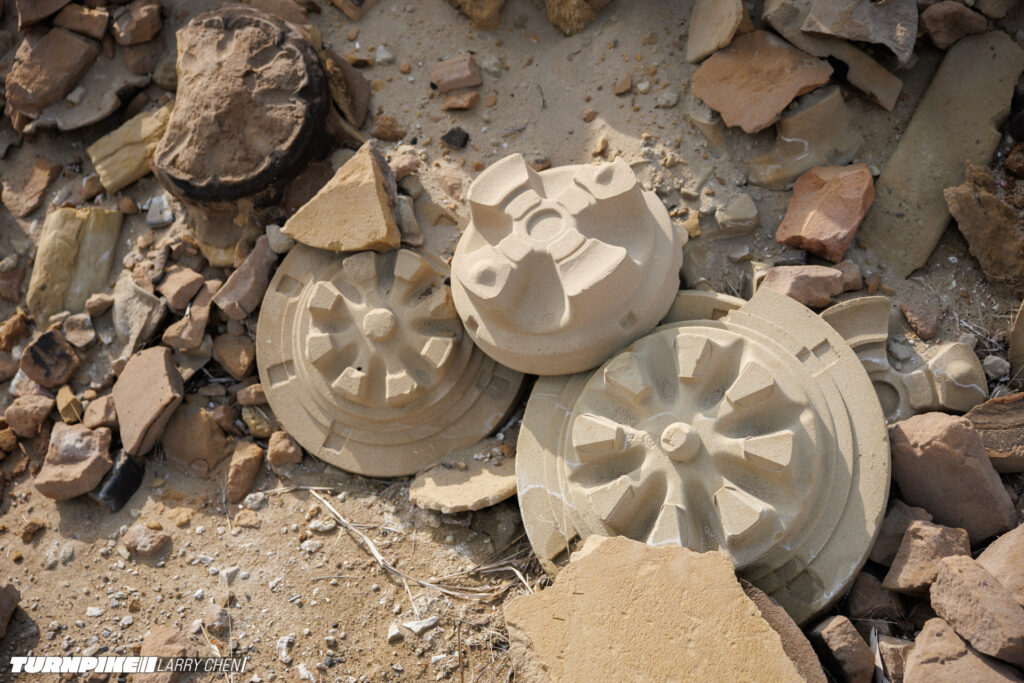
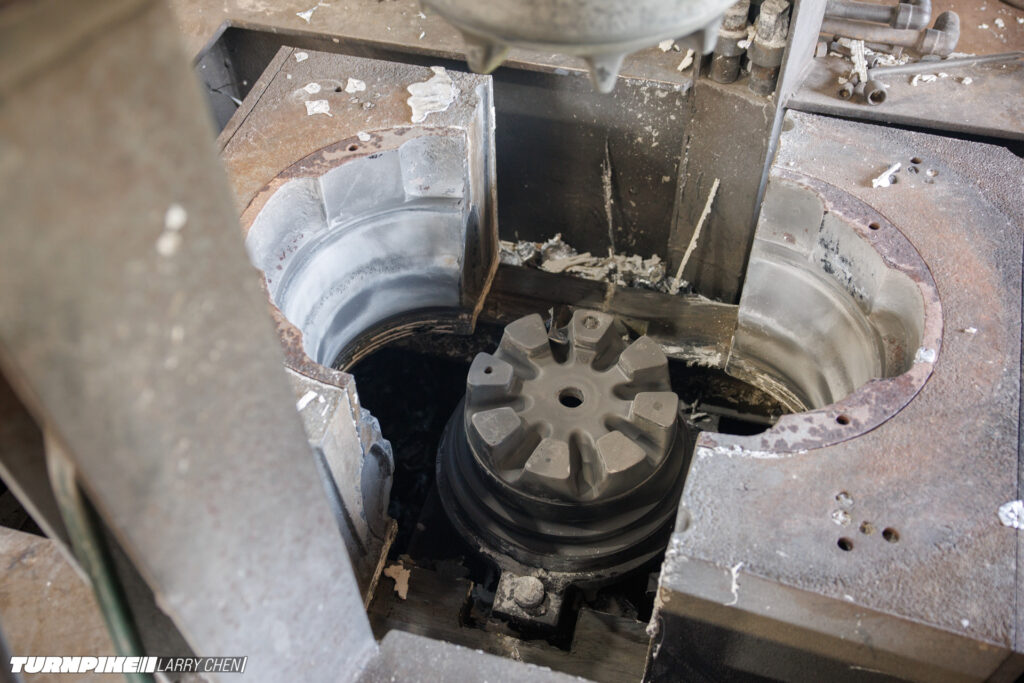
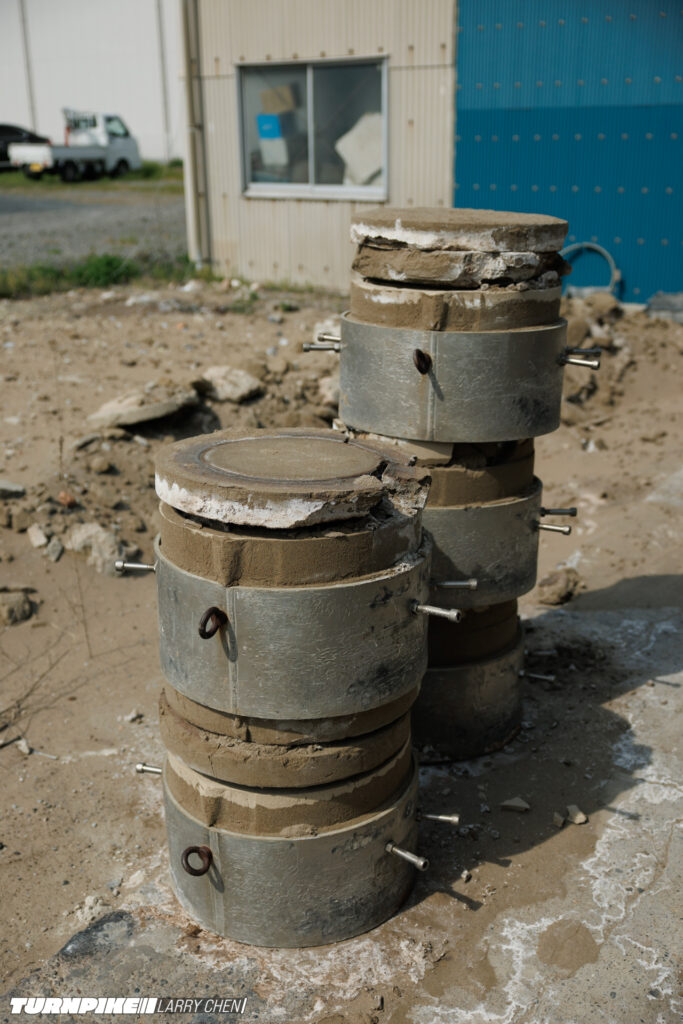
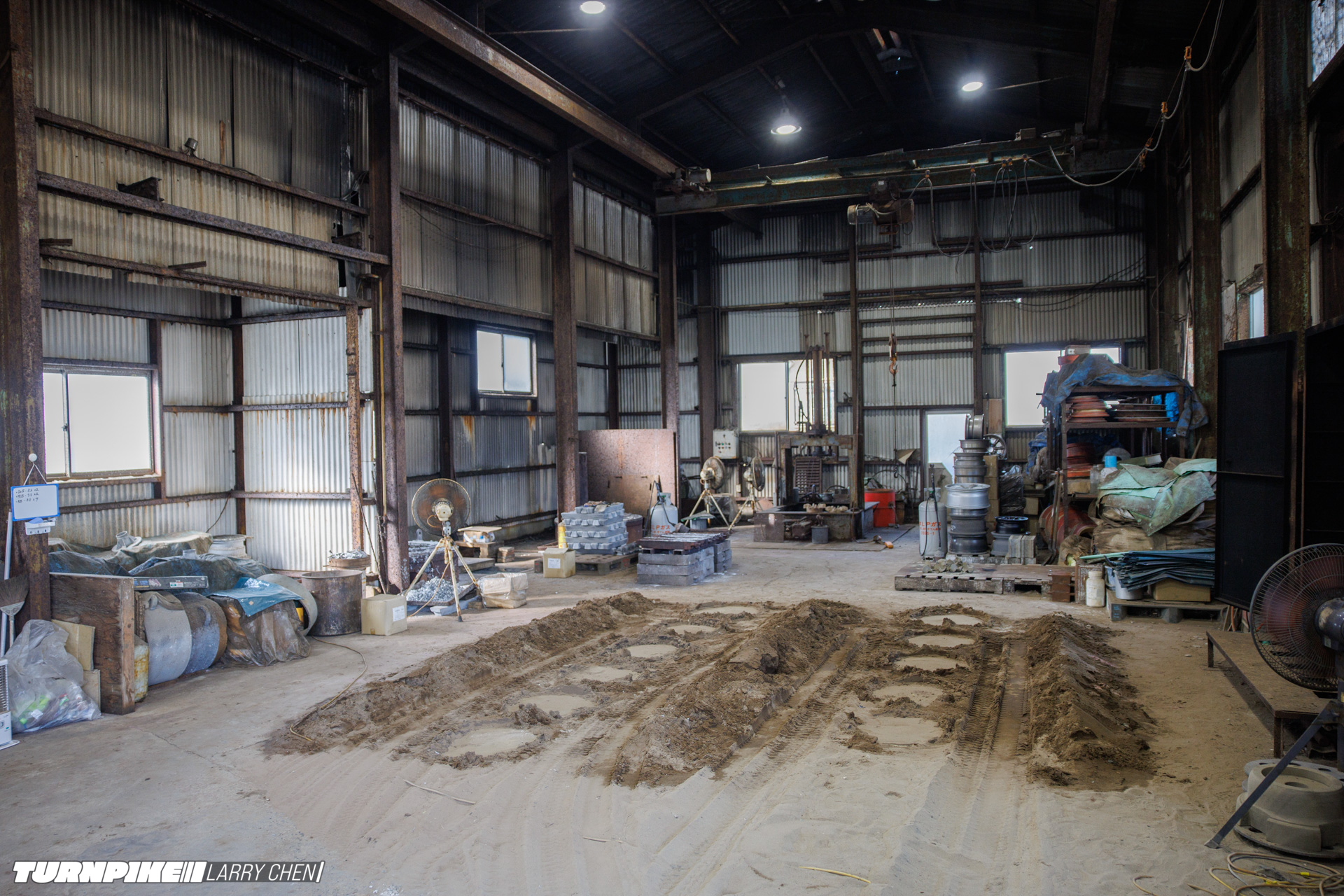
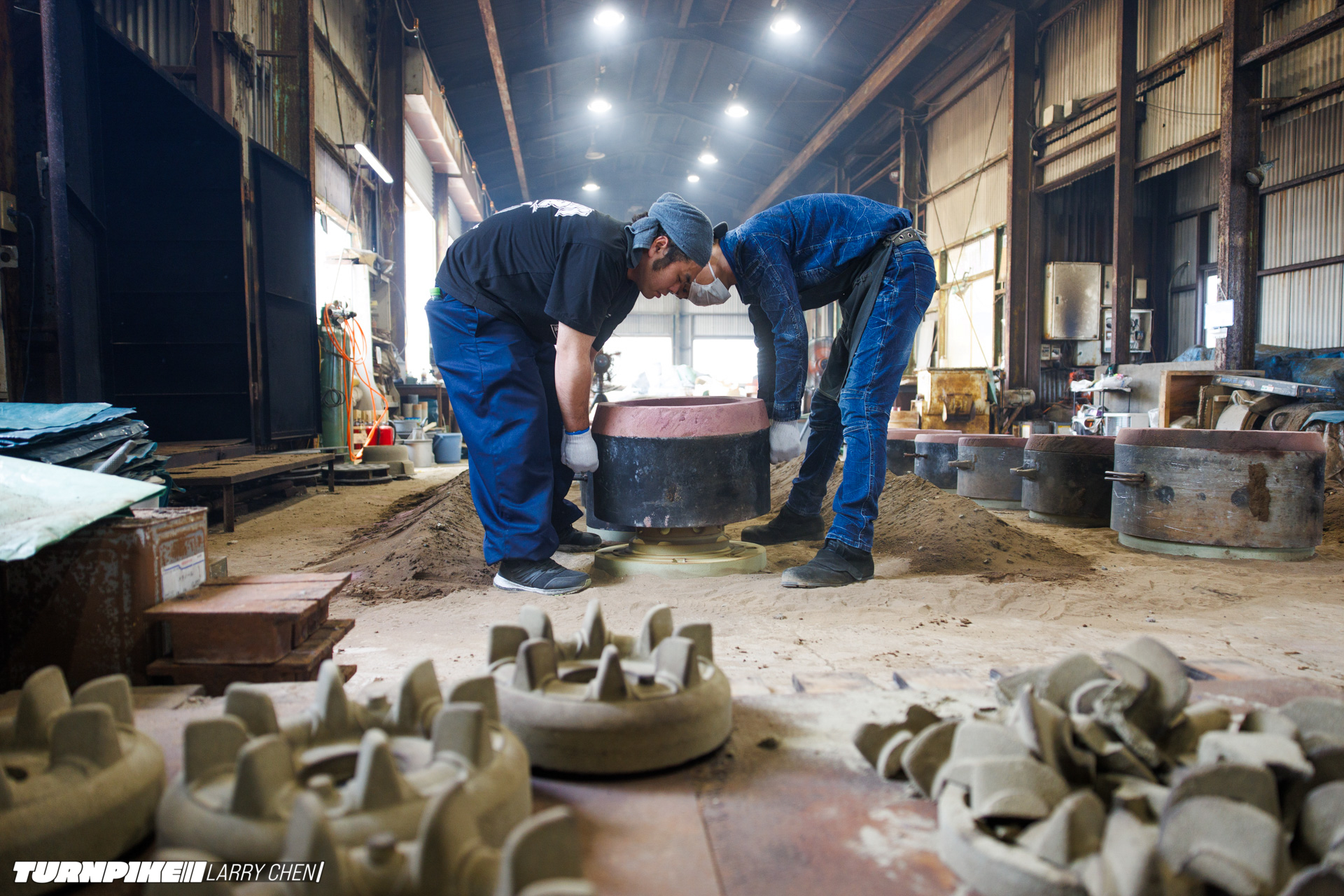
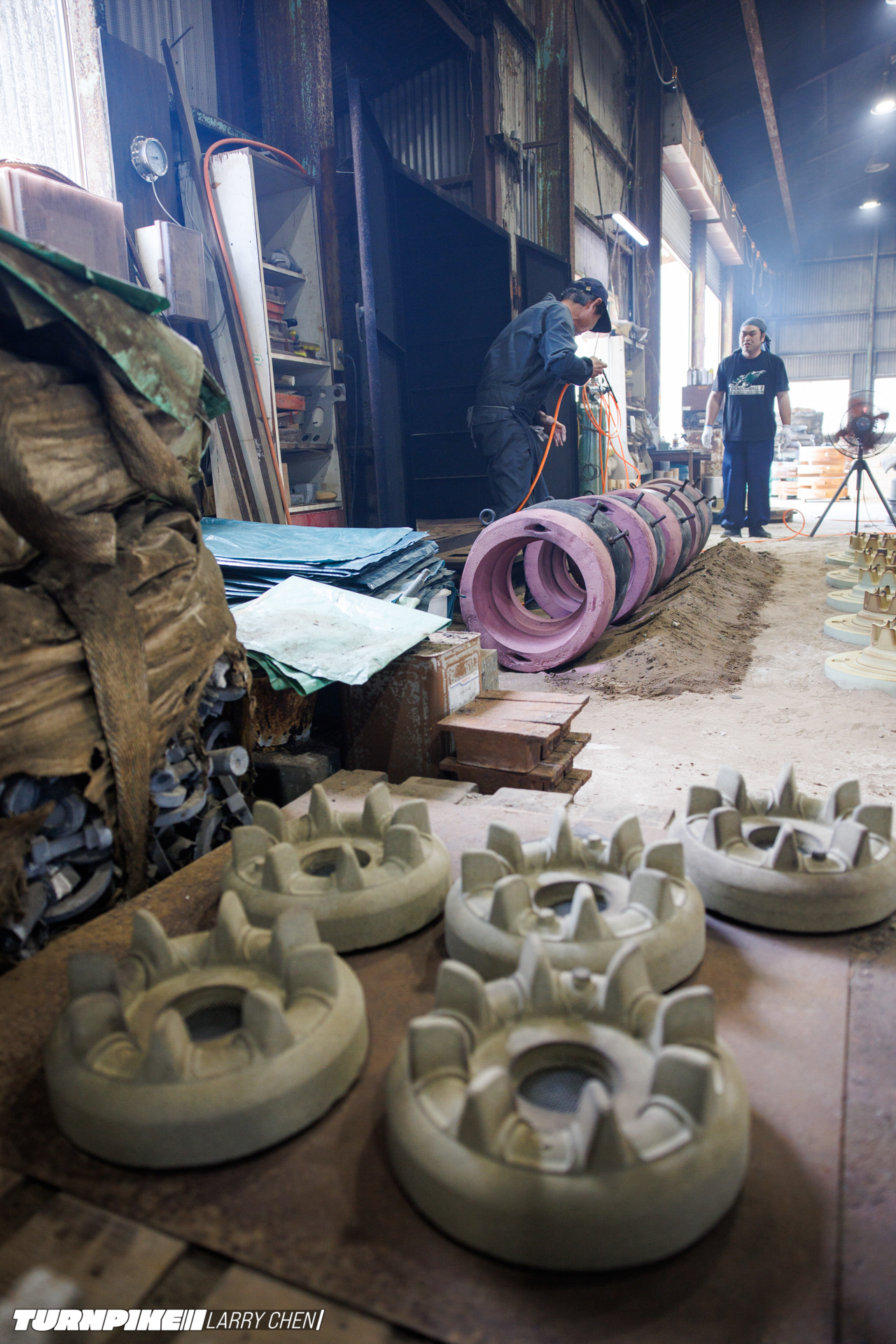
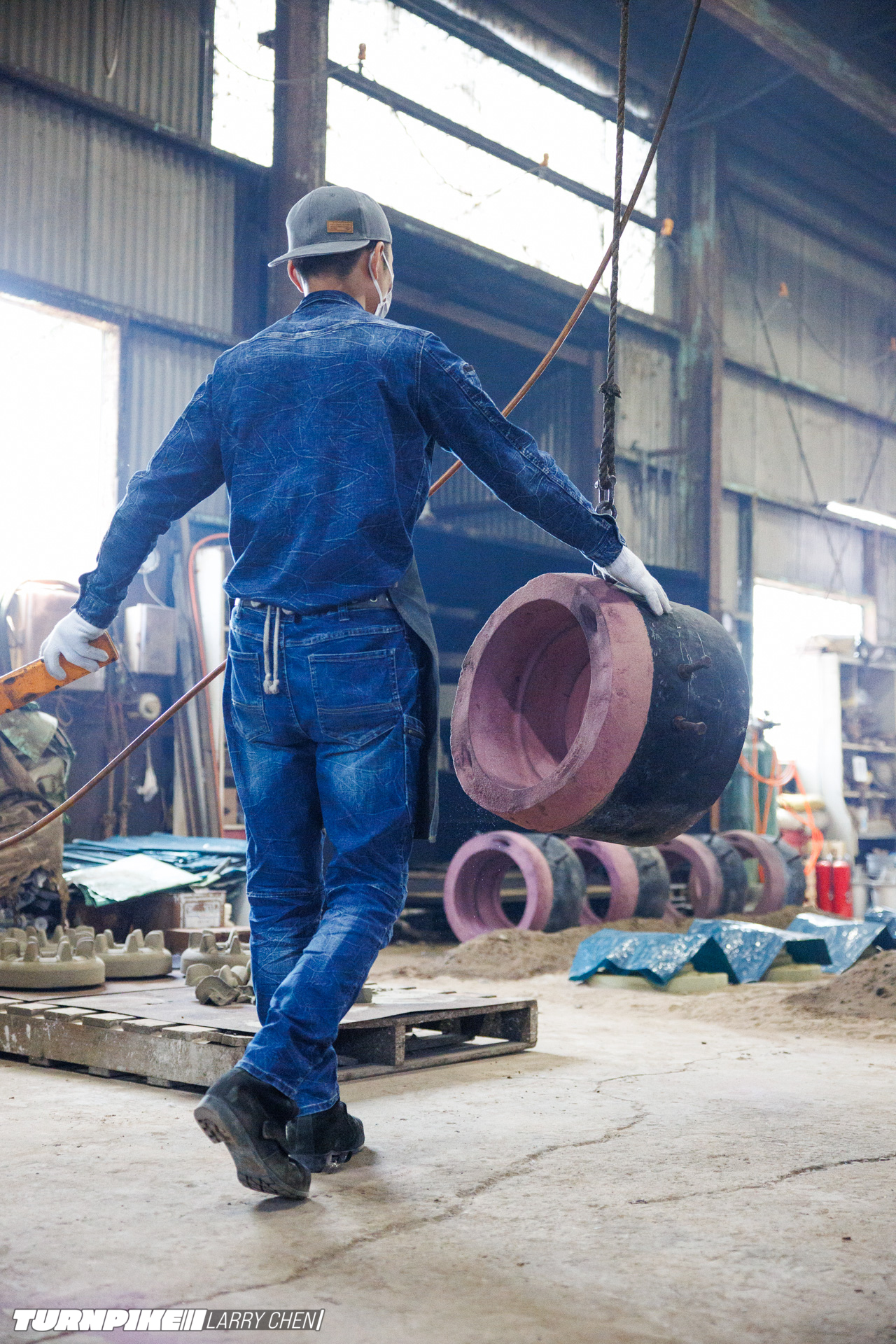
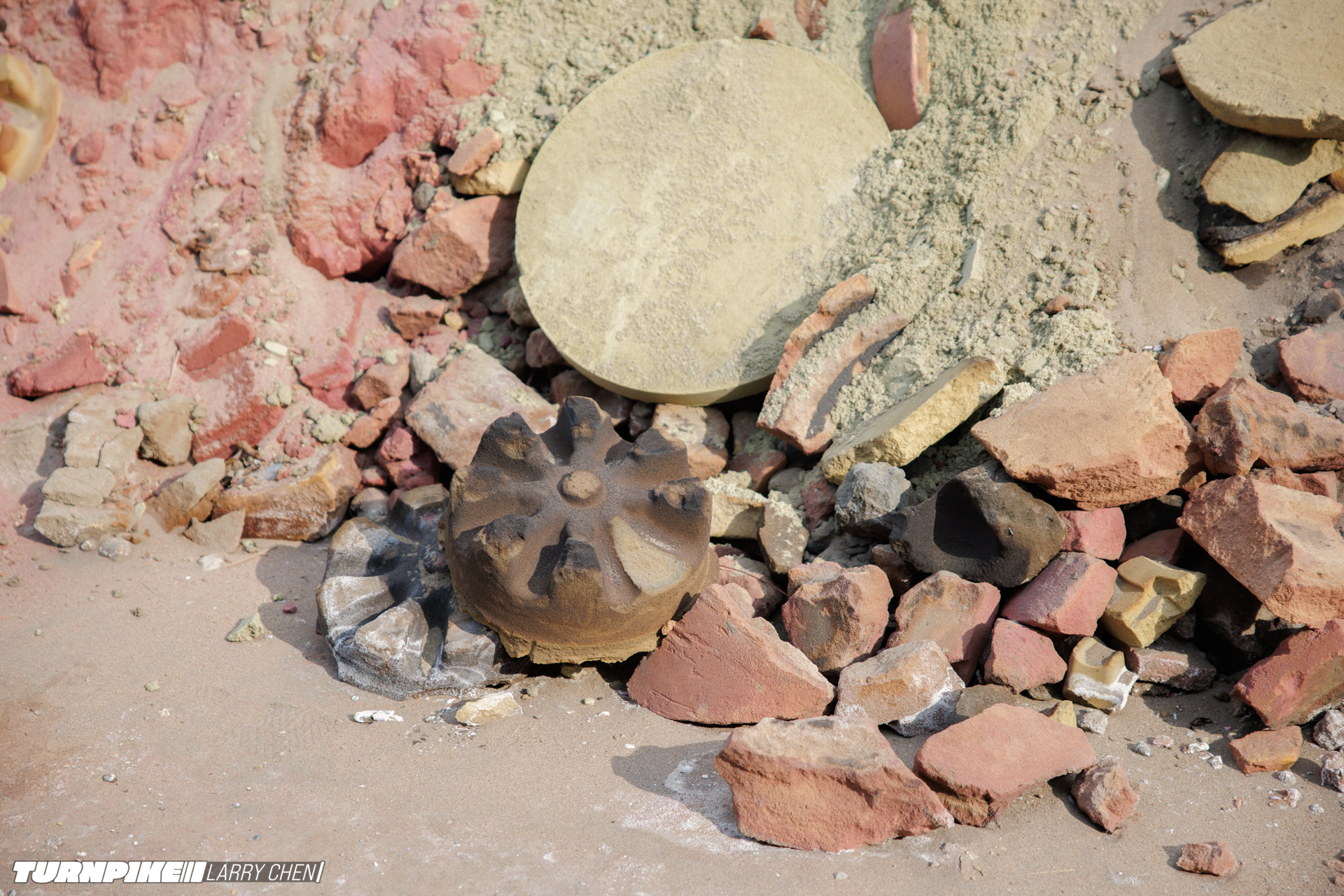
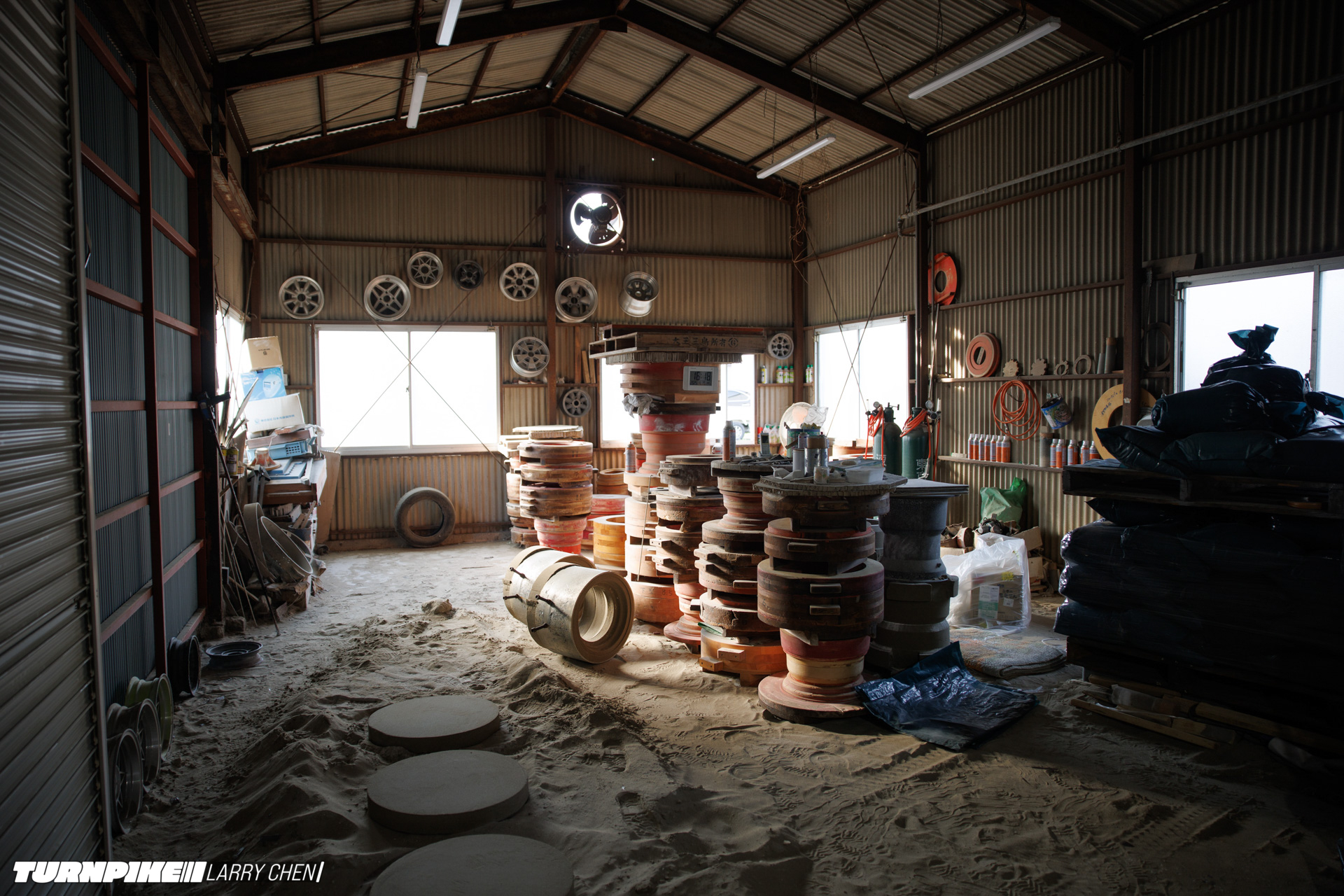
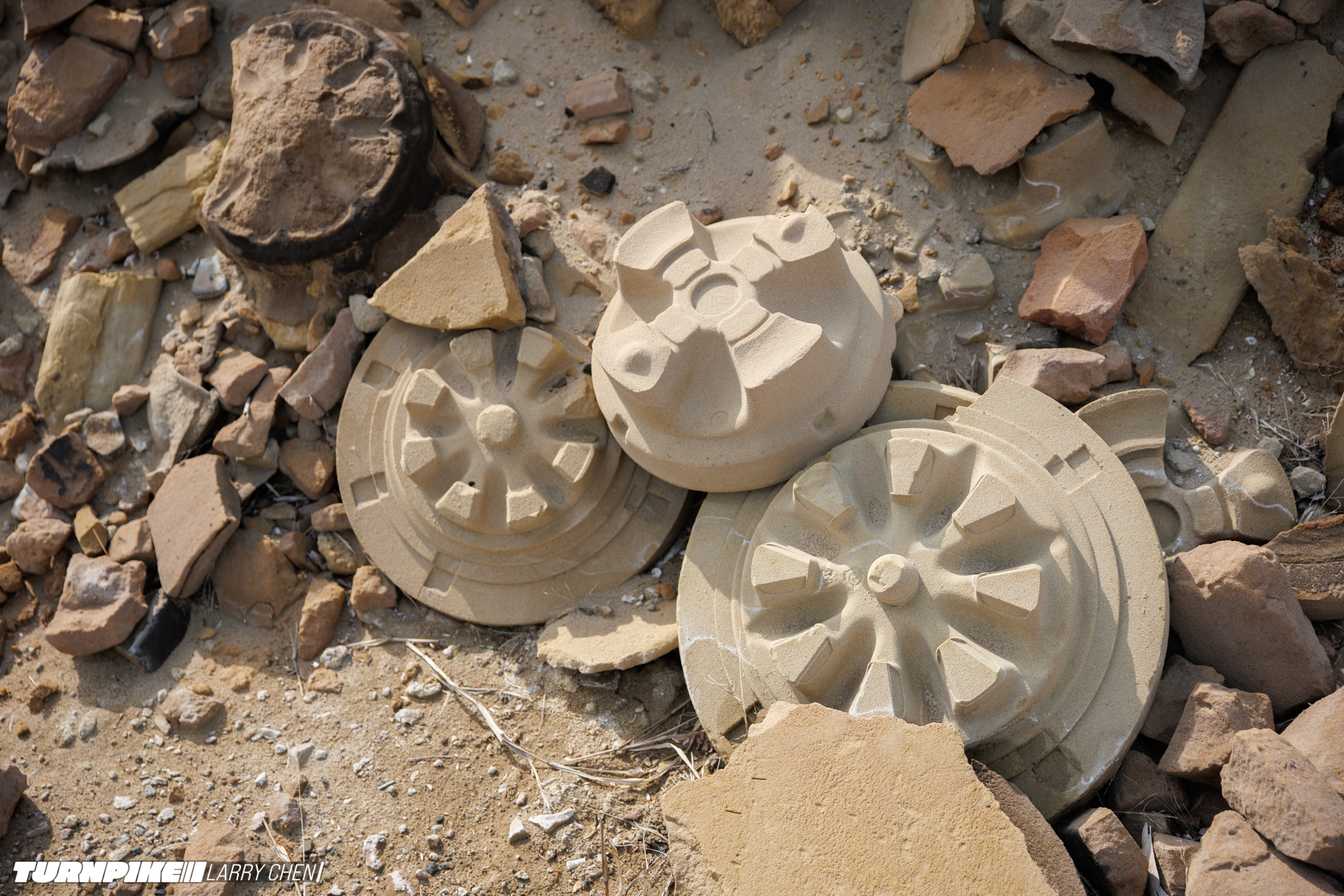
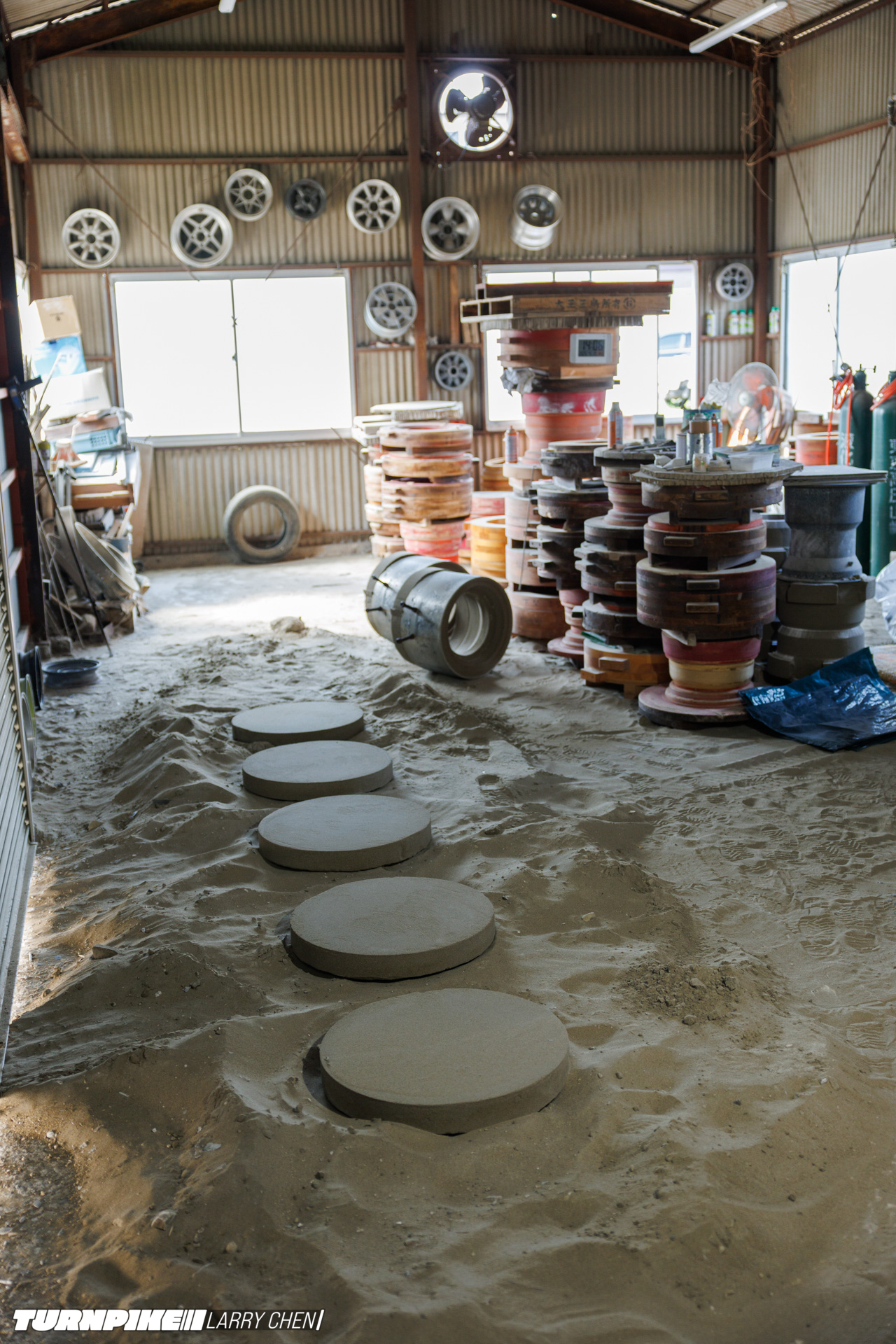
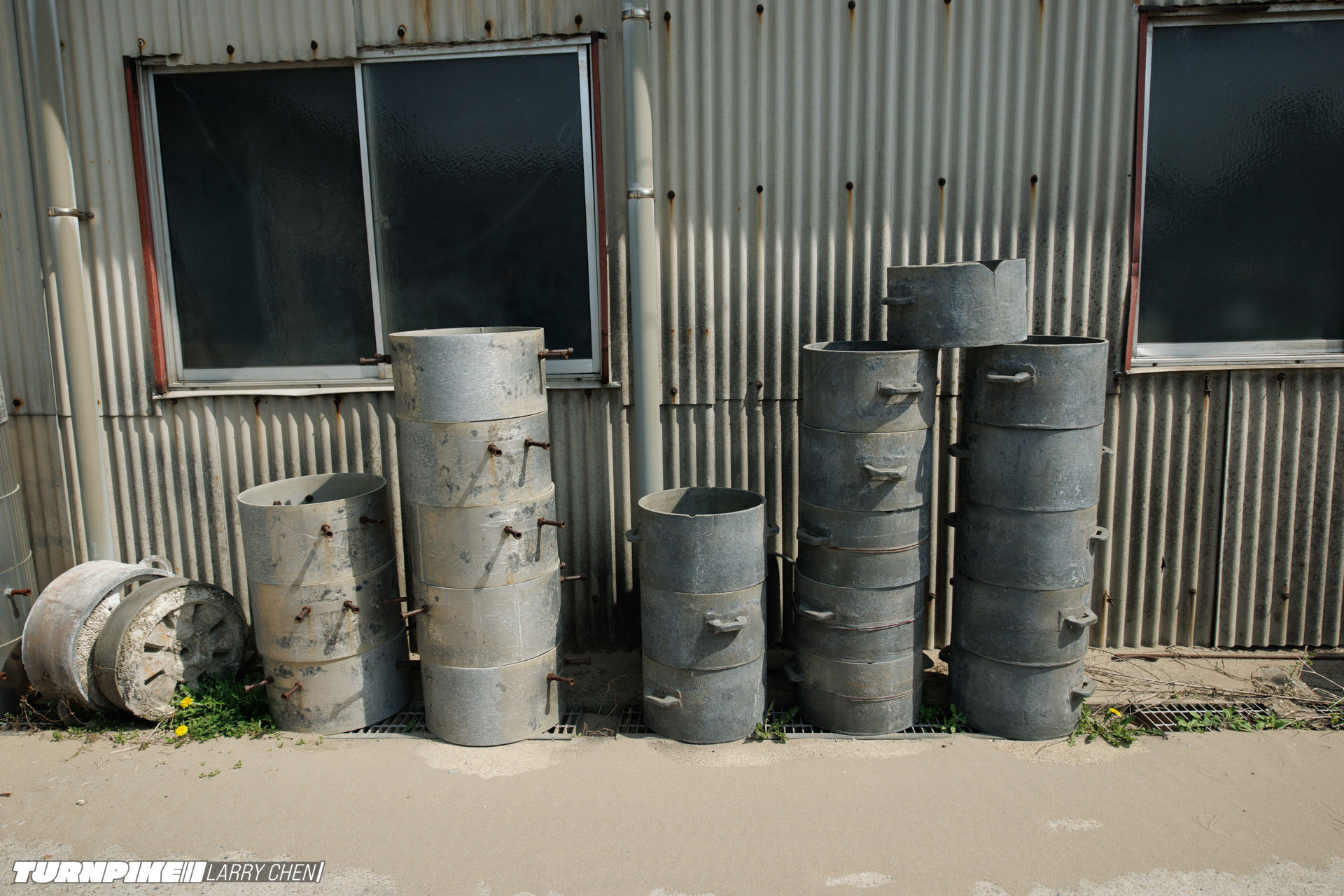
In the next building, a mountain of discarded sand stretched across the floor – the remains of thousands of molds created over the past few weeks. Each small mound represented a single wheel. One wheel, one mold, one week of work.
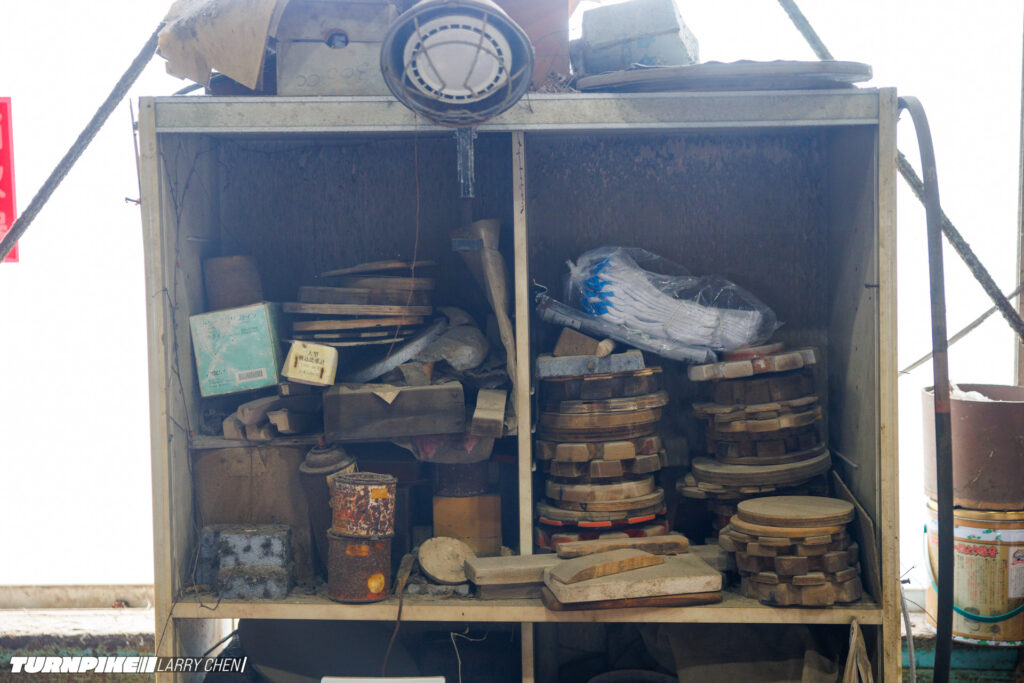
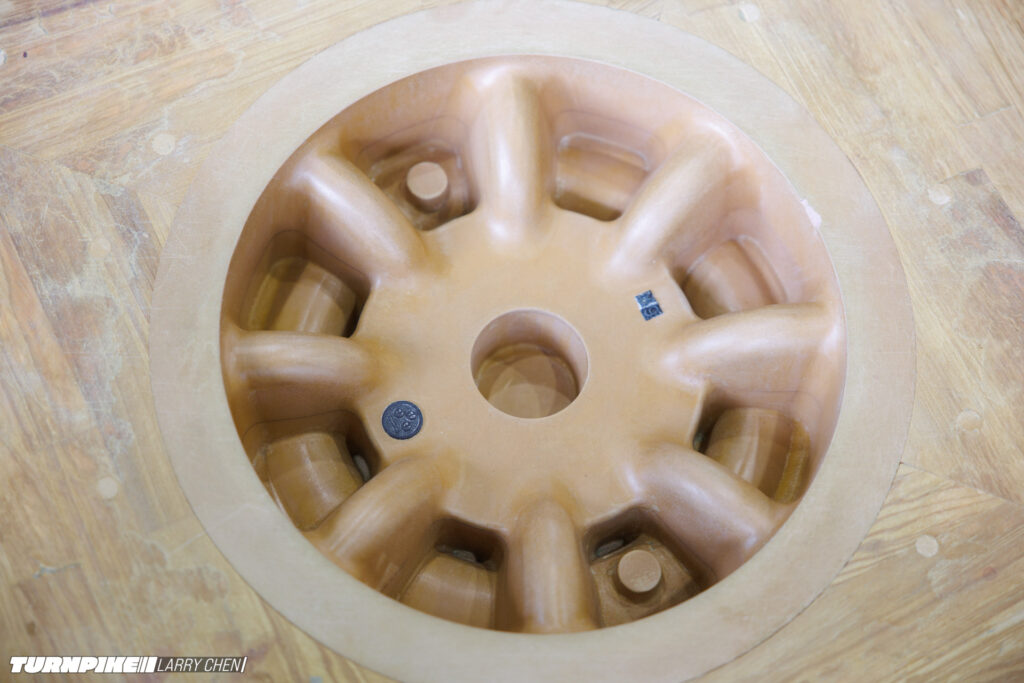
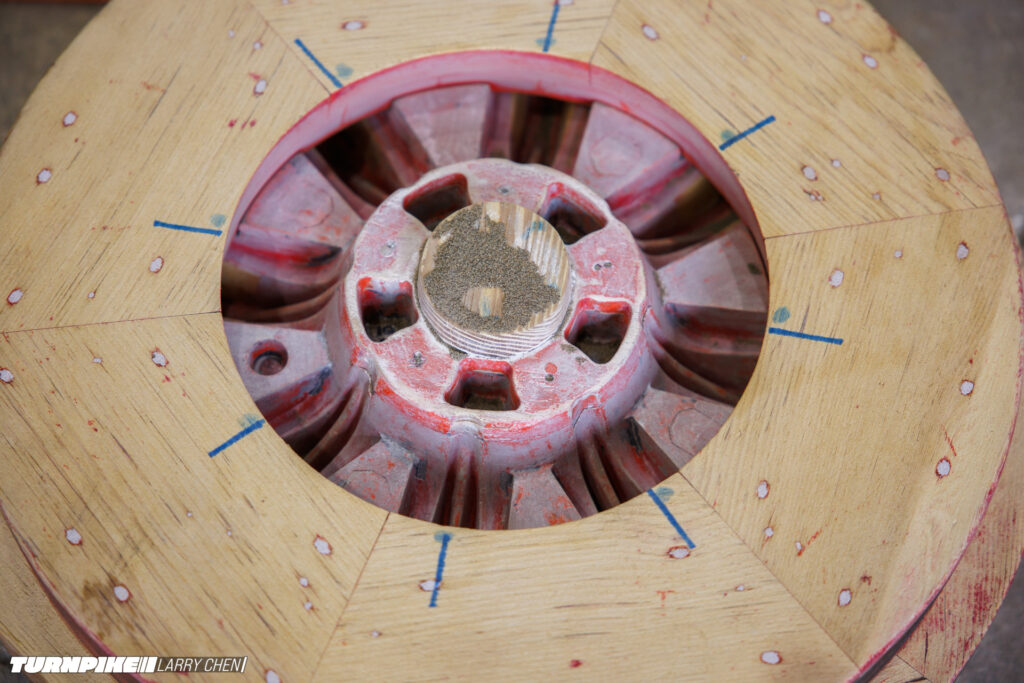
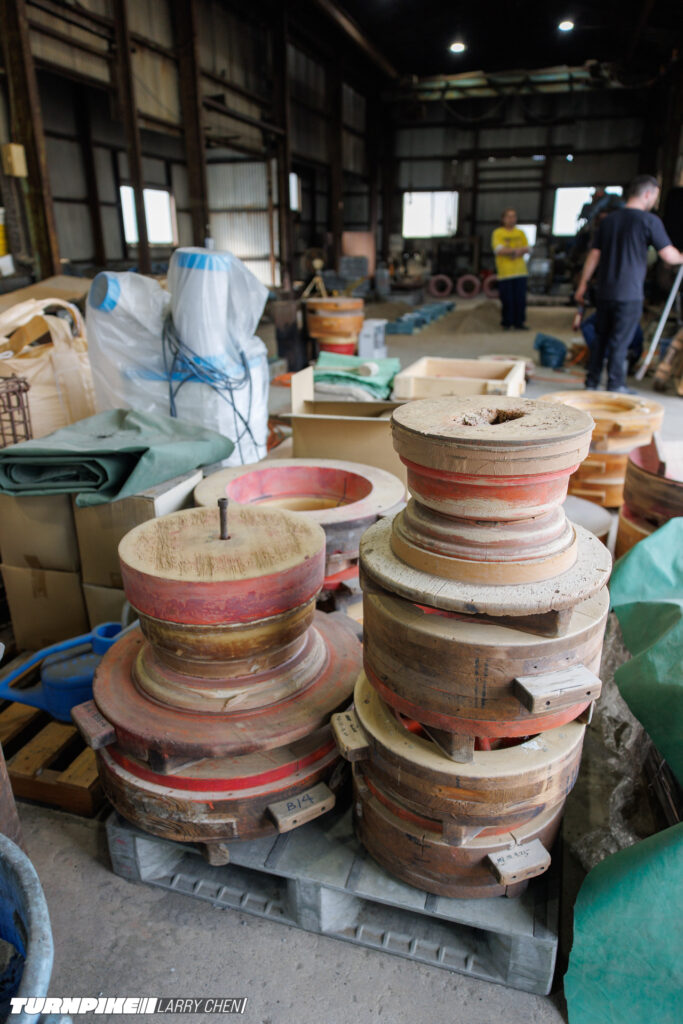
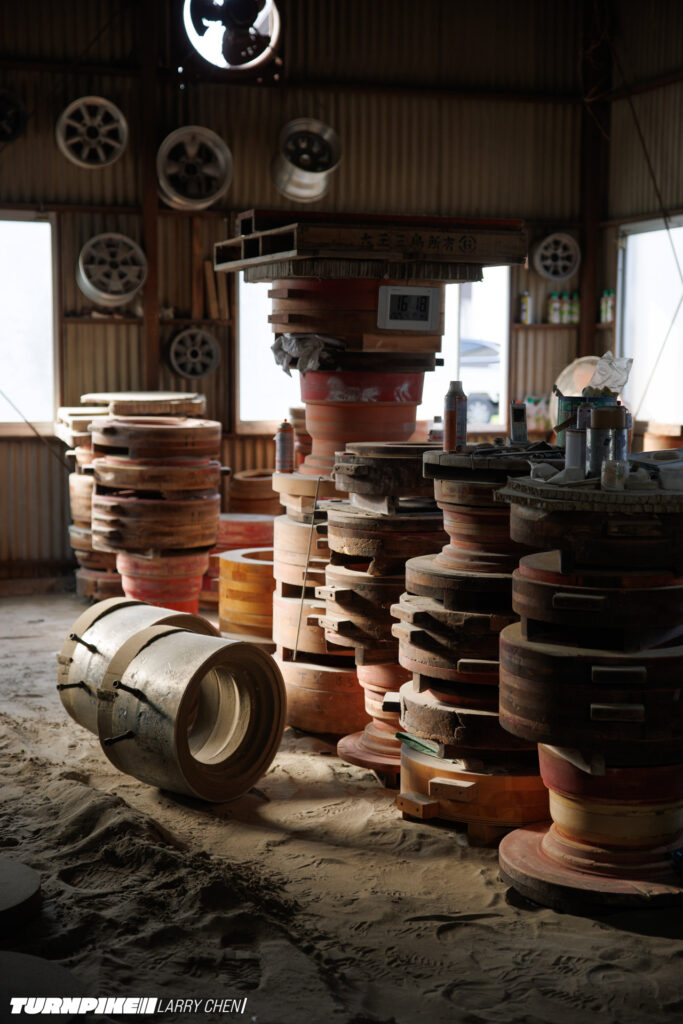
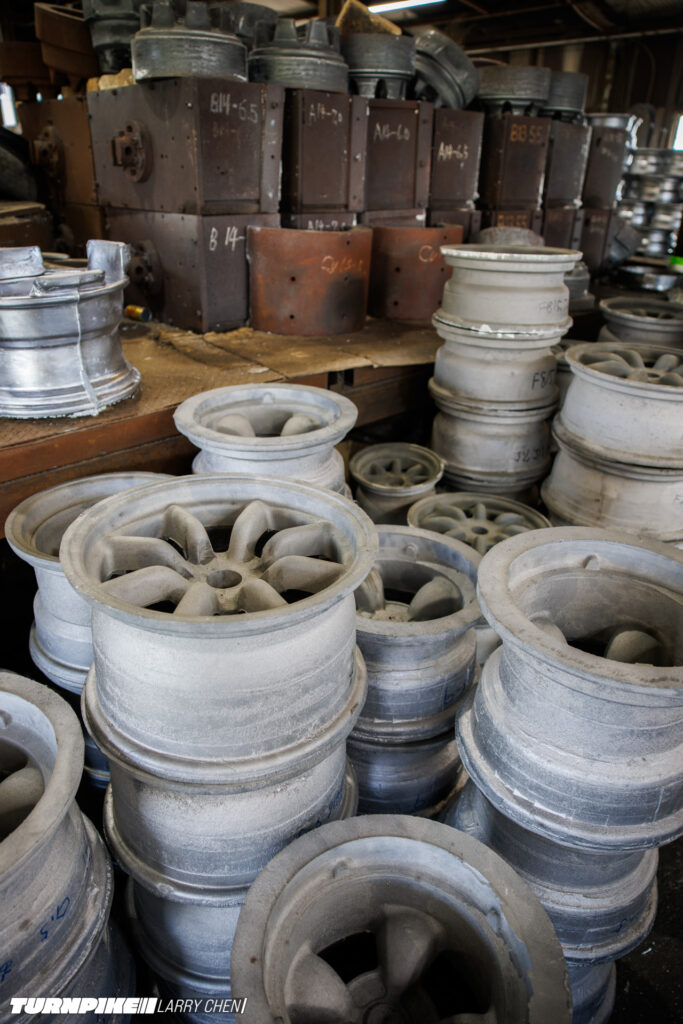
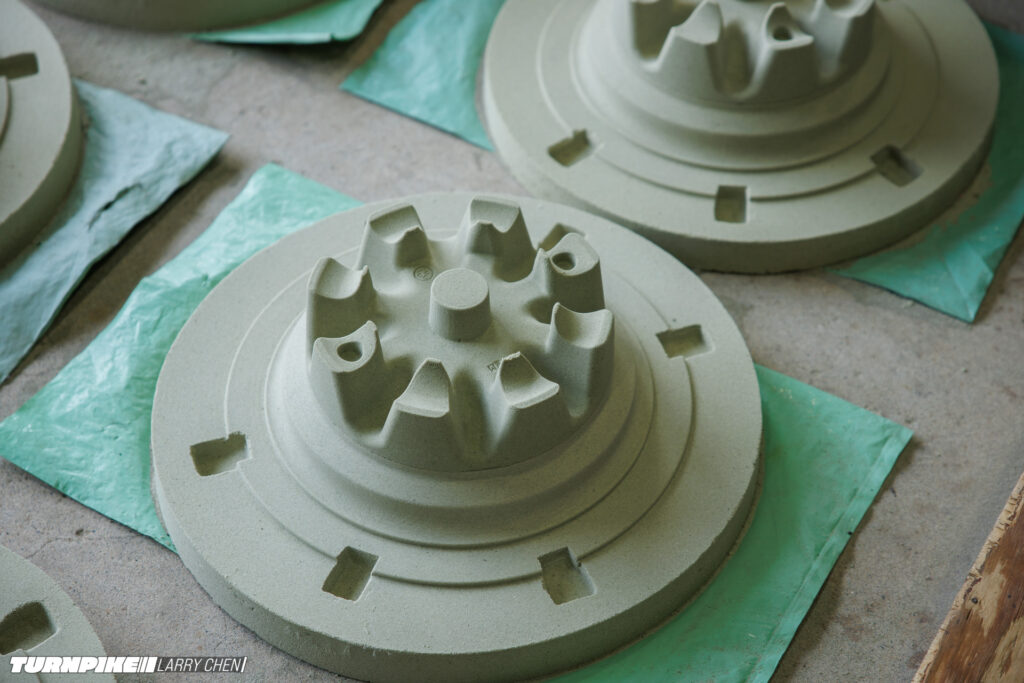
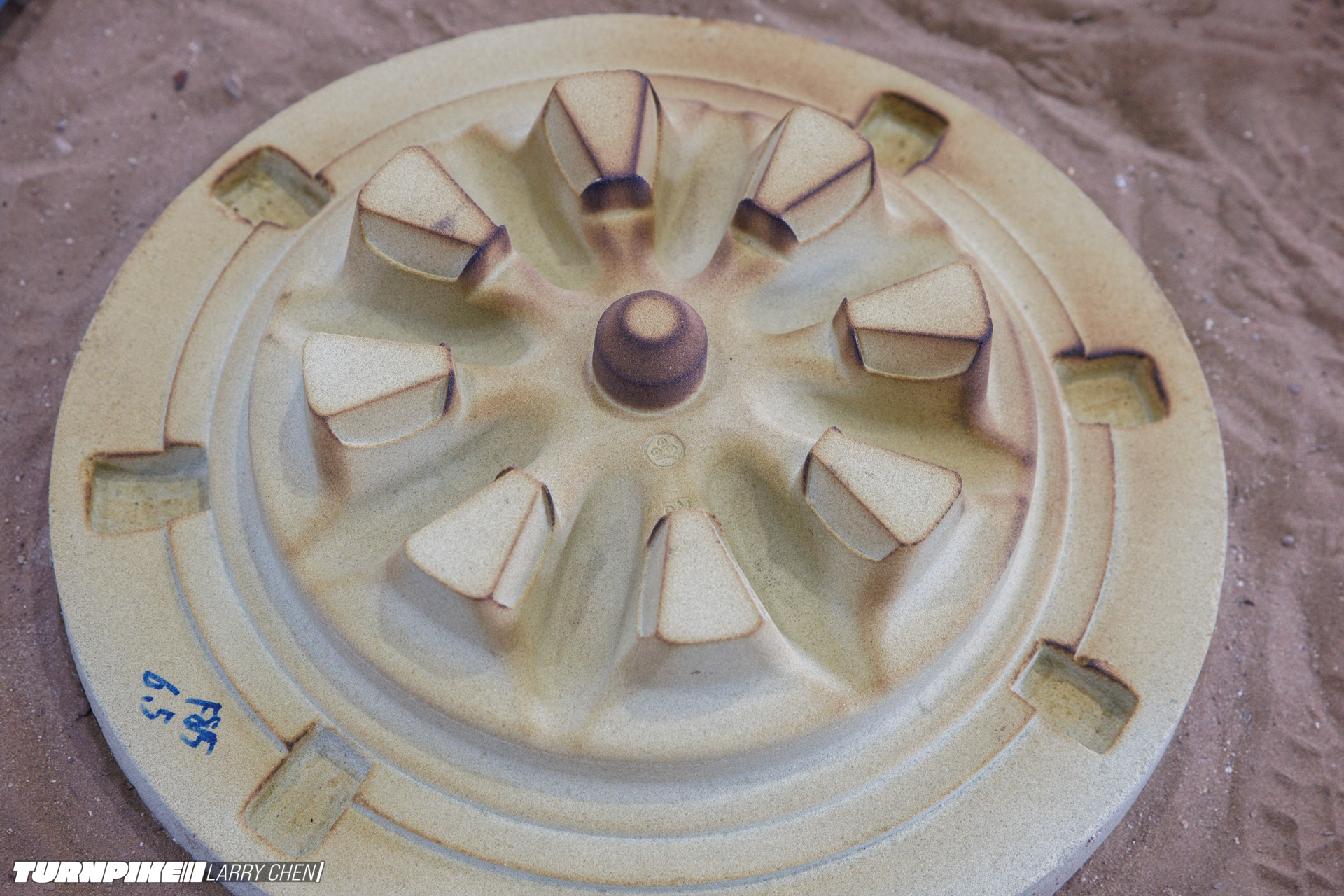
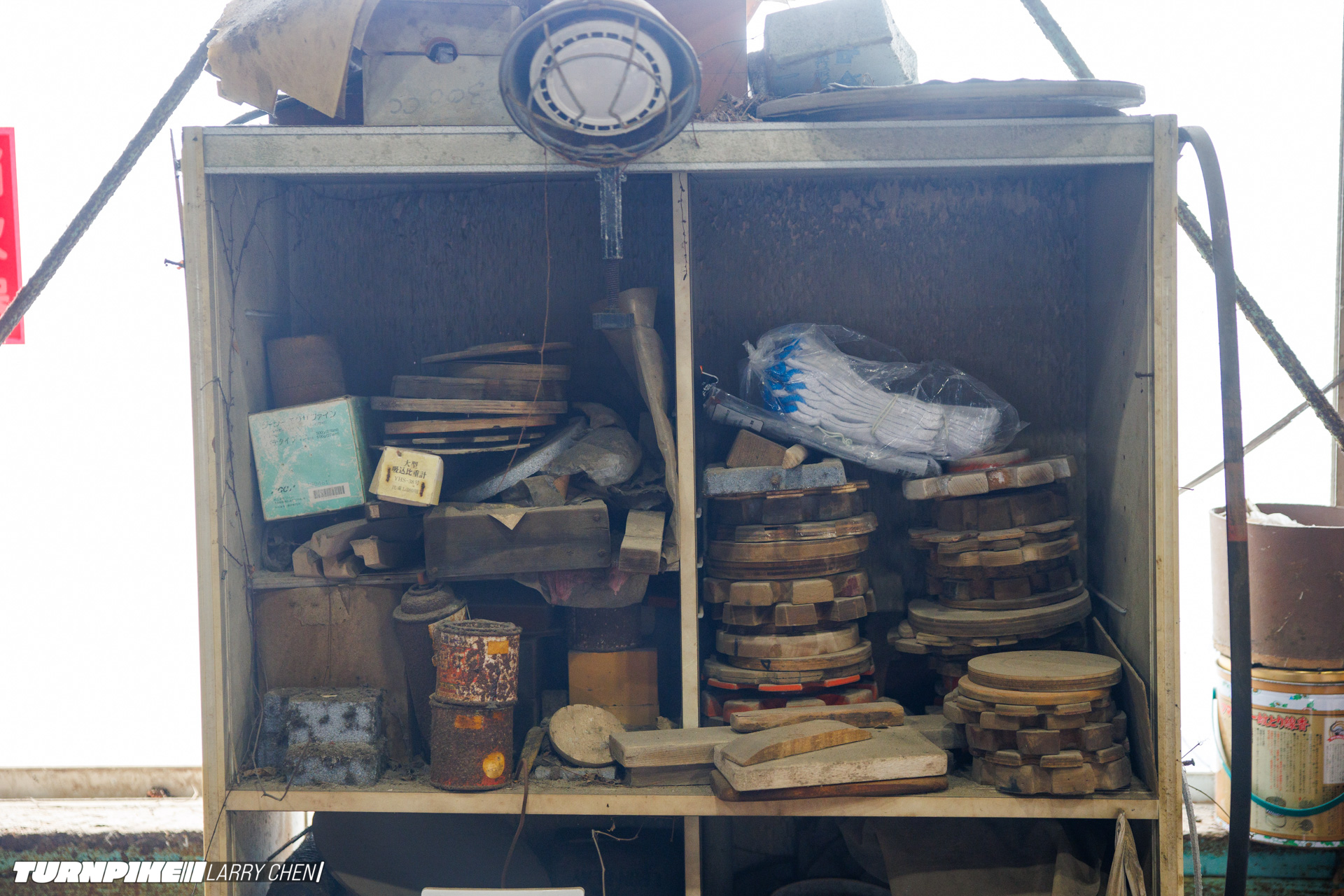
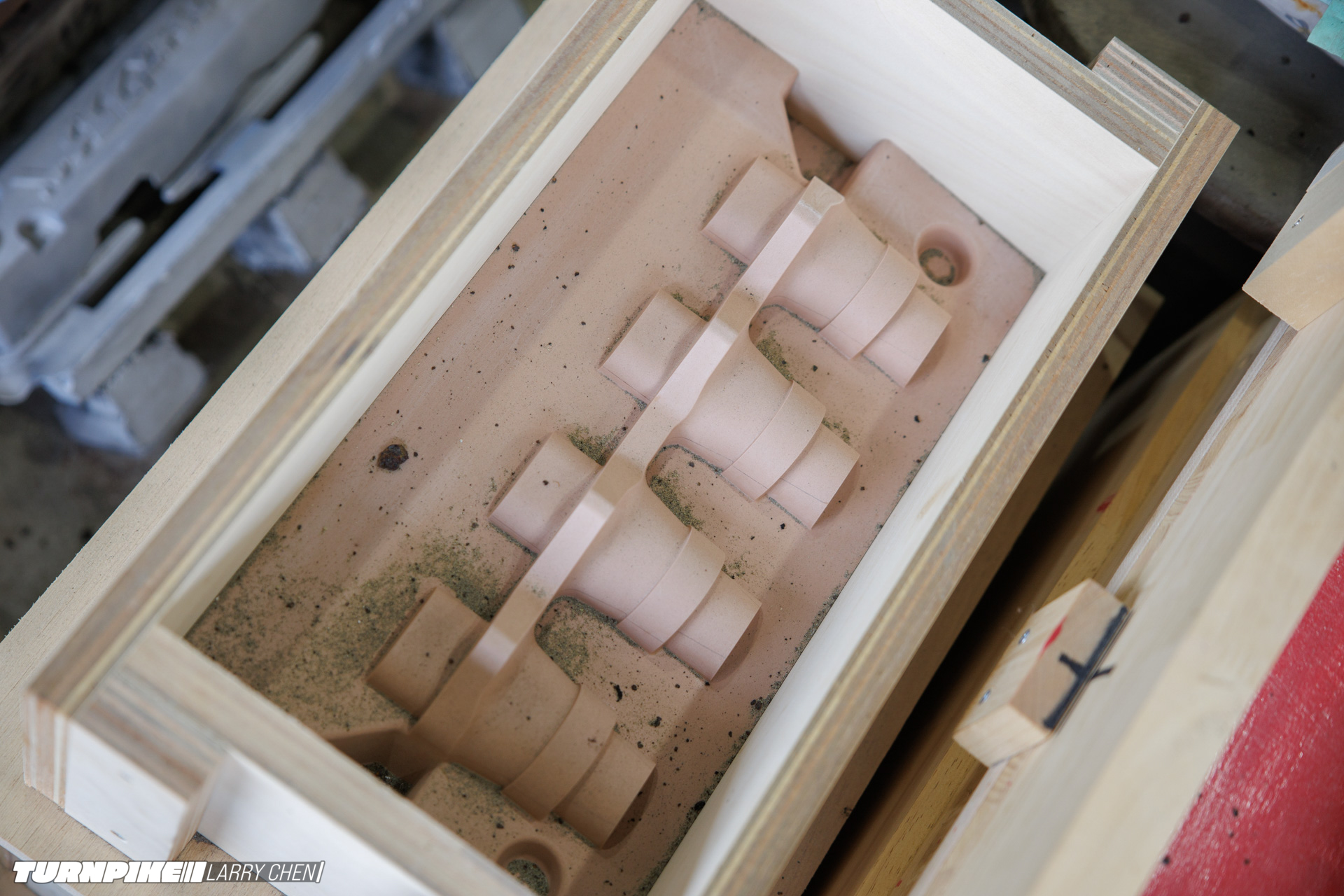
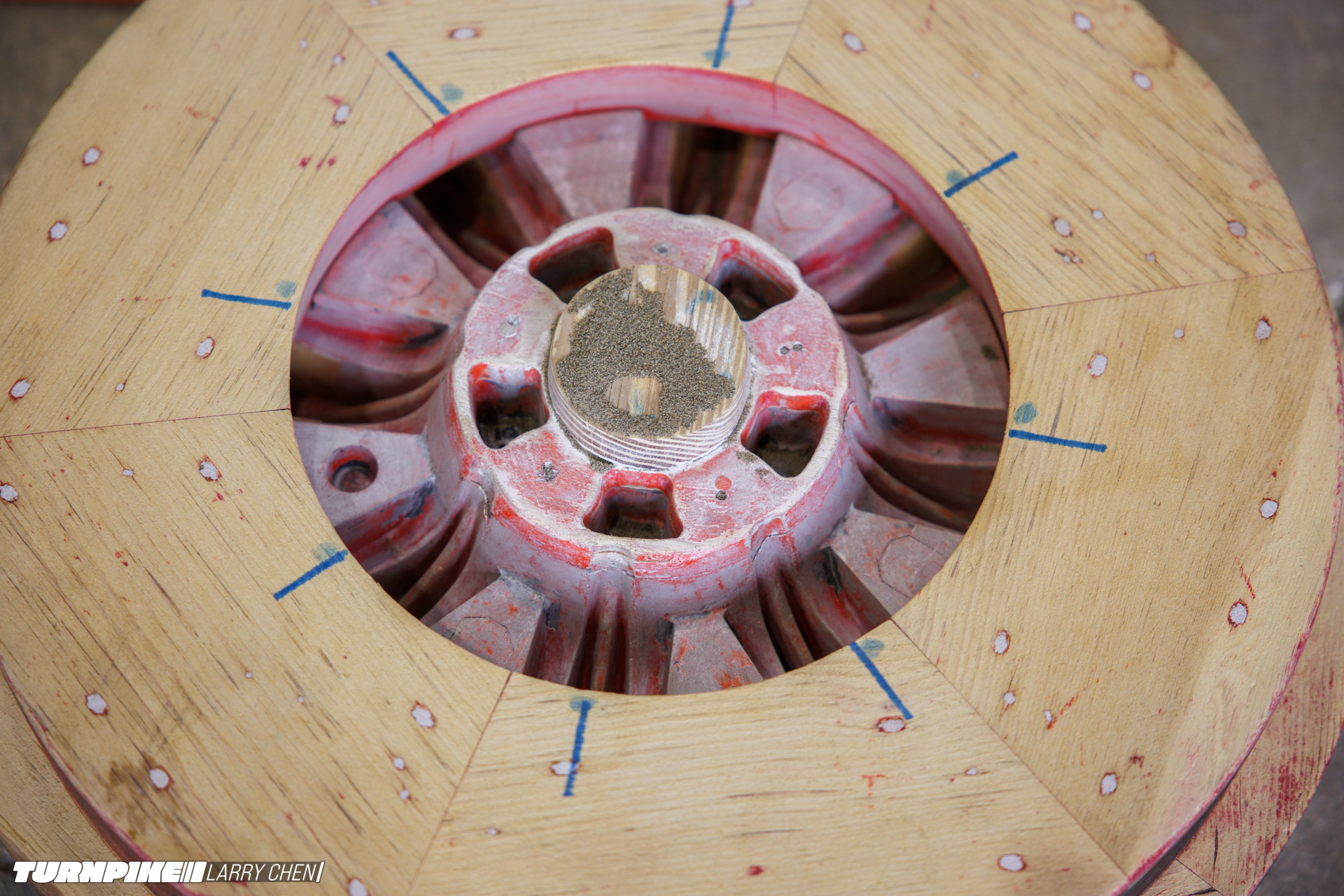
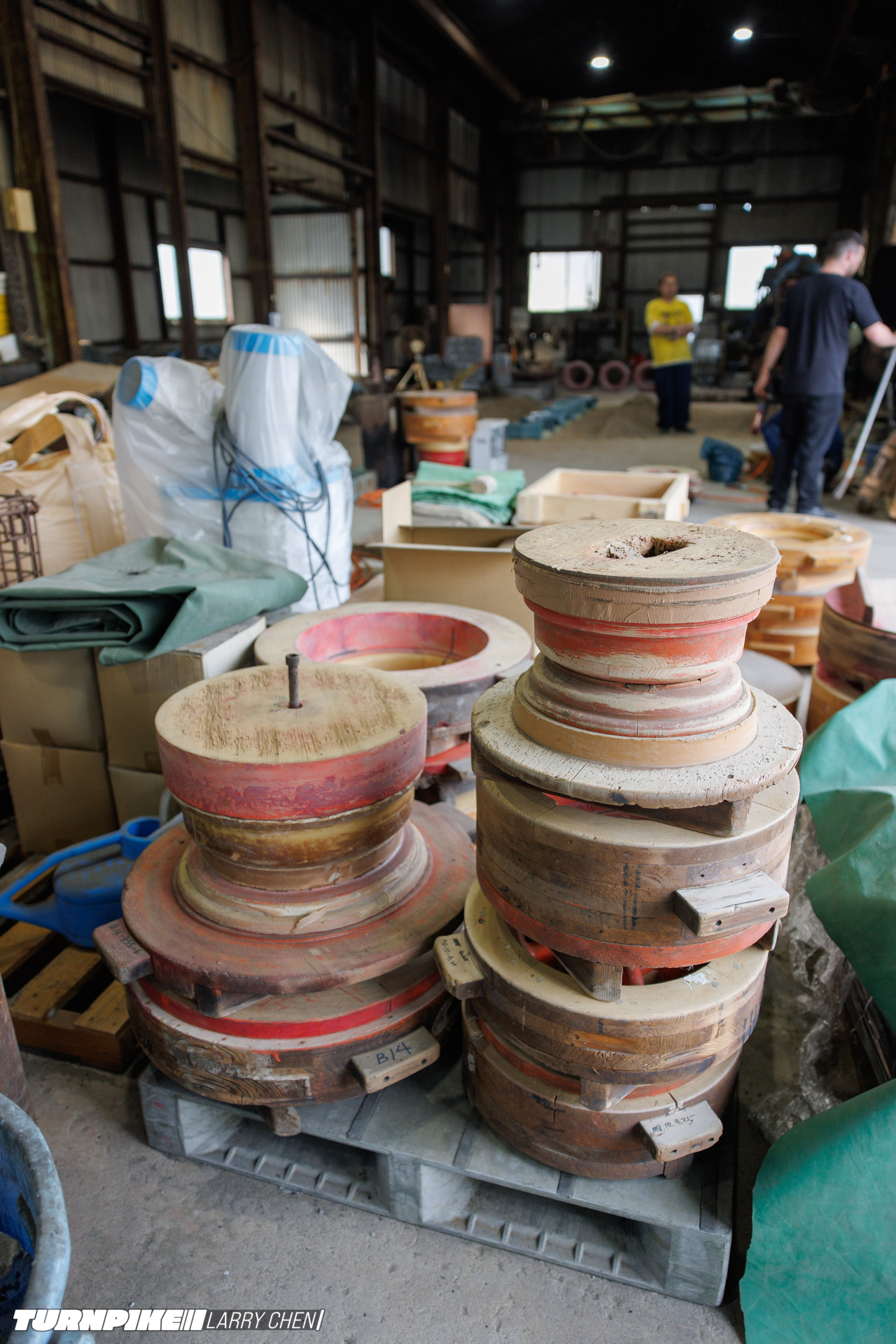
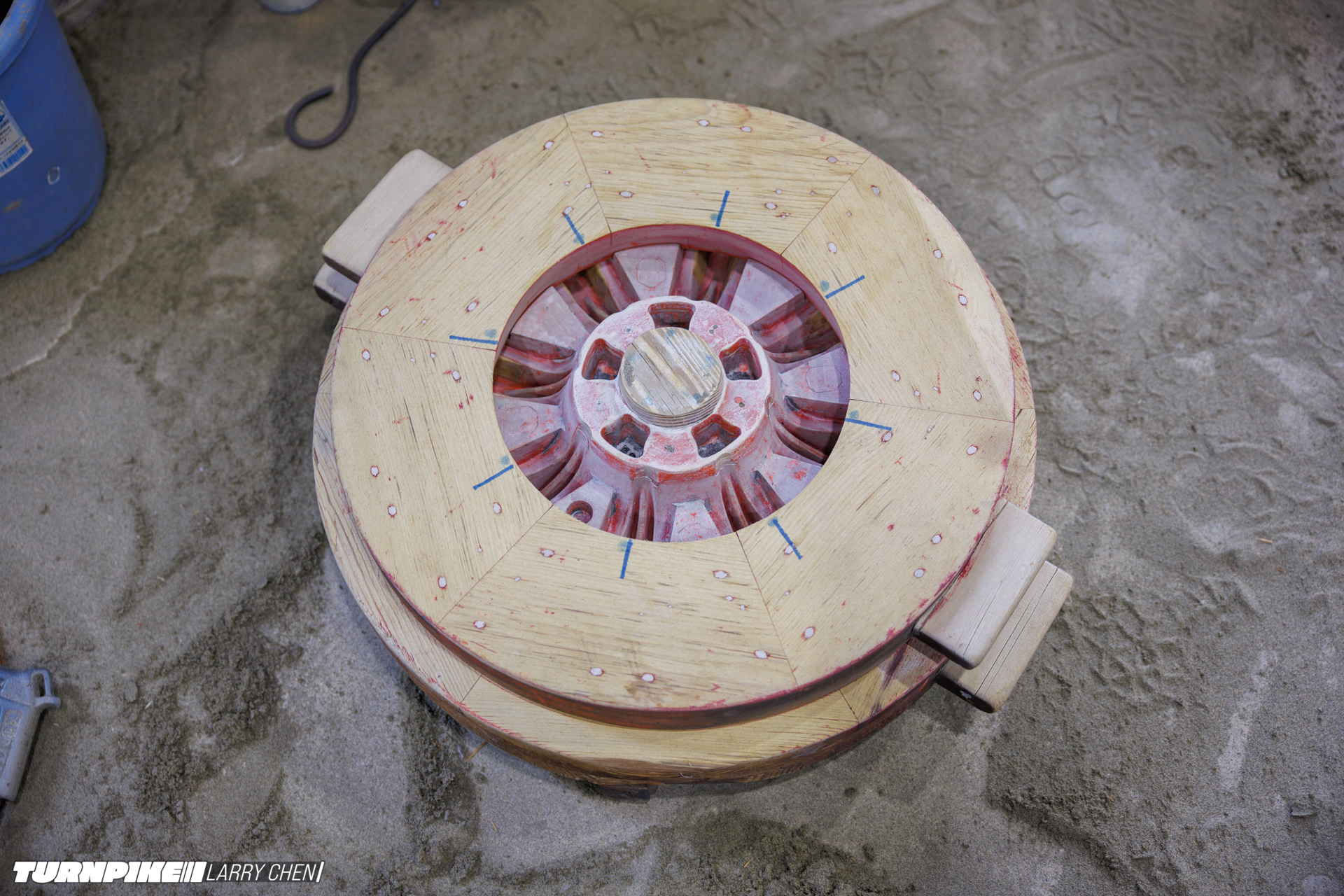
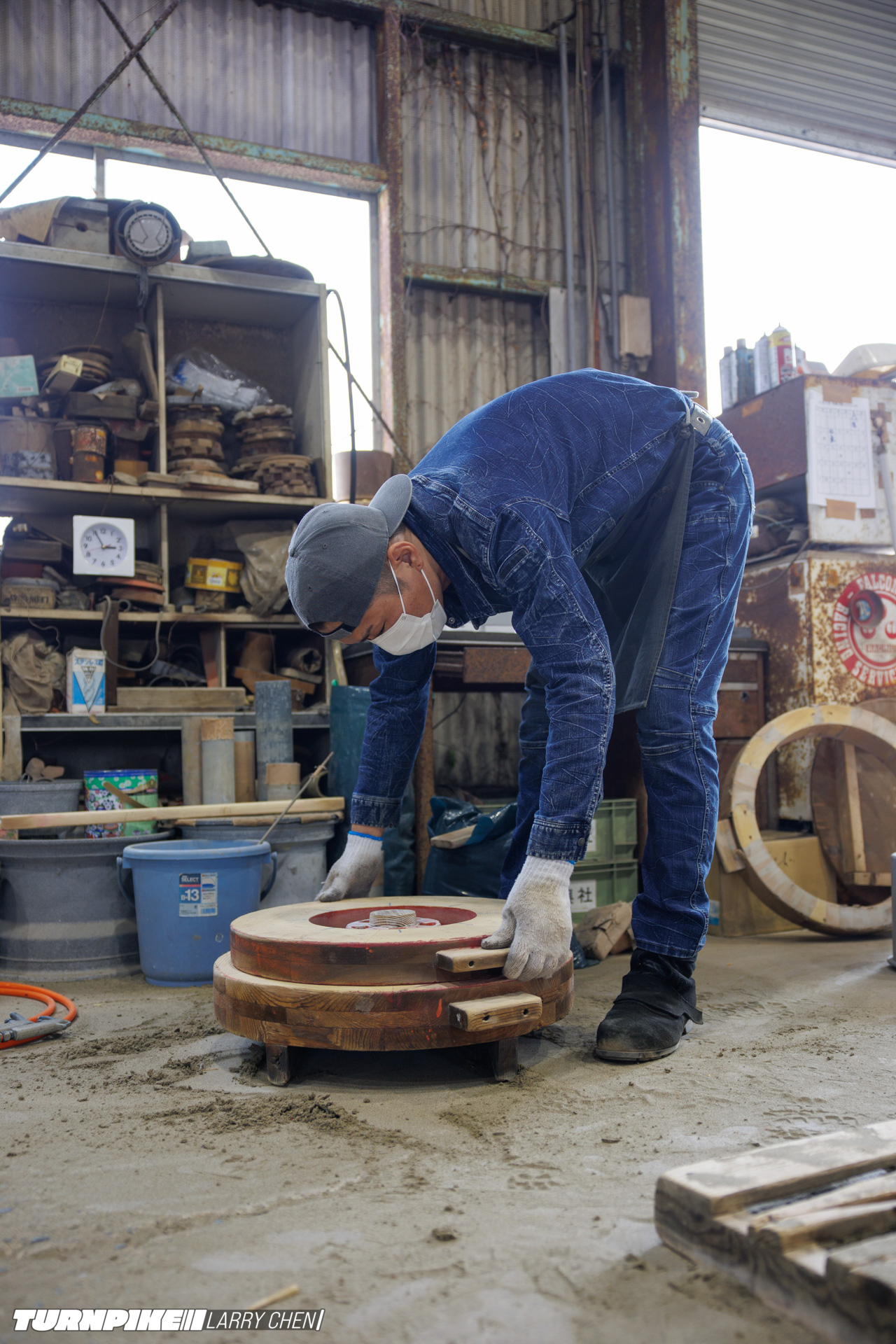
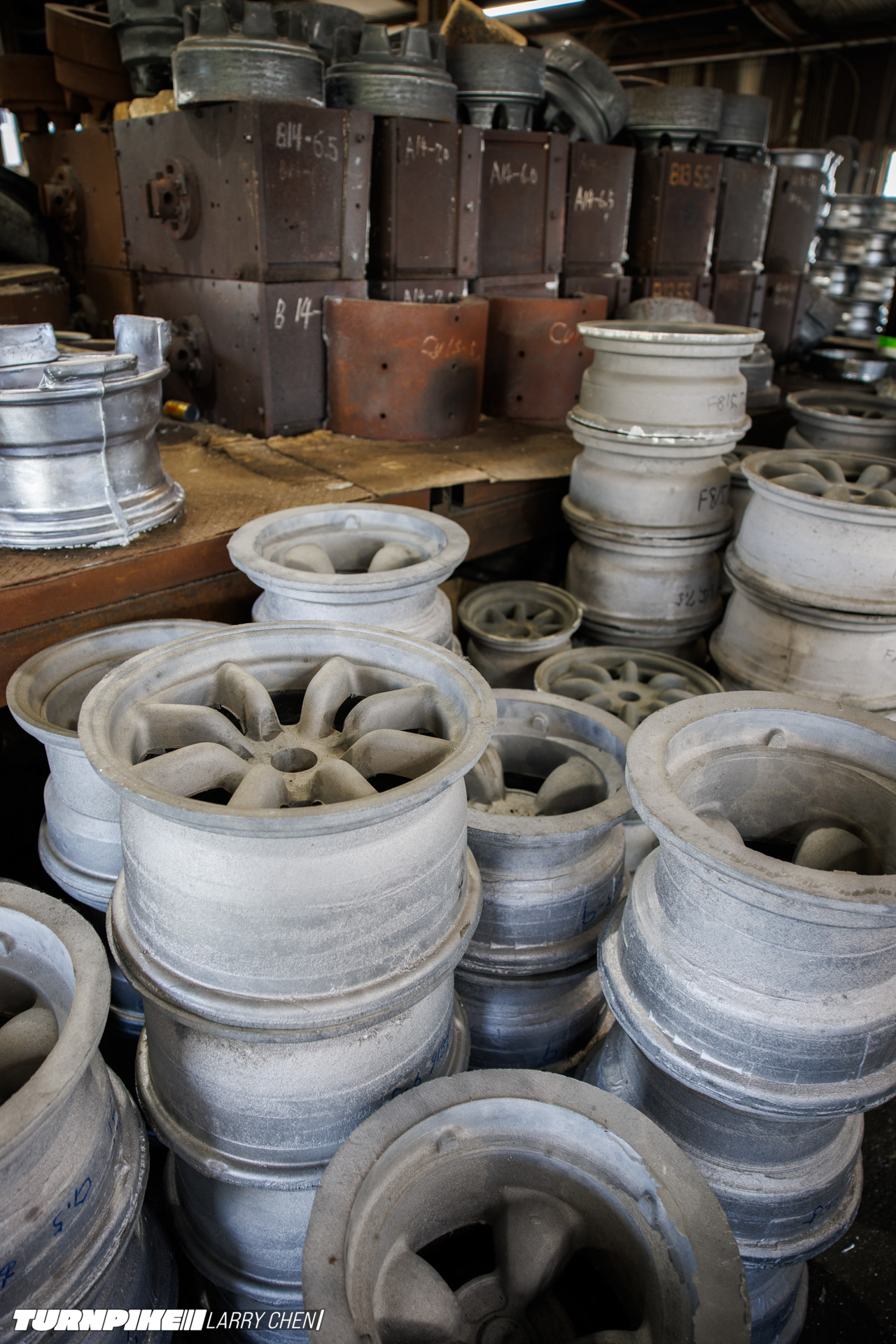
Every mold begins with a hand-carved wooden pattern. Hundreds of them fill the shelves, each carefully labeled by size and design. The detail is astonishing. Some patterns resemble functional art pieces; others clearly show years of constant use.



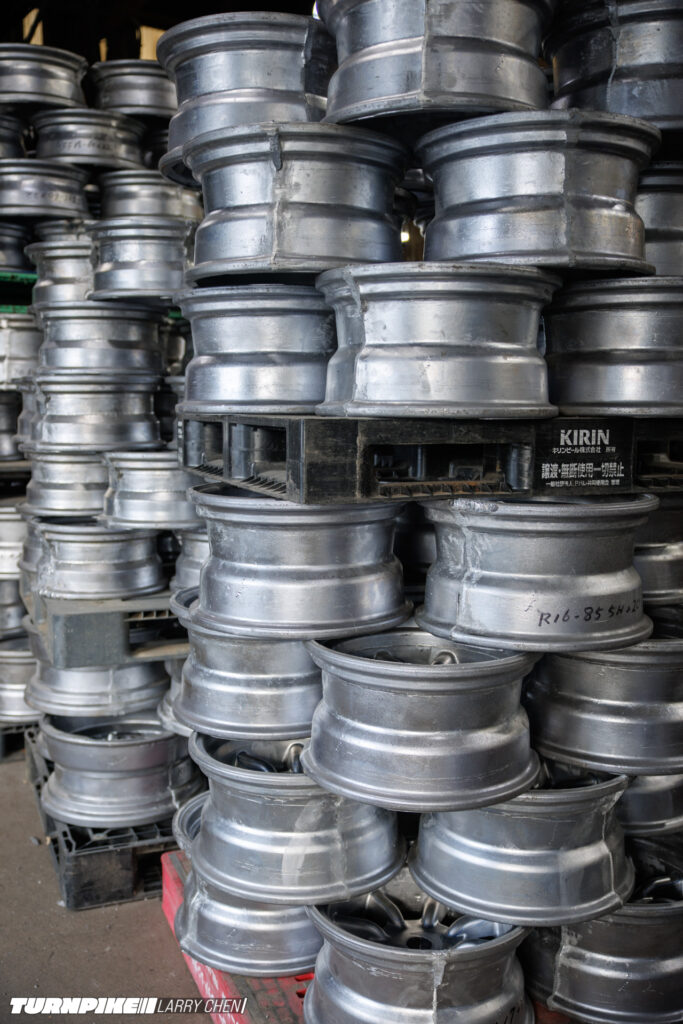


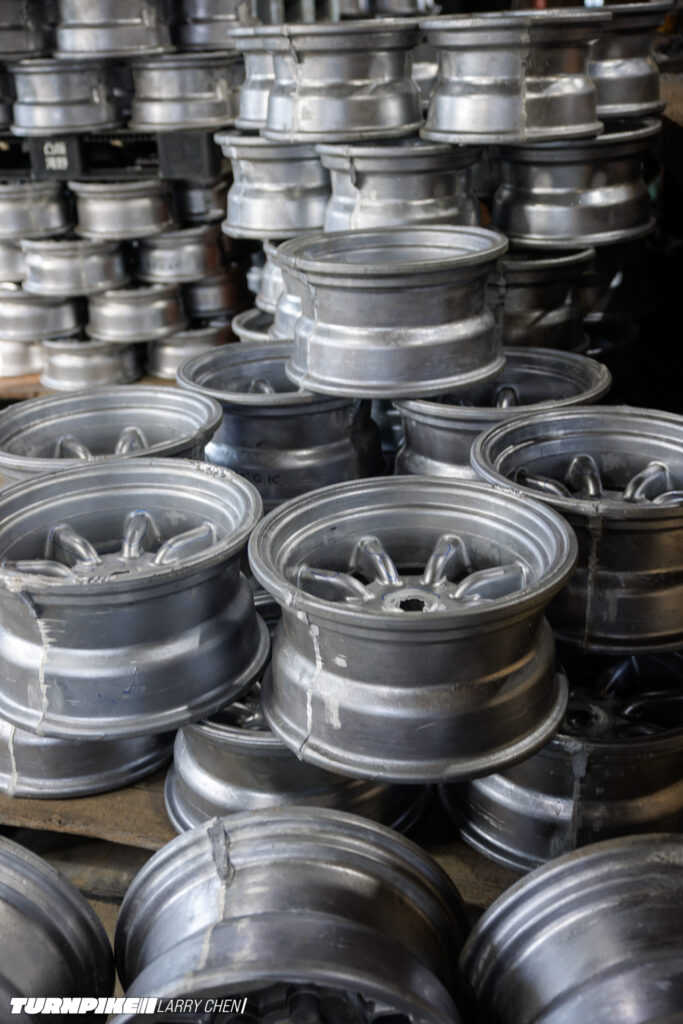

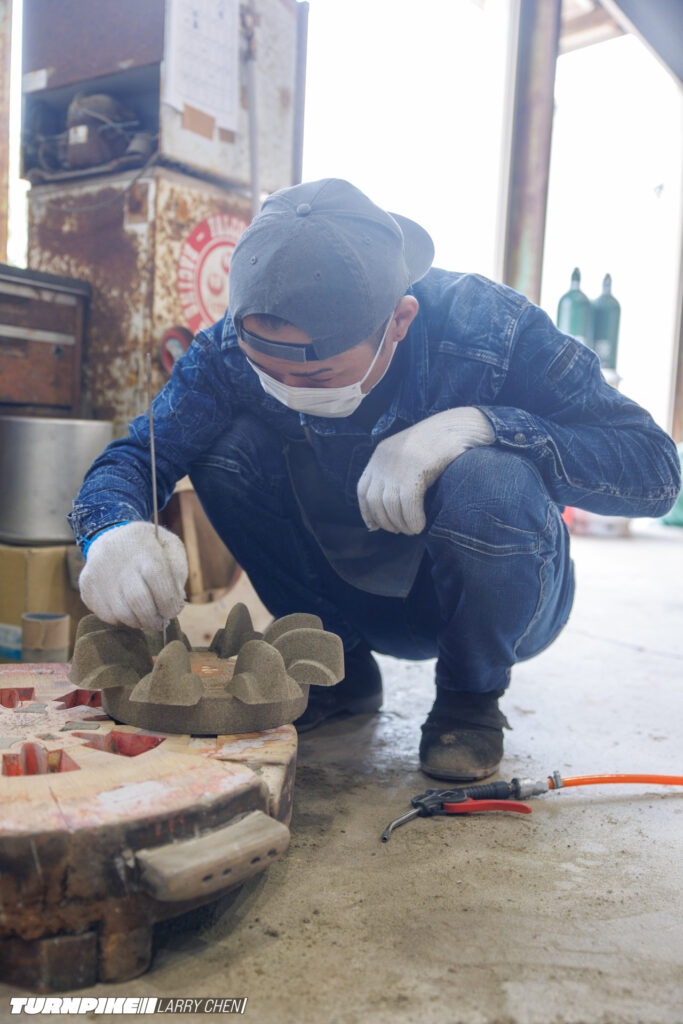
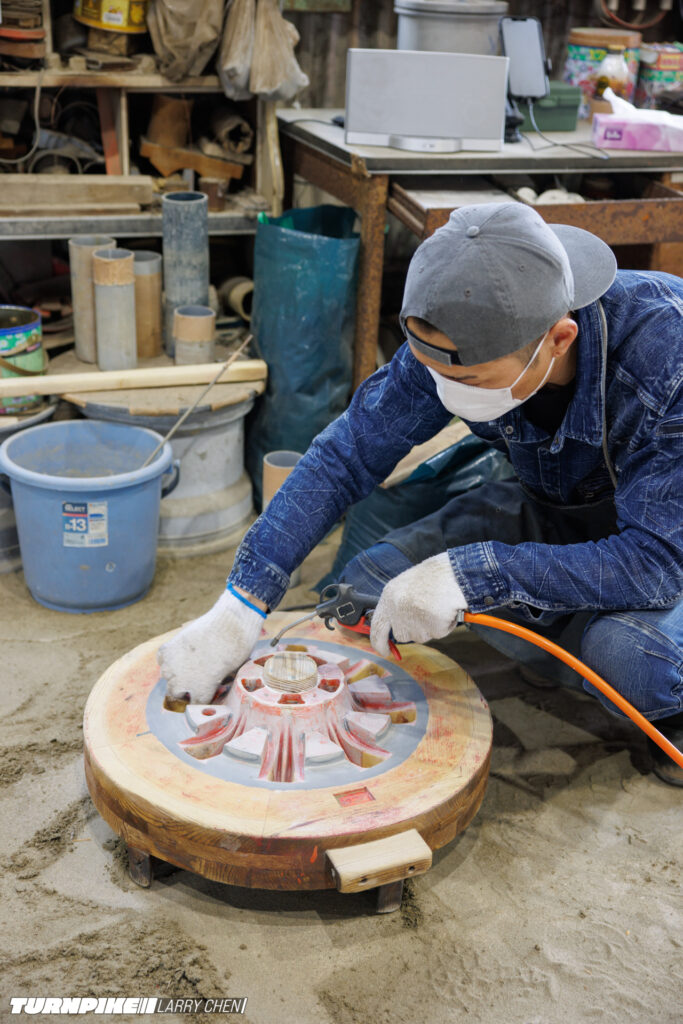
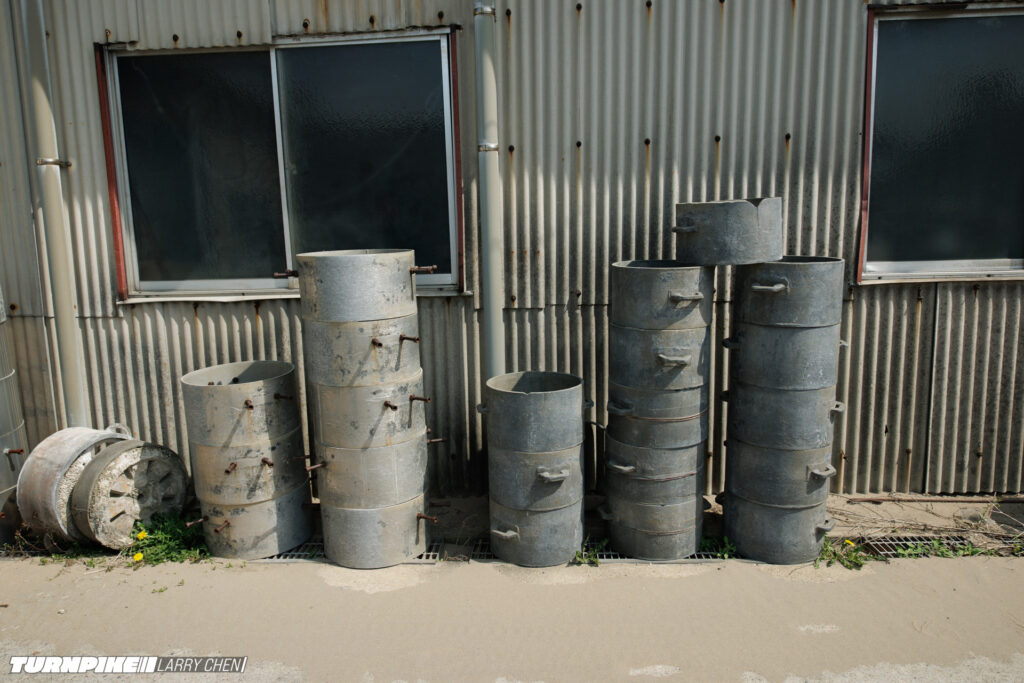
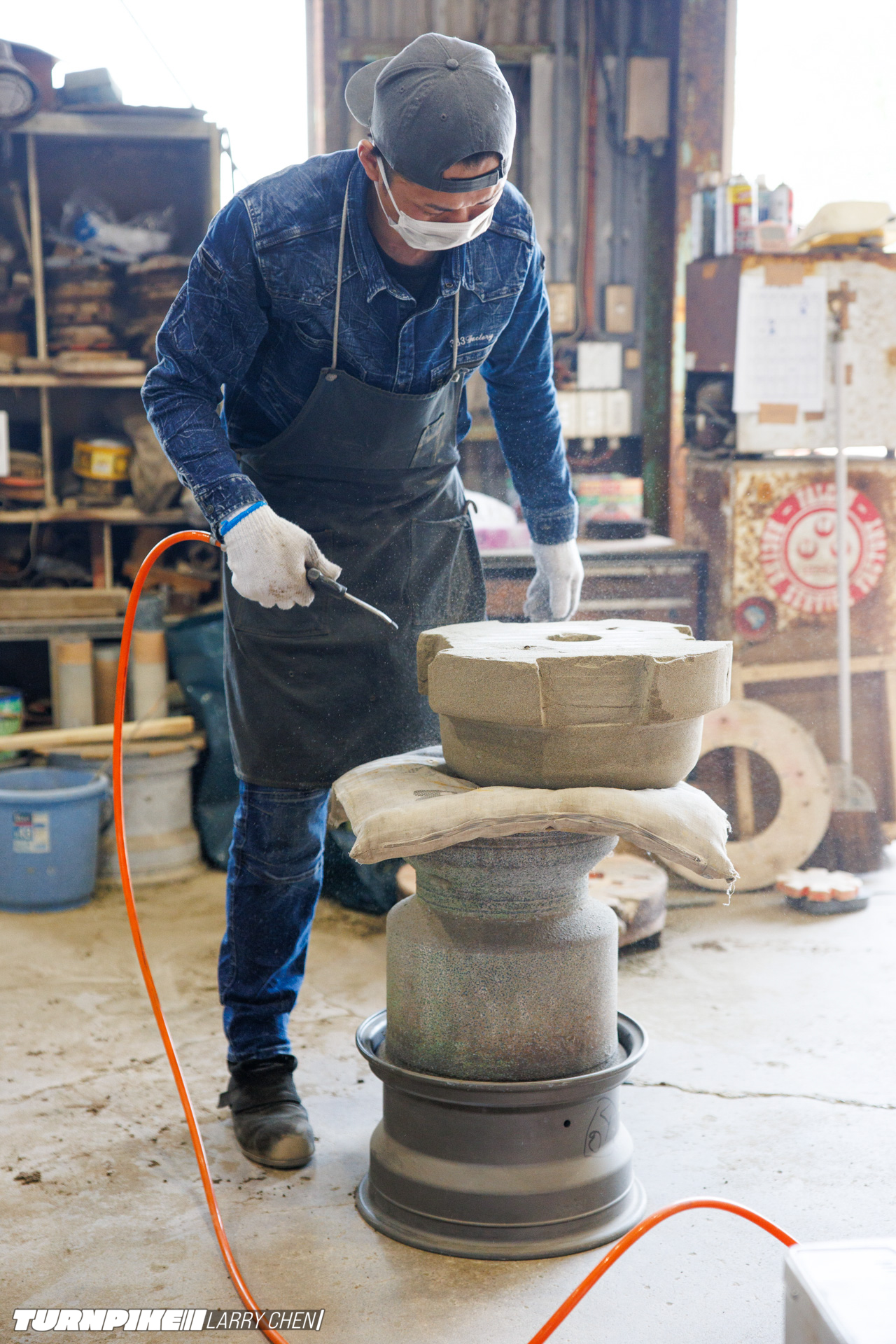
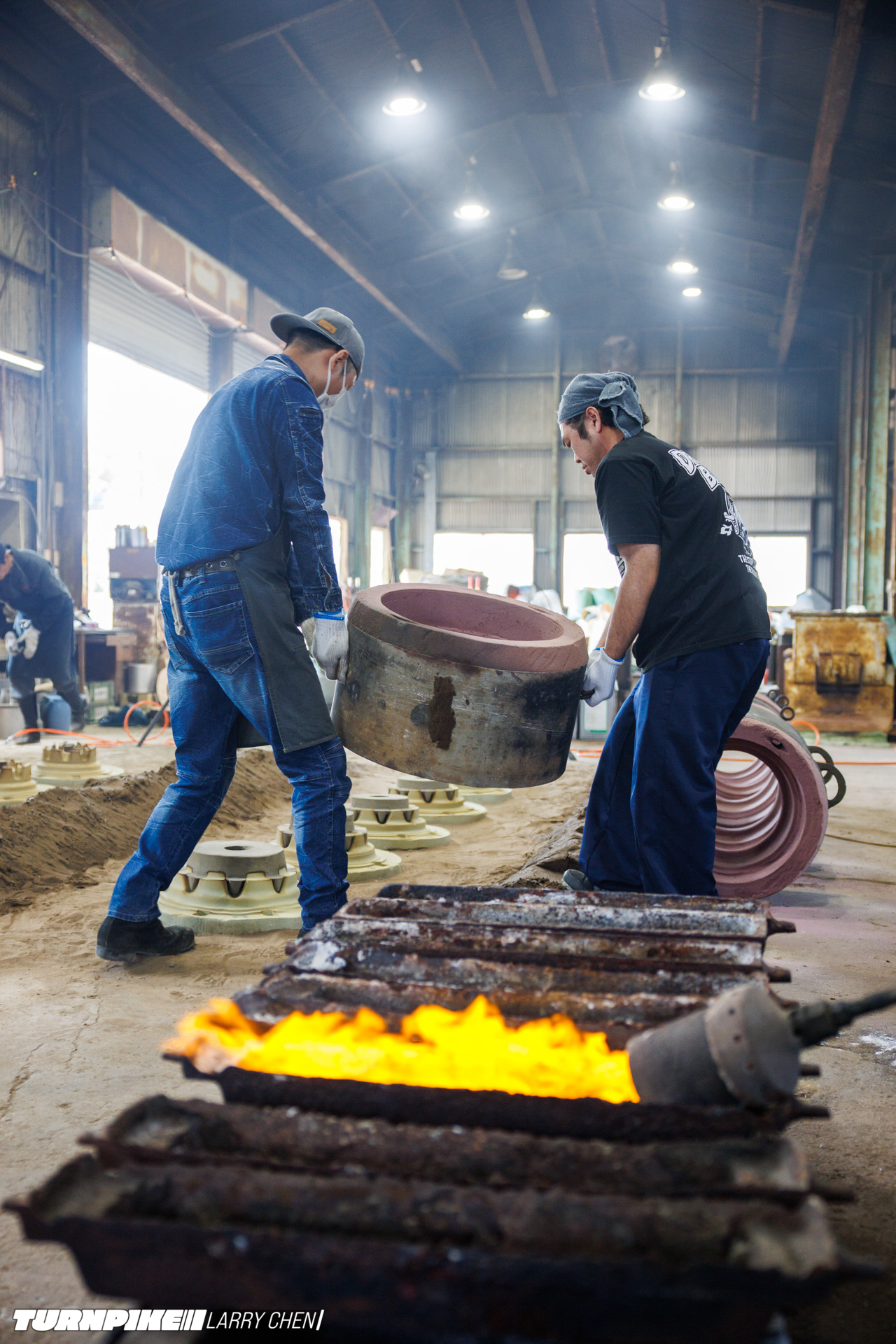
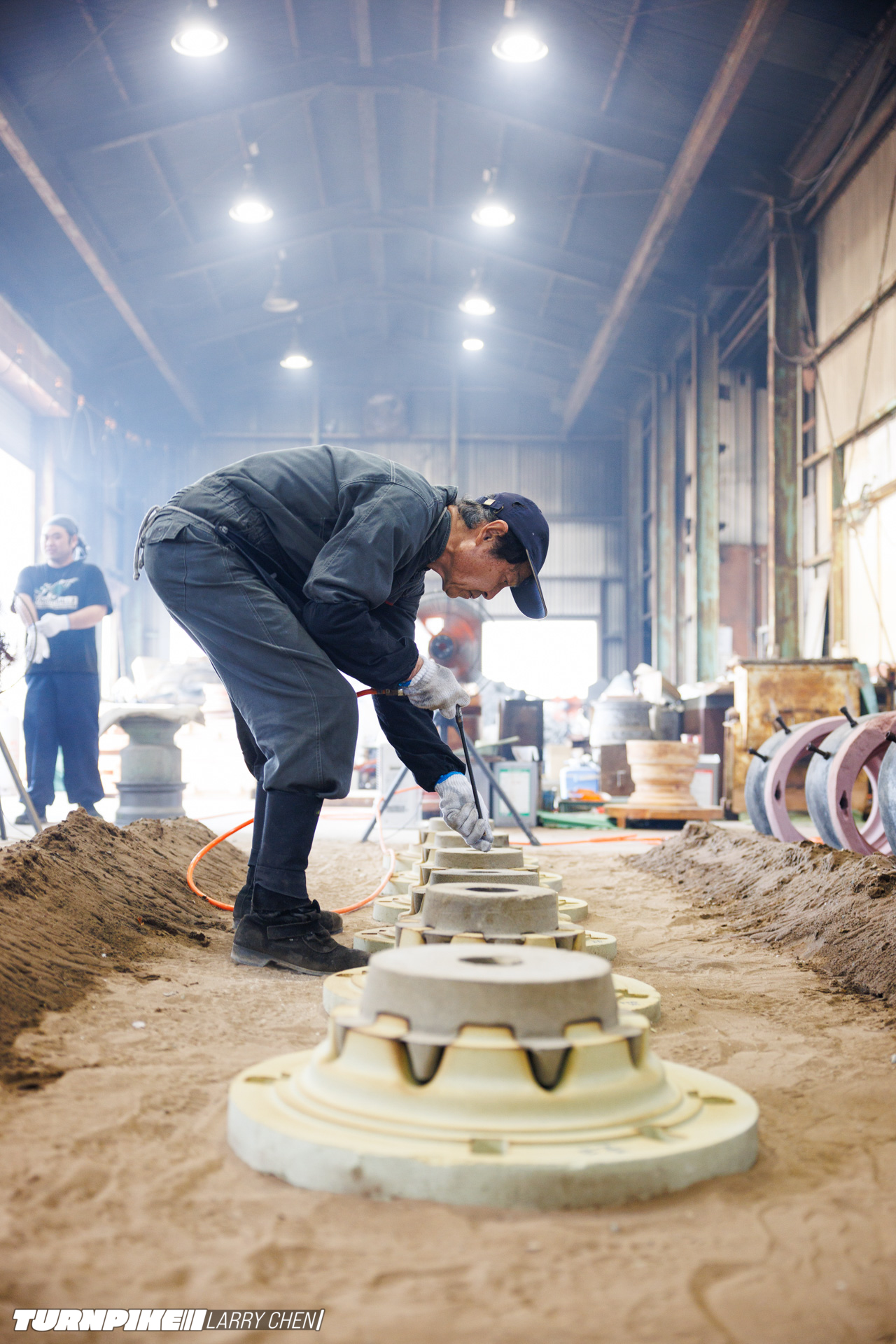
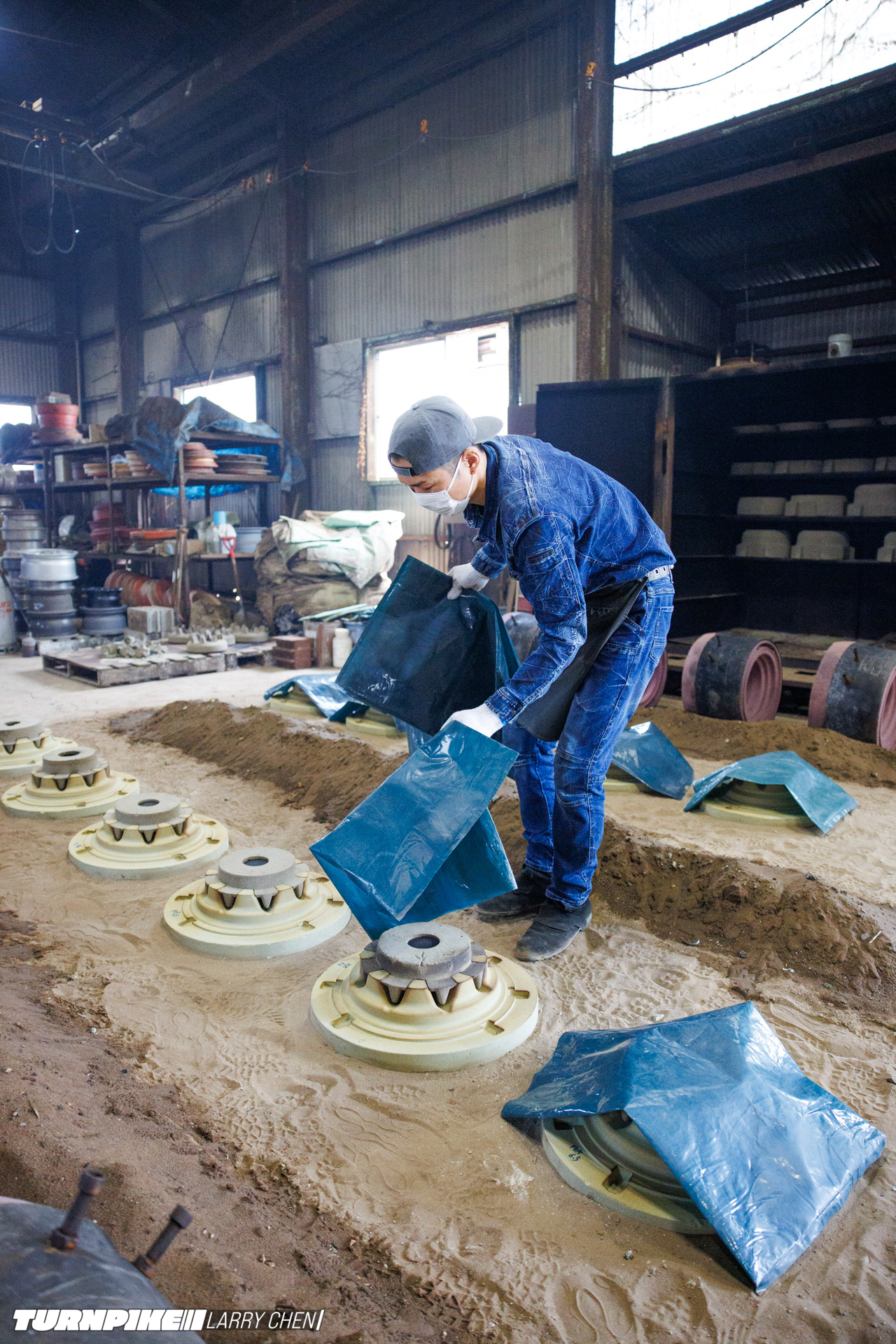
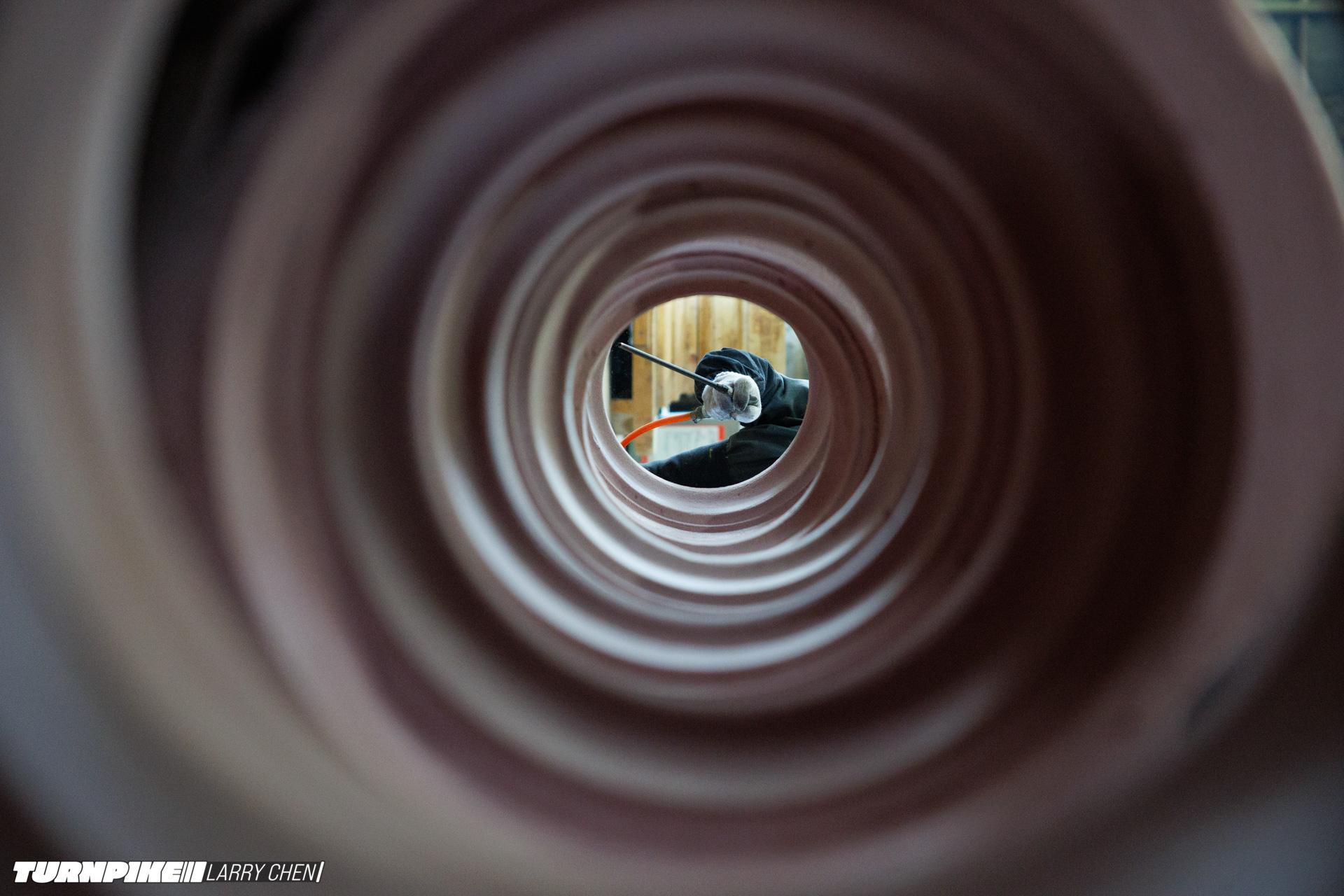
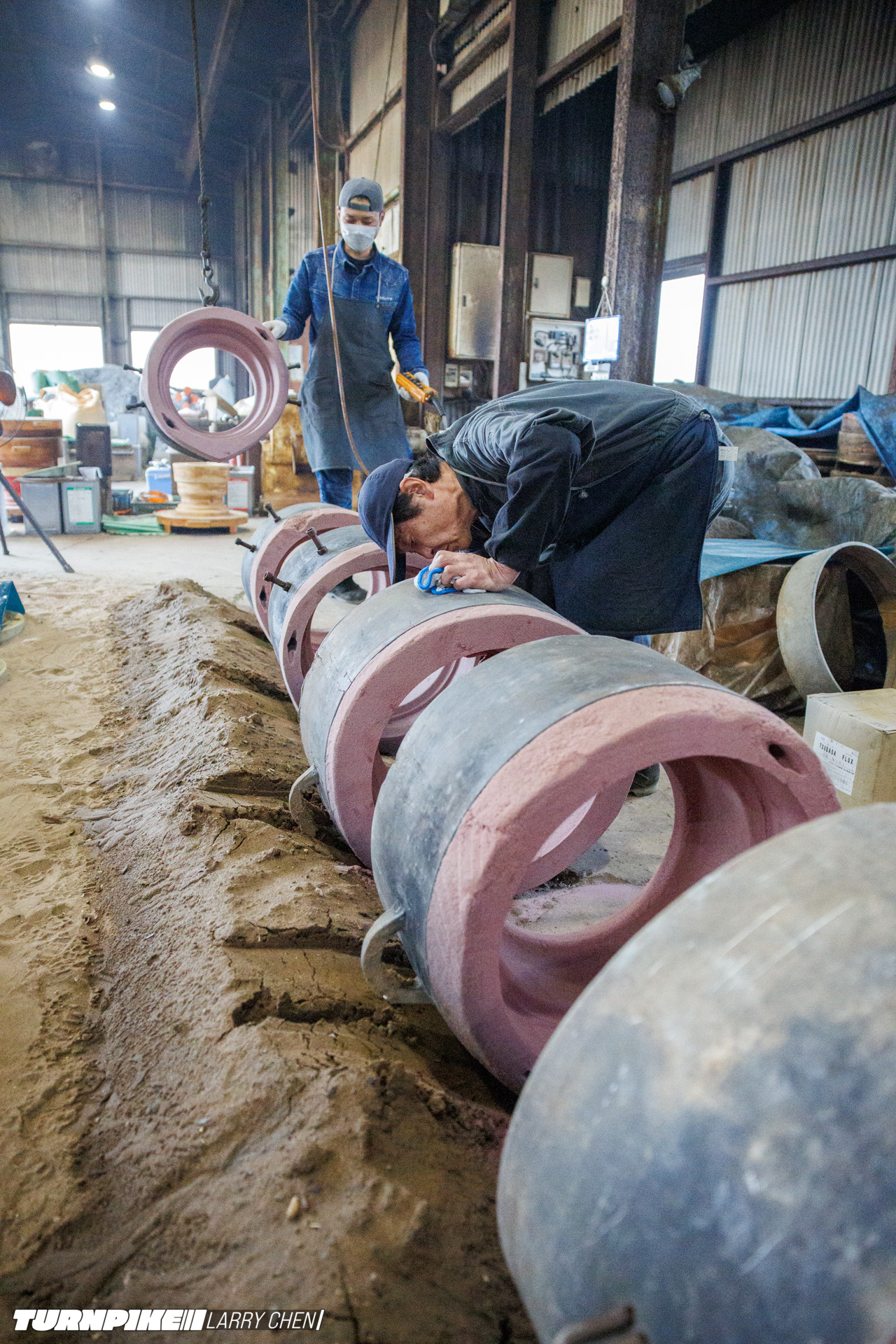
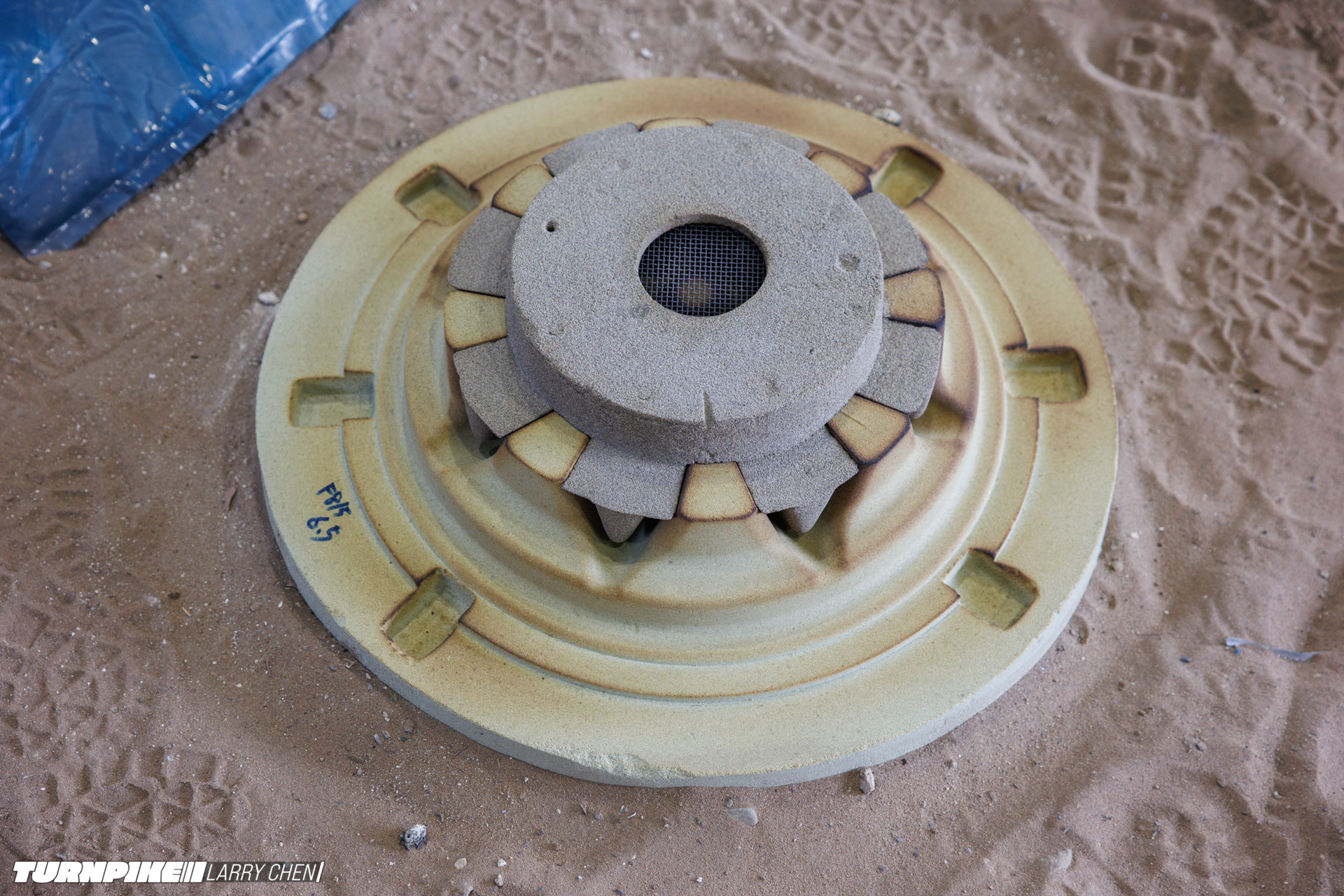
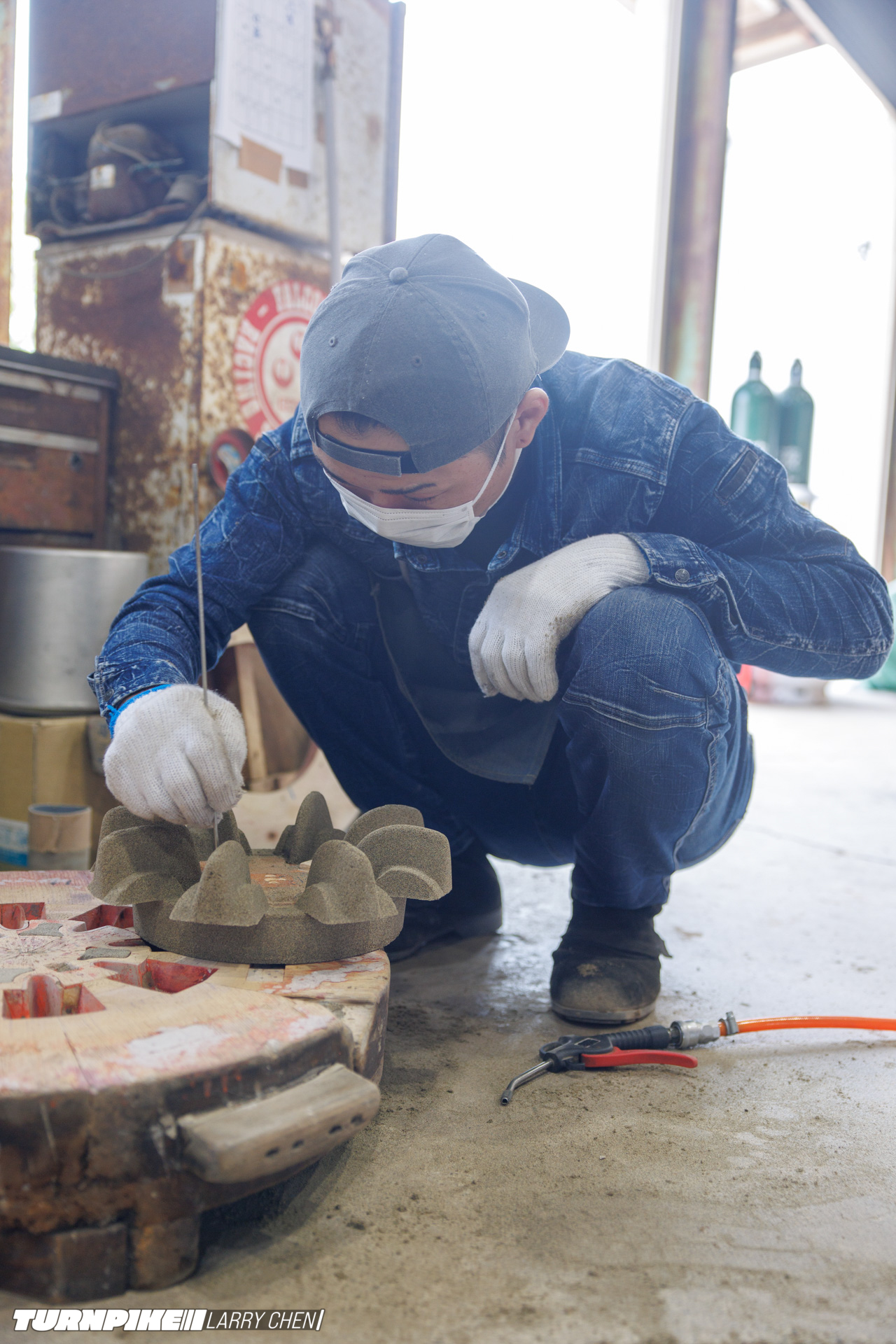
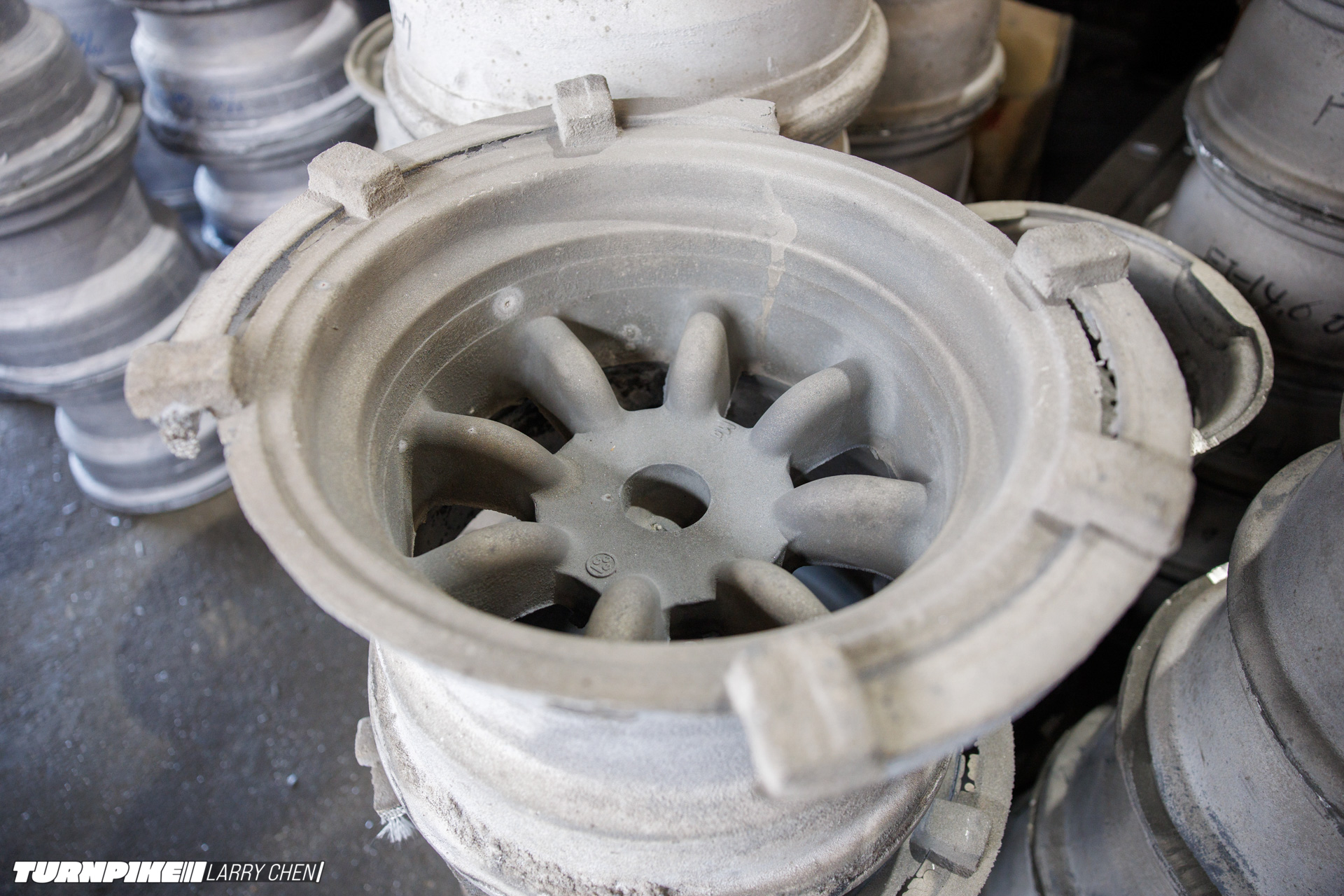
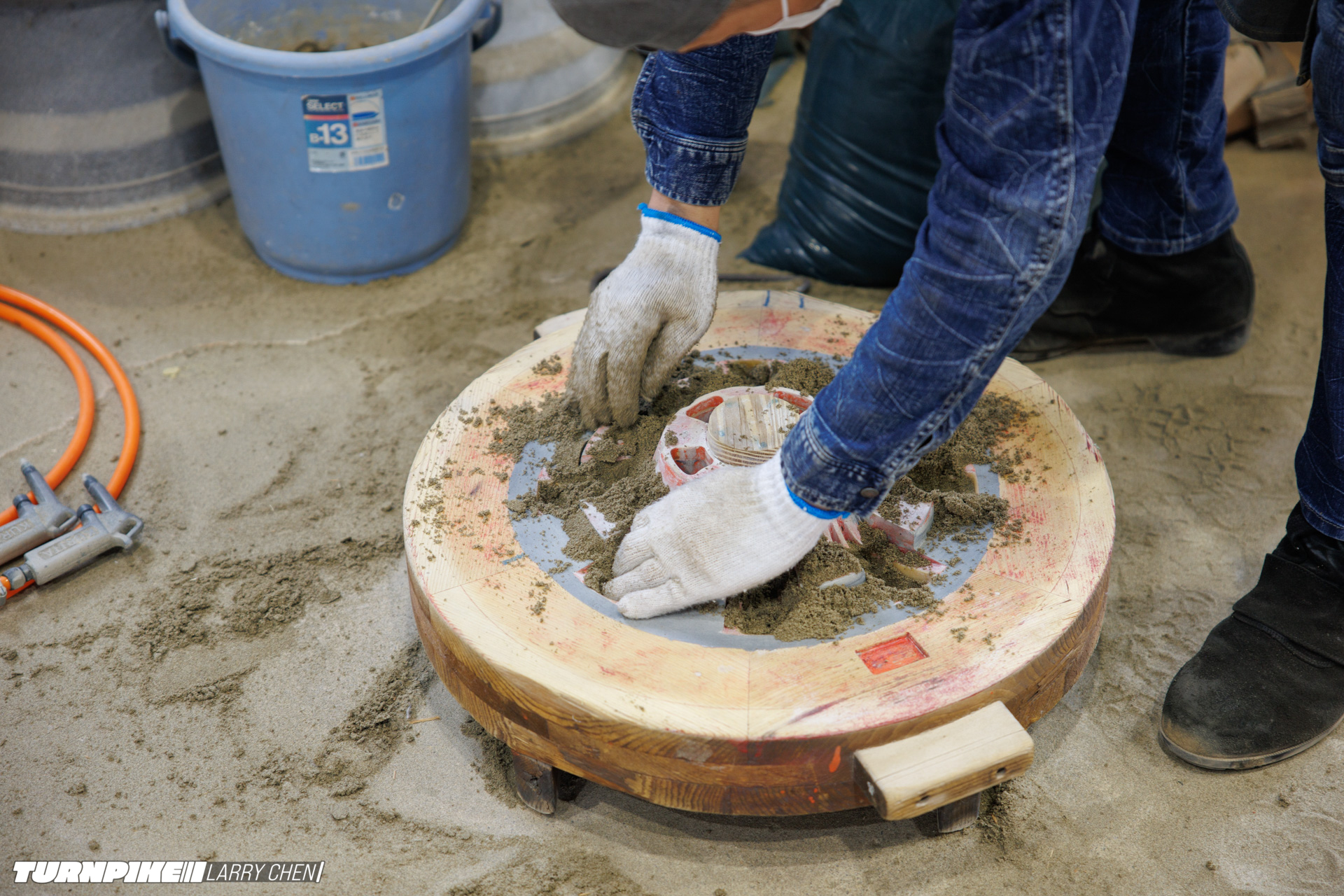
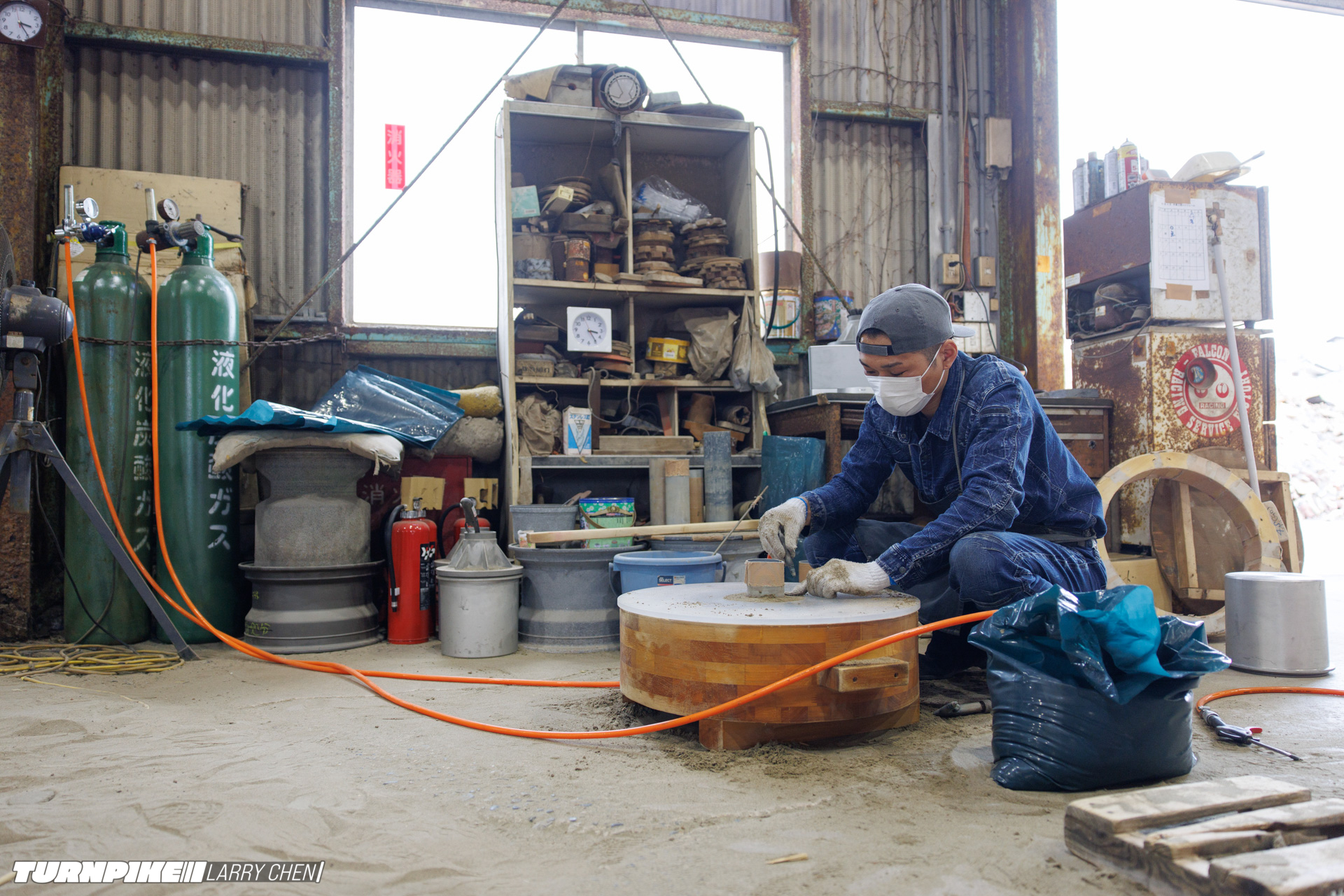
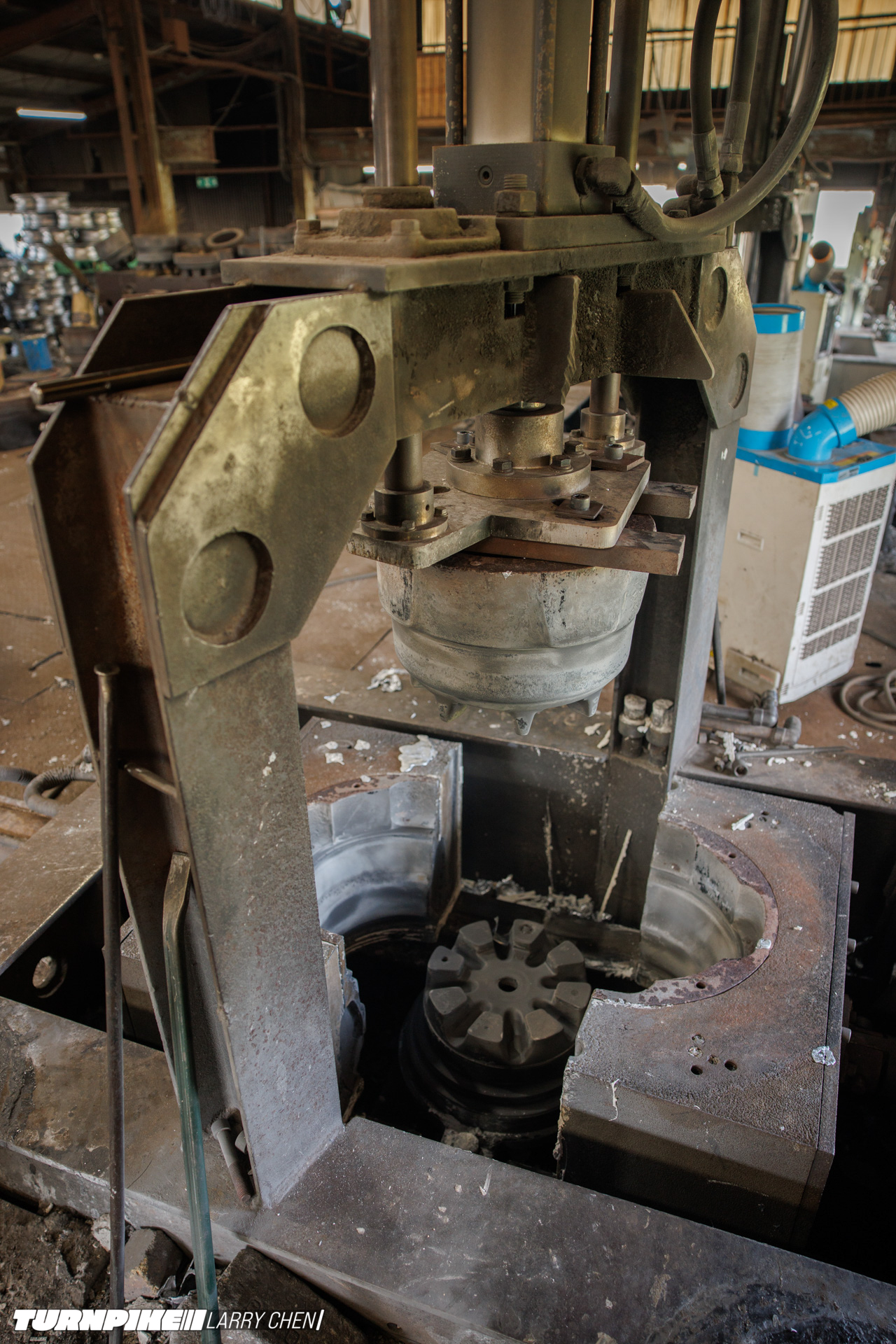
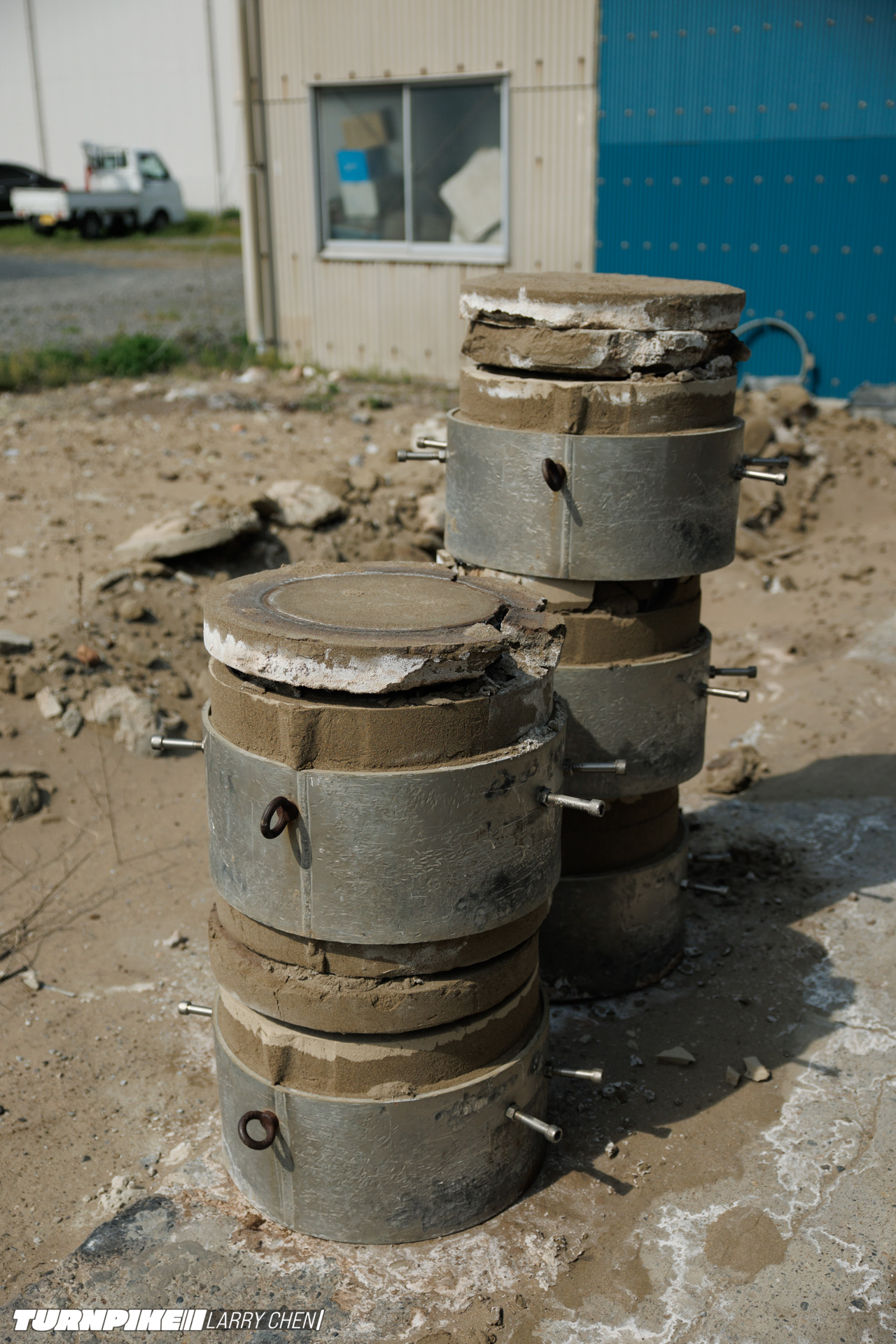
A single sandcast wheel requires at least four separate molds, sometimes more. It takes two full days to create them before any metal is poured. What shocked me most was how fragile they are. Each mold is made from compacted sand hardened with chemicals and CO2, forming something closer to a dry sandcastle than a production tool. The craftsmen must work with extreme precision because one crack or break means starting over – losing hours of labor.
Watching them shape sand with their bare hands – literally feeling for imperfections – was surreal. This is wheelmaking reduced to its most human form.


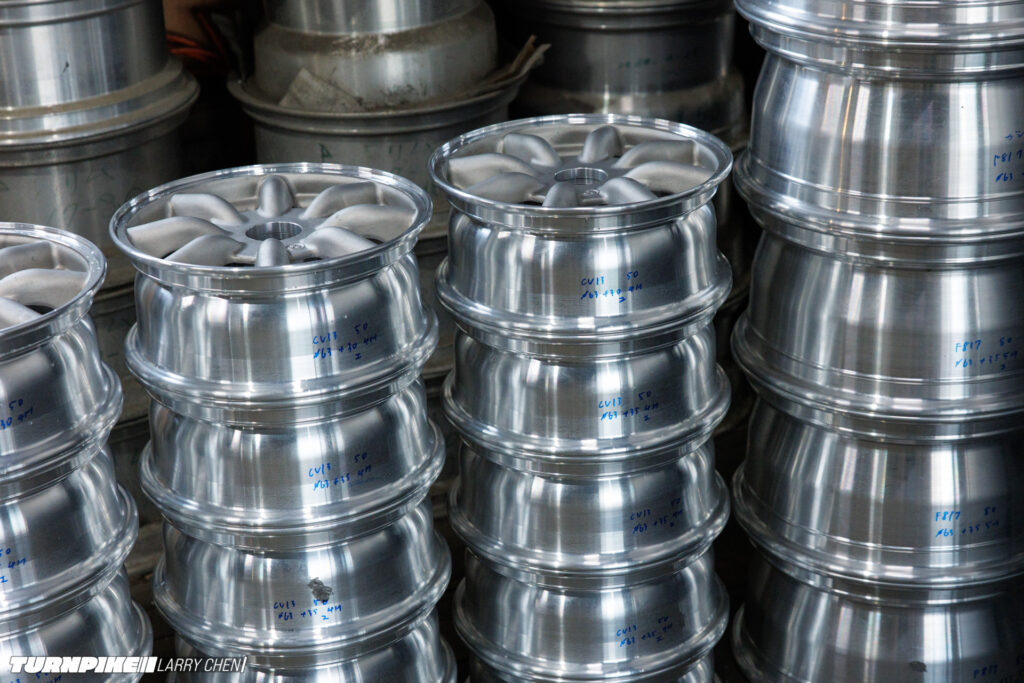
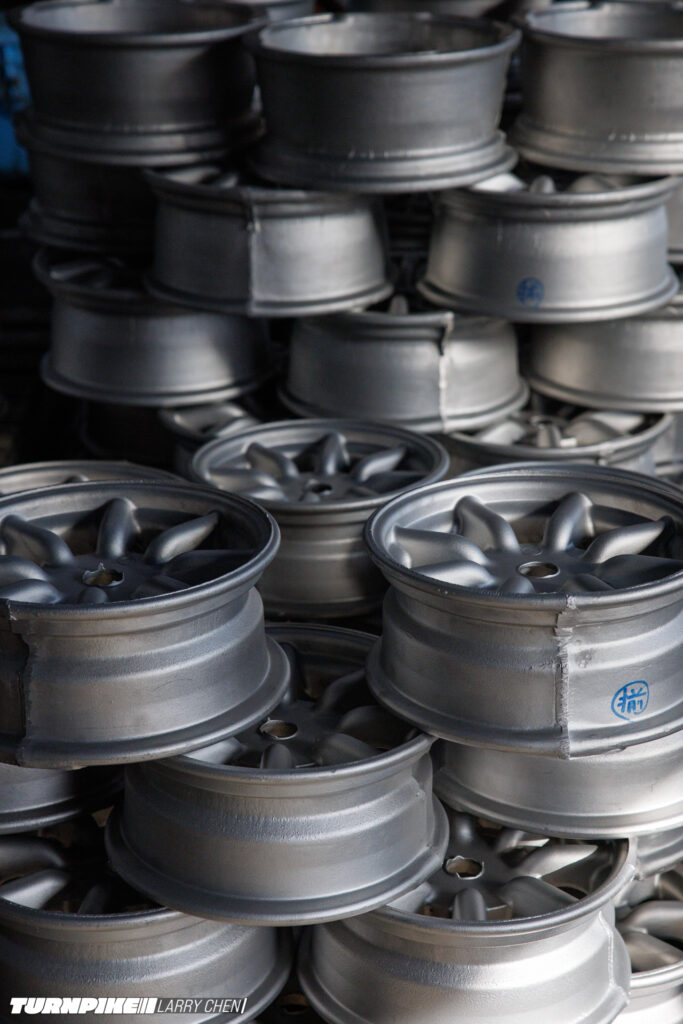
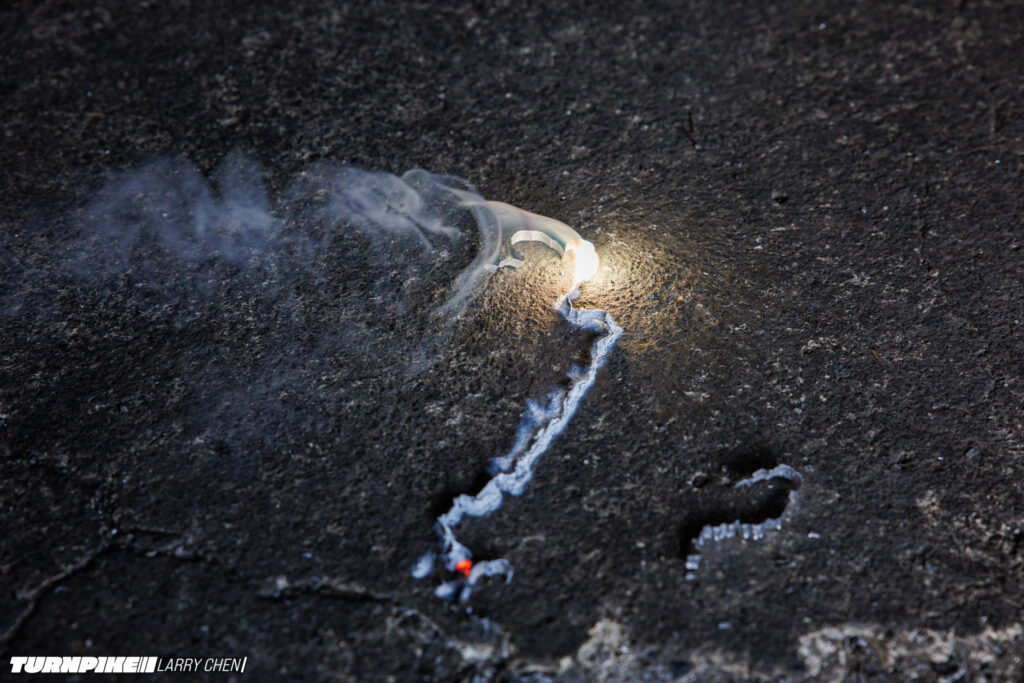

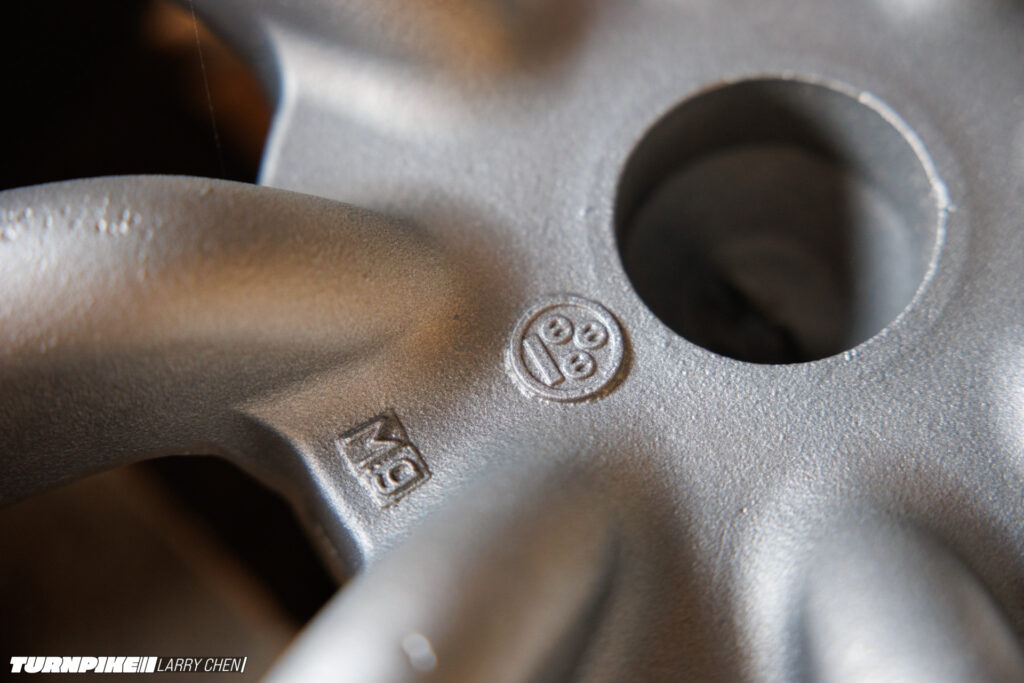
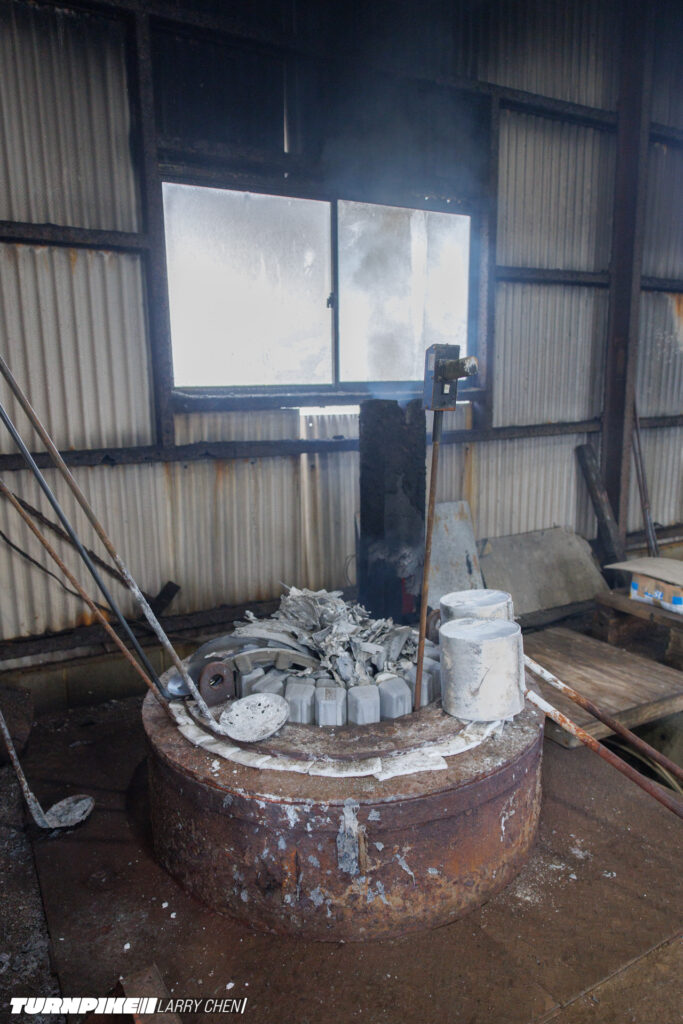
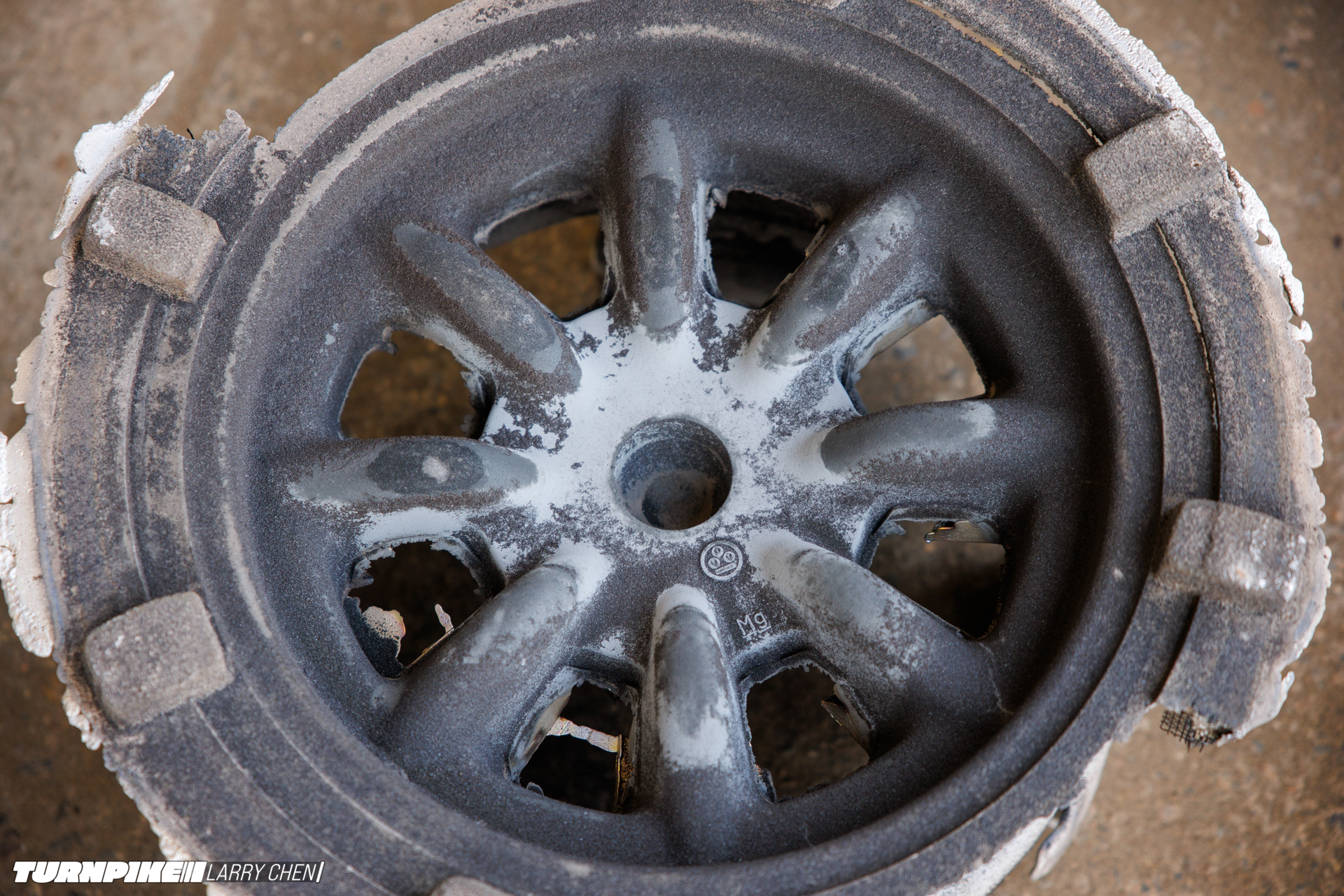
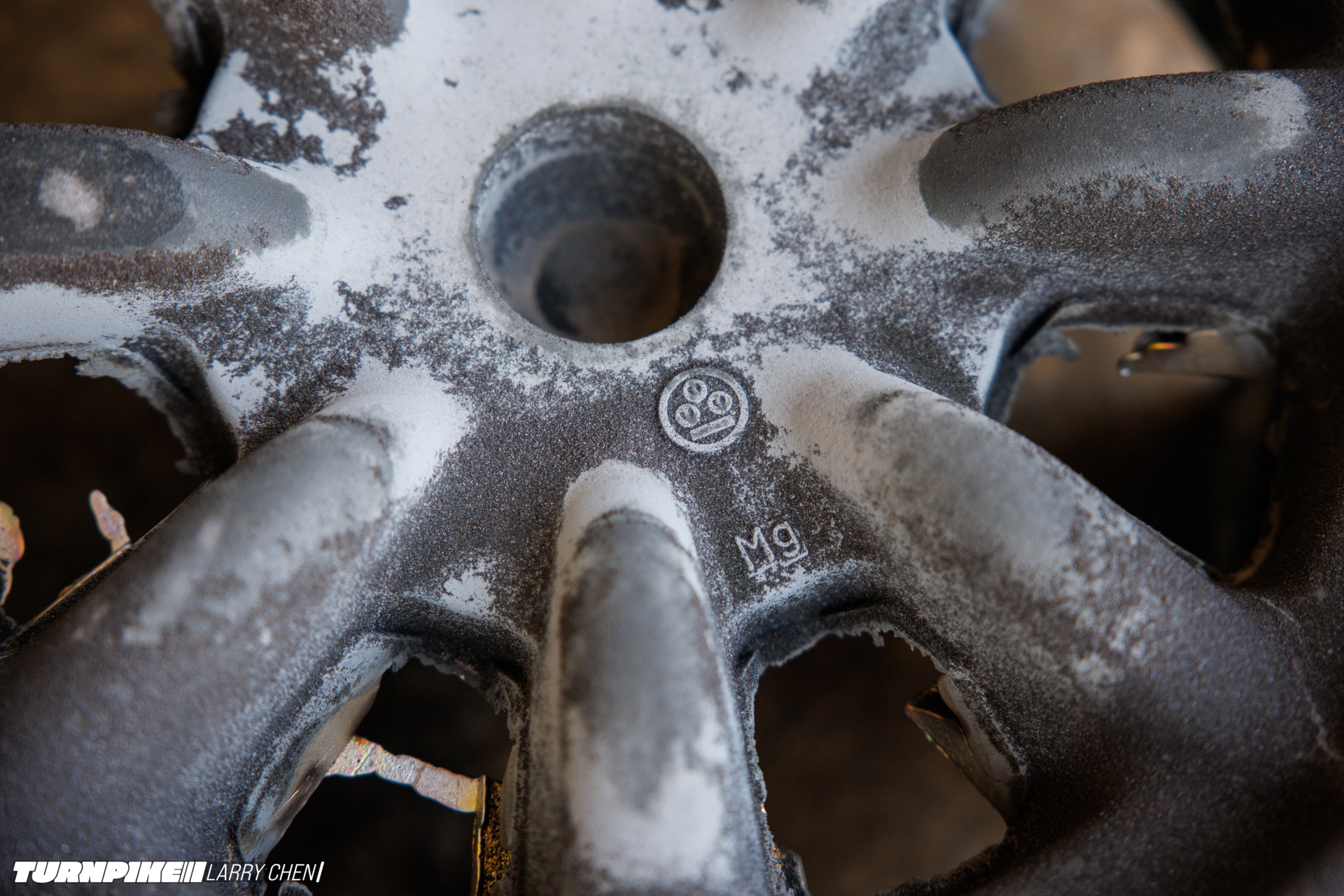
RS Watanabe is most famous for its magnesium wheels, and seeing that process up close was equal parts awe and fear. Magnesium is lighter than aluminum, but far more volatile, as a single spark can ignite it. At one point, the thermometer stick burst into flames the moment it was lifted from the molten metal.
Impurities are constantly skimmed from the surface using tools that must be preheated and sanitized; otherwise, the magnesium can explode from thermal shock. A mix of sulfur and other elements is added to suppress flames and float out carbon and debris.
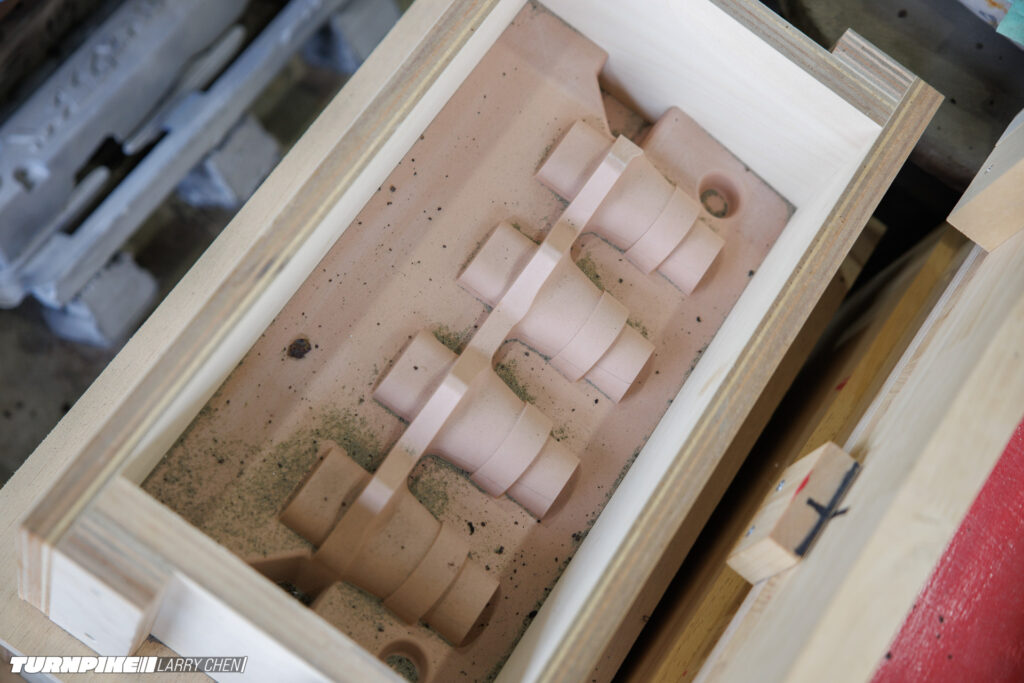





When the pour begins, molten magnesium flows through tiny slits in the mold. The room quickly fills with sulfur smoke so thick it becomes difficult to breathe. My eyes were burning, but the craftsmen barely reacted. They’ve done this for decades.
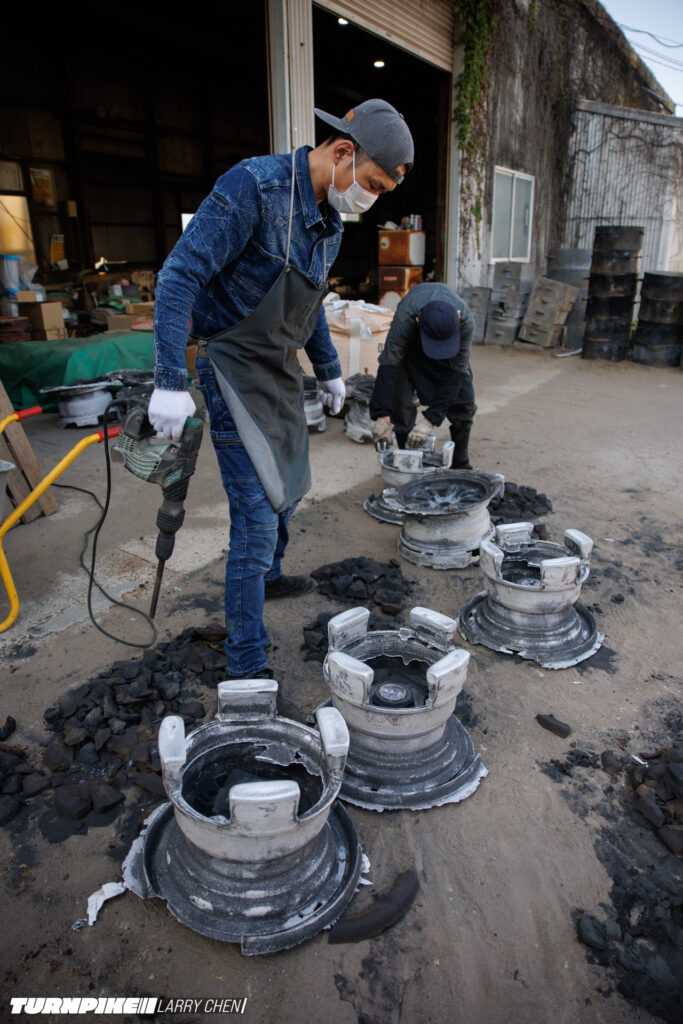
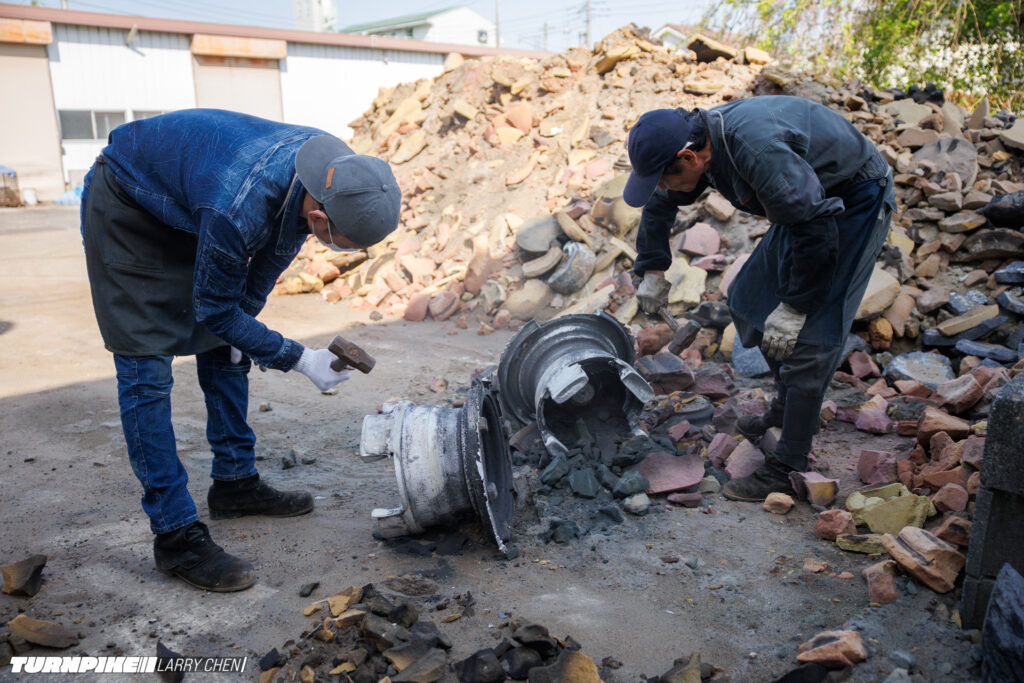
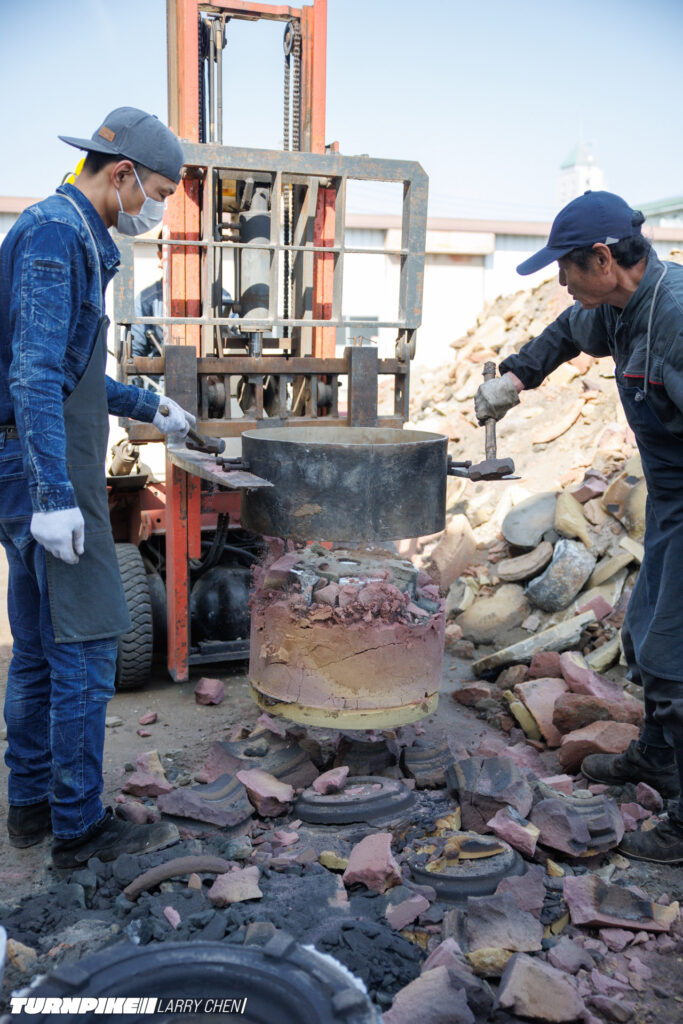
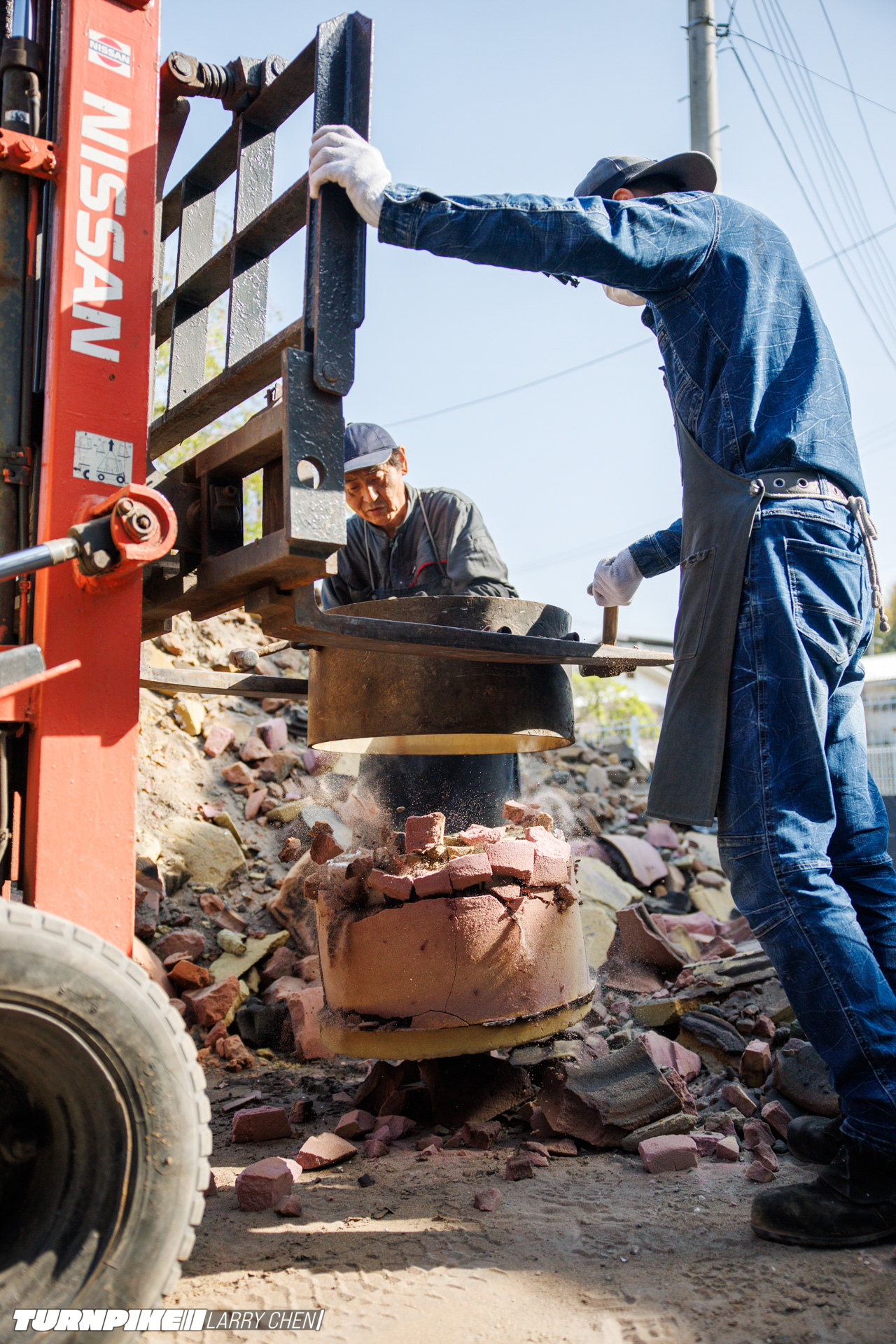
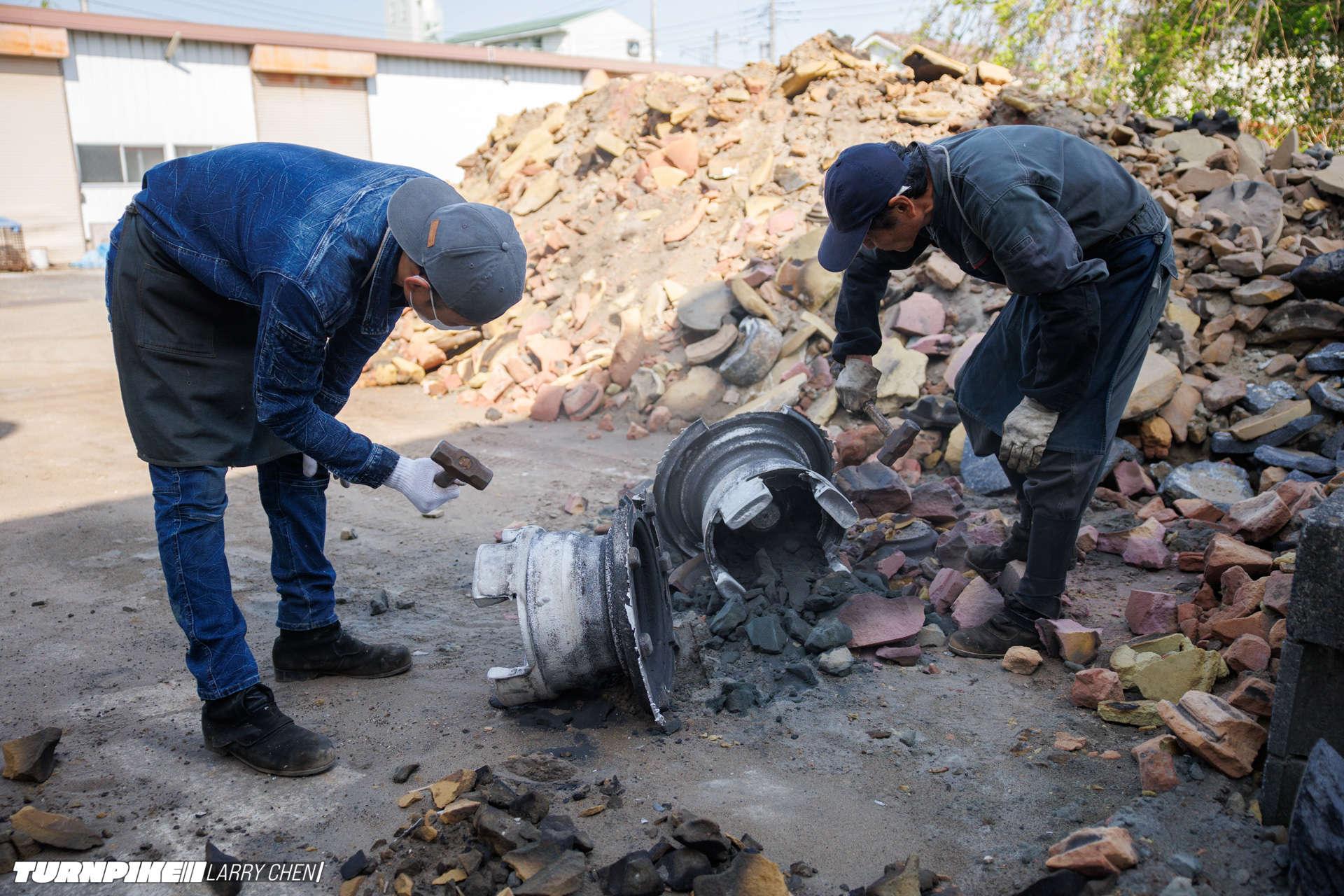
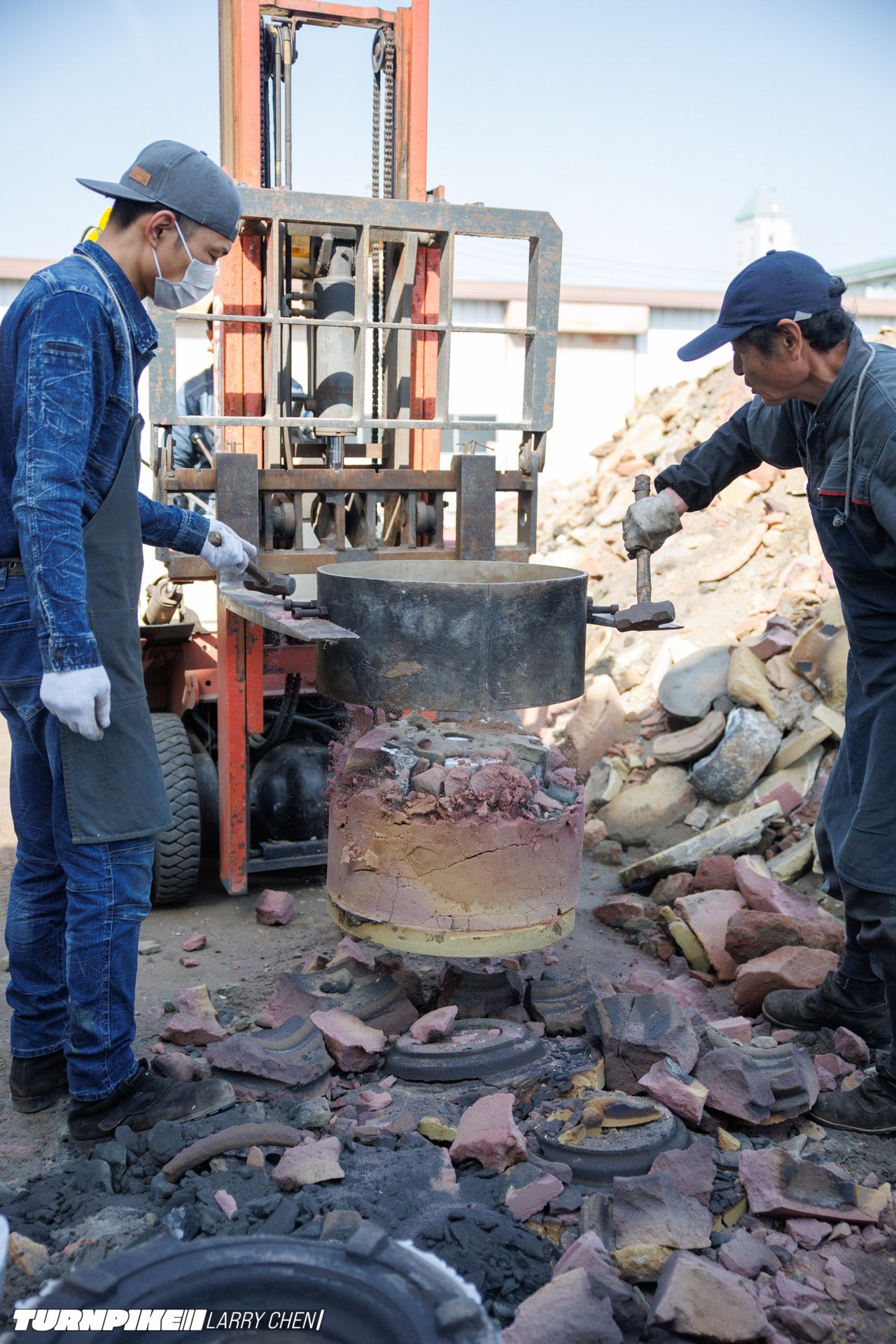
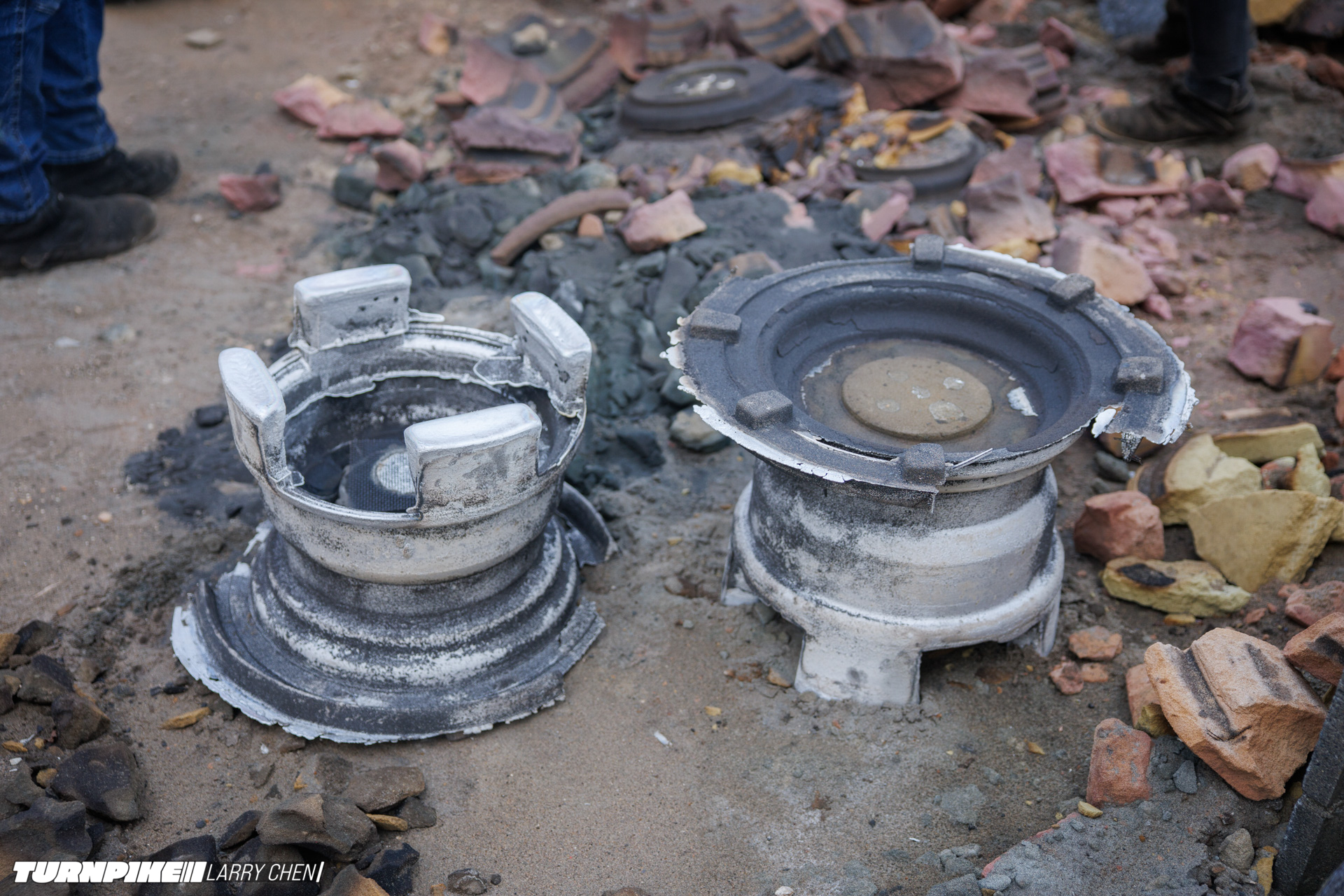
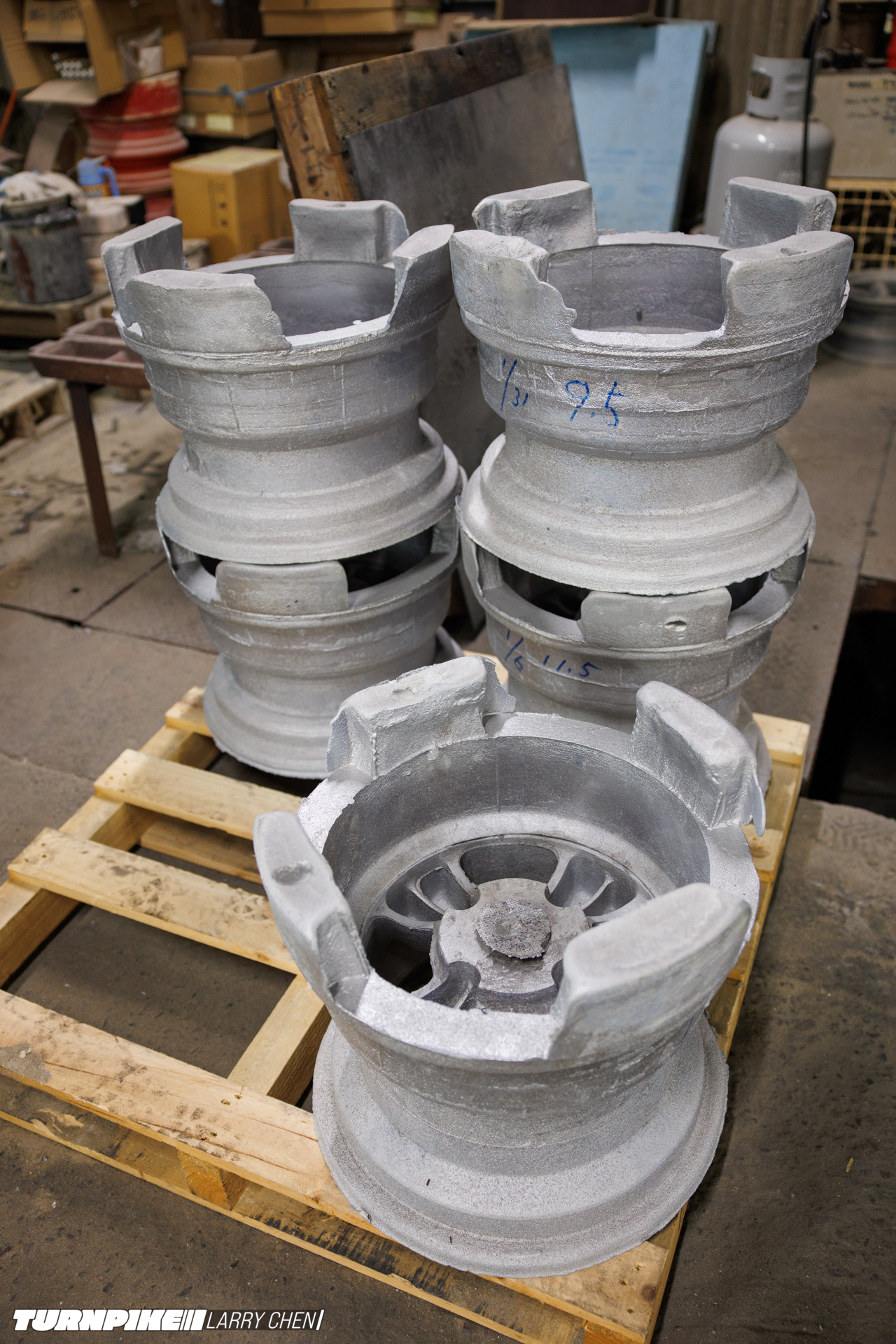
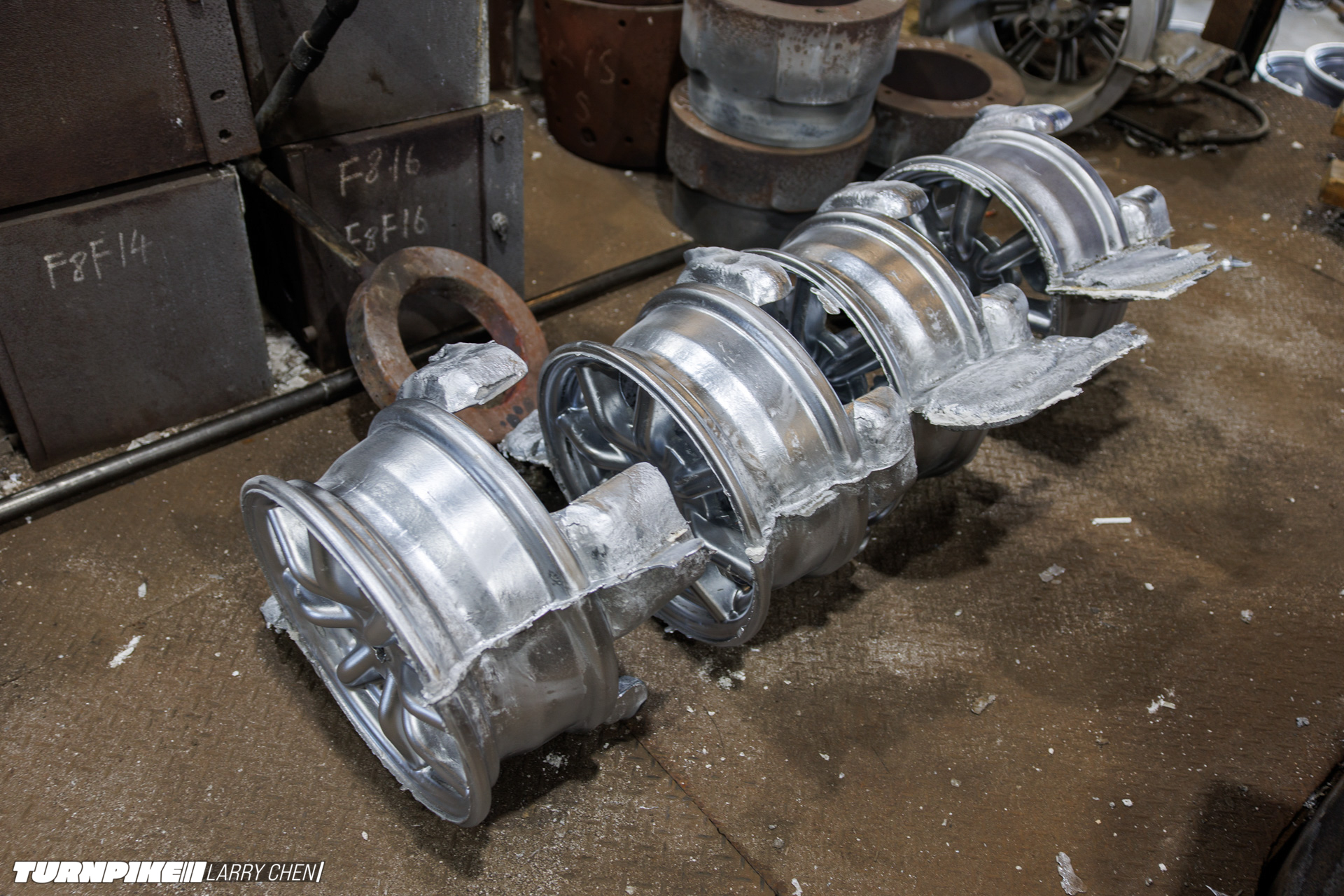
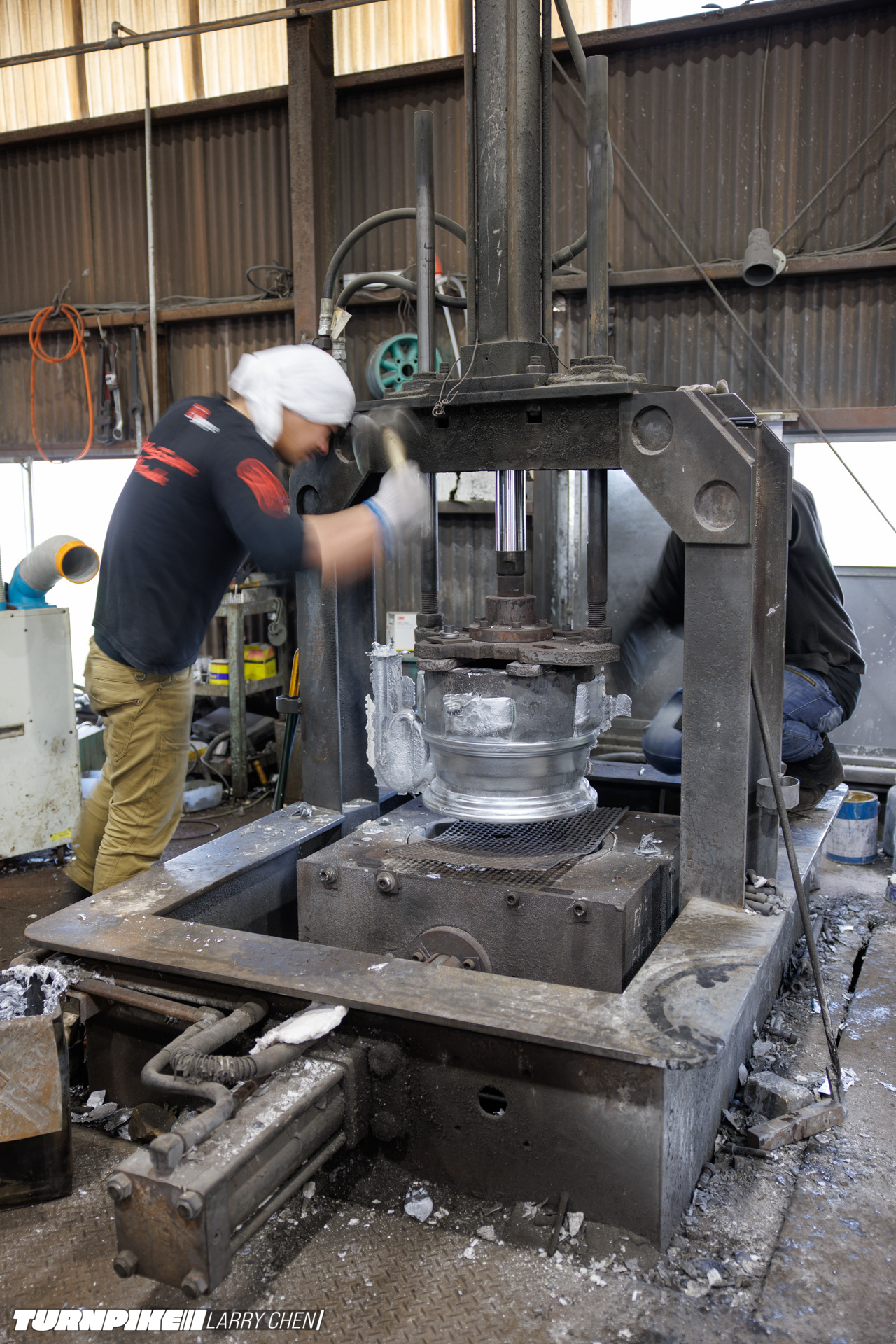
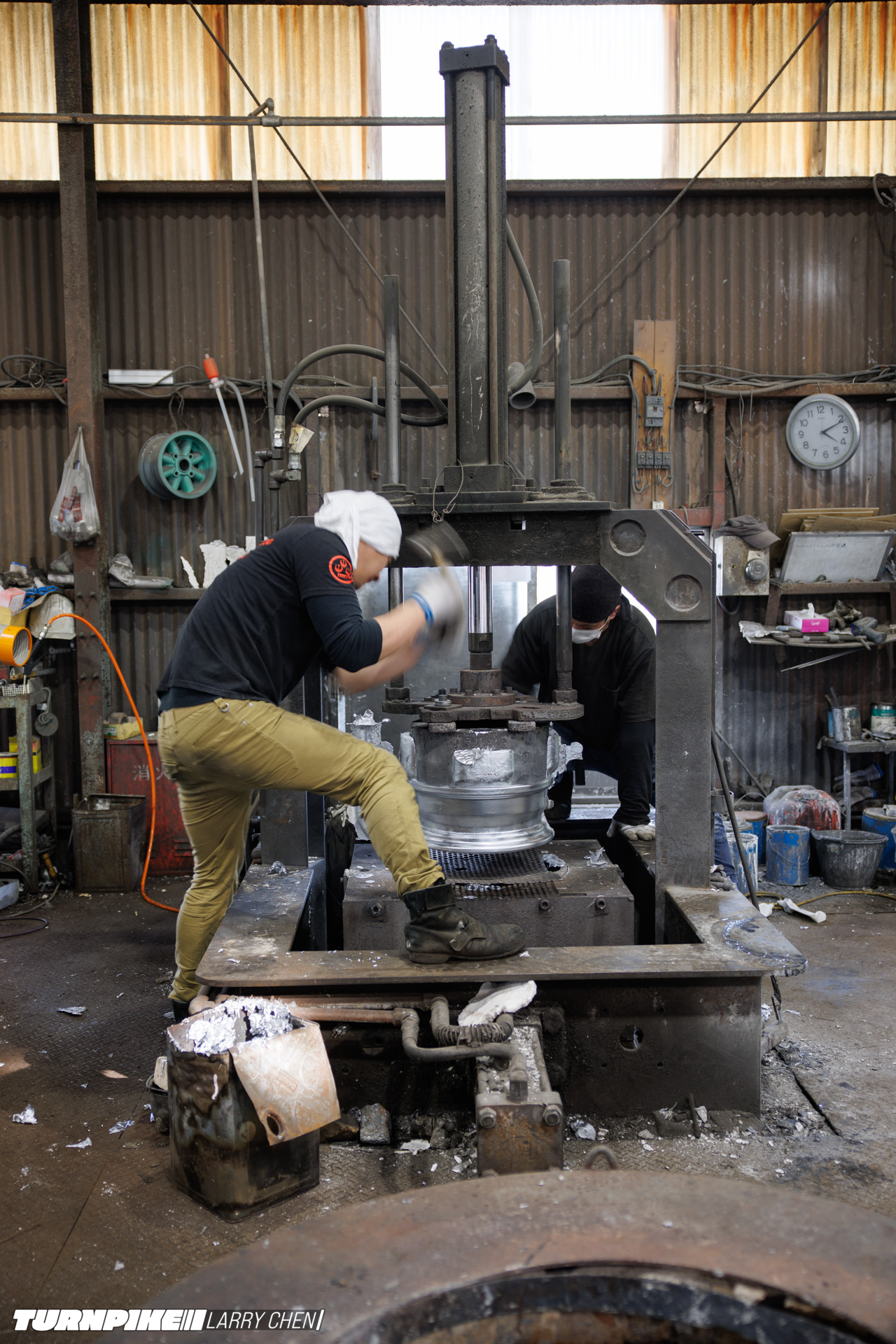
Once poured, the molds are buried in wet sand to control cooling and prevent leaks. After about an hour, they’re cracked open like treasure chests, revealing their metallic prize.

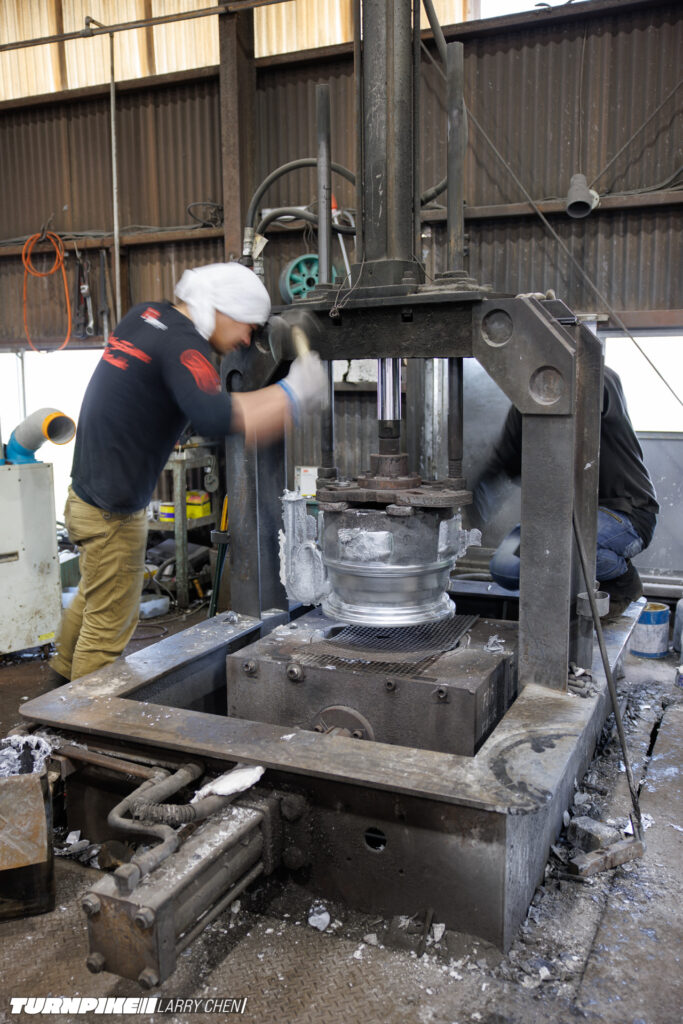

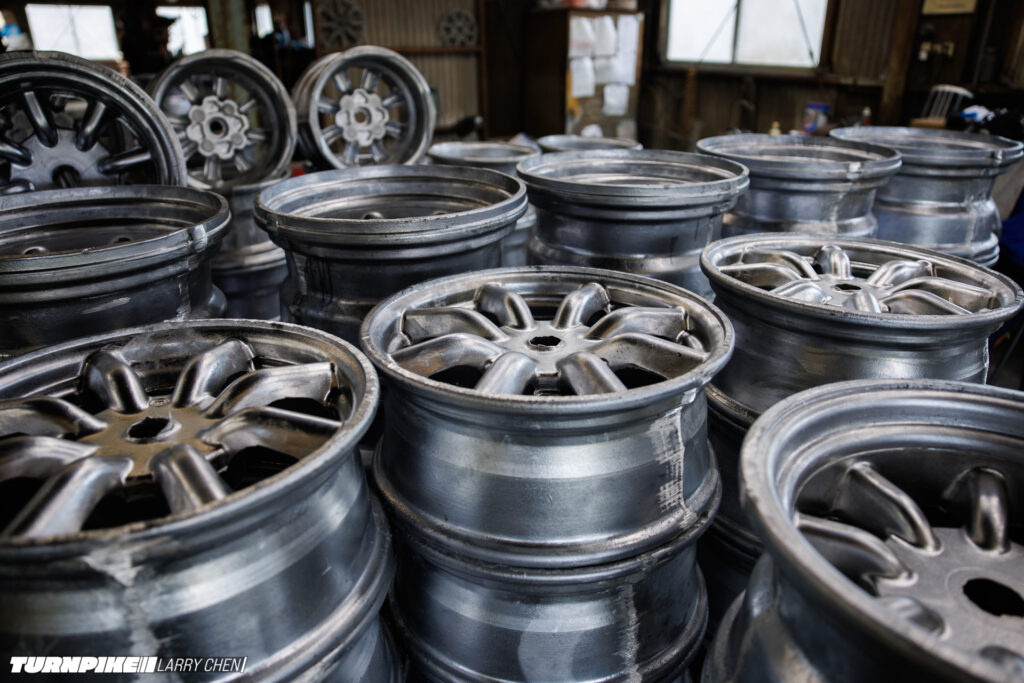


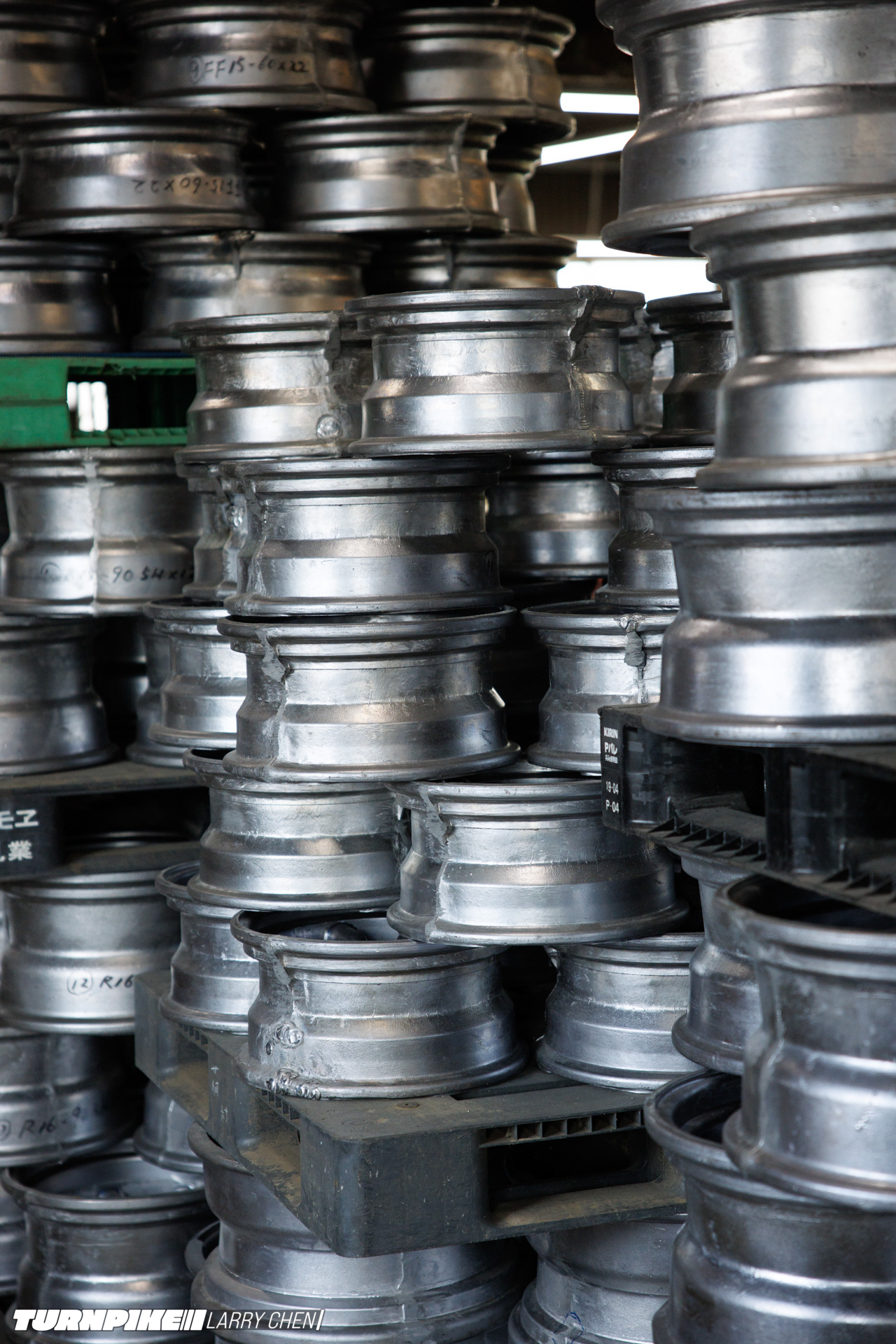
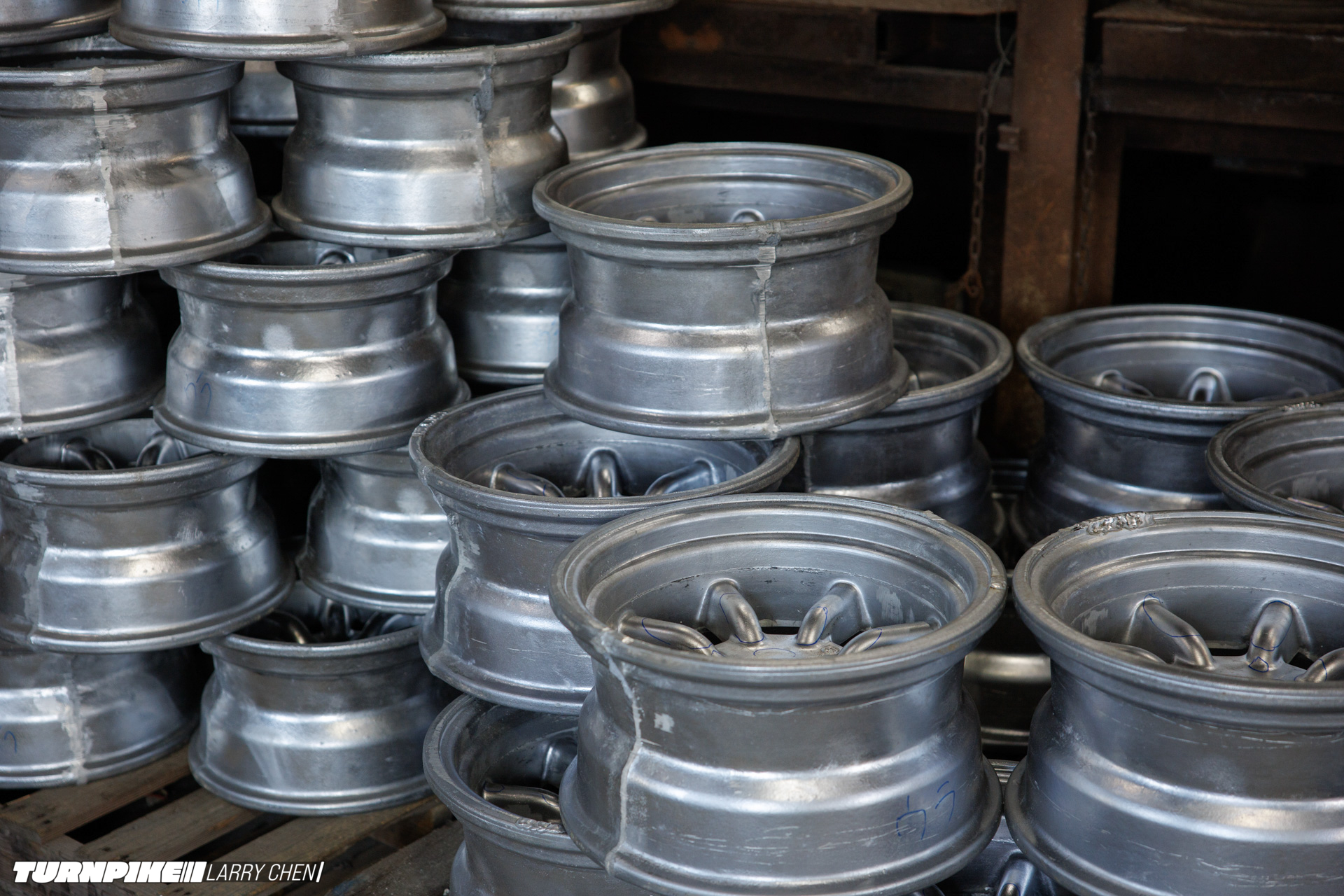
Not every wheel survives. Imperfections in the pour, temperature variations, or mould issues can send a casting straight back into the melting pile. Handmade means variability. It also means heartbreak – sometimes an entire week of work vanishes in seconds.
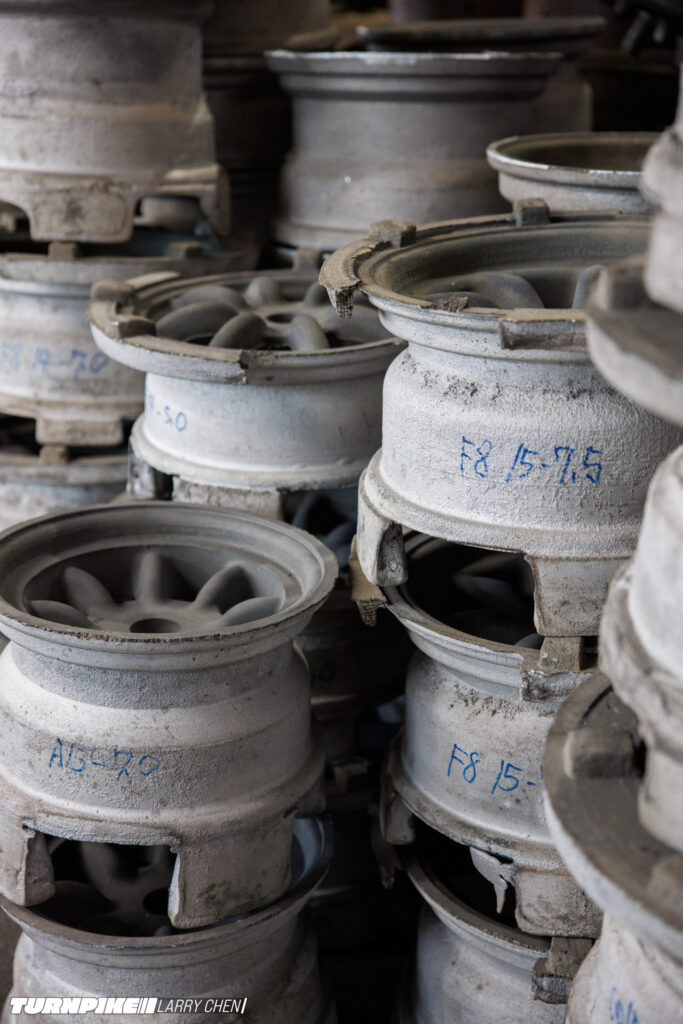
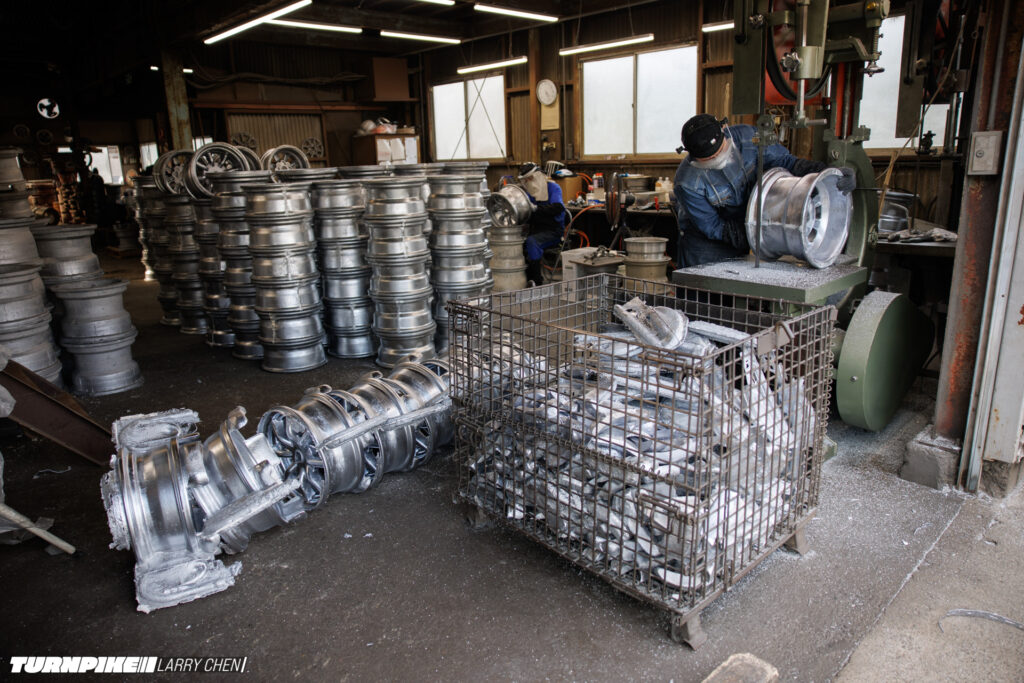
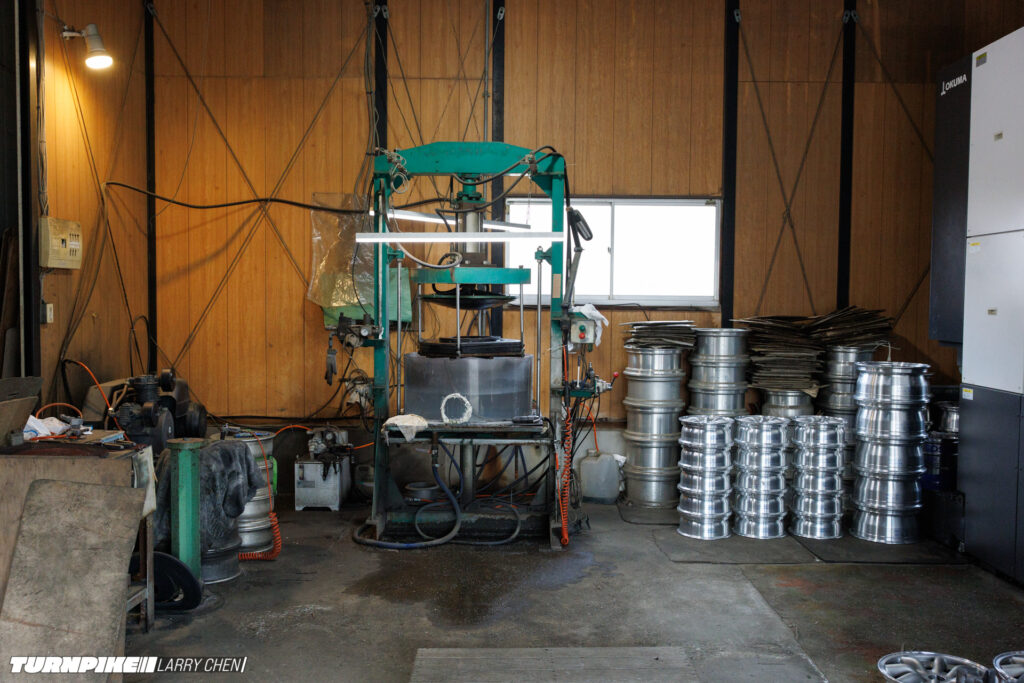
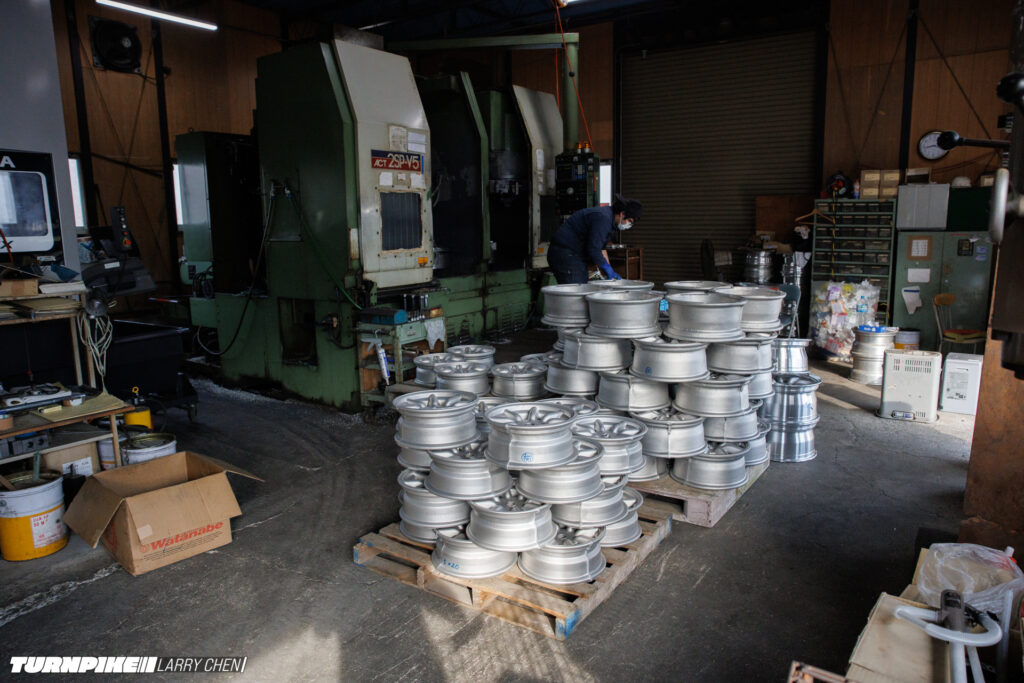
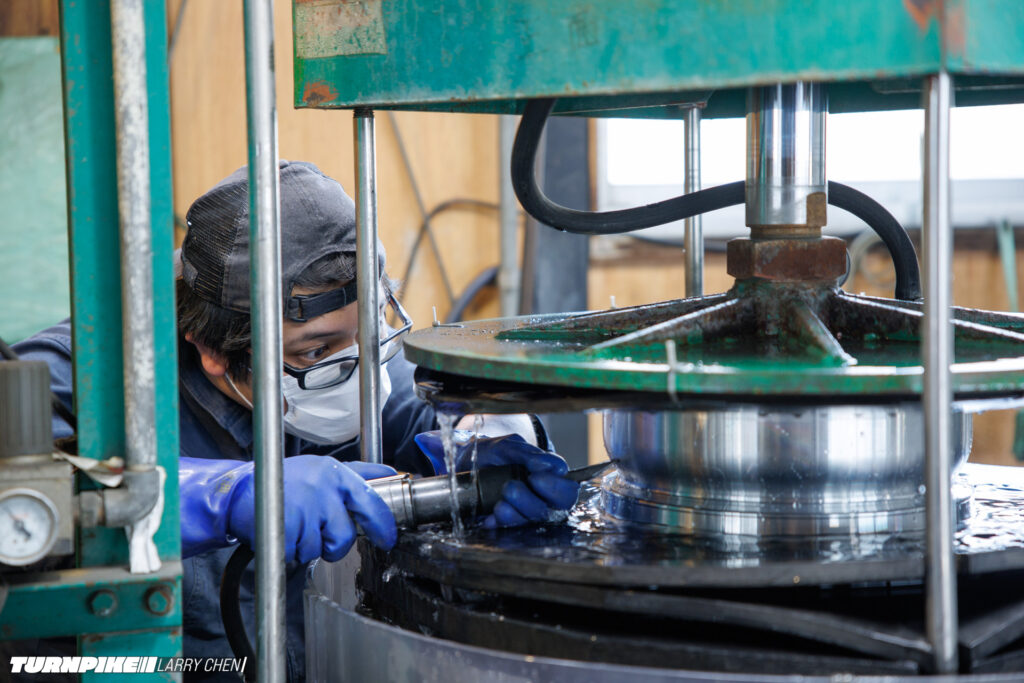
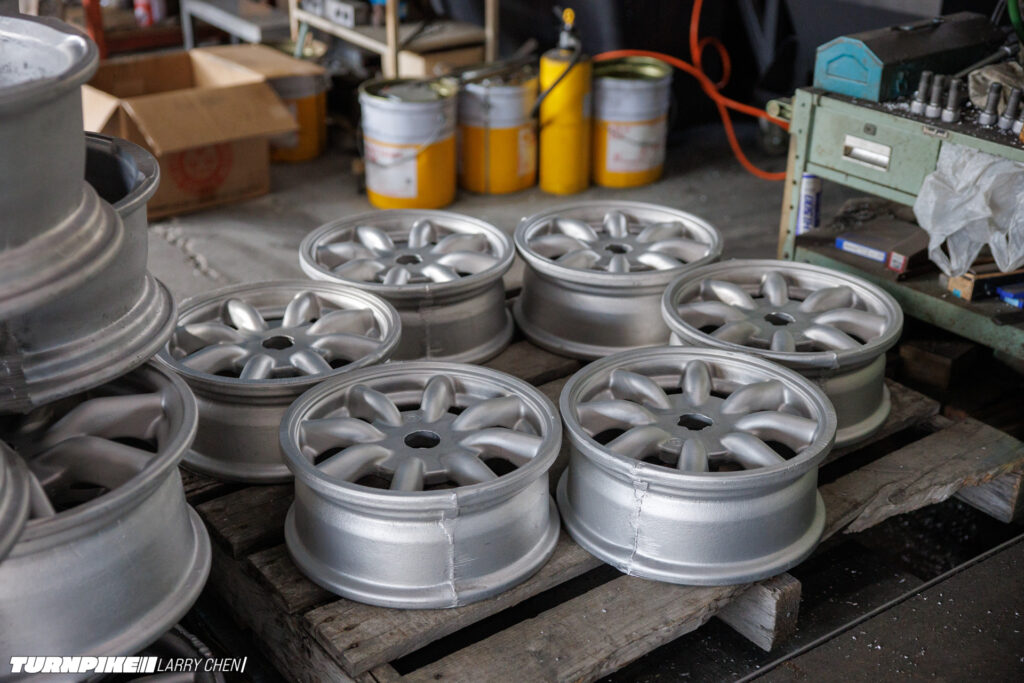
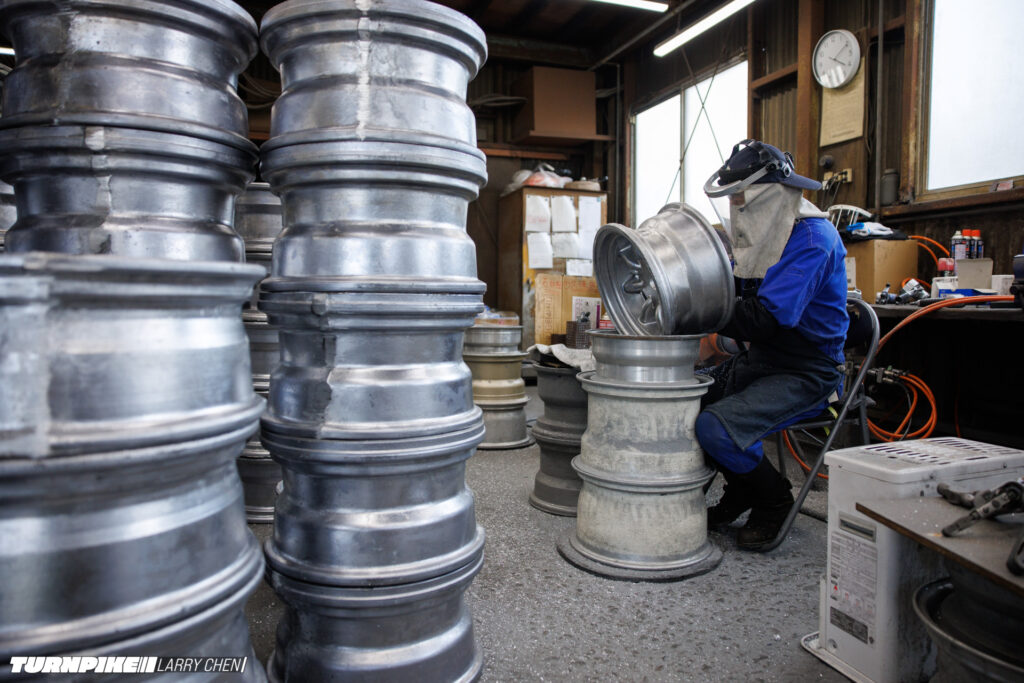
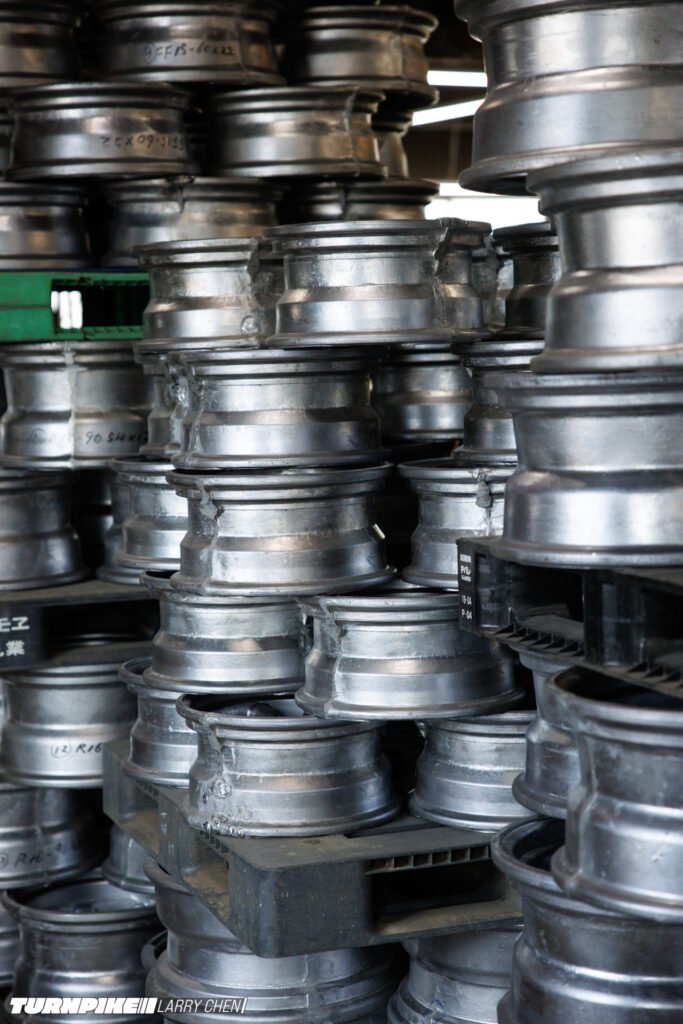
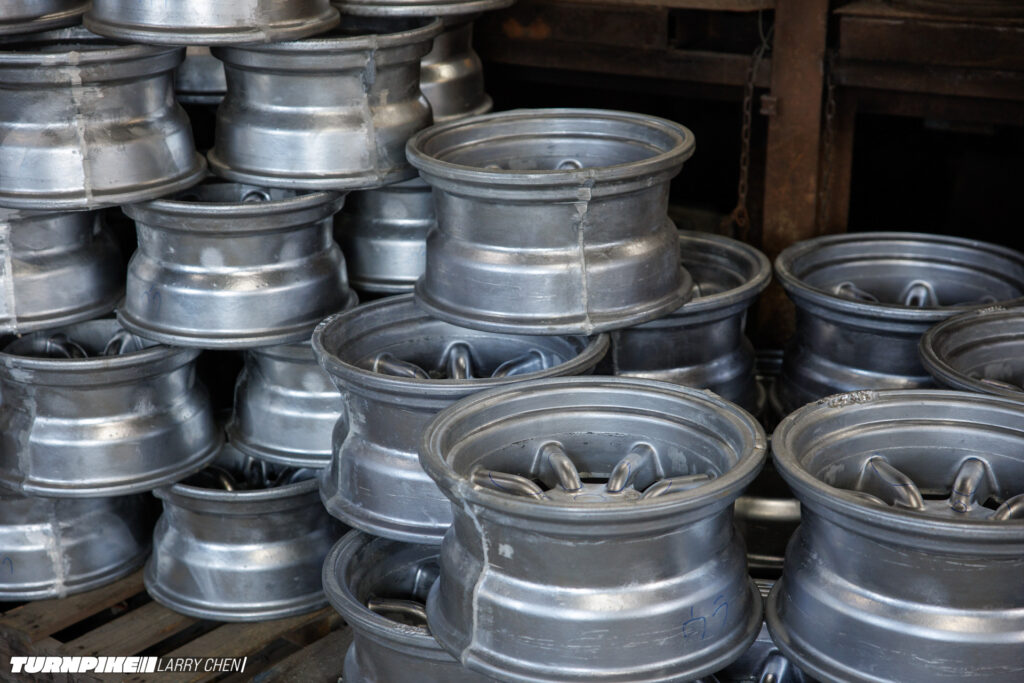
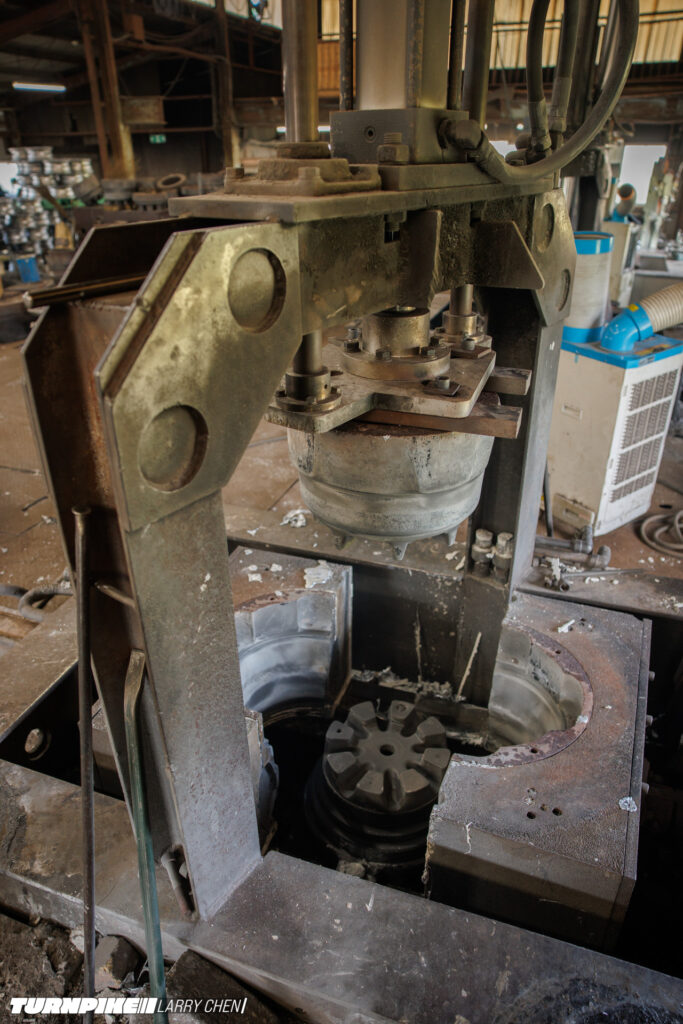
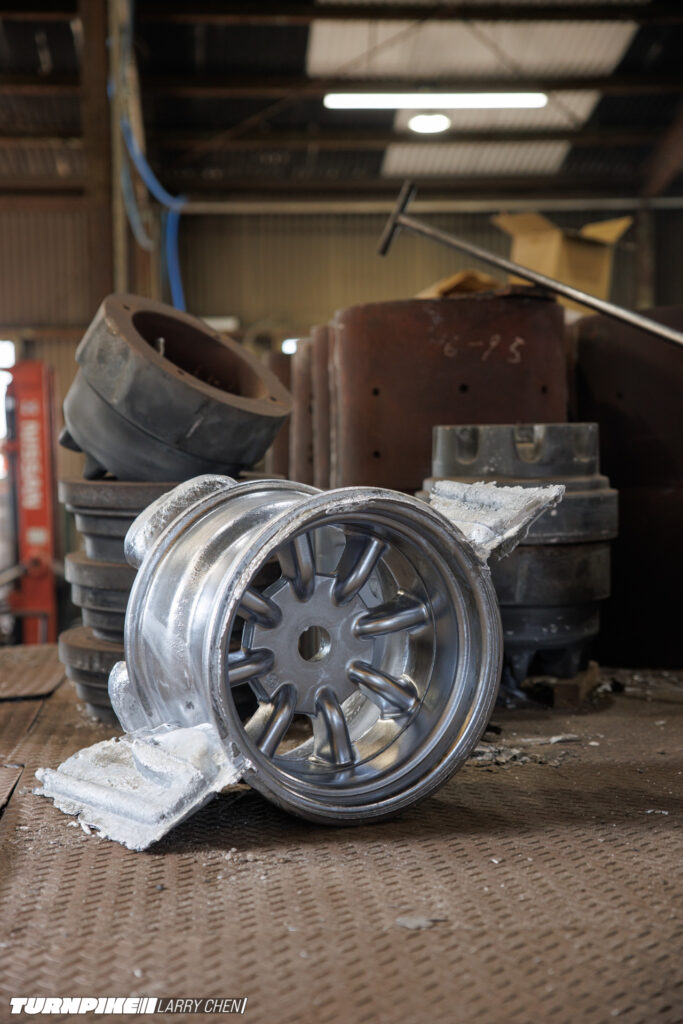
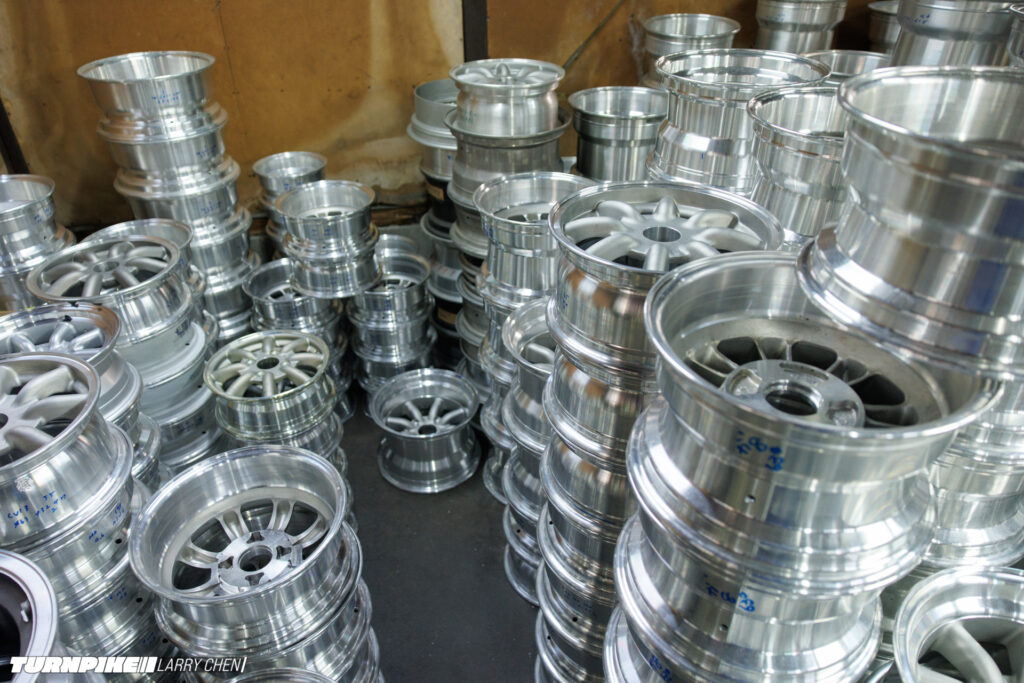
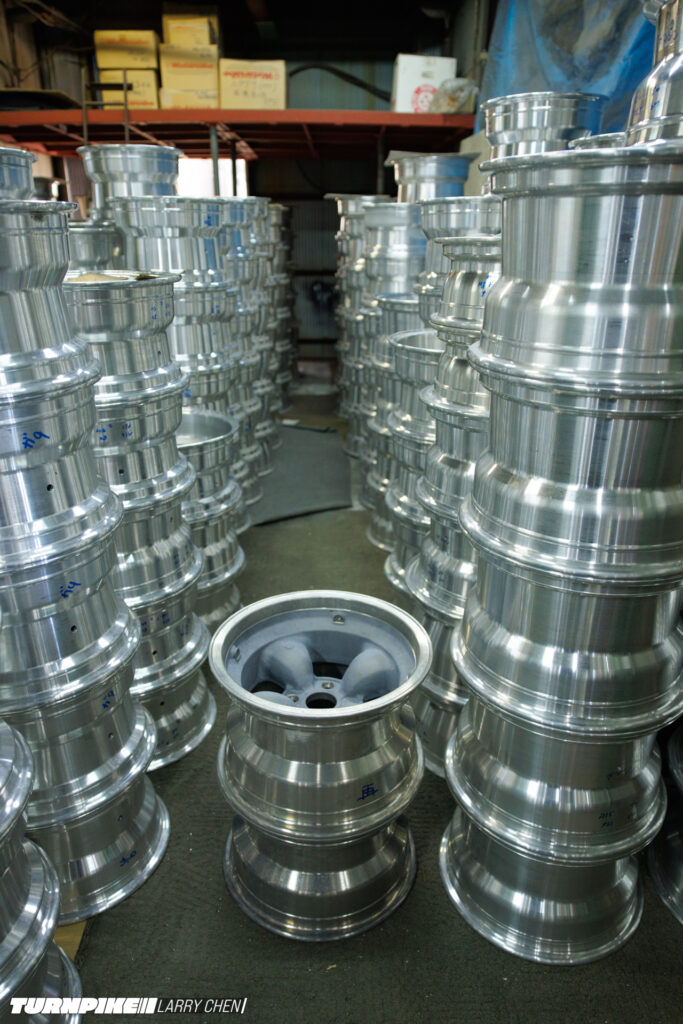
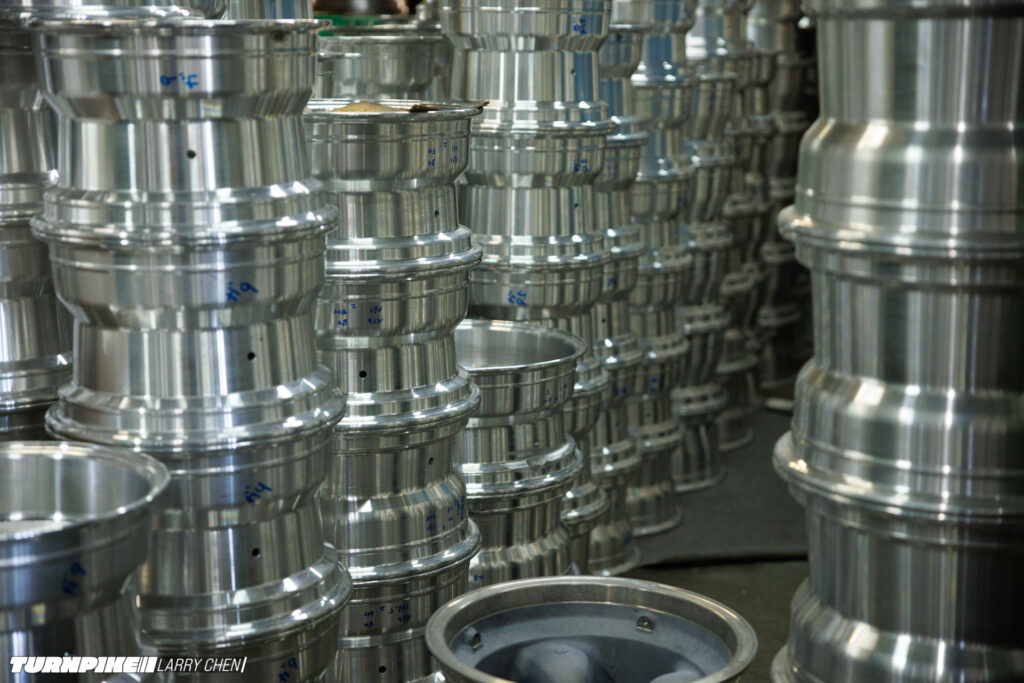
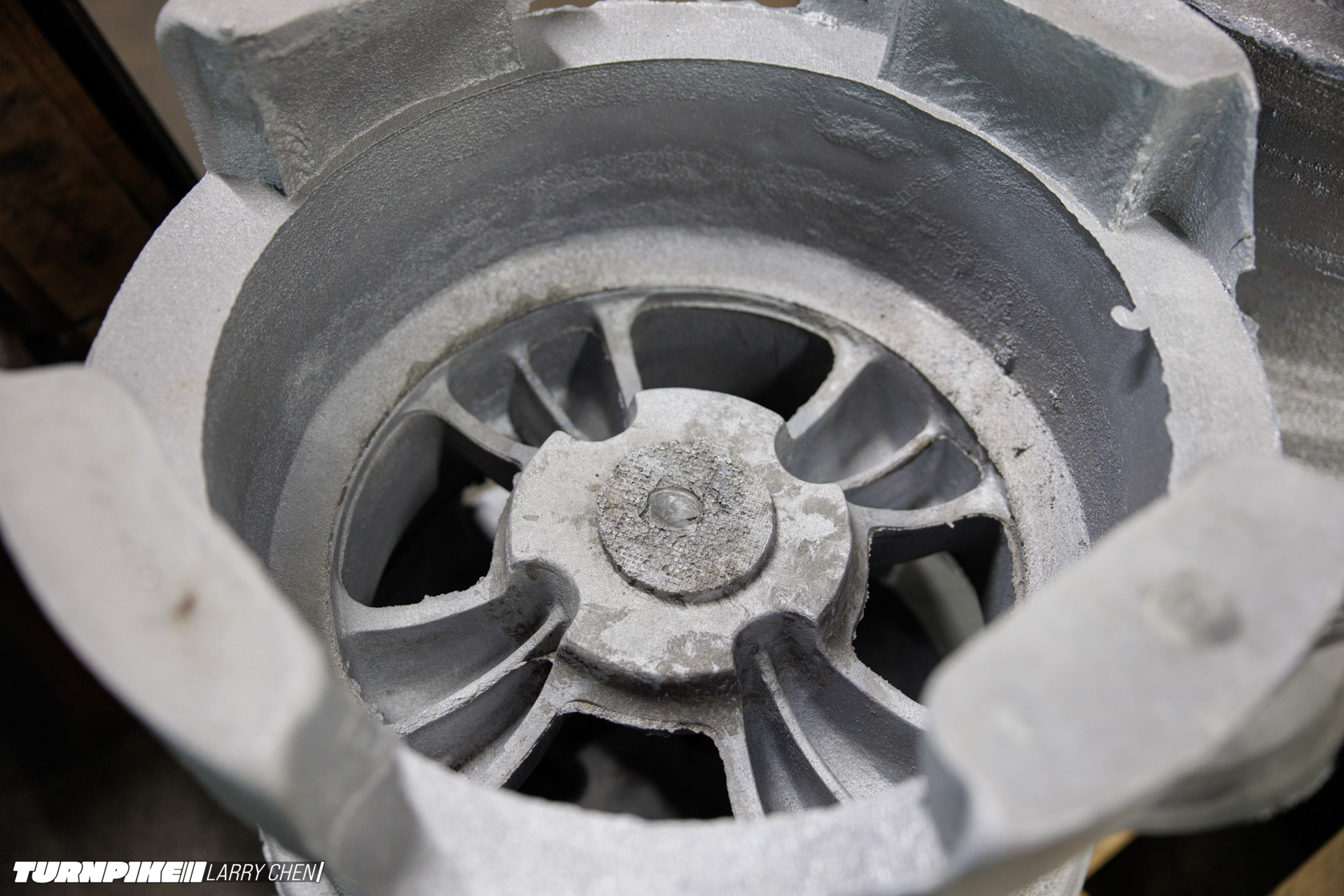
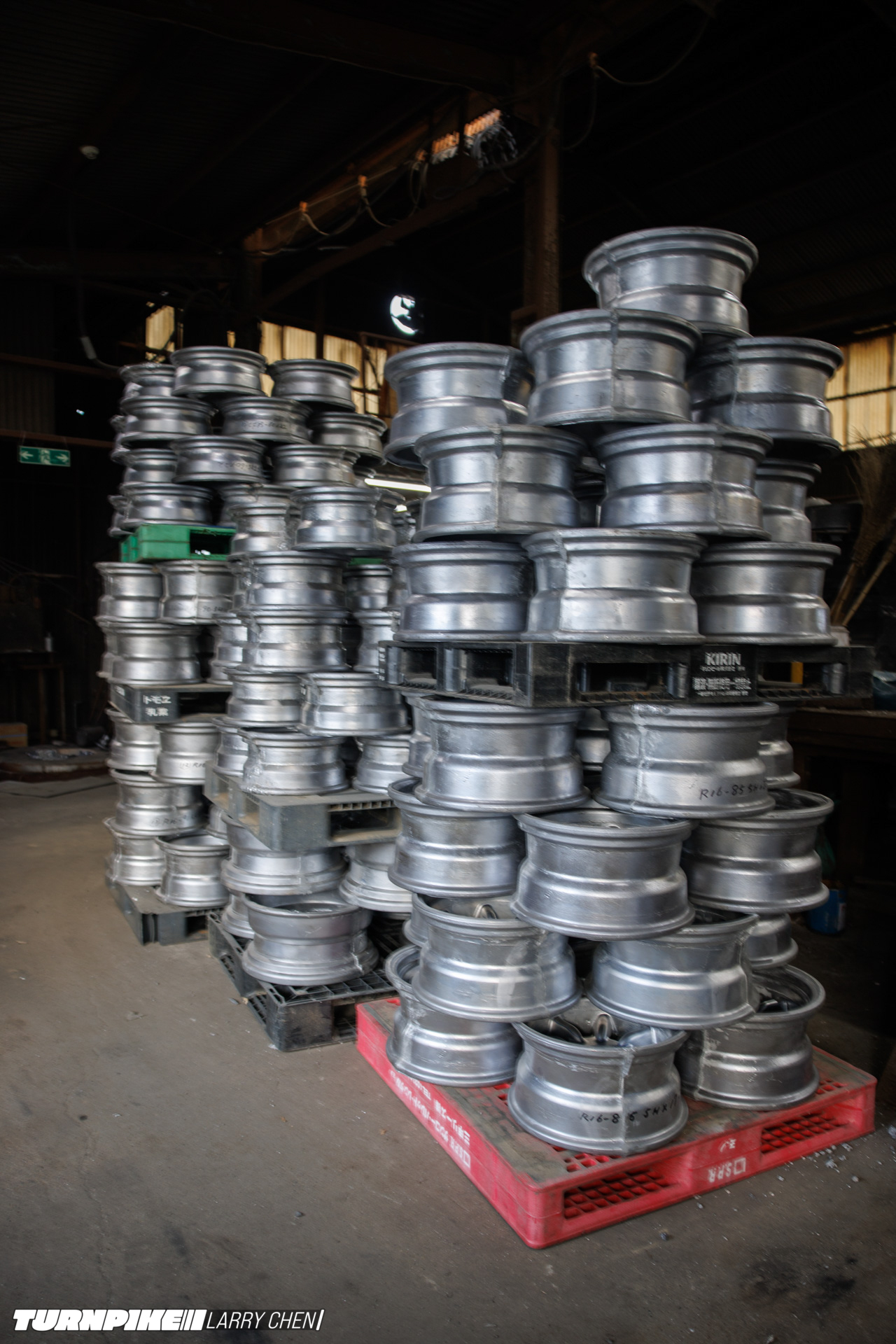
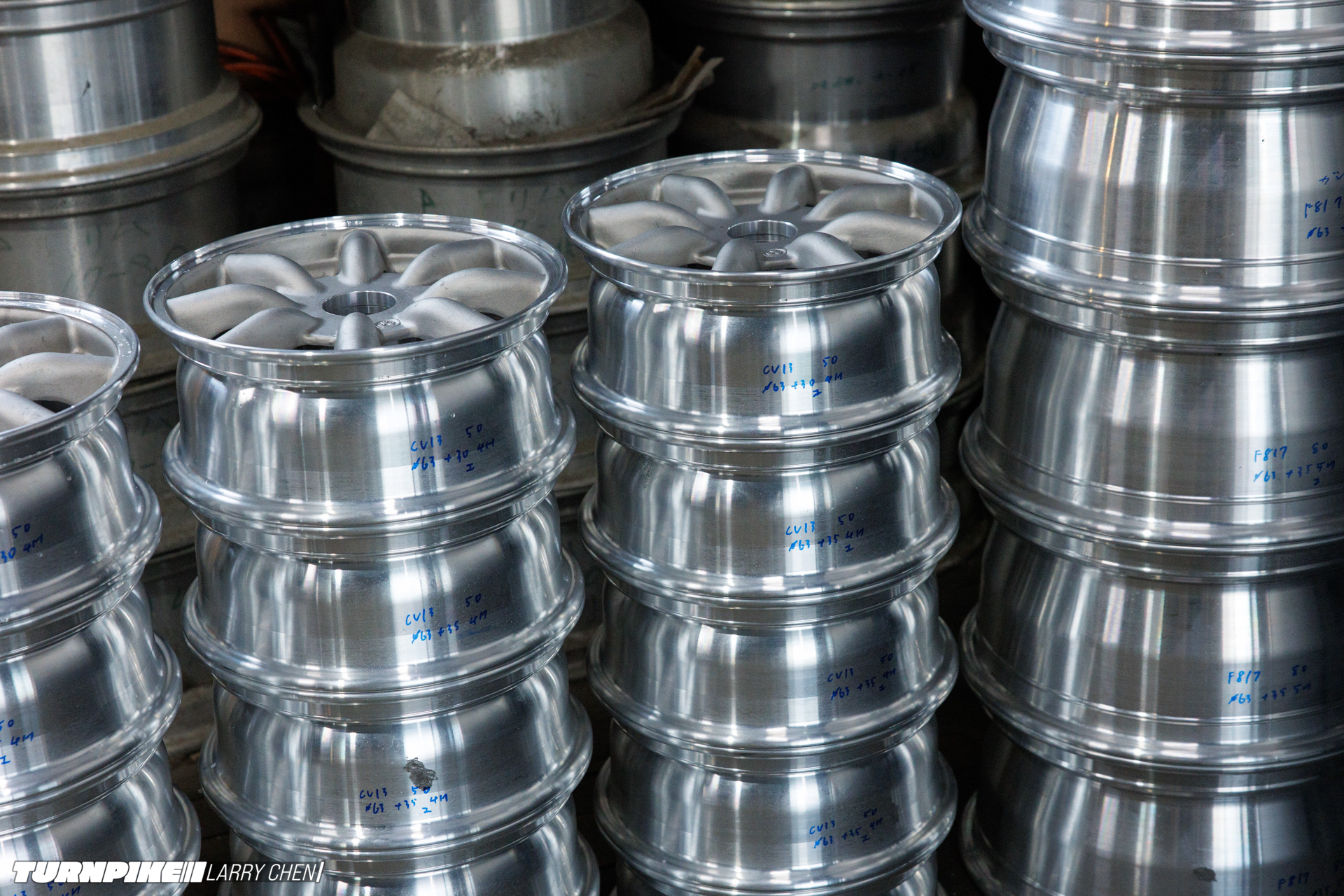
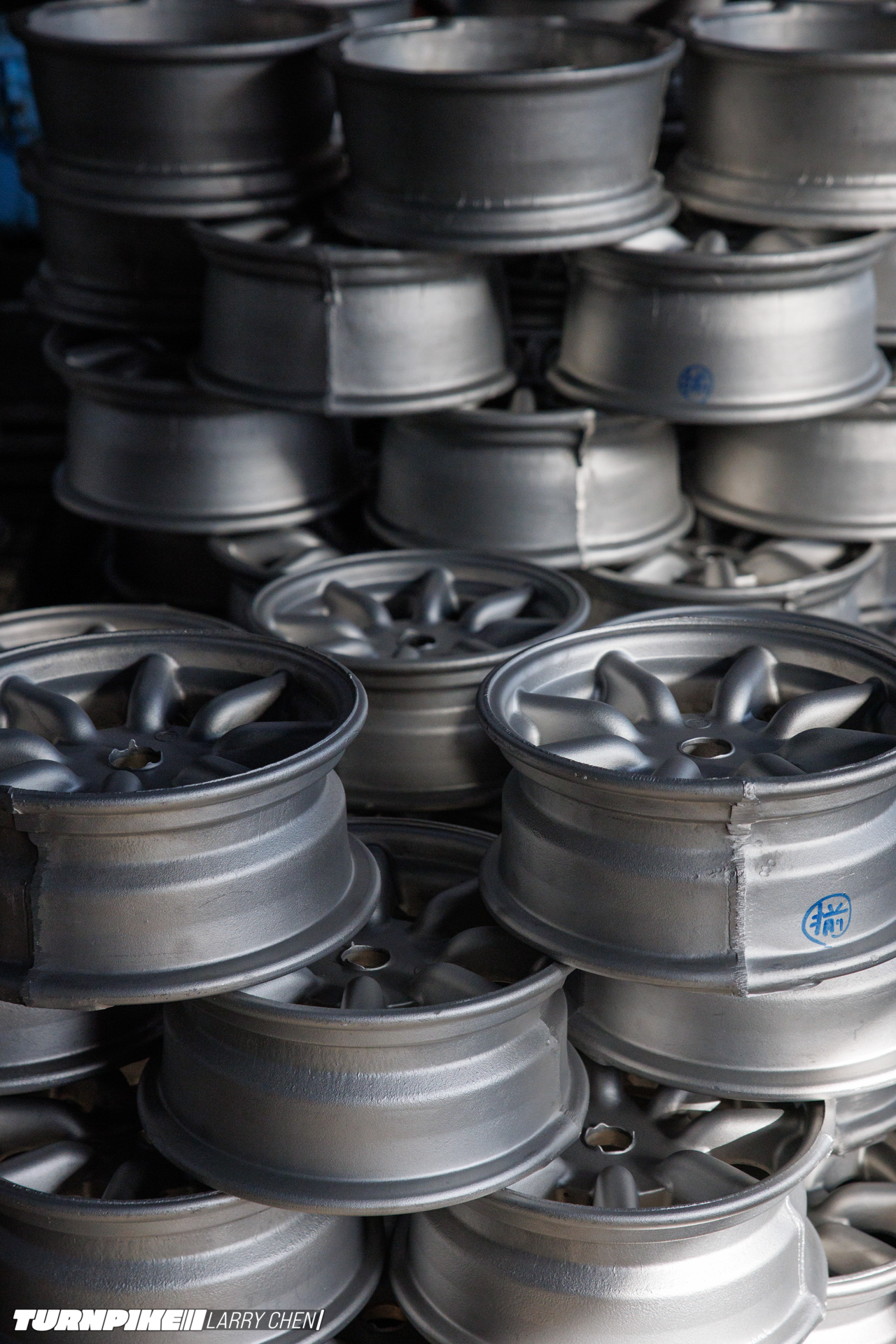
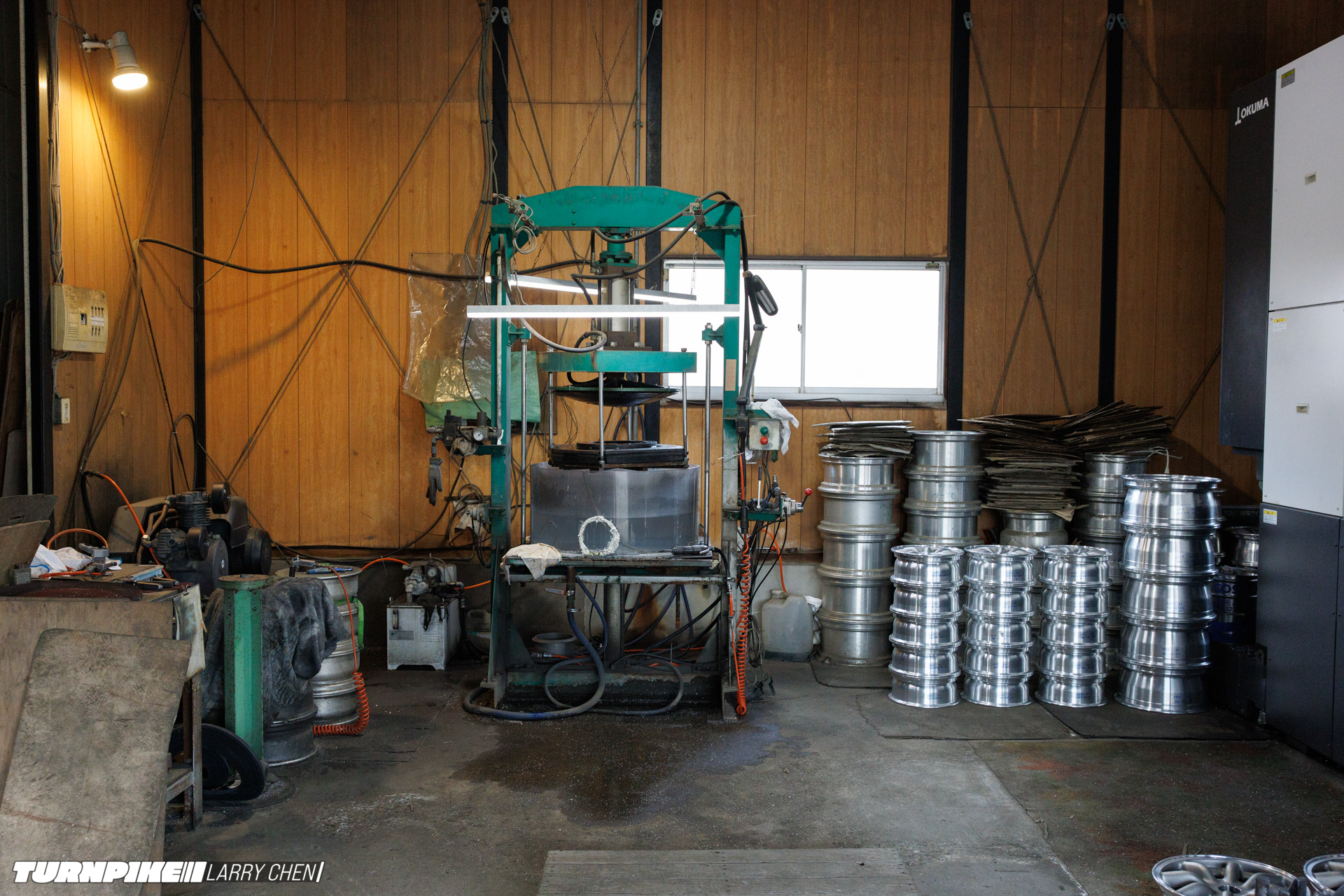
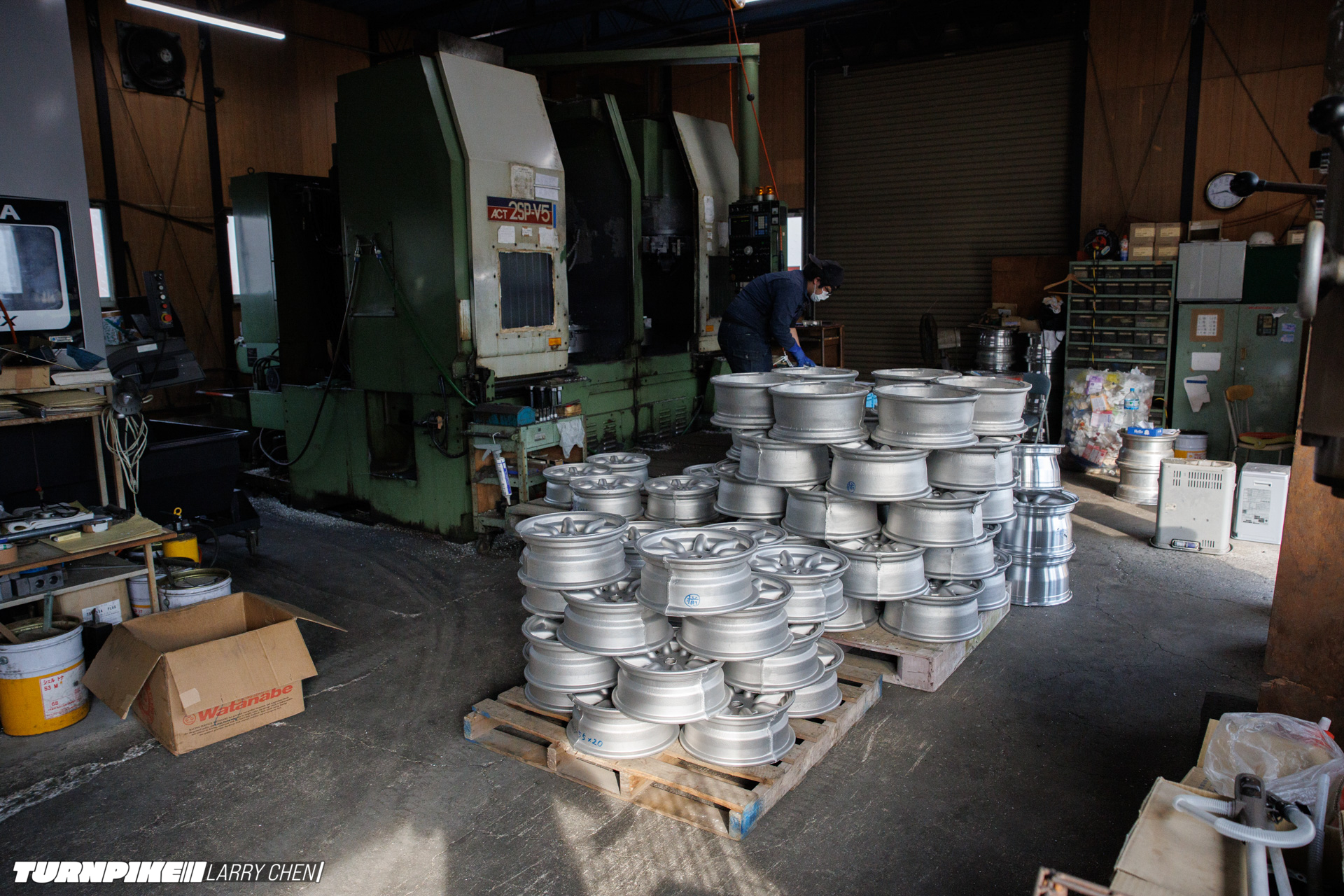
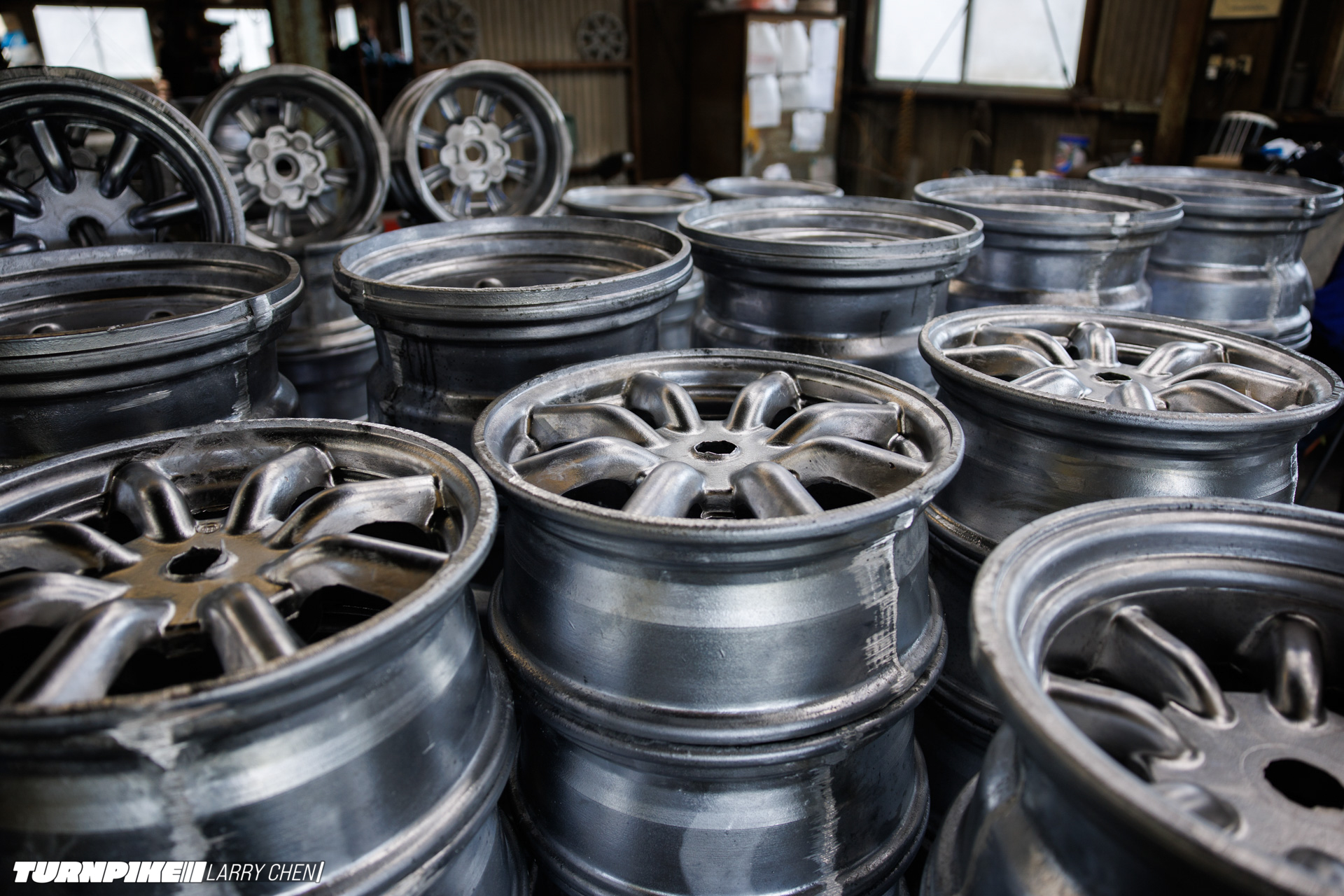
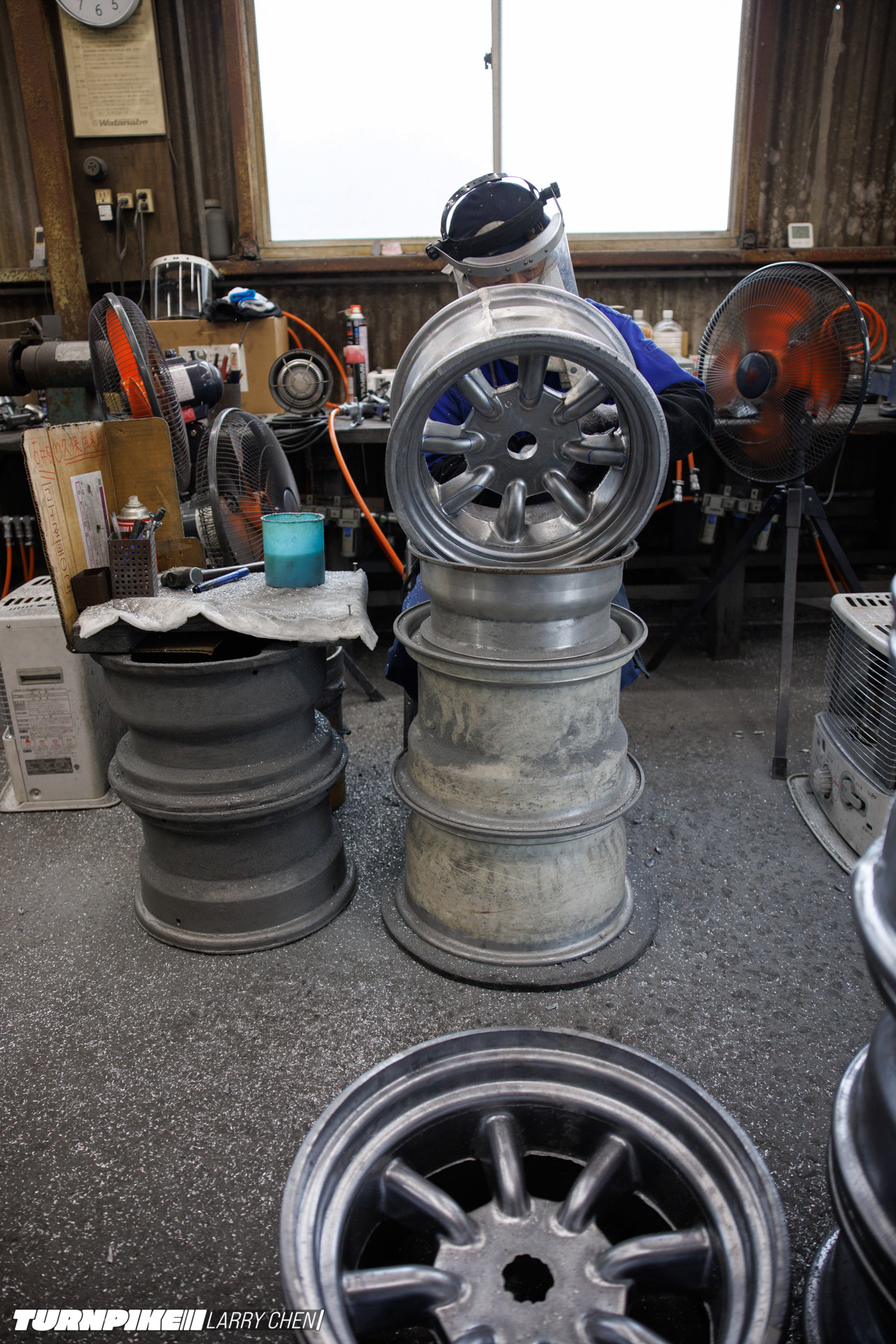
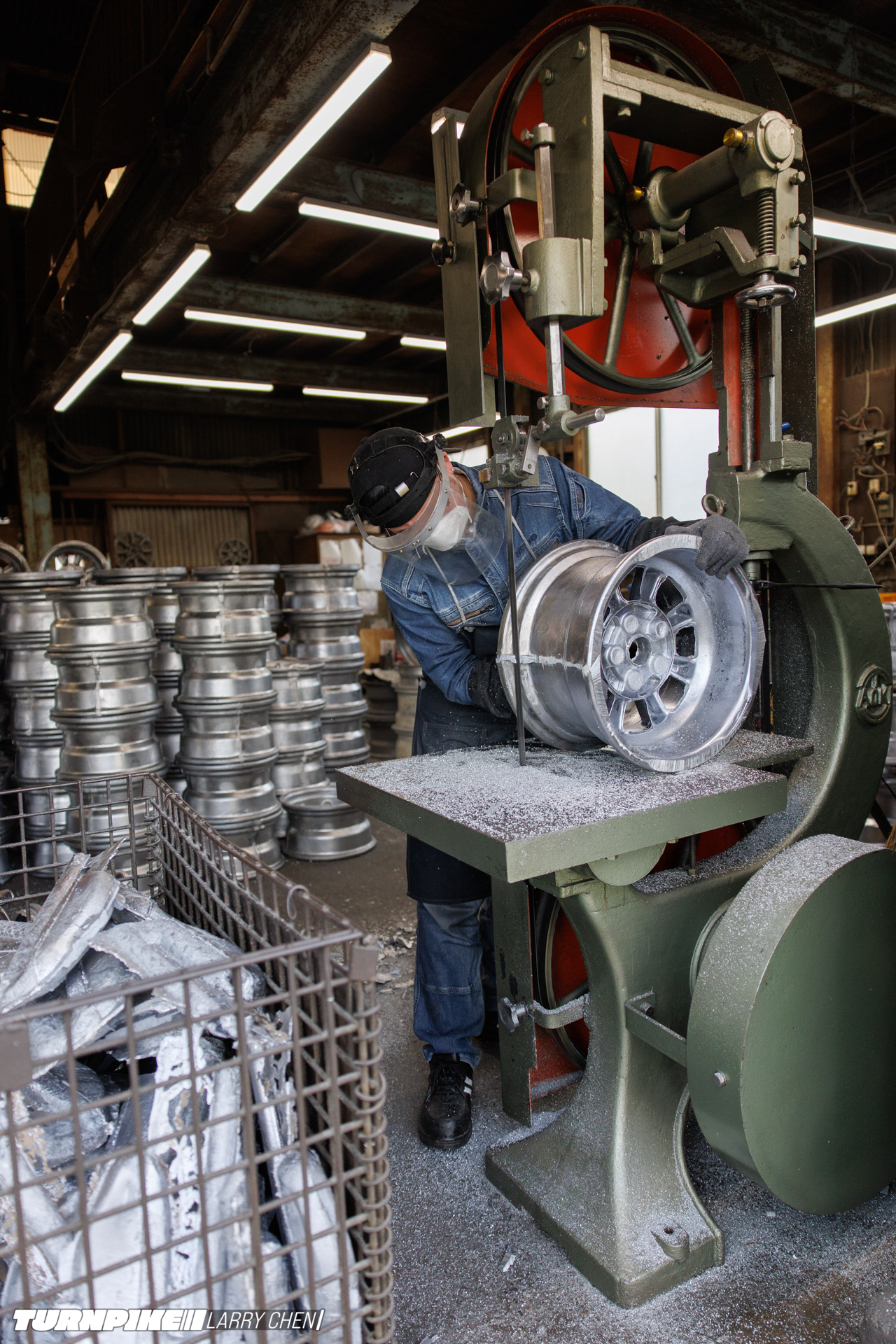
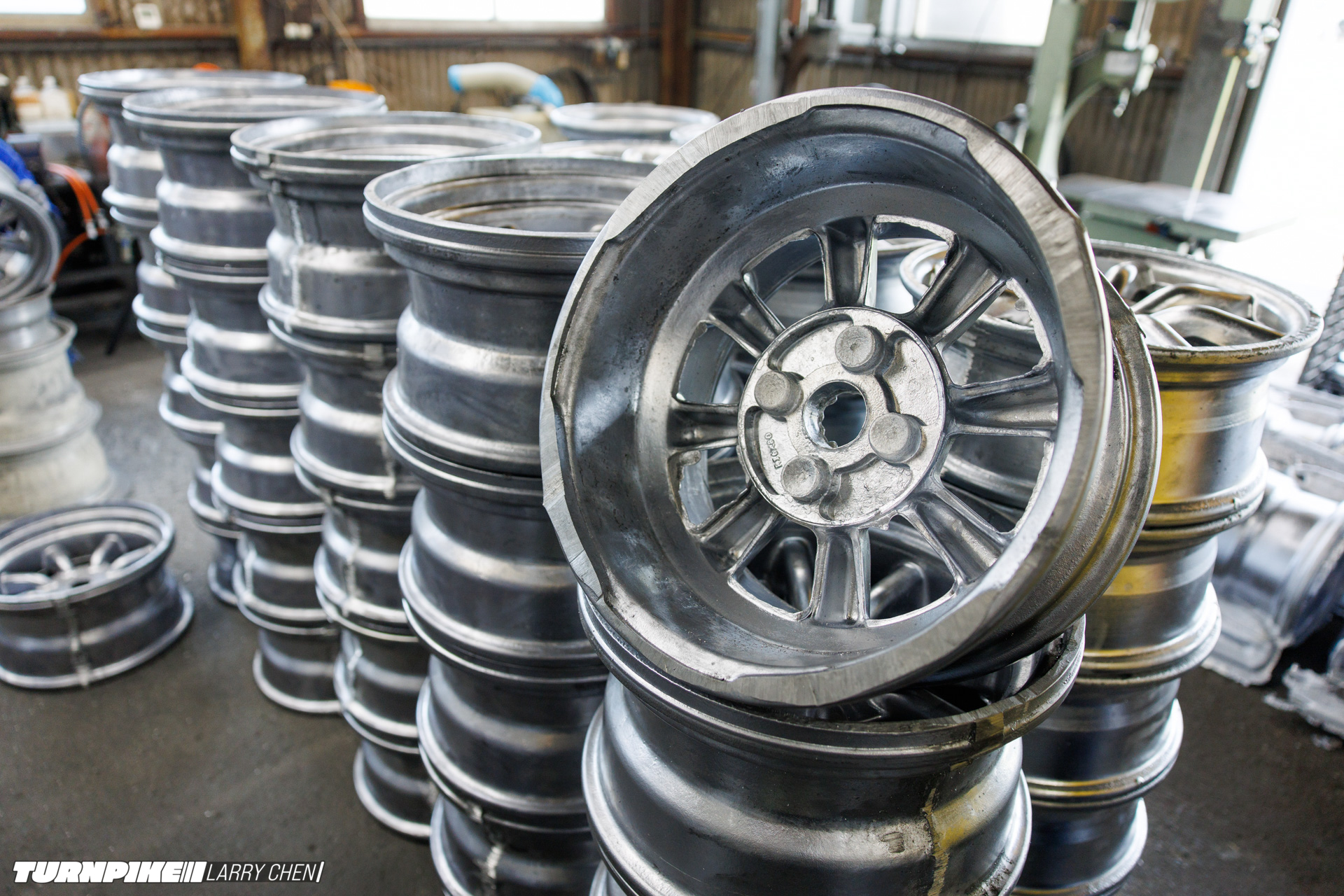
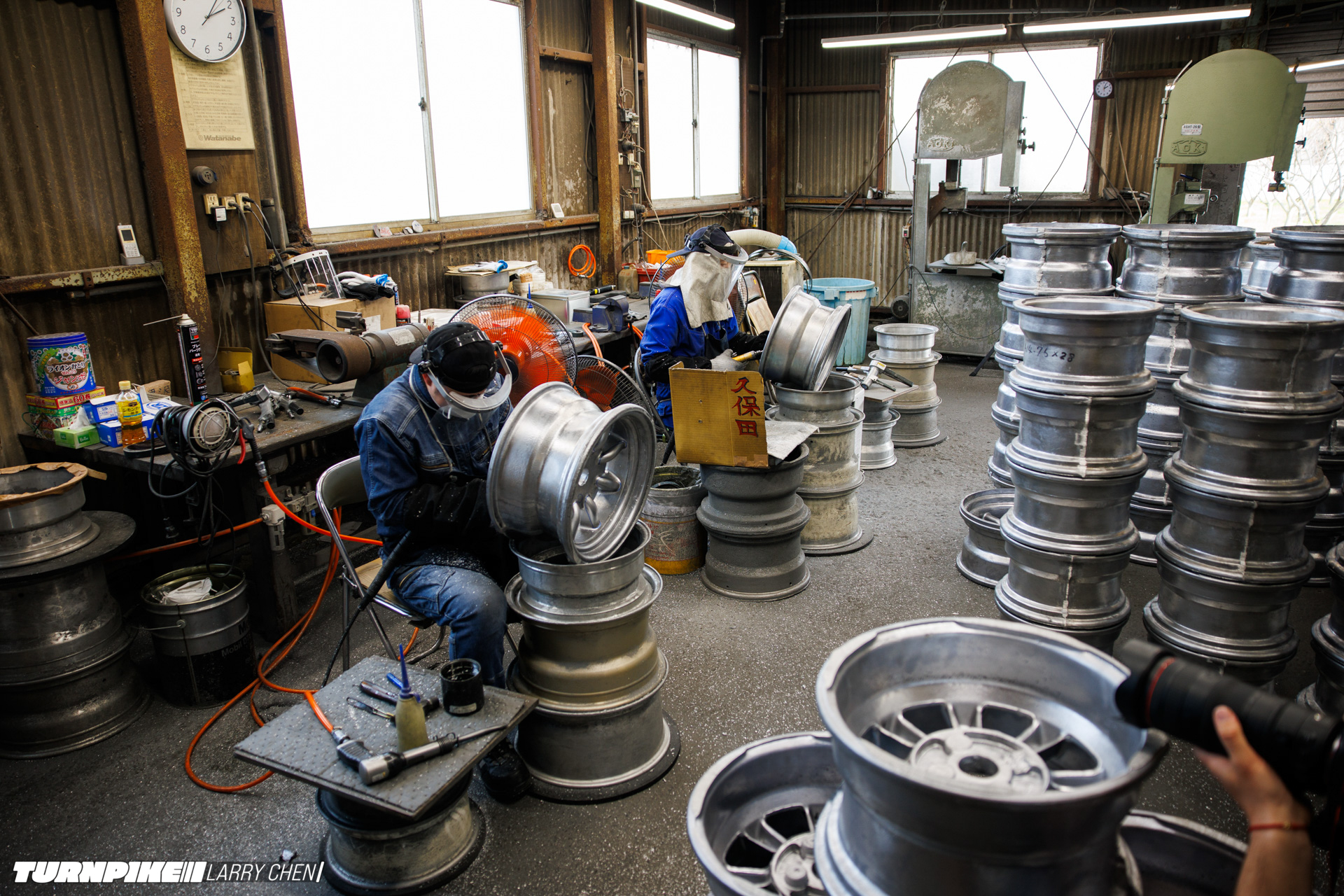
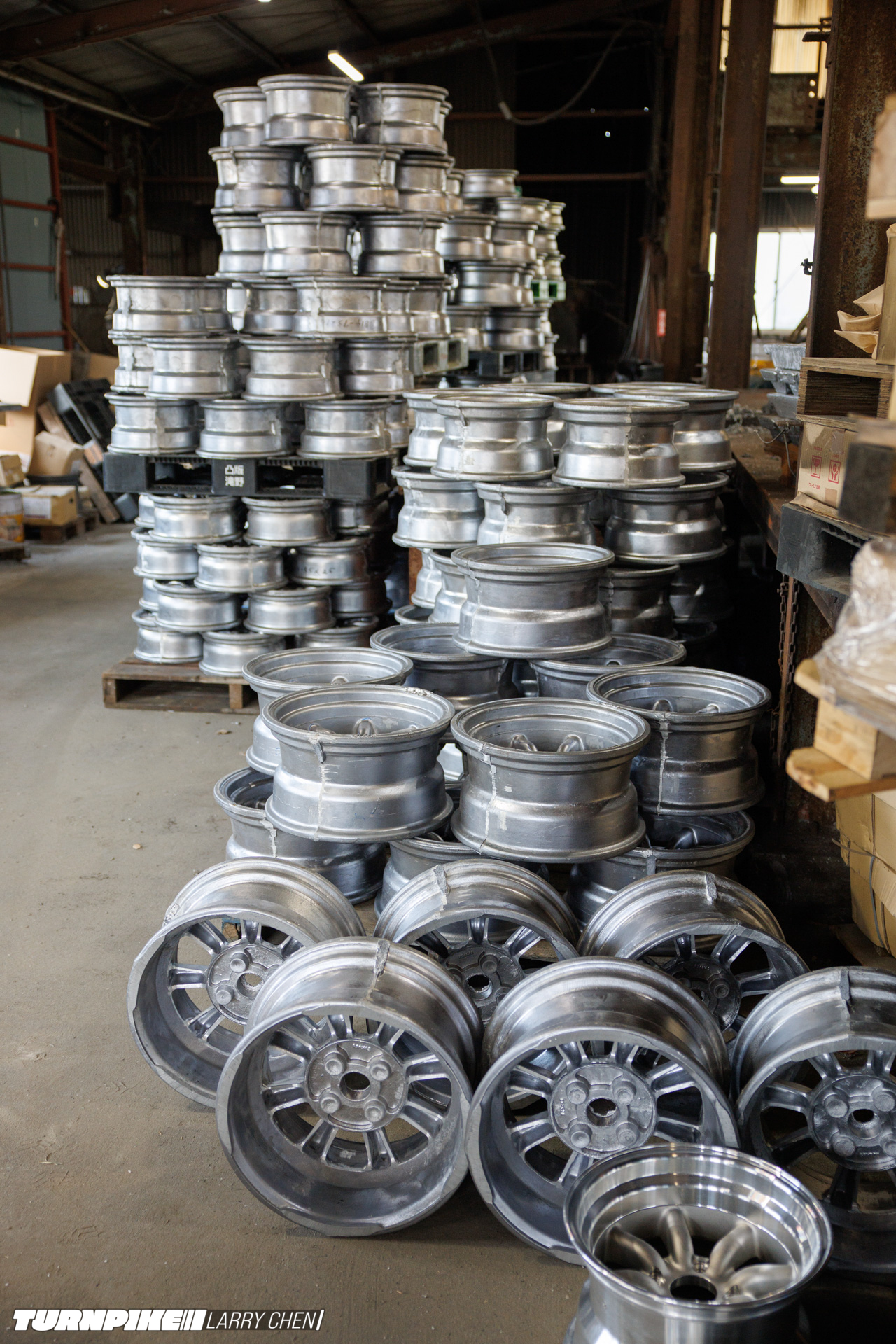
Fresh castings look more like rough sculptures than wheels. Excess metal is trimmed, sanded, shaped, and refined entirely by hand. The wheels are then hardened in a massive oven before machining, where the markings, bolt patterns, offsets, and finishes are applied. This is where we met one of the most important people in the company: the drill master.





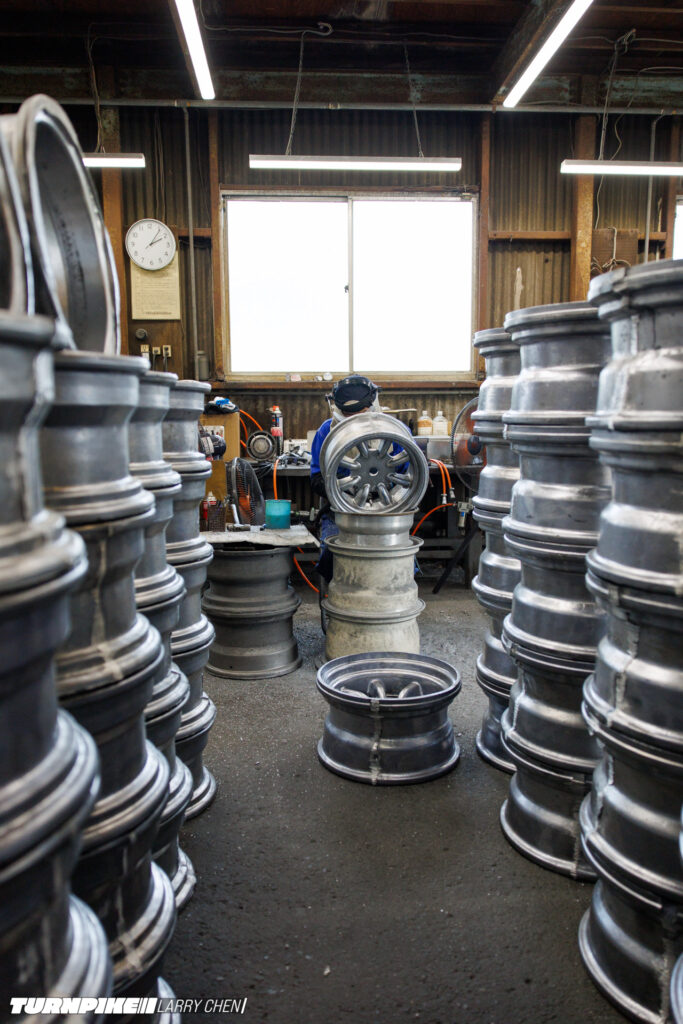

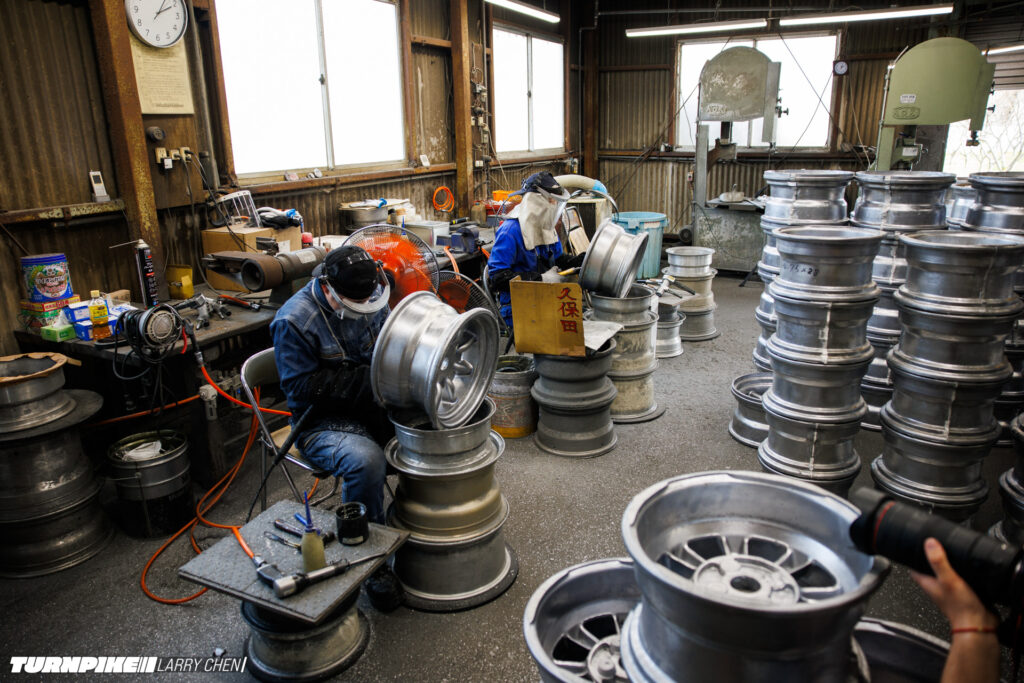
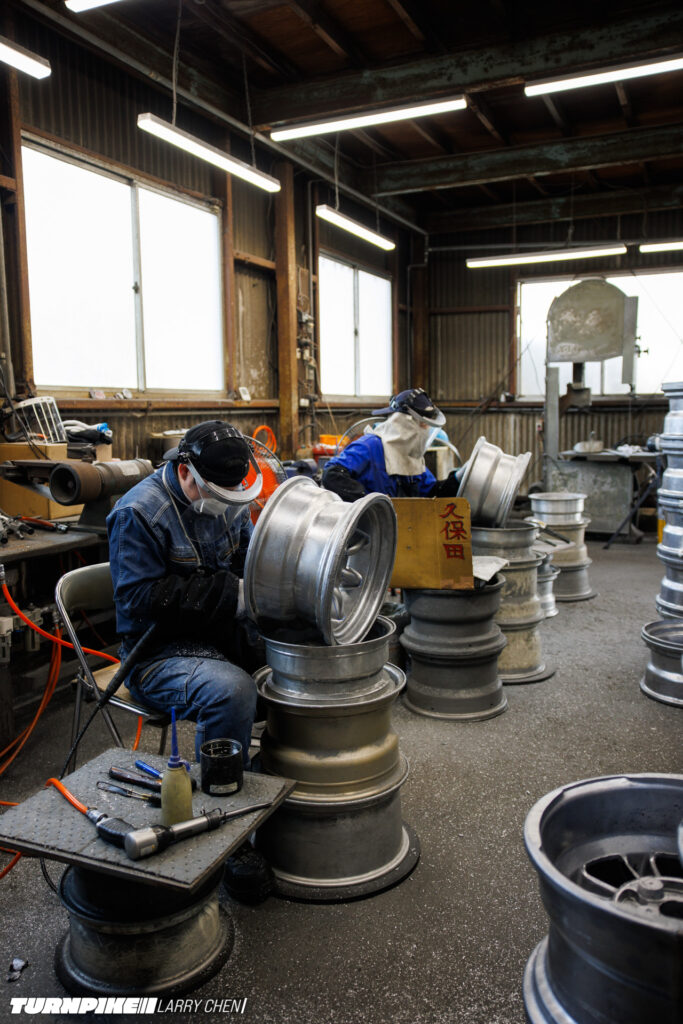
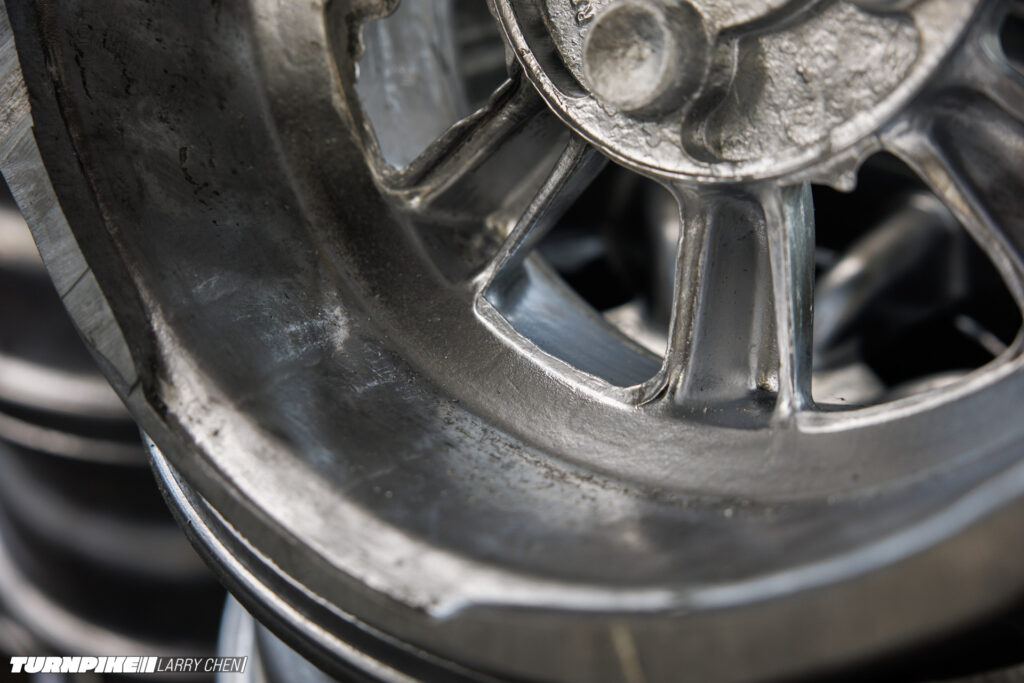


He has been drilling wheels for twenty-six years. In the 1980s there were five craftsmen doing this work; now he is the last one. Every bolt hole, every custom offset, every special hub ring is done by feel, by sound, by experience. No CNC automation. No manuals. If he becomes ill, no Watanabe wheels get drilled. It’s that simple. He has probably drilled hundreds of thousands of wheels in his lifetime – possibly even your set.
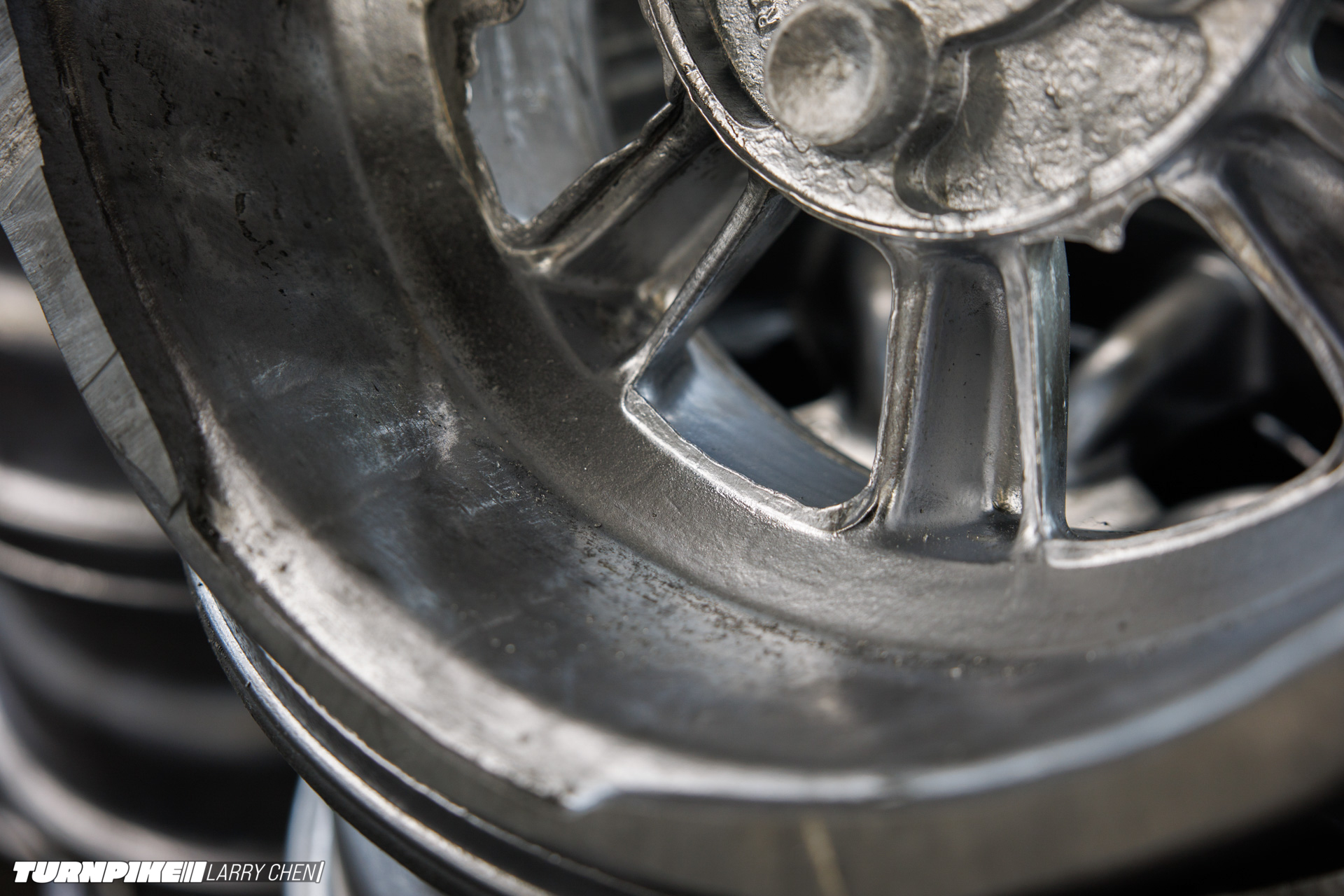
Watanabe wheels never hide their method of creation. The natural sand texture, the tiny variances from wheel to wheel, the subtle human fingerprint – these are exactly what collectors obsess over.
No two wheels are identical. That uniqueness makes every set a piece of functional art.
It’s why enthusiasts wait two years for a set of sandcast wheels. It’s why forged magnesium sets – like the ultra-light, sub-eight-pound versions we saw in testing – carry so much mystique. And it’s why Mr. Watanabe refused to let his son discontinue the sandcasting program, even when told it was inefficient and financially impractical.
“This is our spirit,” he told us. “We make wheels for you, by hand.”
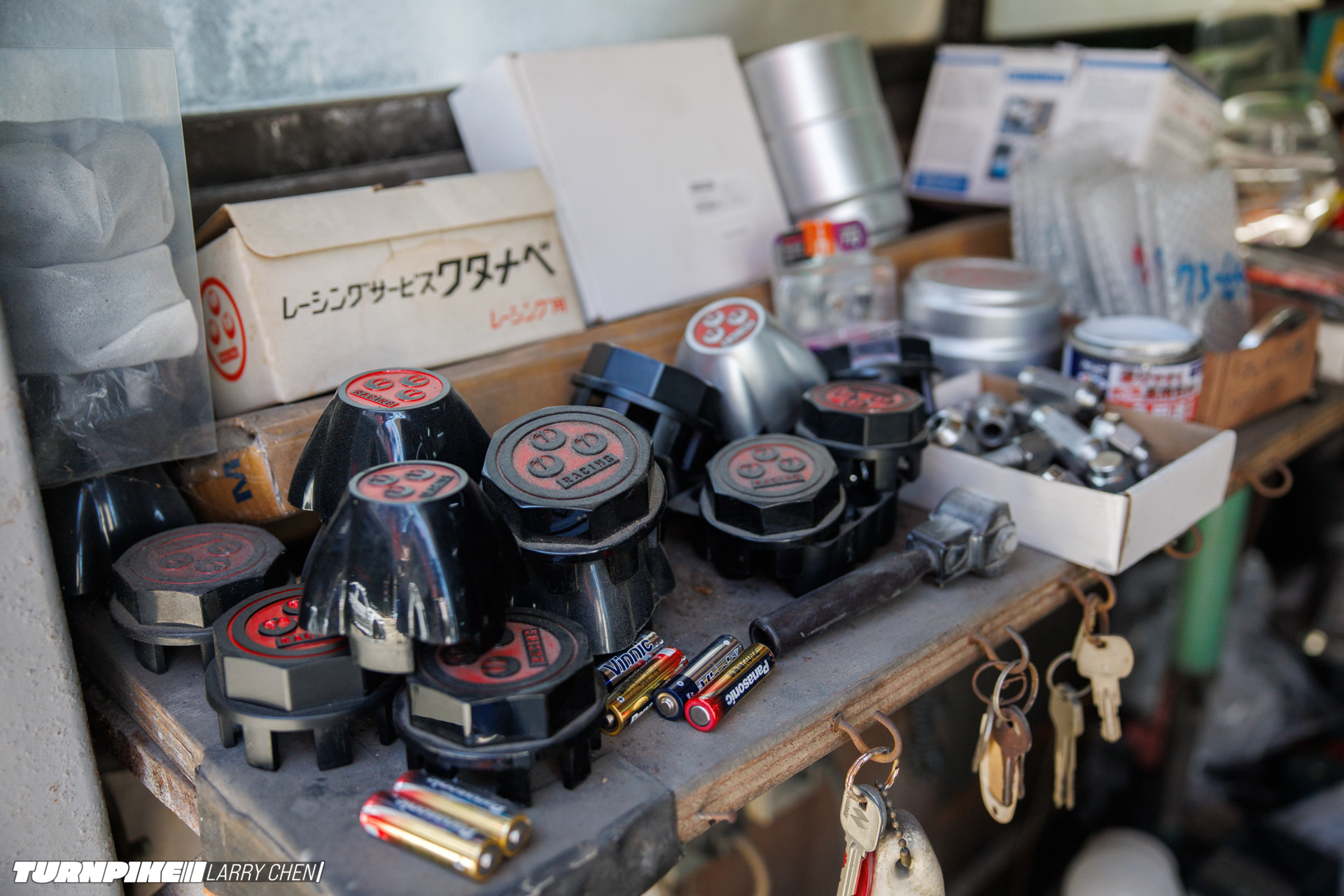
RS Watanabe began in the early 1960s building full race cars for Japan’s F4 series. Wheels came later, introduced in the early 1980s, and they quickly became icons in both motorsport and street tuning. Their original blueprints are still stored in tissue-paper lined notebooks, hand-drawn, annotated, and carefully protected. These aren’t reproductions or digital files. They are the originals – fading pencil lines that built a global brand.
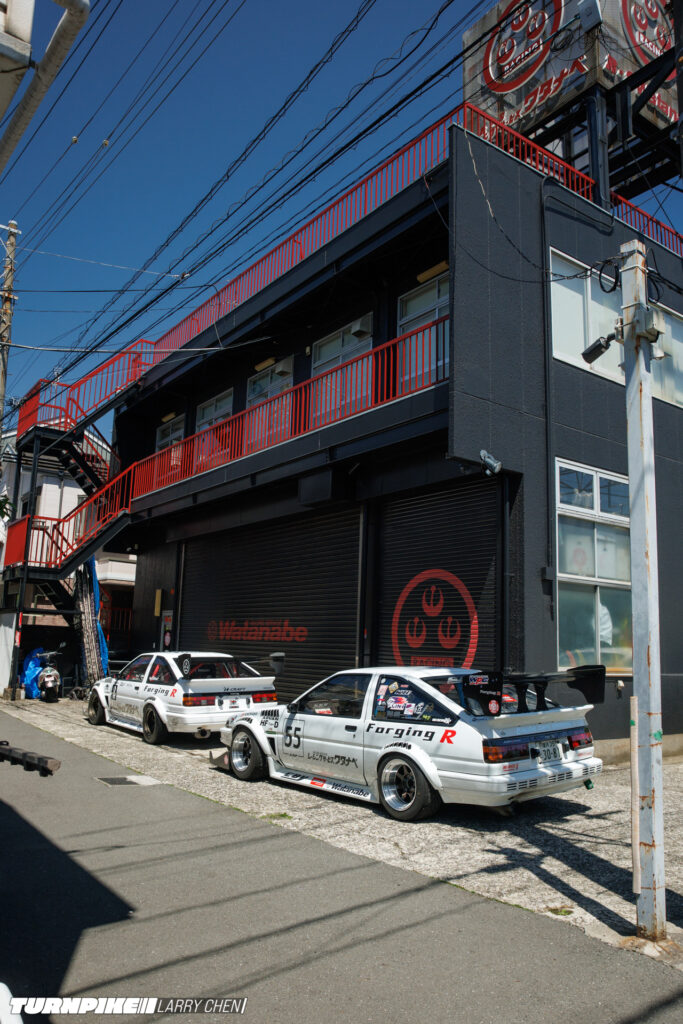
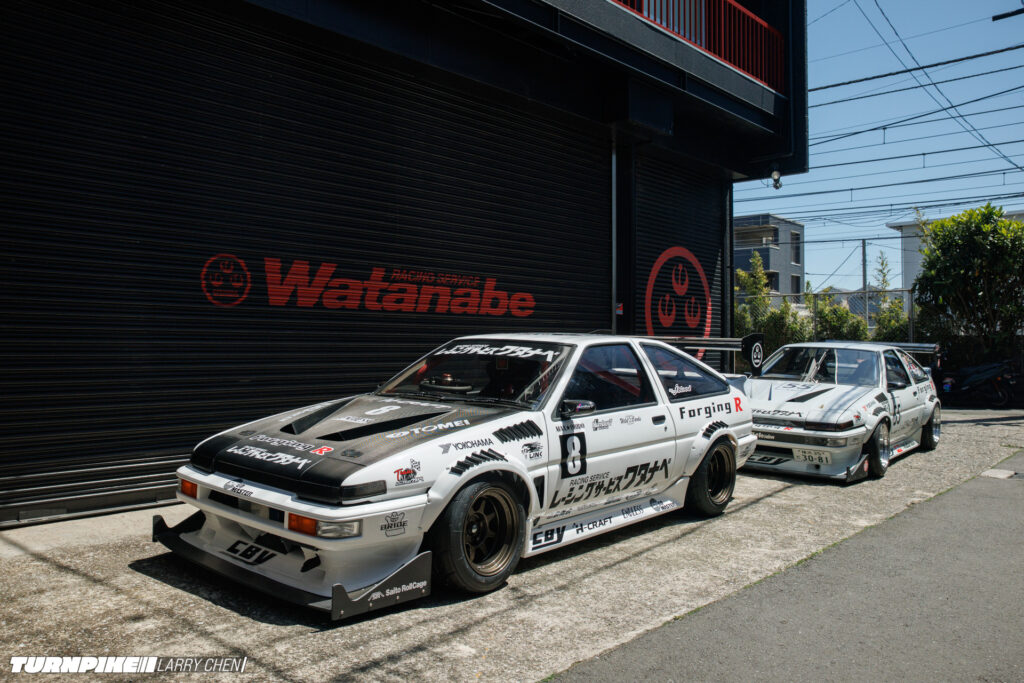
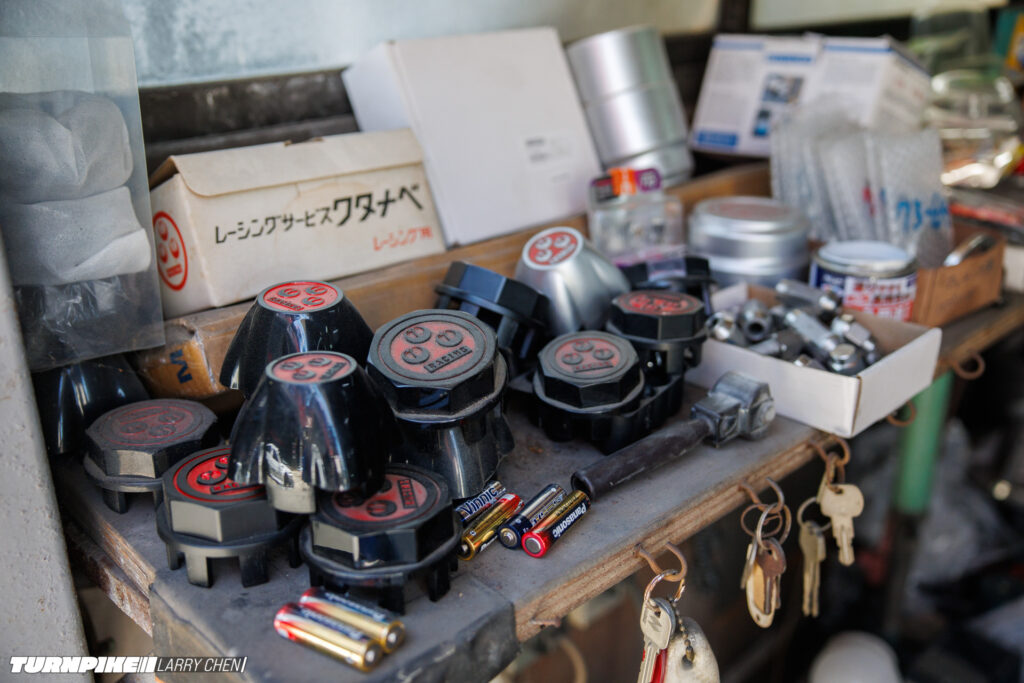
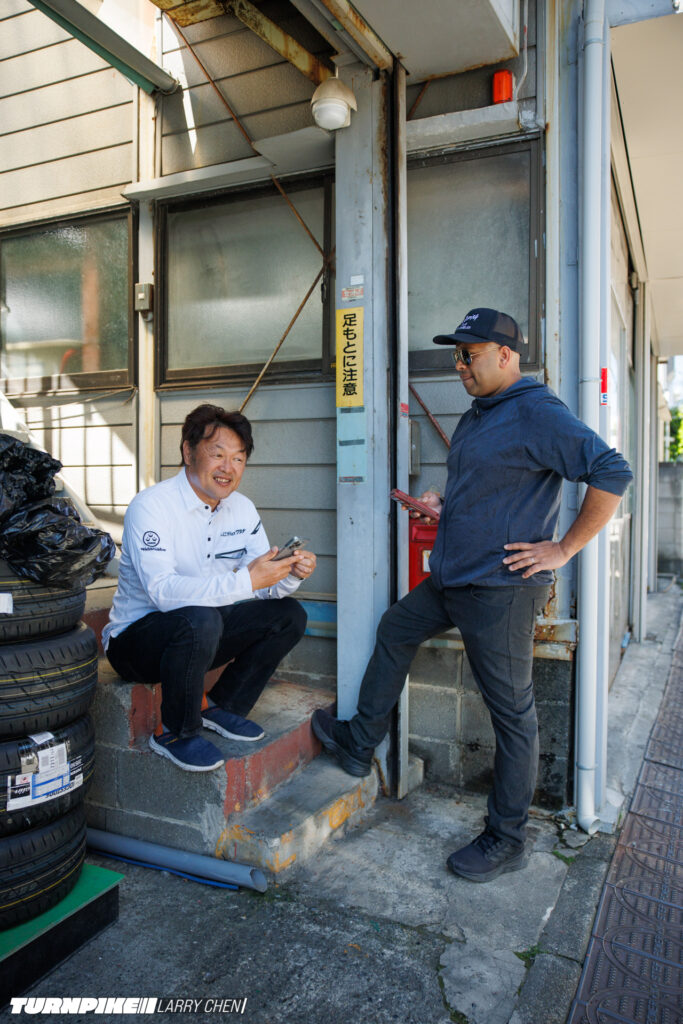
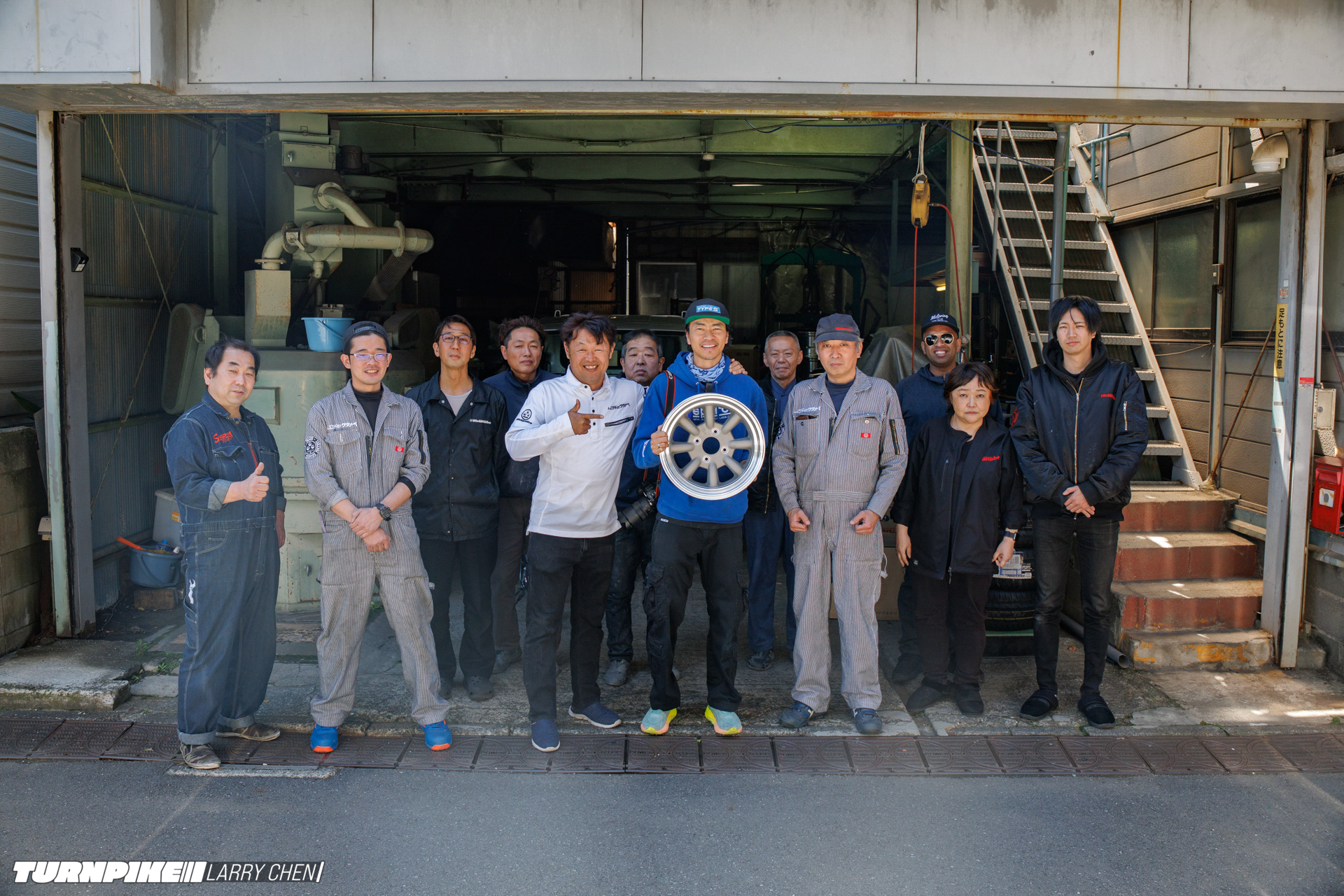
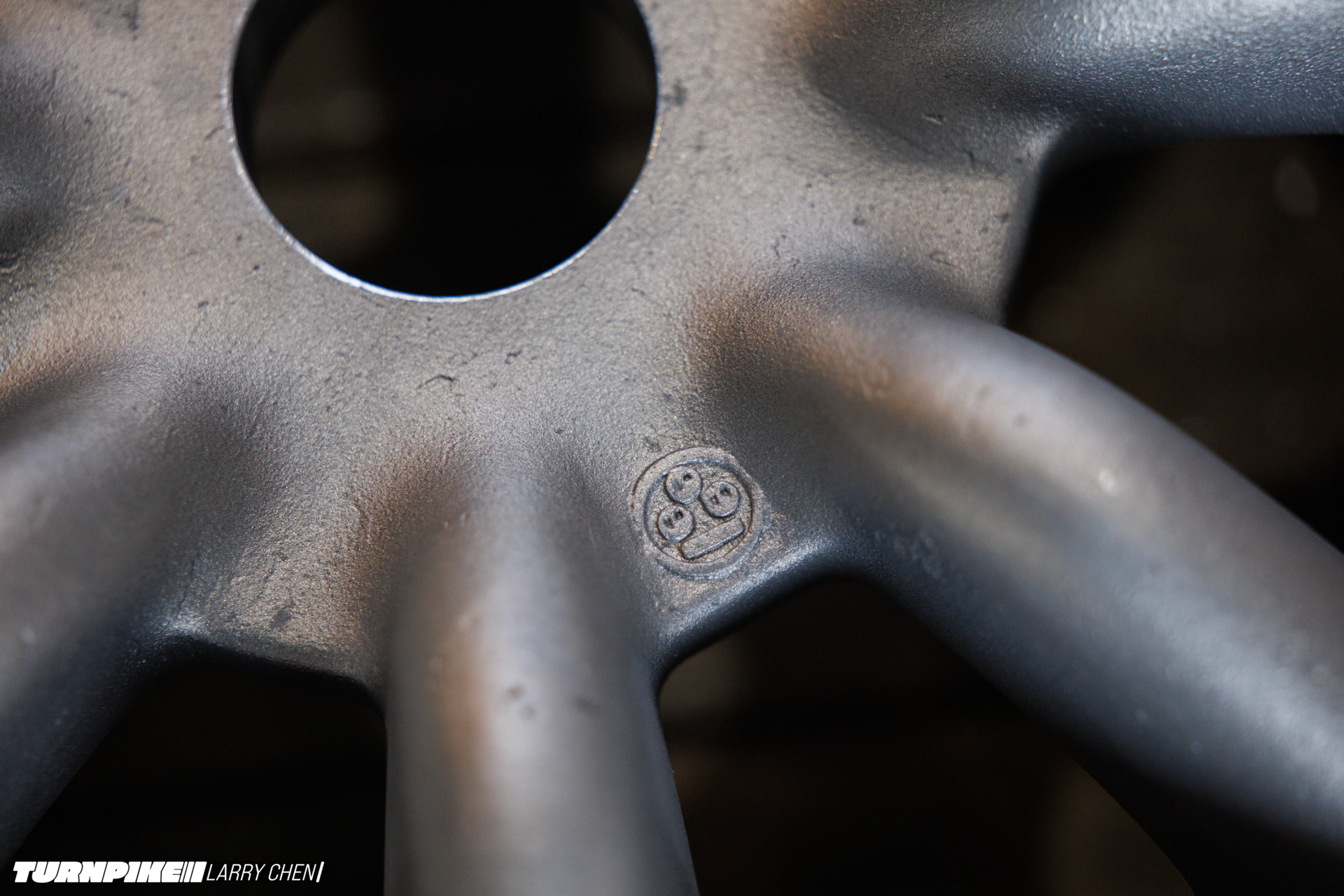
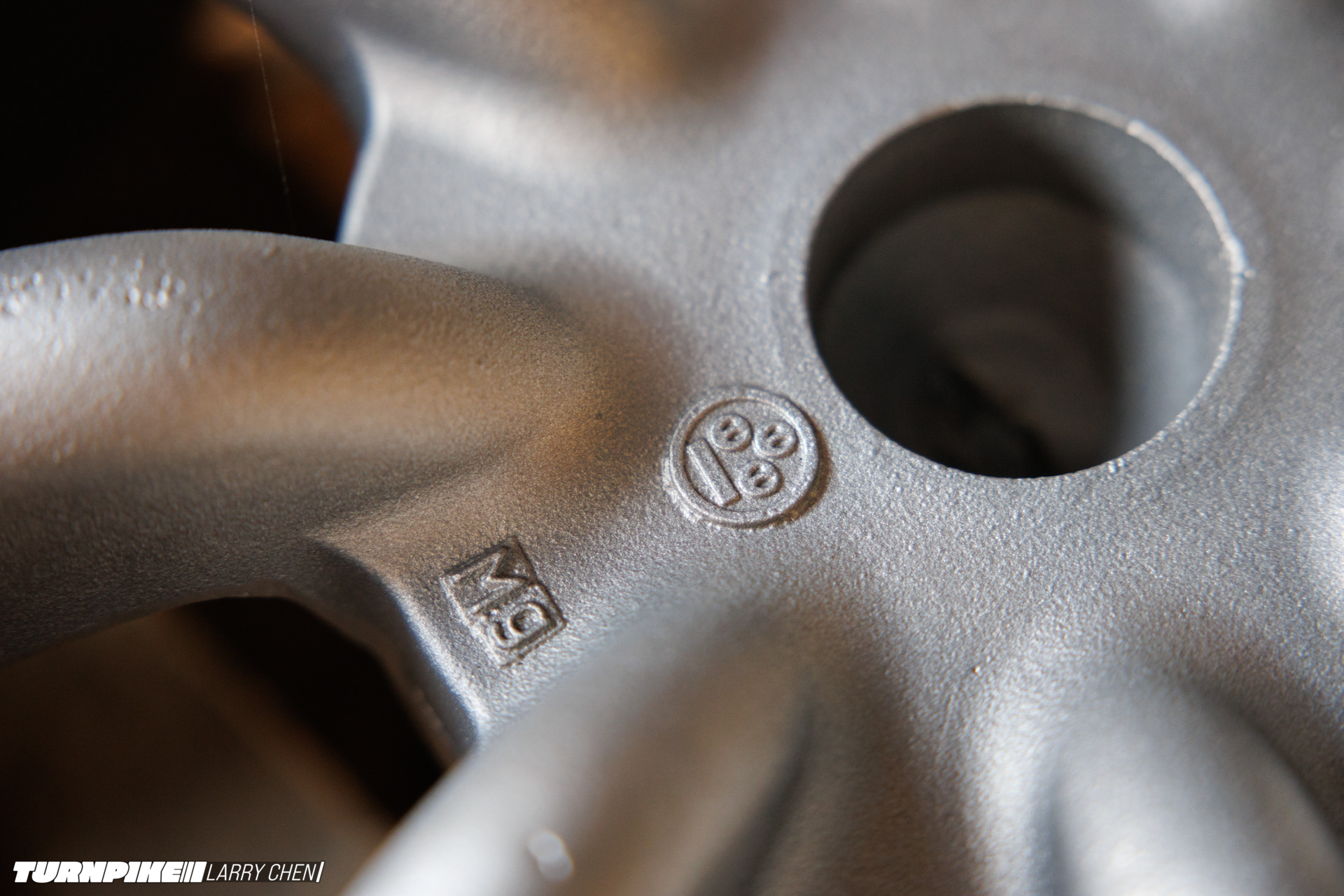
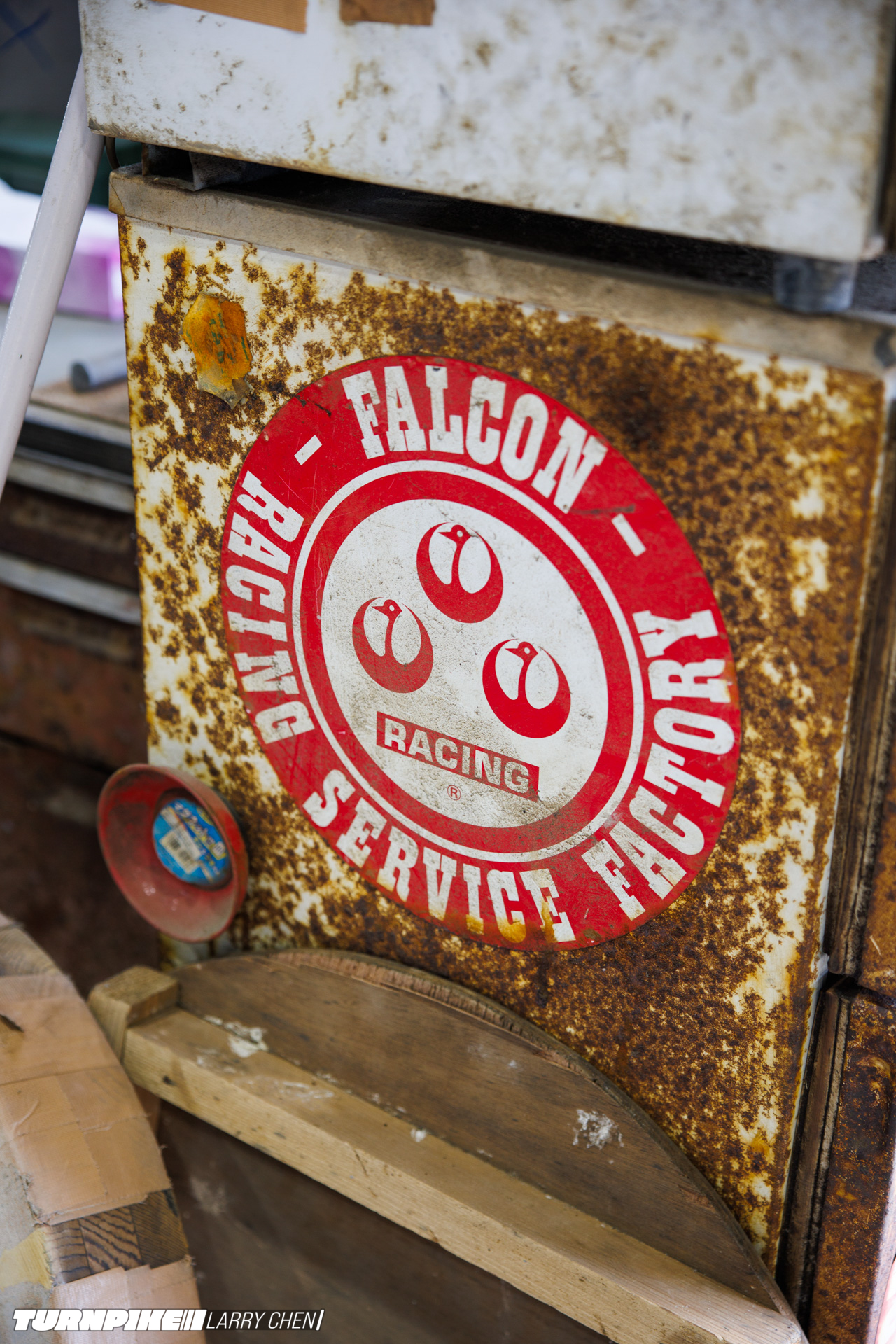
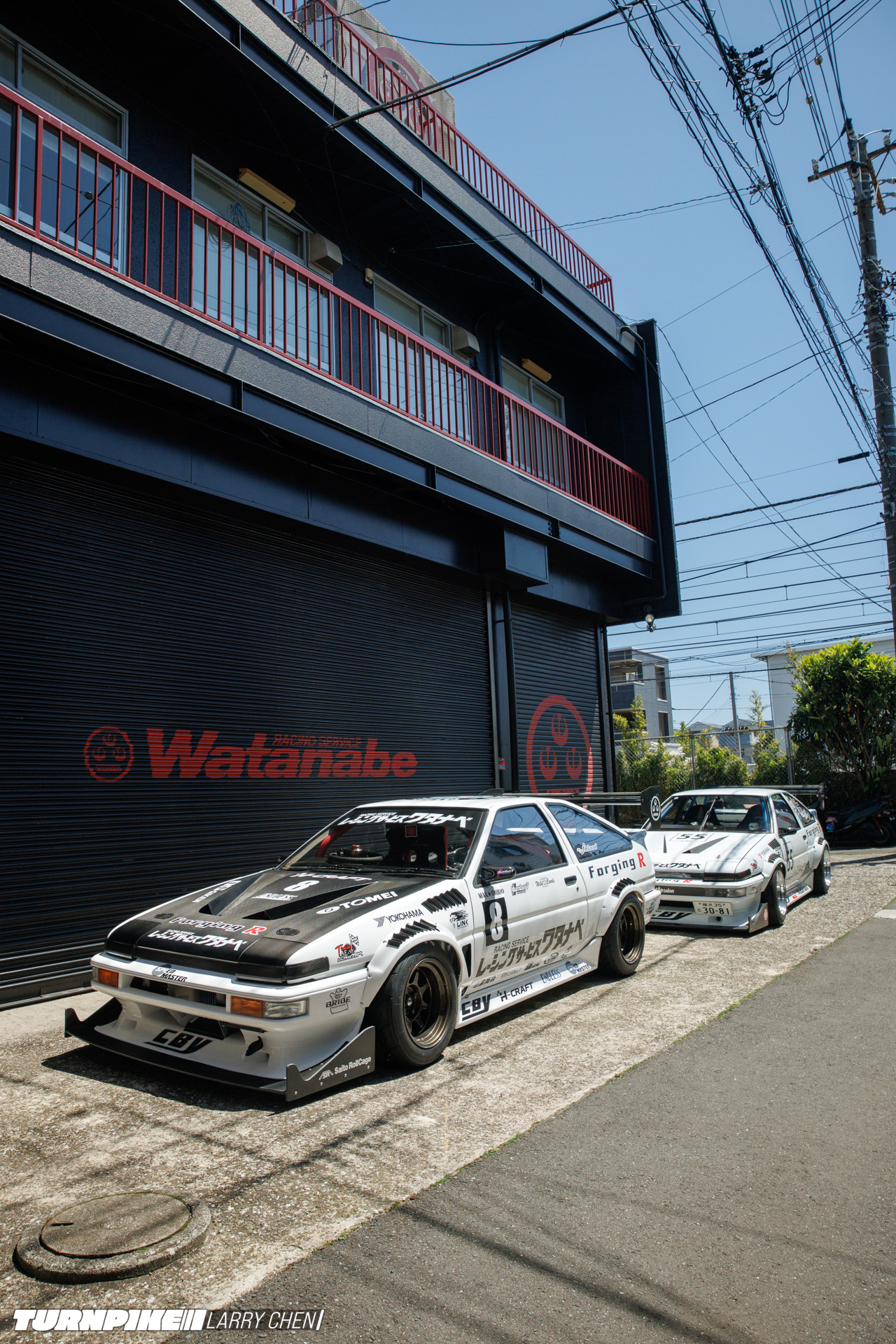
The company still operates in Tsurumi City, and its three-crane logo comes from the town itself. History is everywhere here, even in Mr. Watanabe’s home, which sits directly beside the factory.





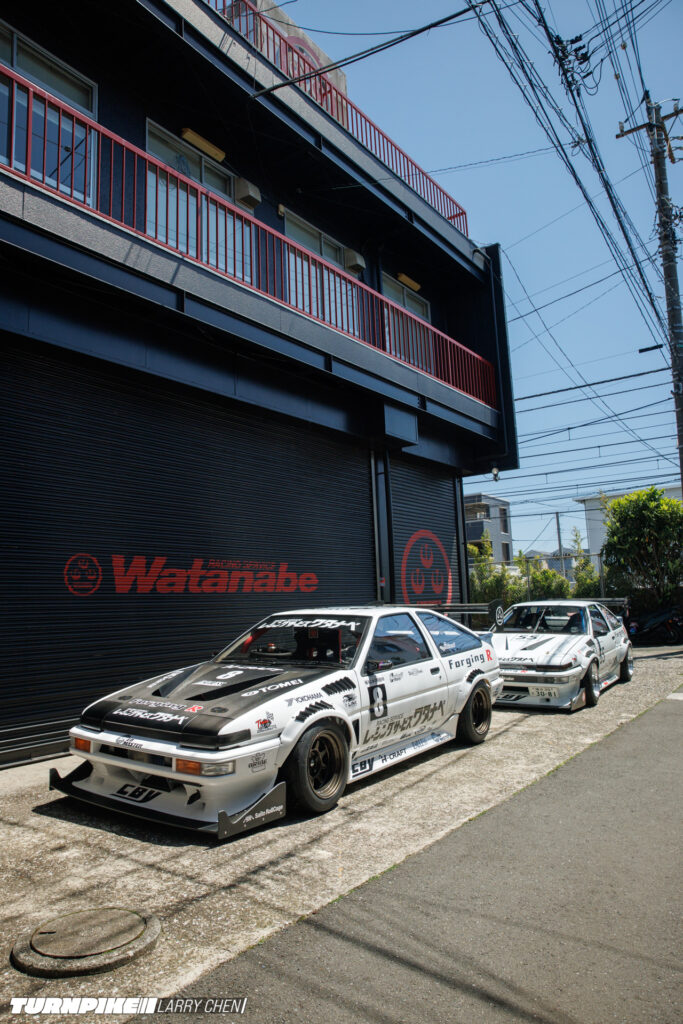
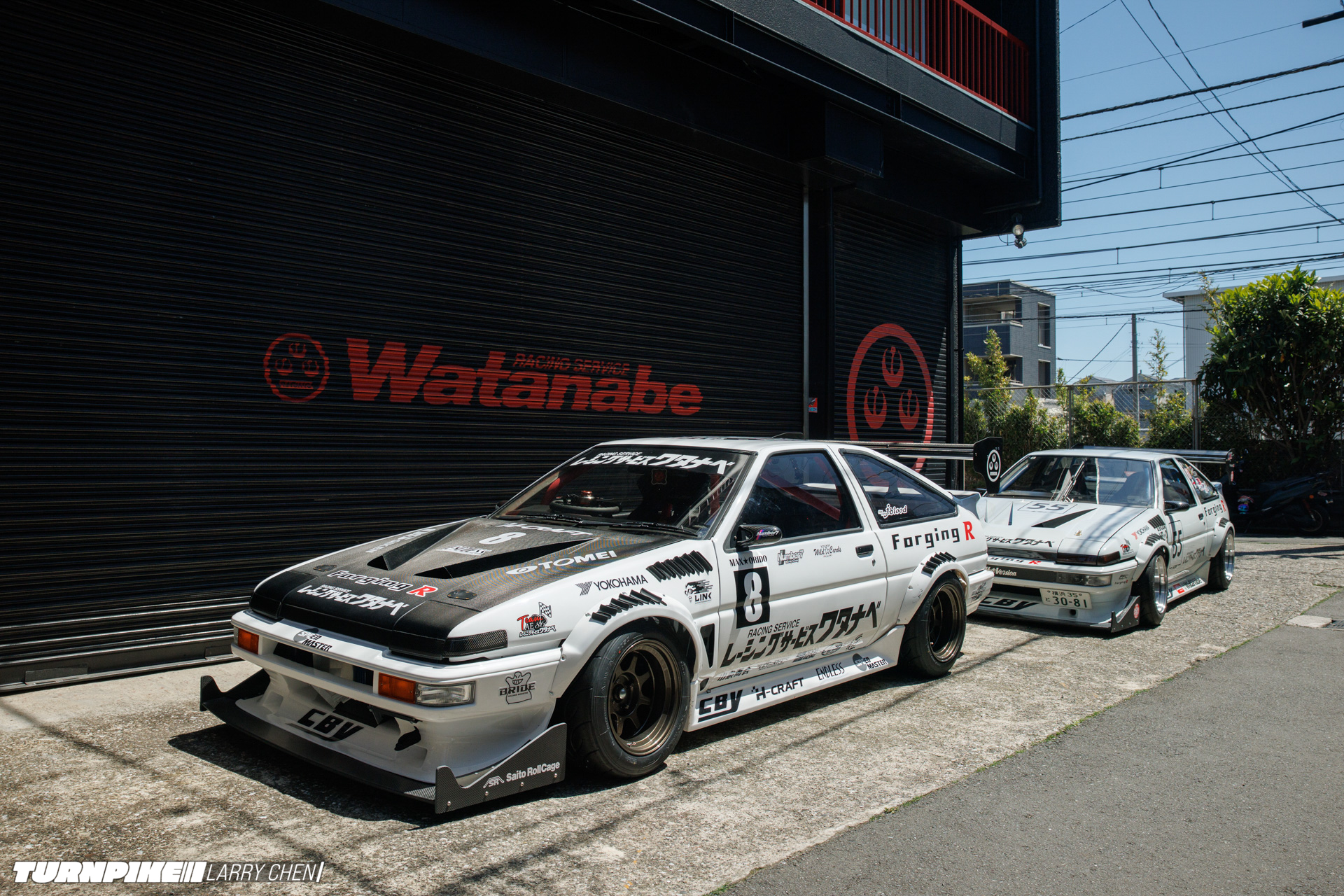
I was fortunate enough to meet his father, the original founder. With the little time I had, I tried my best to express how much his company has shaped car culture worldwide. So many legendary tuner cars – Nissan Skyline GT-Rs, AE86 Toyotas, Datsuns and old-school time-attack machines run Watanabe wheels. Many of the cars from my own crew, Team Wild Cards, wear them proudly.
After nearly two decades of shooting car culture, I can finally say I own a true set of RS Watanabe wheels for my 240Z. And after seeing how they’re made, that feels more meaningful than ever.
Car culture is thriving – bigger than ever – but it stands on the shoulders of people who committed themselves to excellence decades ago. RS Watanabe is one of those rare brands that didn’t just create an iconic product; they shaped automotive identity.
Watanabe-san’s son now carries the torch, modernizing where necessary while preserving tradition. The company sells more than 9,000 wheels a year, yet every single one still carries the fingerprint of its maker.
















































I have complete respect for these amazing craftsmans. I had no idea their wheels were so handmade. Thanks for the share, Larry !
The wheel itself is an art the go to wheel for any AE86, any Miata, and any vintage JDM car also for many vintage Euro and American cars too
Great read! Very interesting to see this process. Truly an unique brand with a rich history. Couldn’t ask for more.