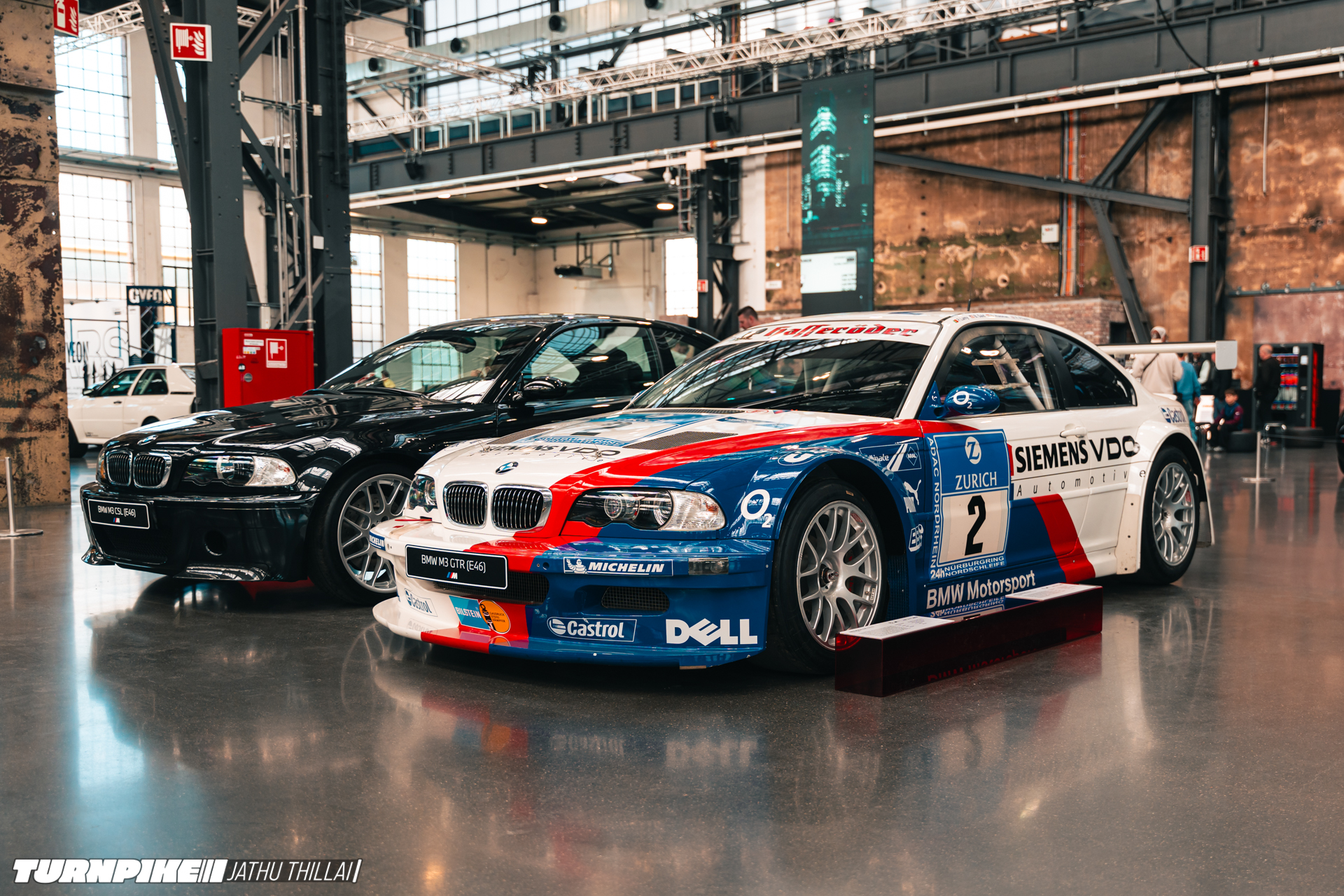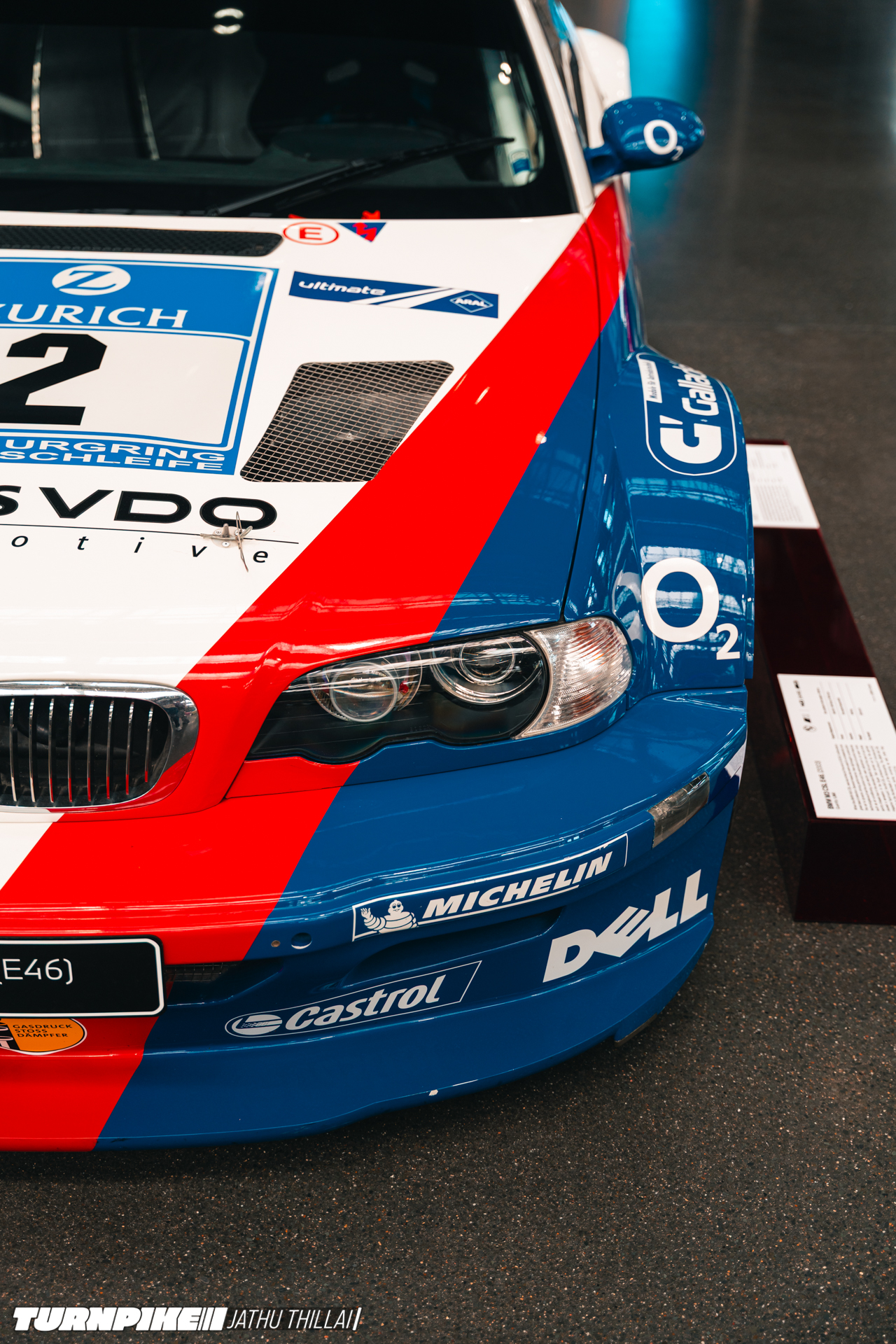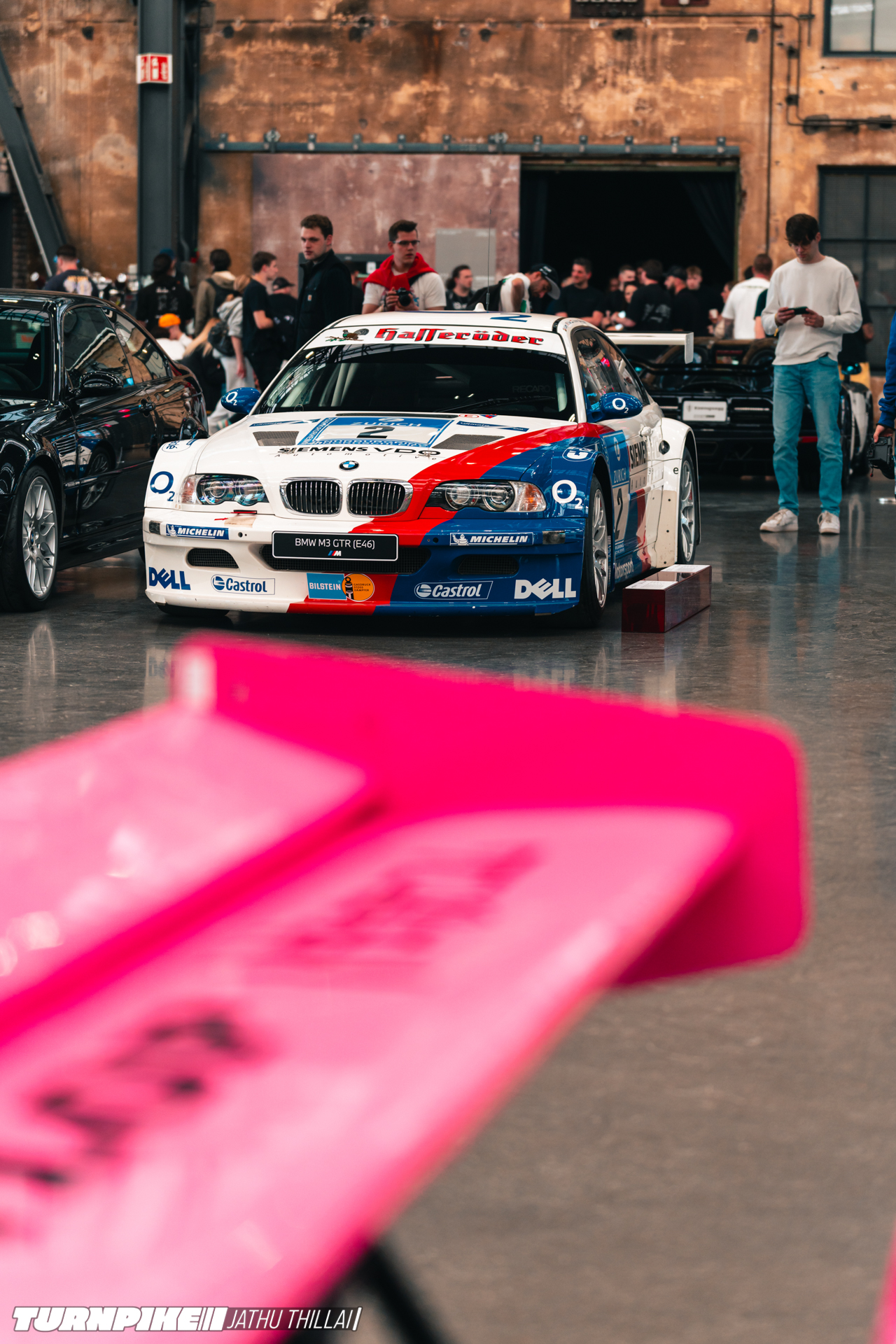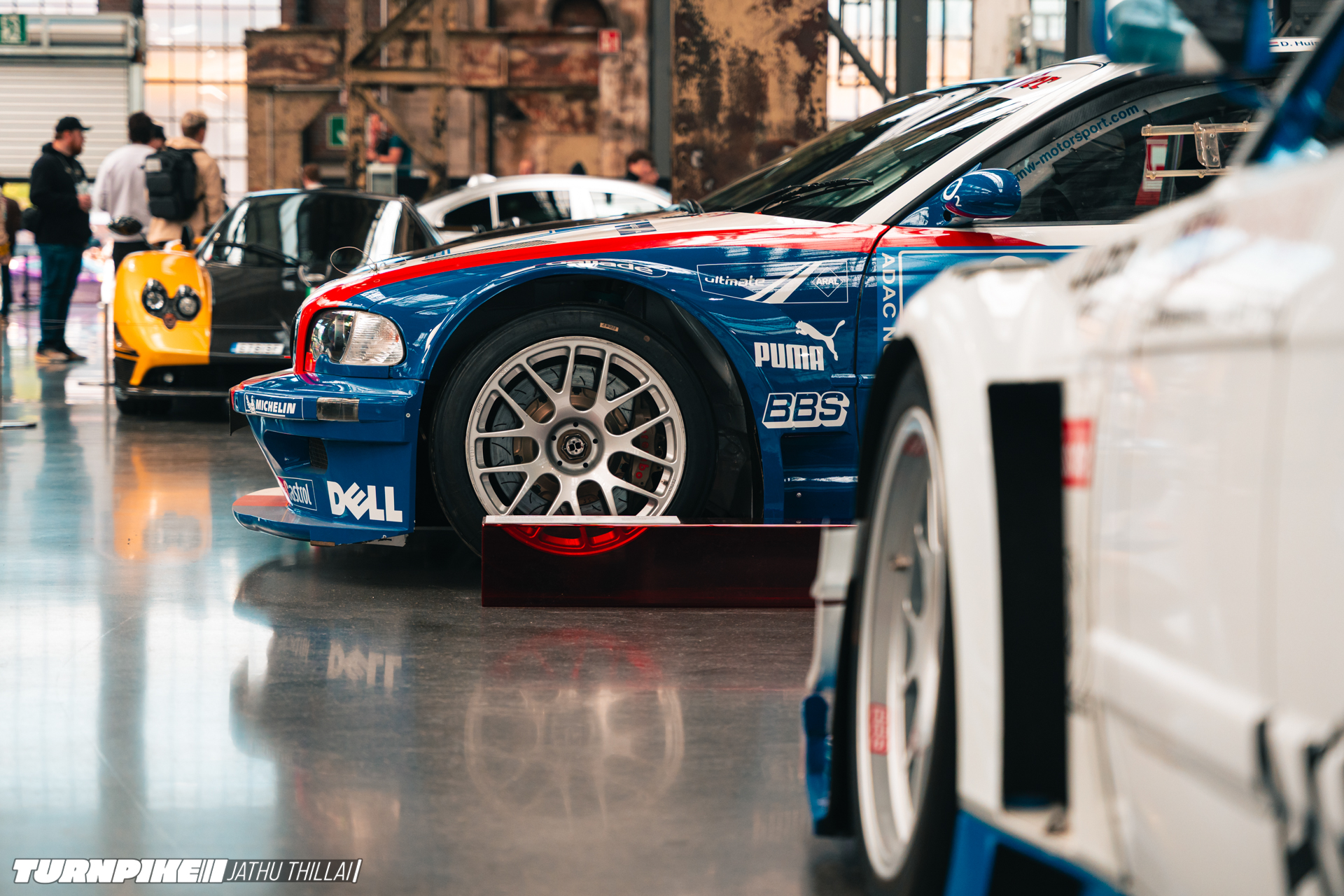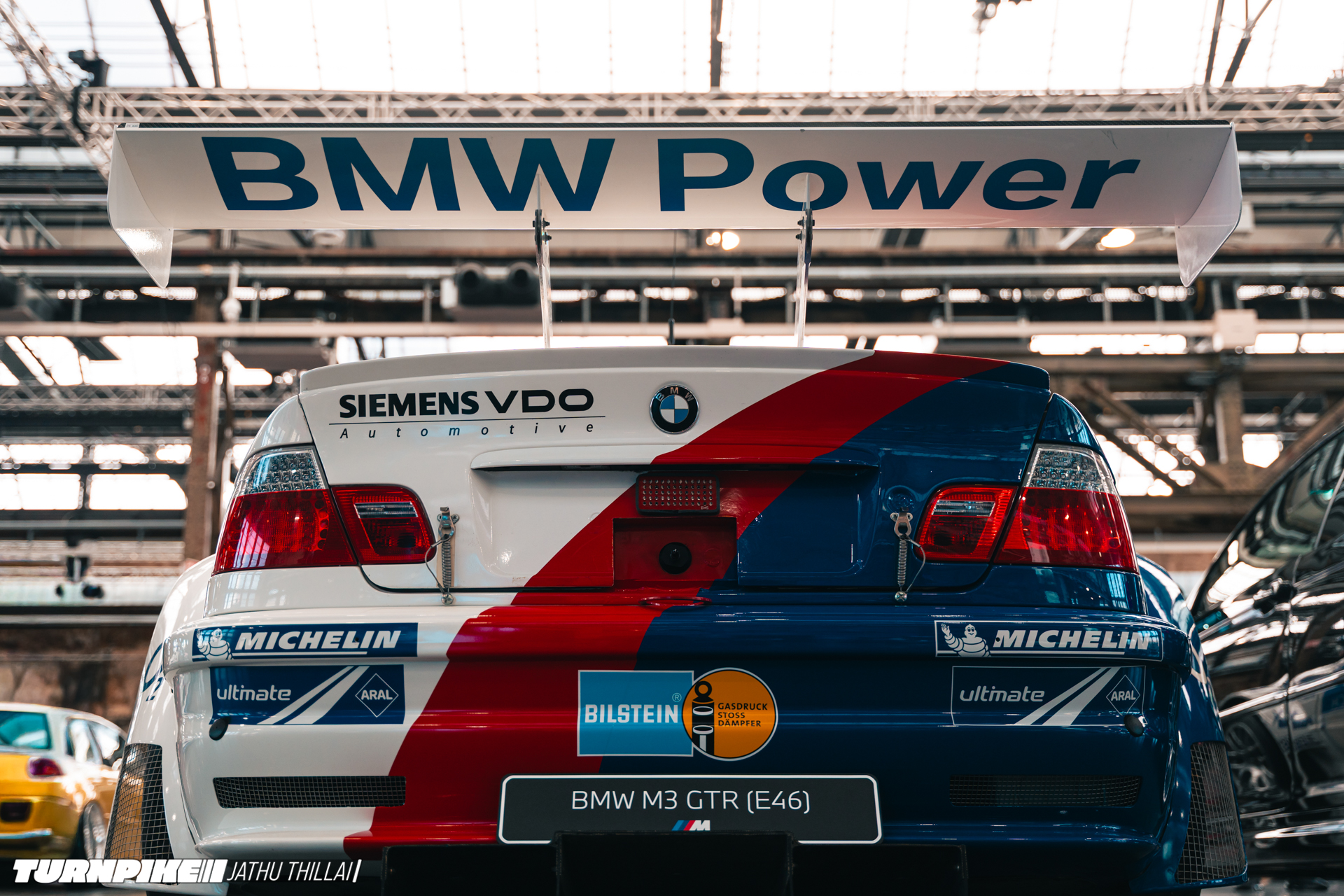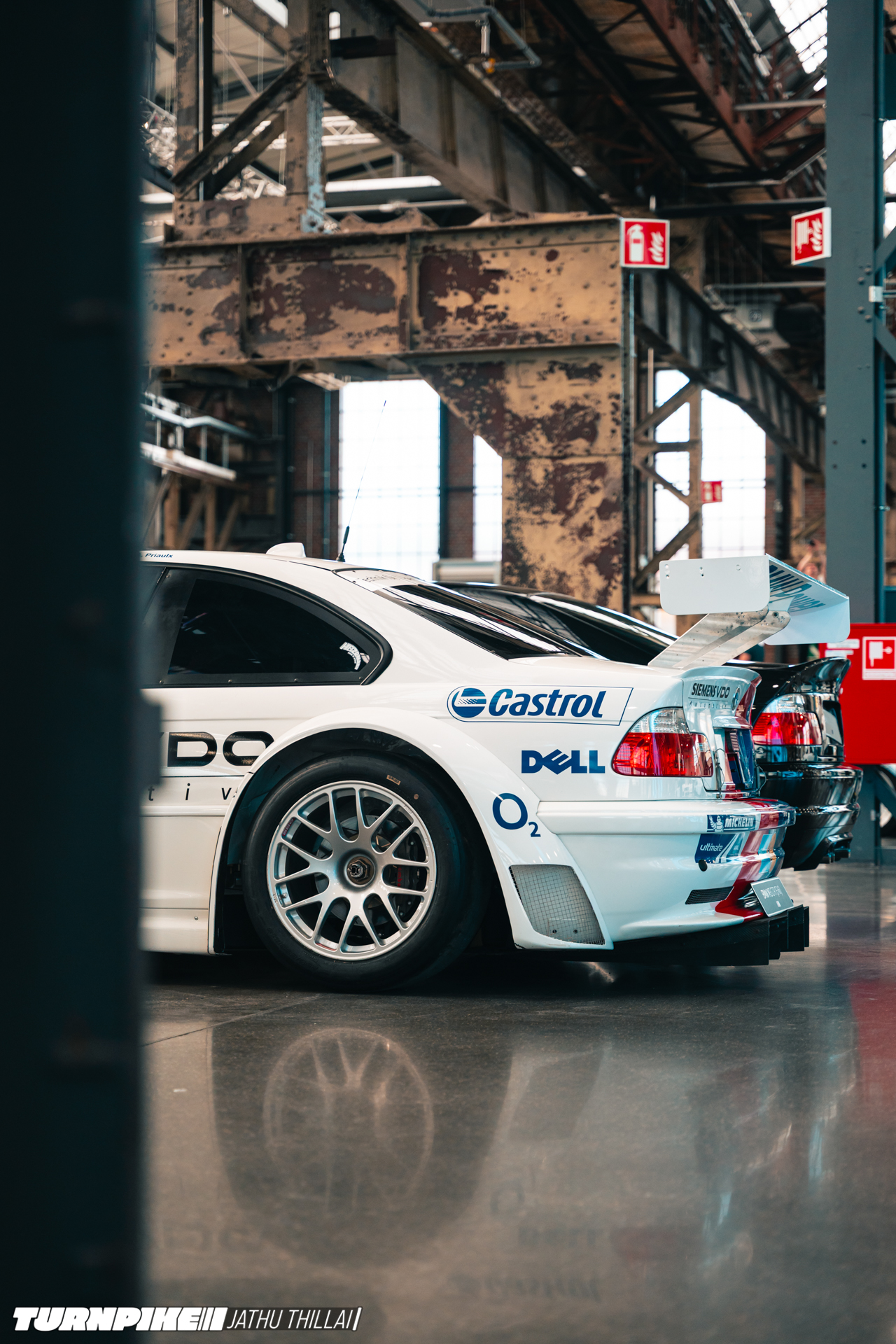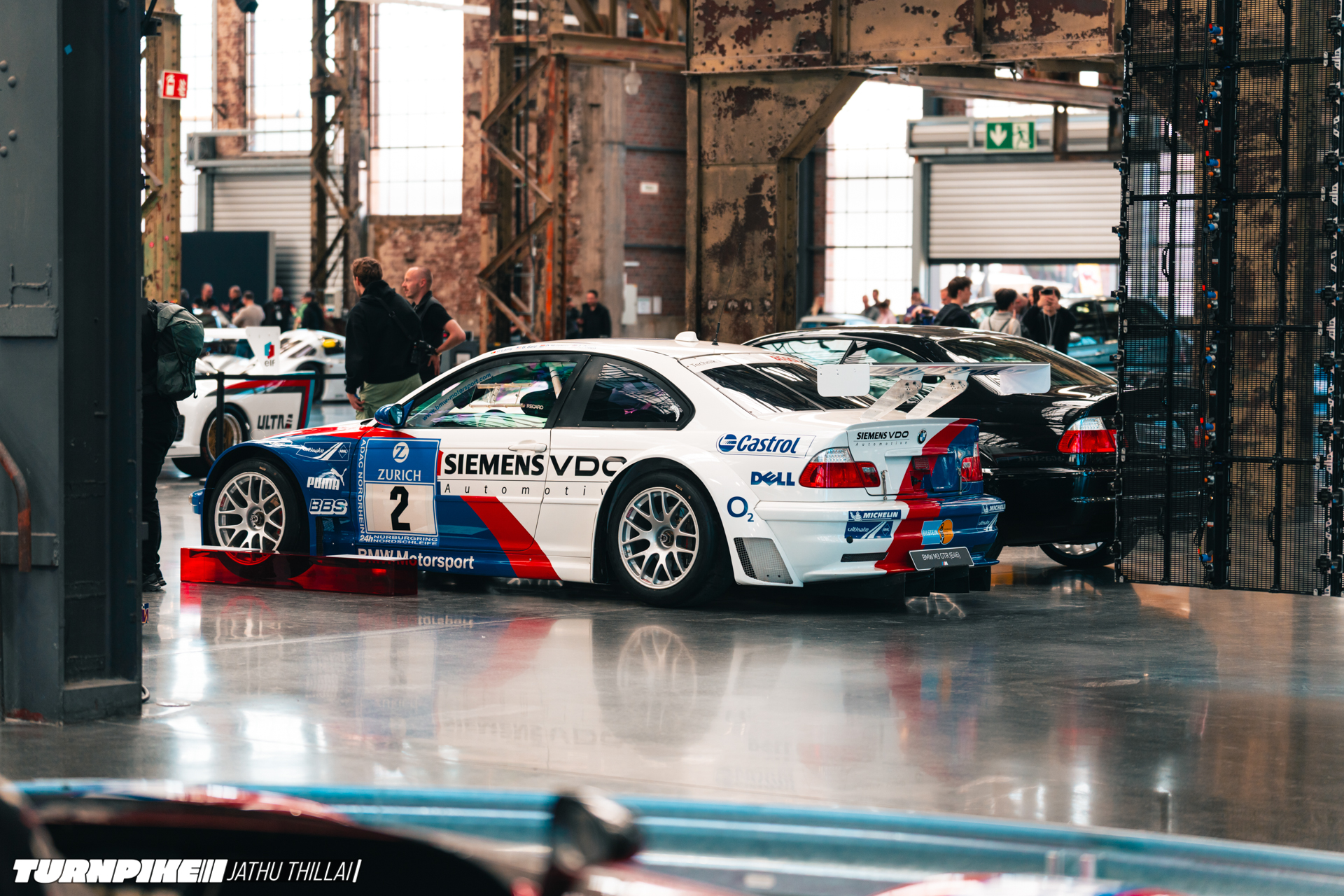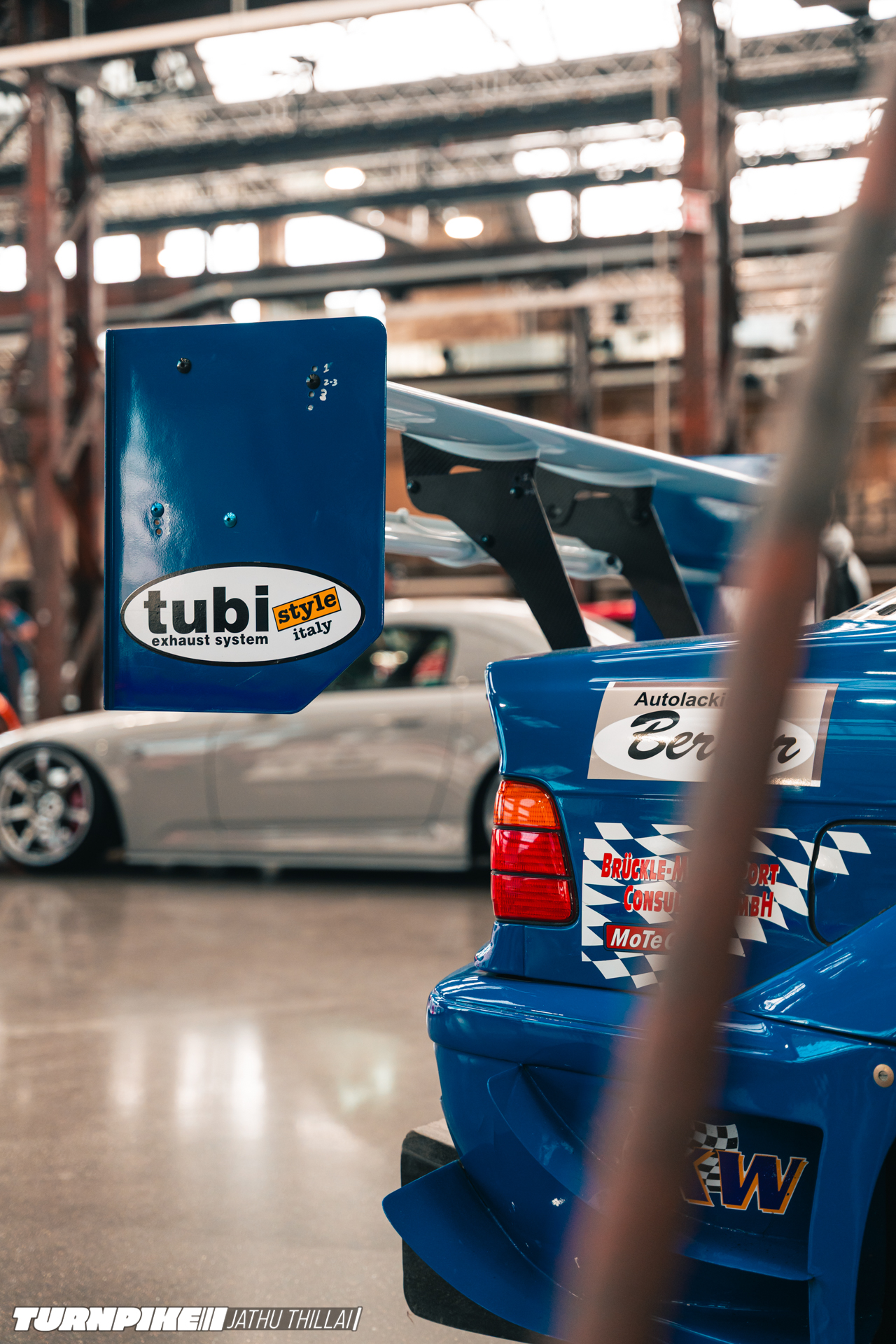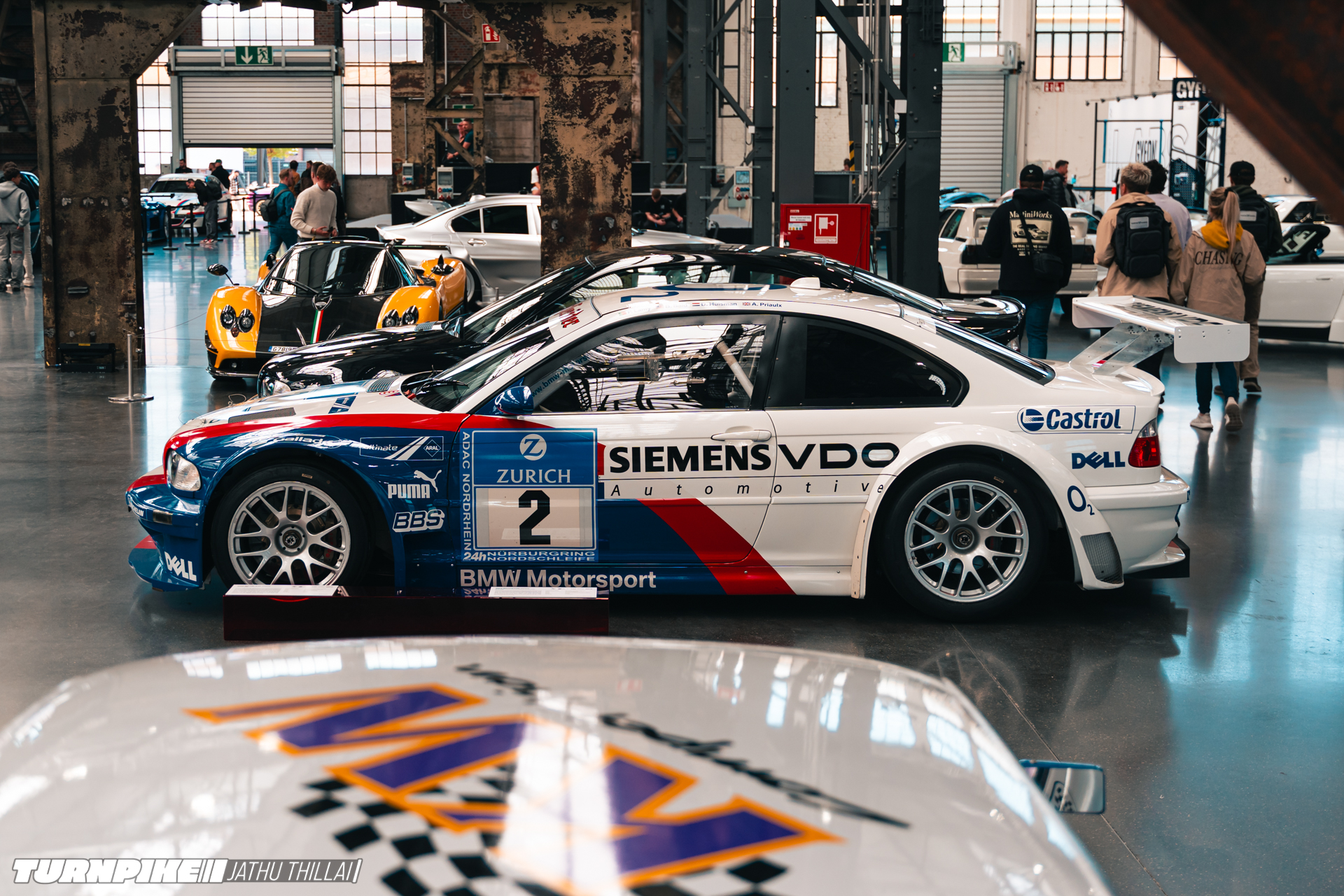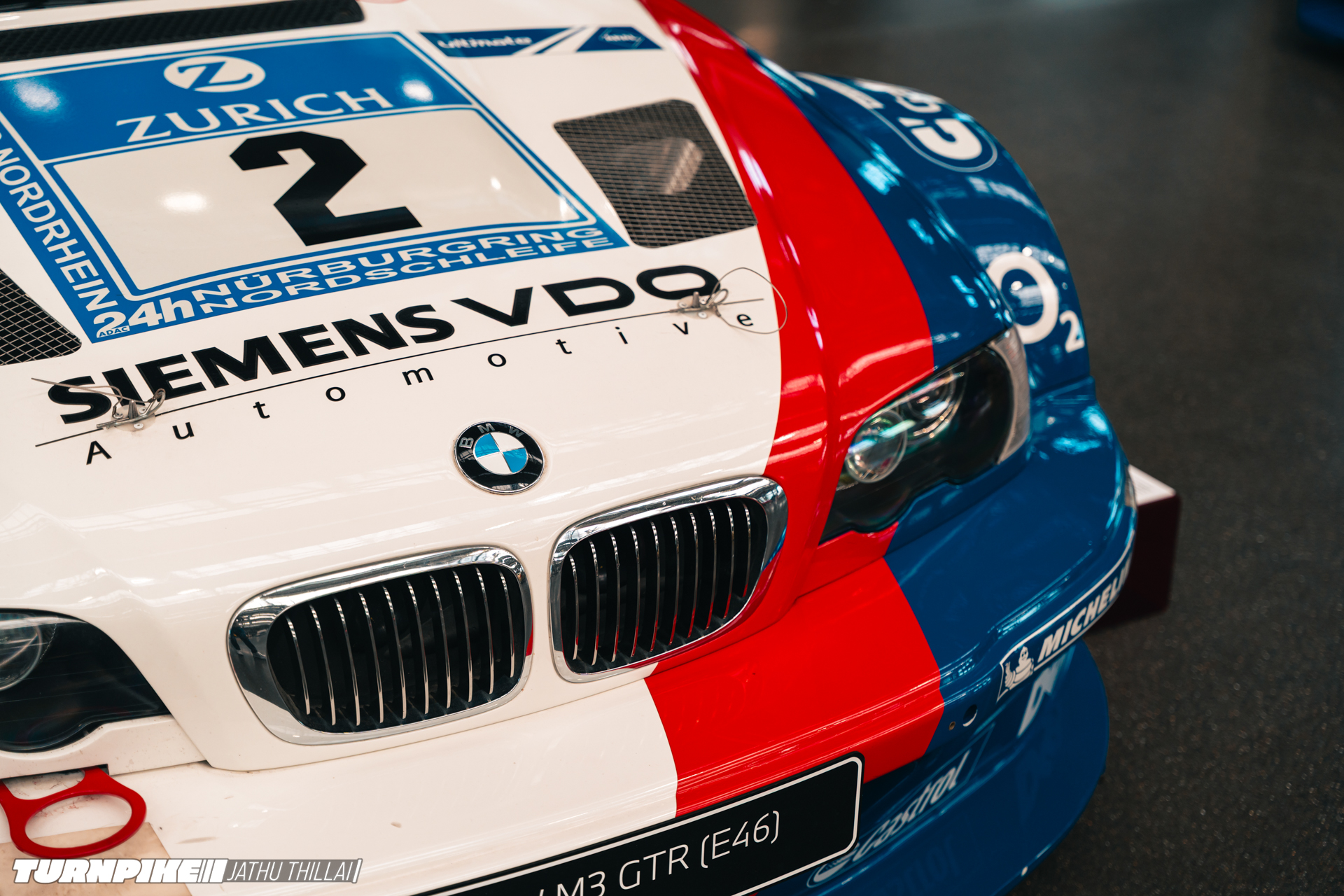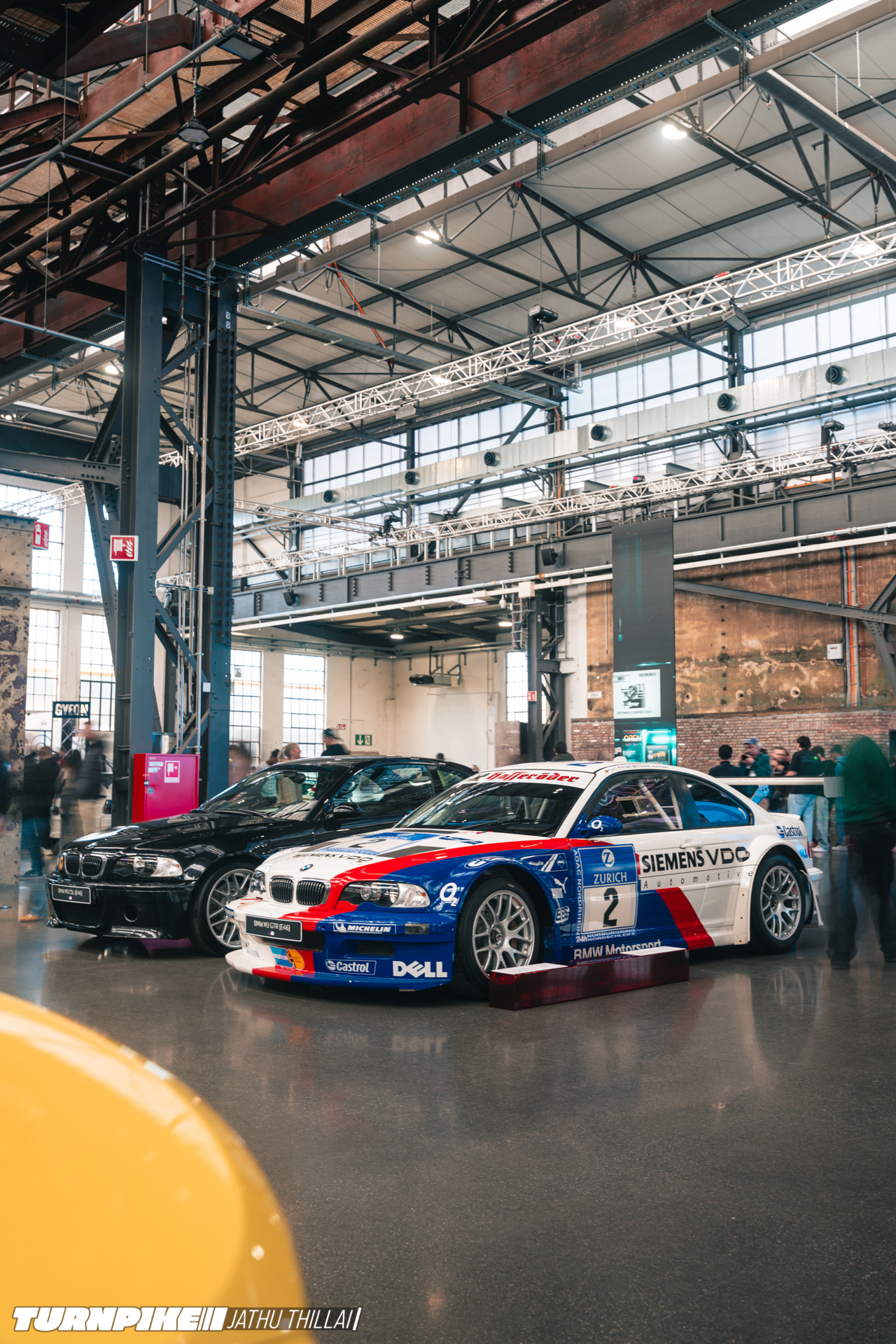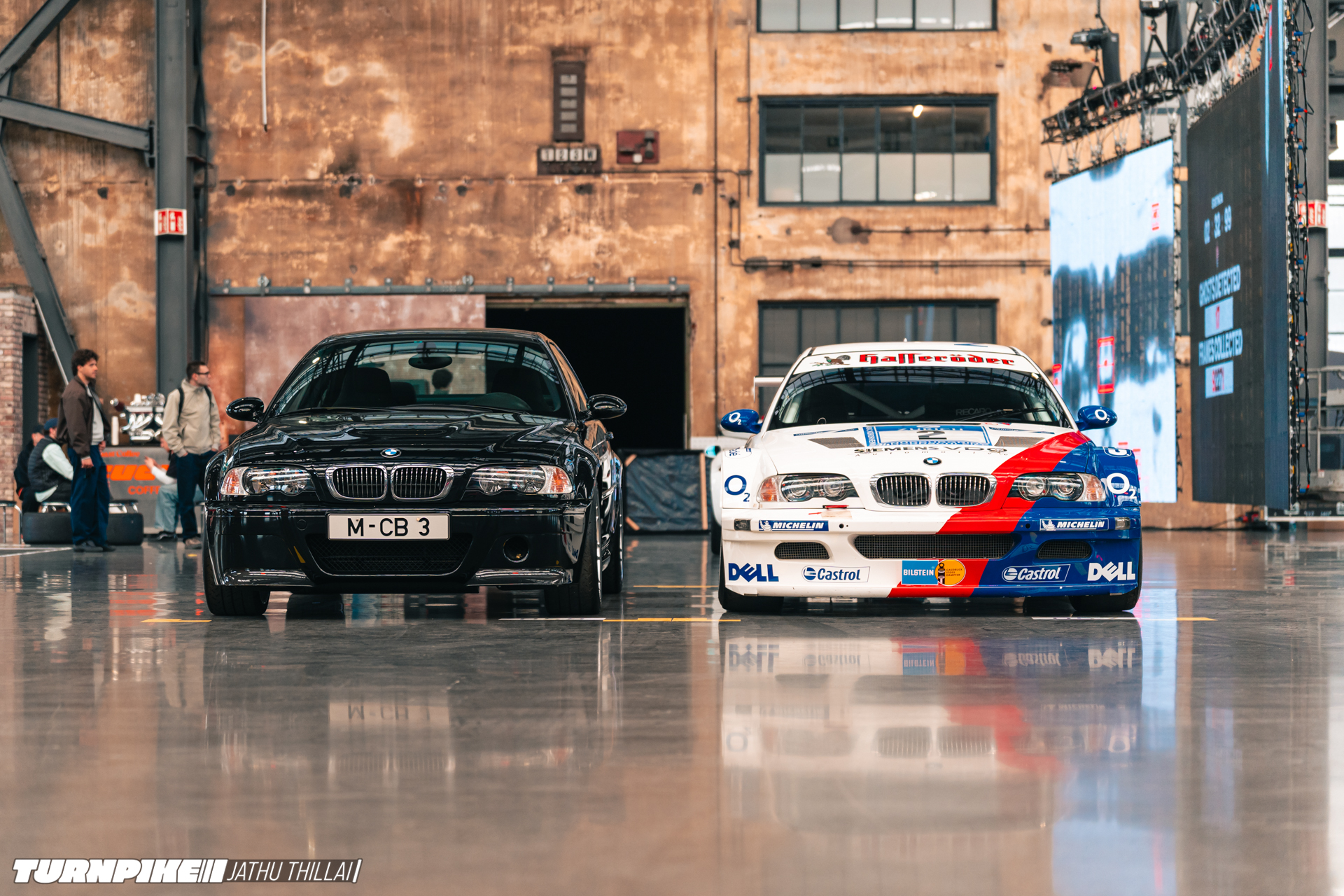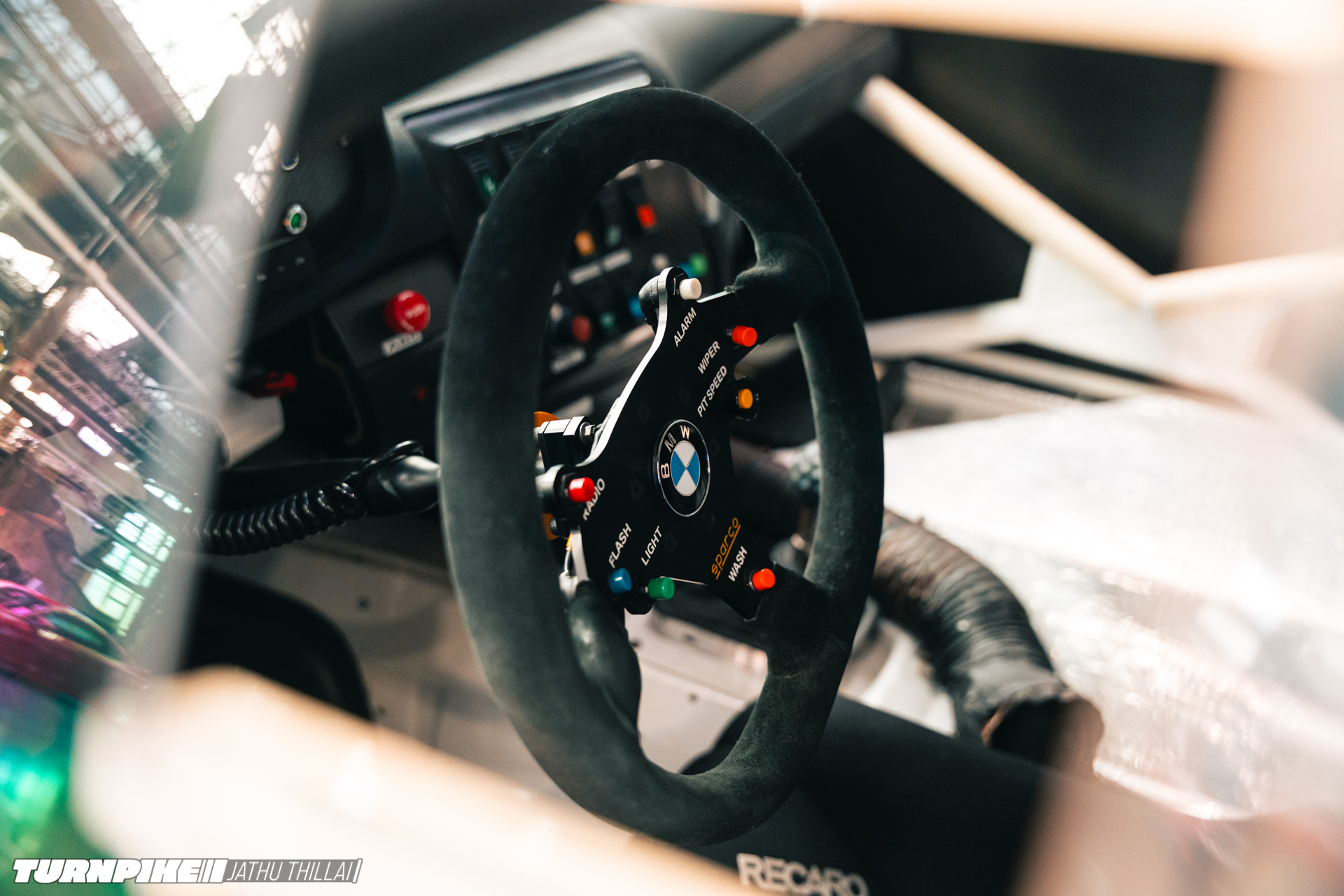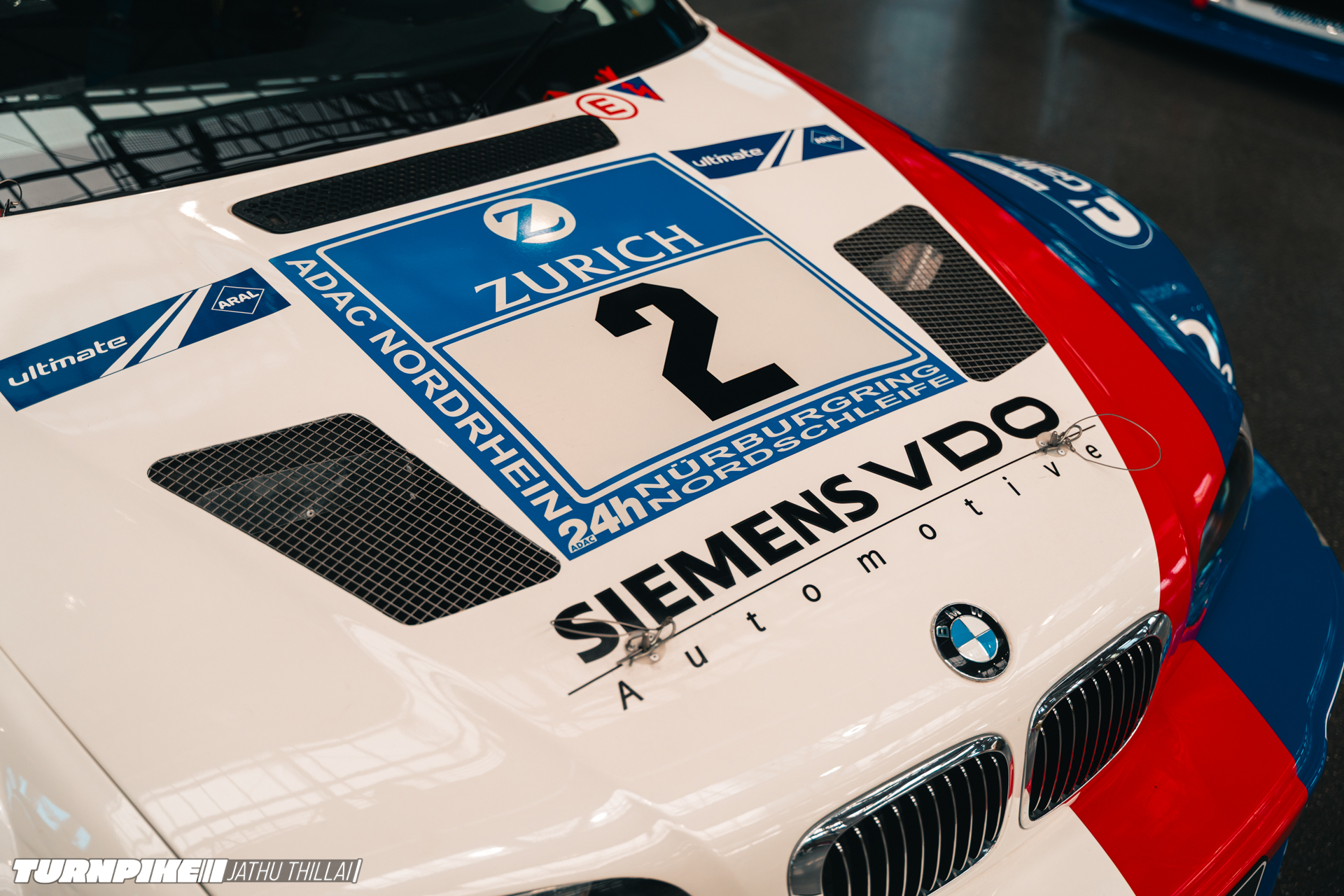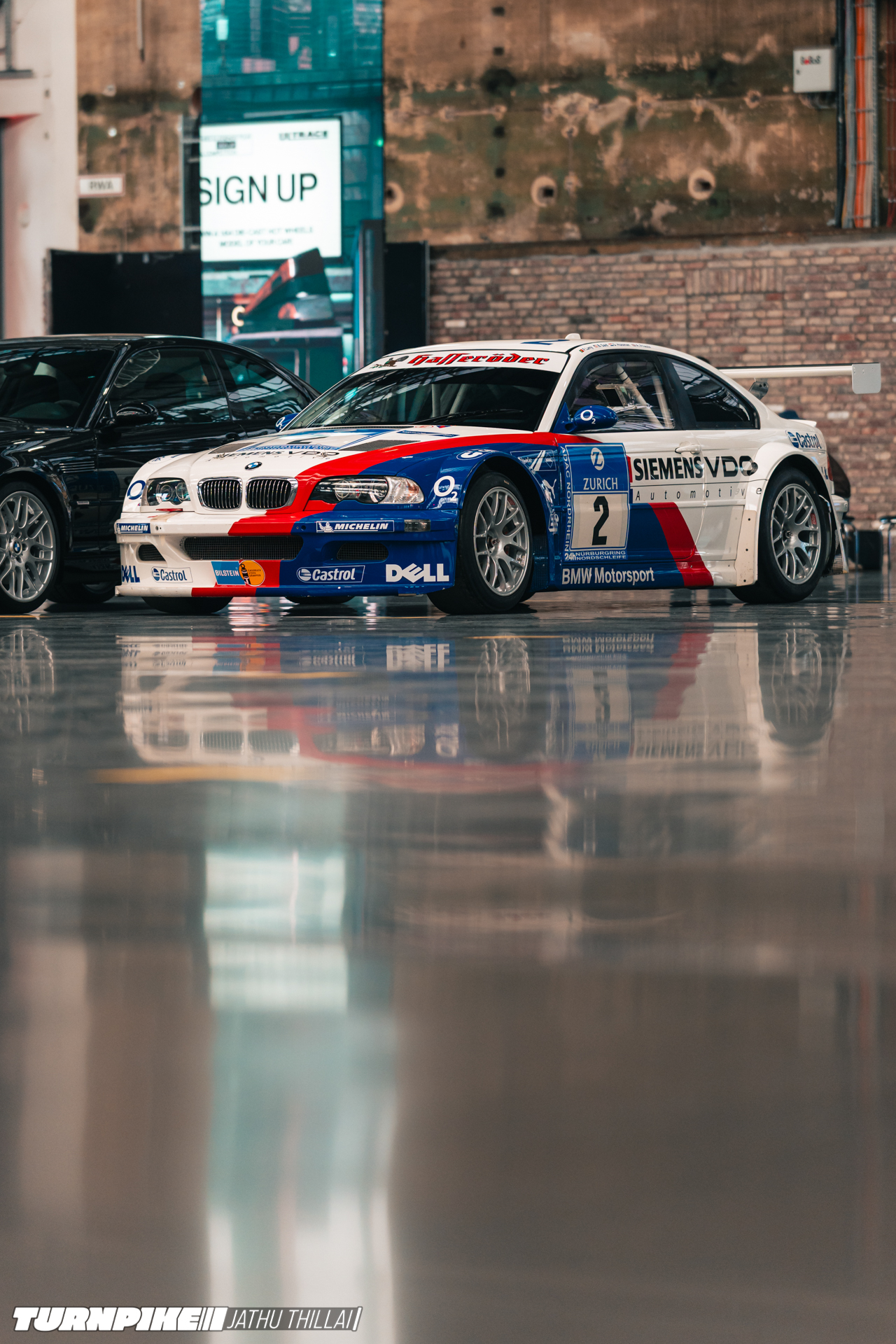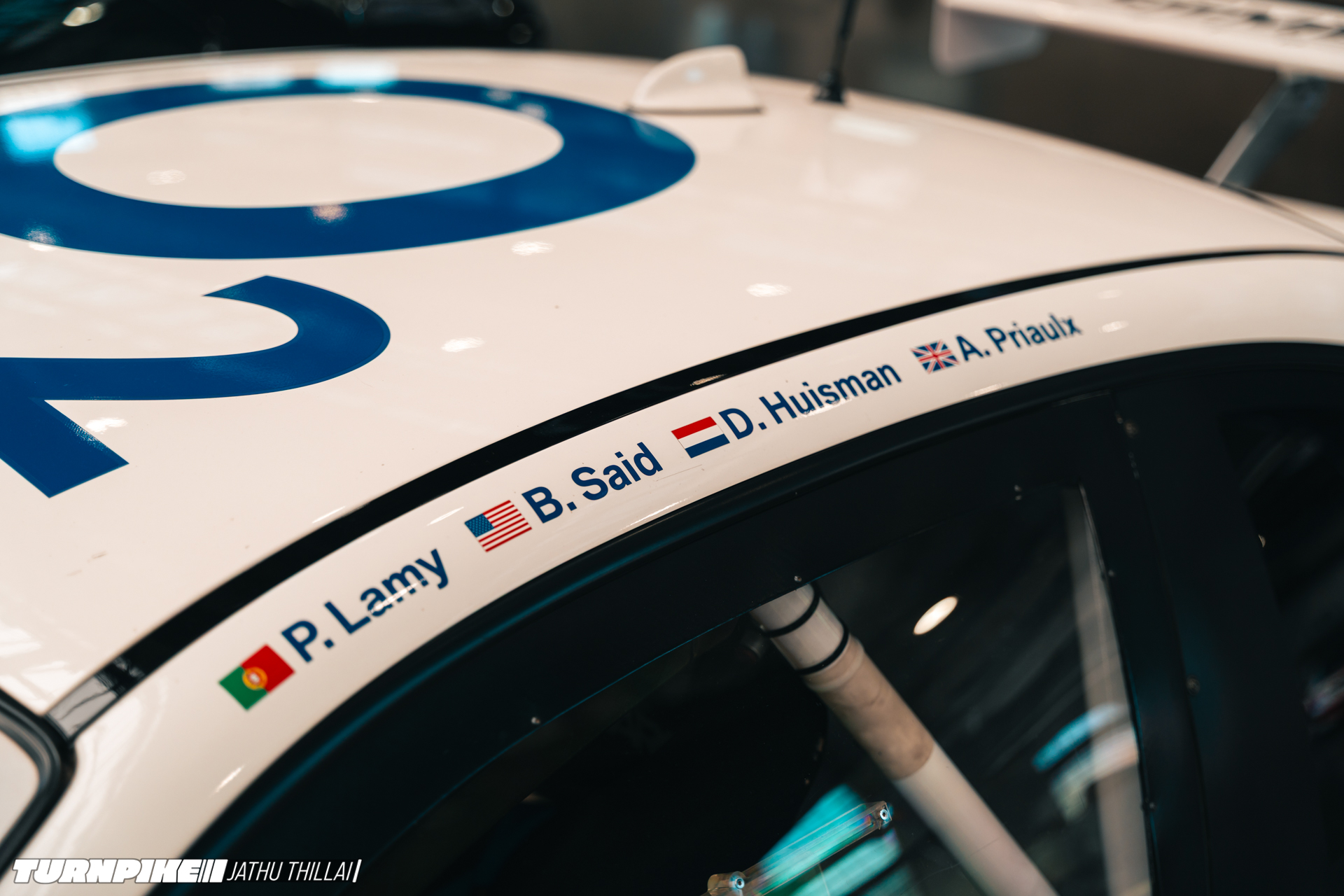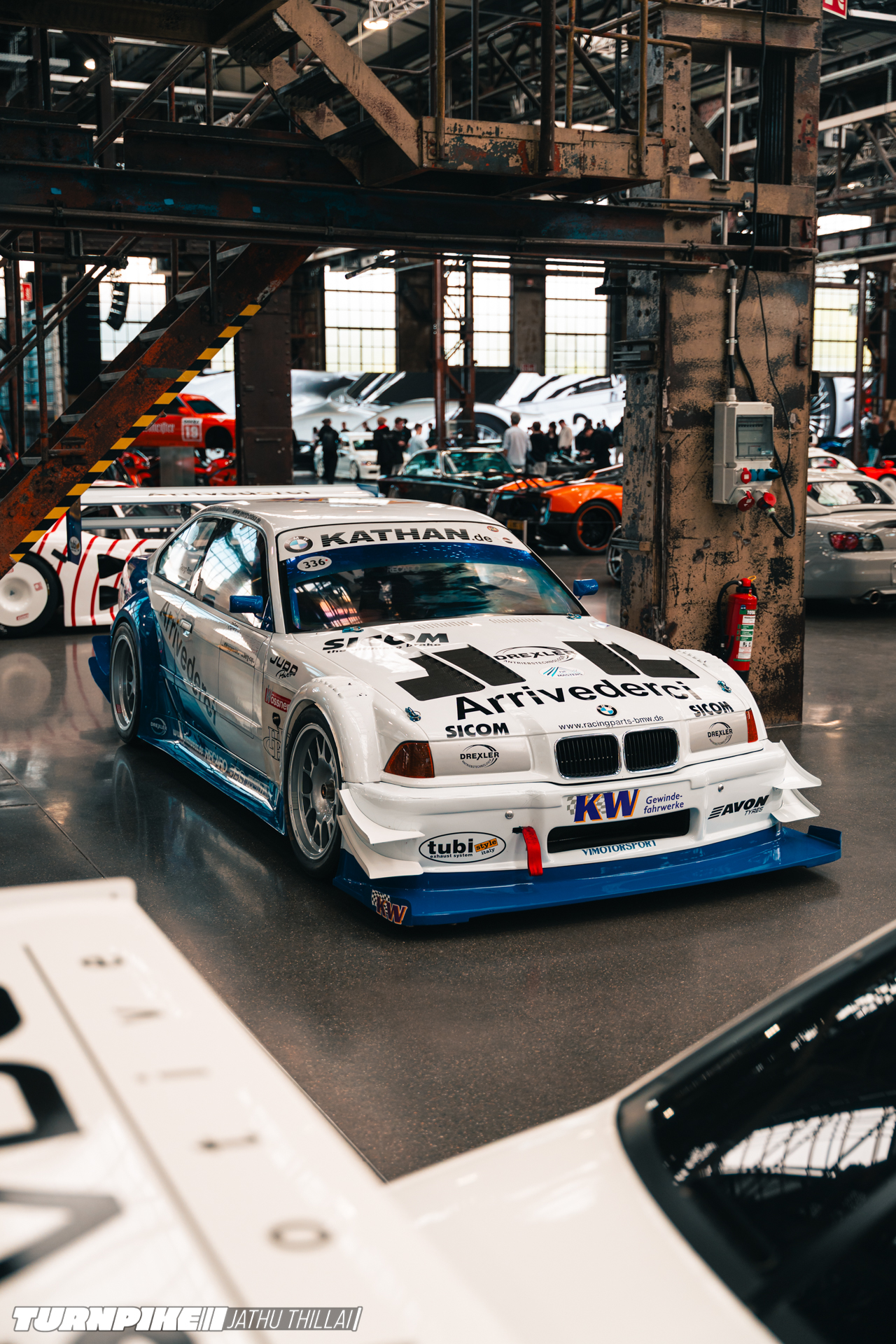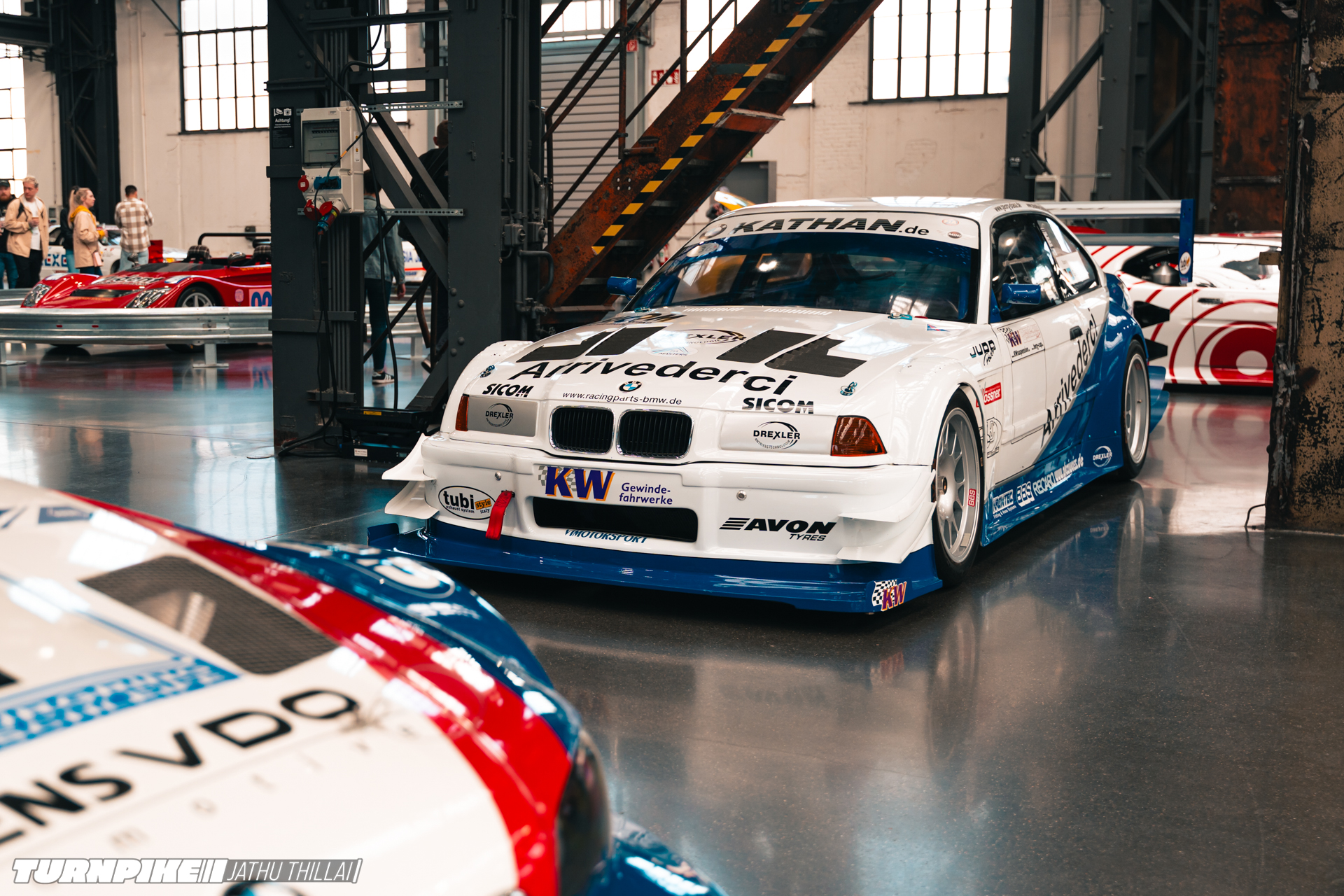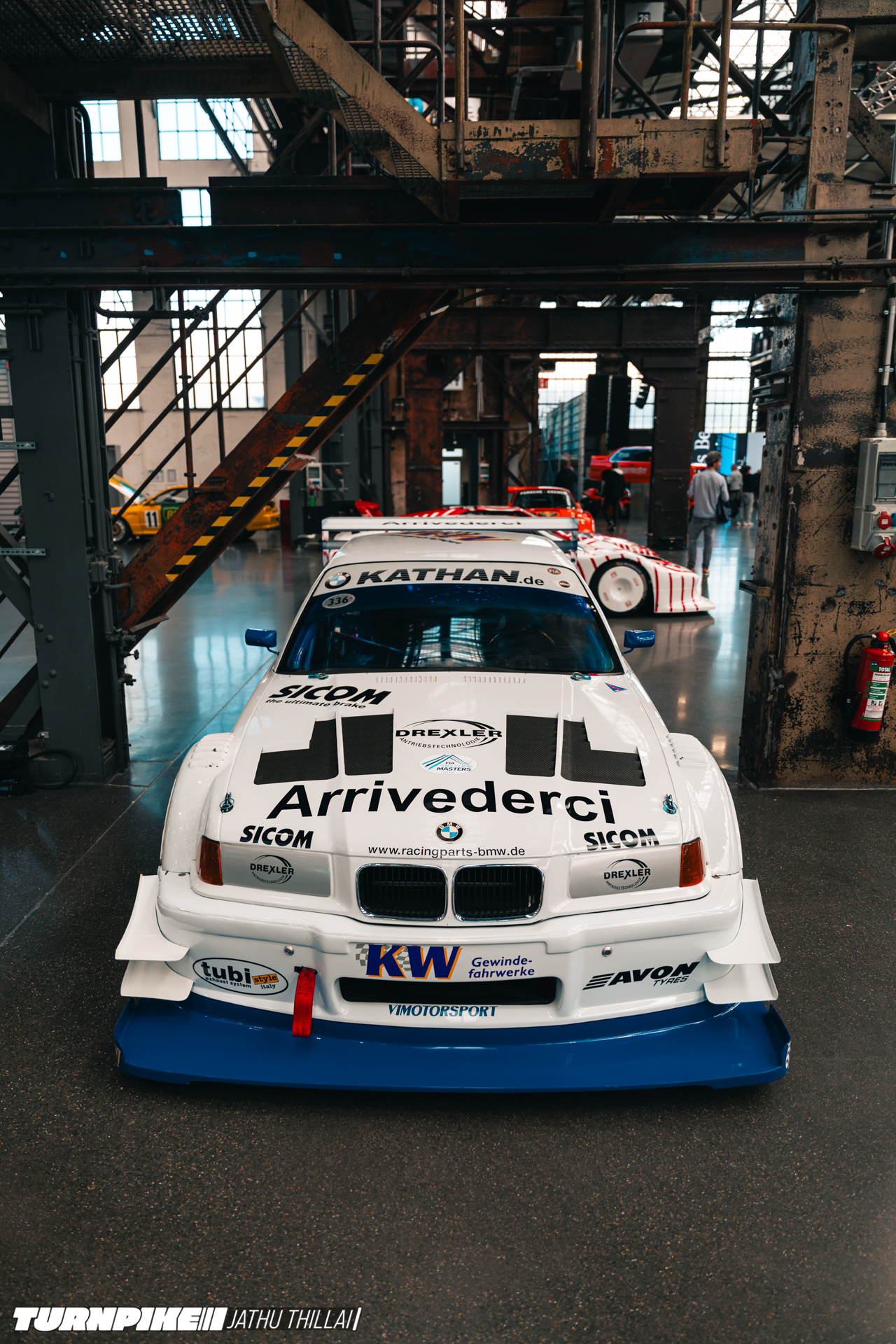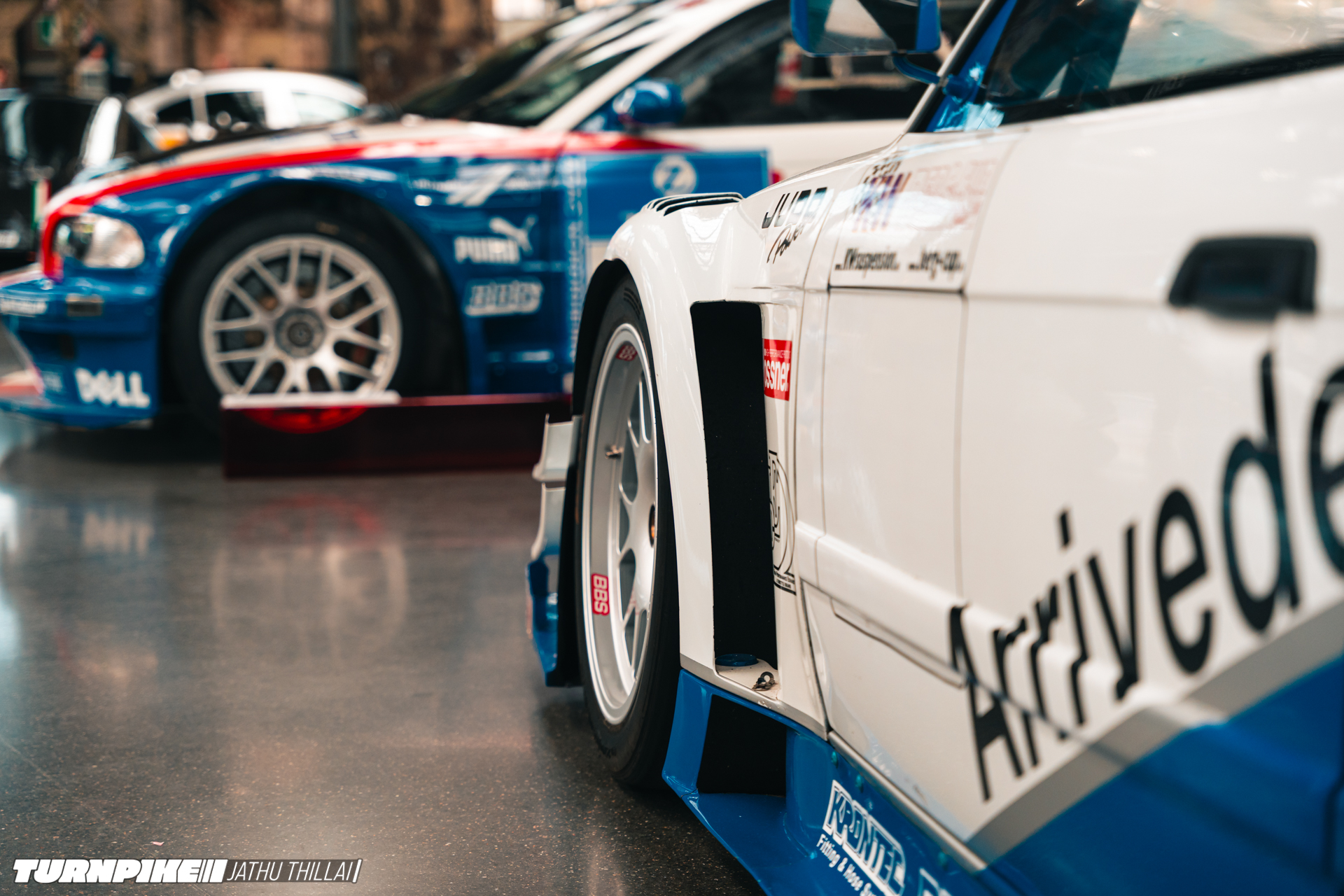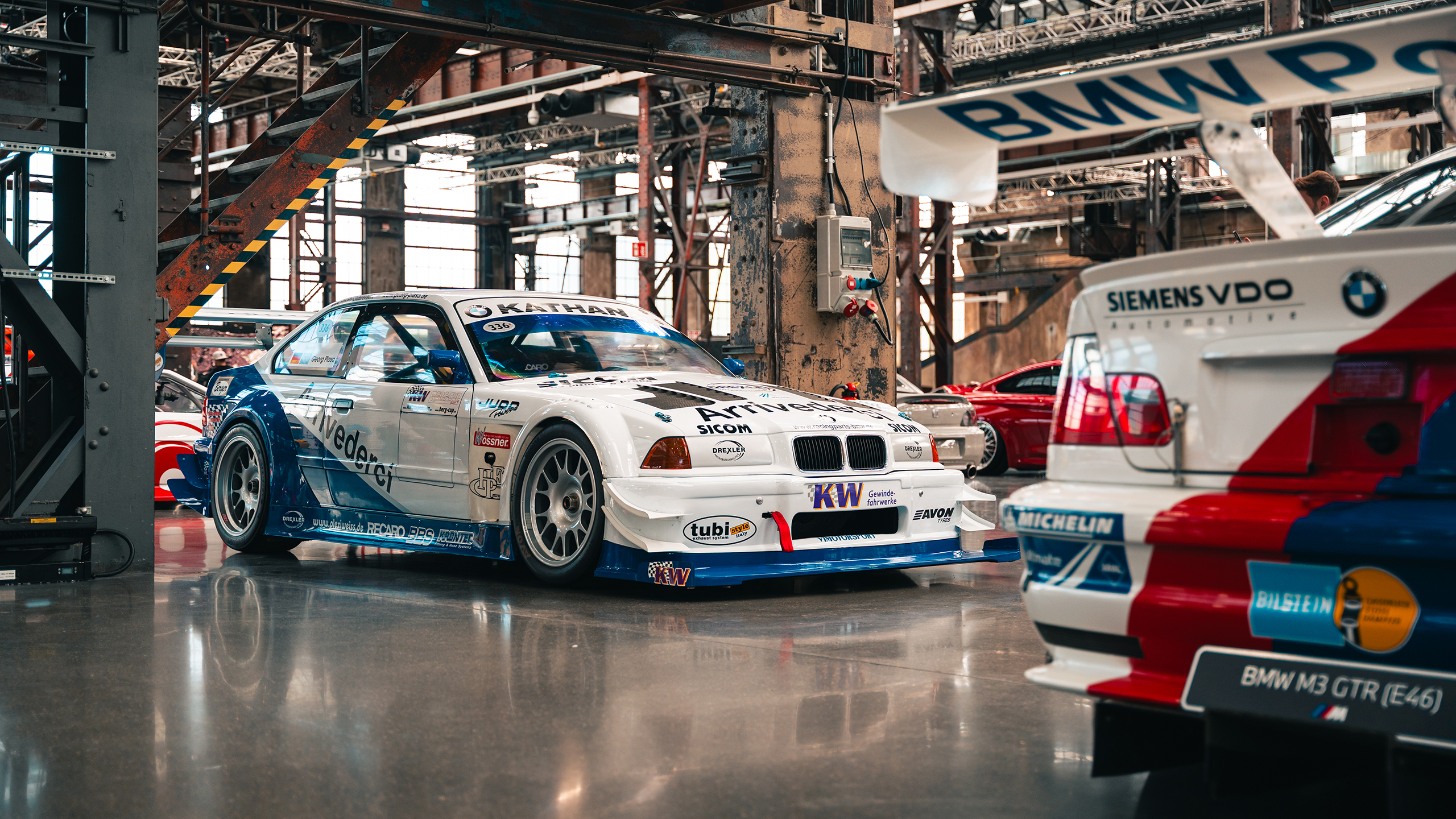
BMW and the inline-six engine have long been synonymous, both on the road and on the racetrack. But what happens when six cylinders are no longer enough? Apparently, there are two answers. One is to tap into the vast resources of BMW Motorsport and slot a V8 into an E46 M3, creating the legendary M3 GTR. The other is to squeeze a Judd V8 into an E36 320i.
These two radically different approaches to the same problem were on full display at Ultrace Düsseldorf 2026,a few weeks ago.
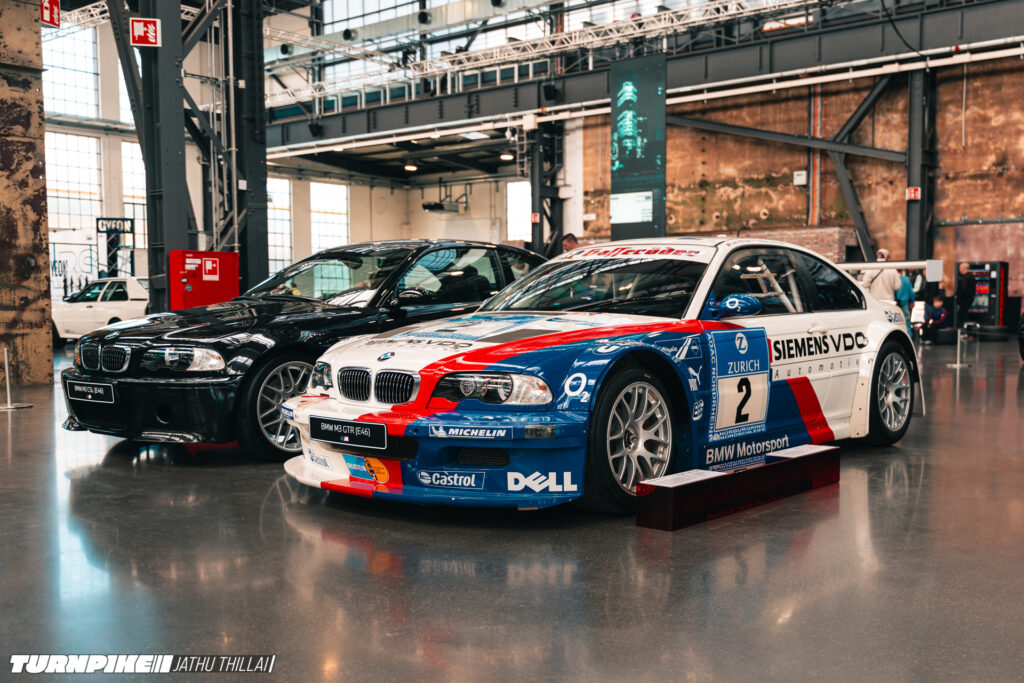
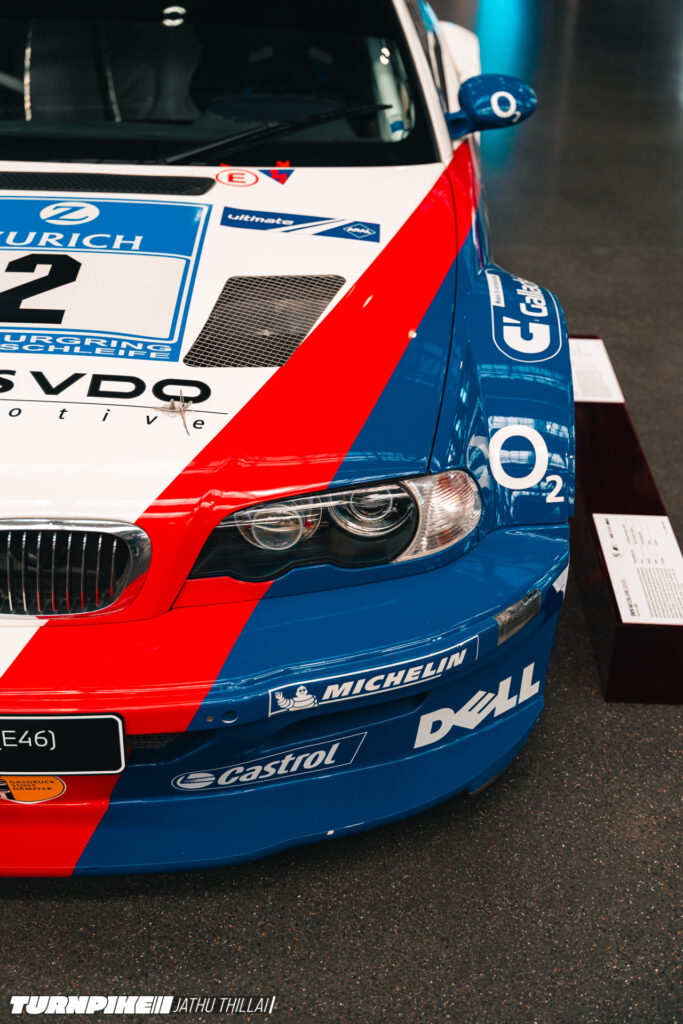
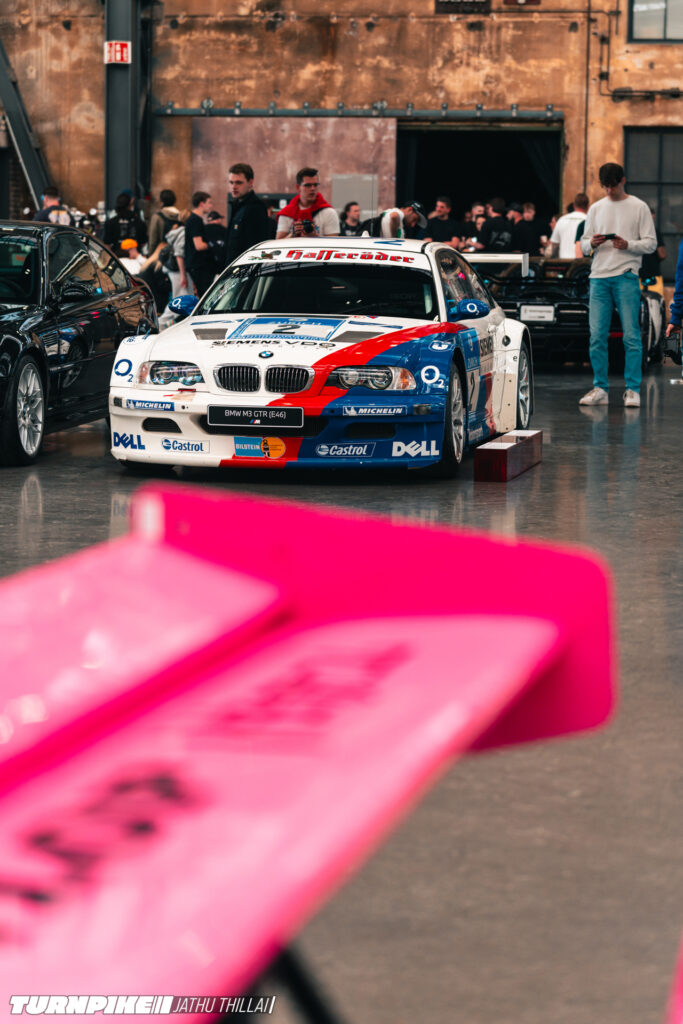
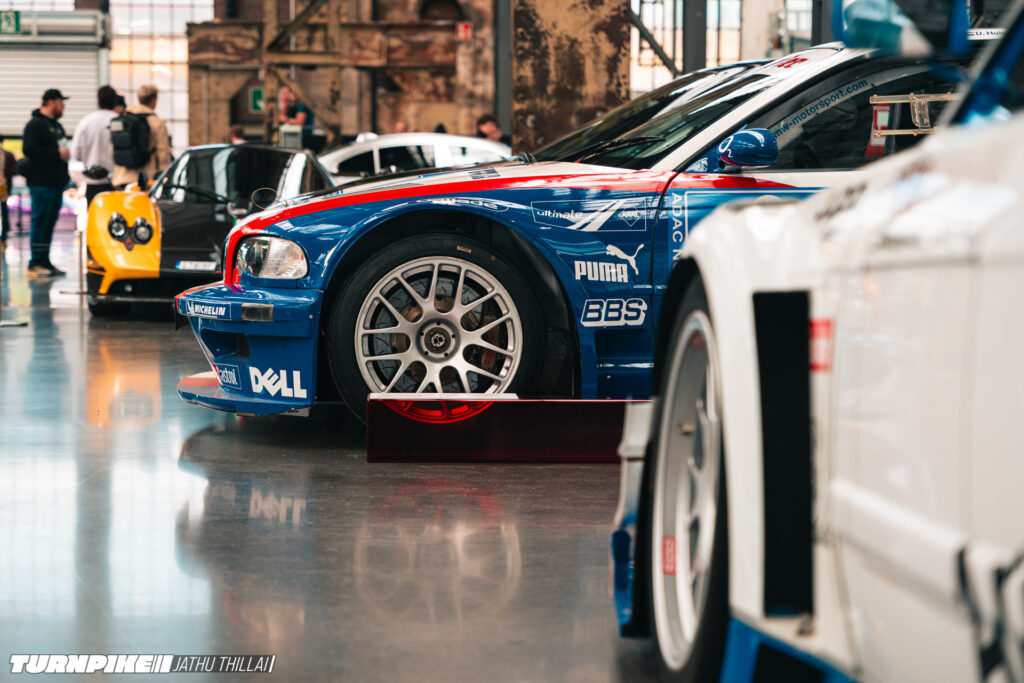
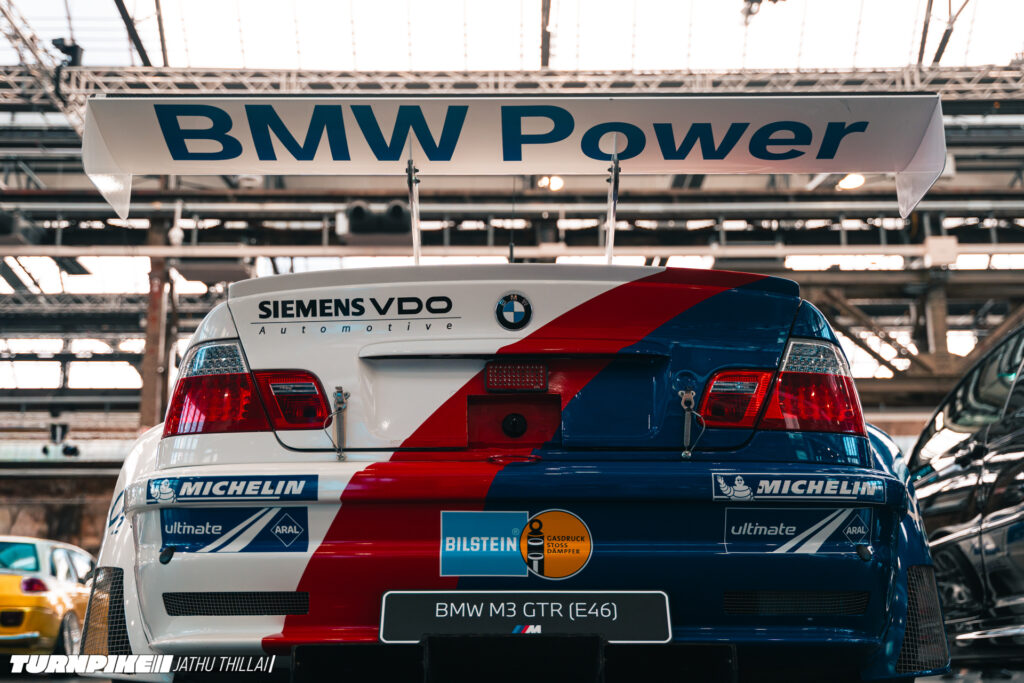
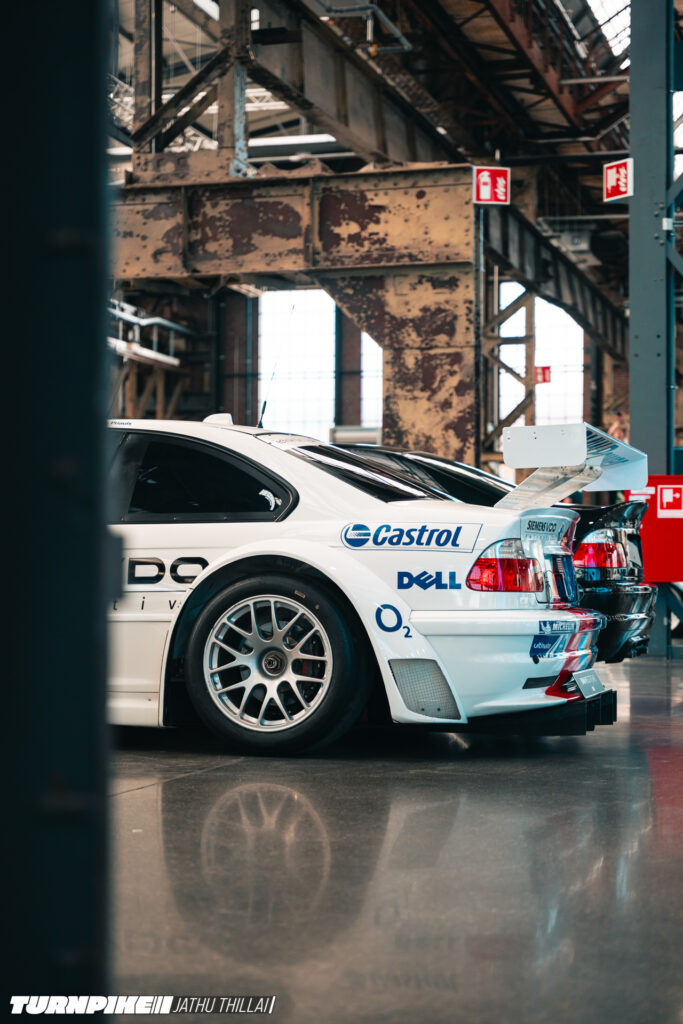
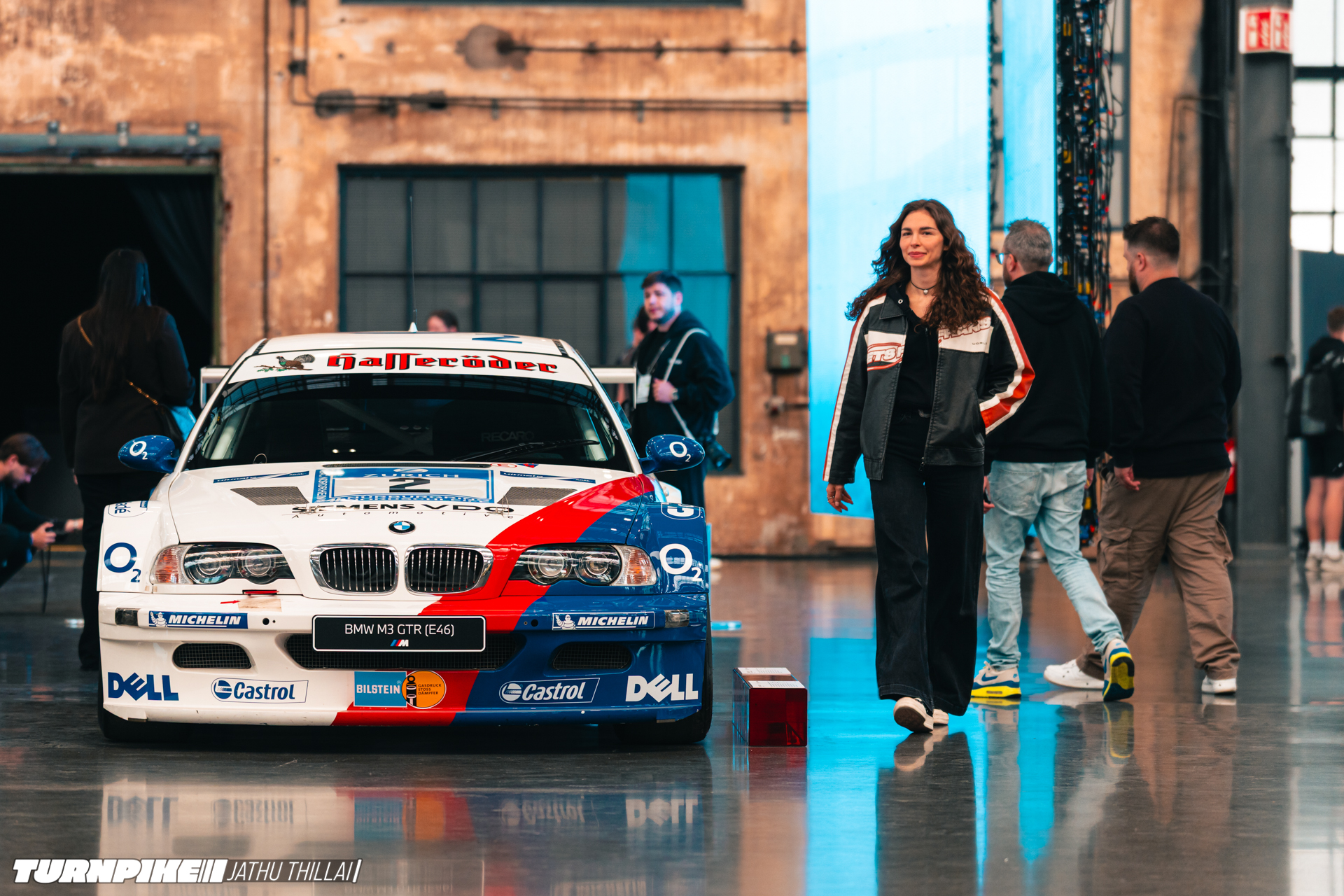
The E46 M3 GTR was born as a solution to a Porsche 996 GT3-R-shaped problem. By autumn 2000, the E46 M3 road car was a great success, but the race car, powered by a tuned version of the production S54 inline-six, struggled to compete with the Porsche on track. BMW’s engineers came to one conclusion: six cylinders weren’t cutting it. Their solution was to build an all-new engine, one that represented a radical departure for the M3 bloodline.
The P60B40, as it was called, was an all-aluminium 4.0-litre naturally aspirated 90-degree V8 featuring four valves per cylinder, quad overhead camshafts, and a dry-sump lubrication system, paired to a sequential gearbox. In unrestricted form, the engine was capable of producing 650bhp.
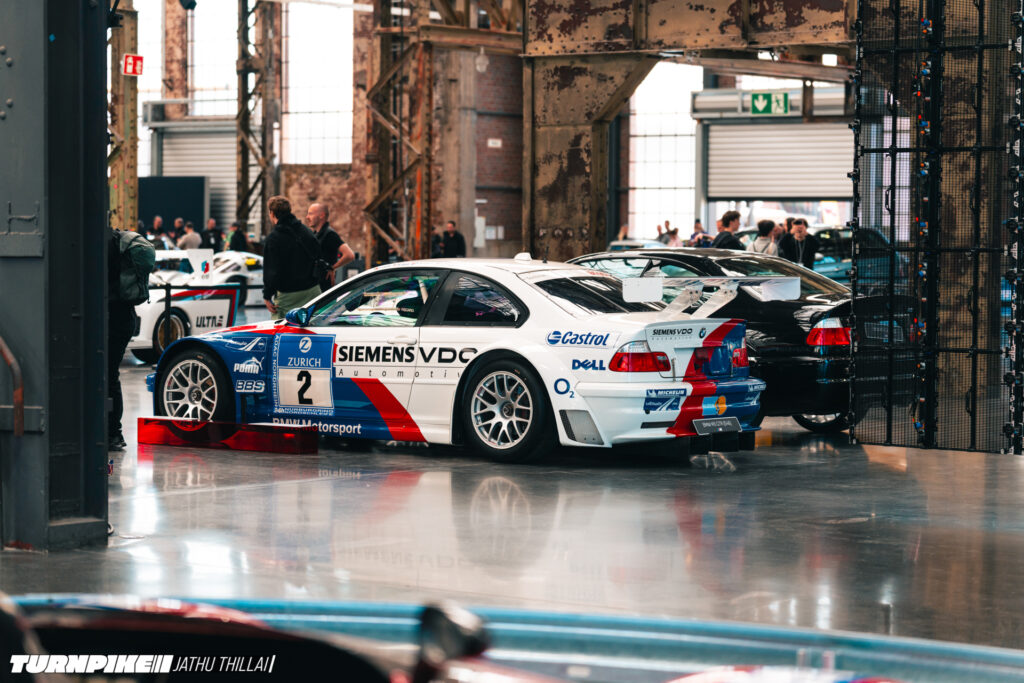
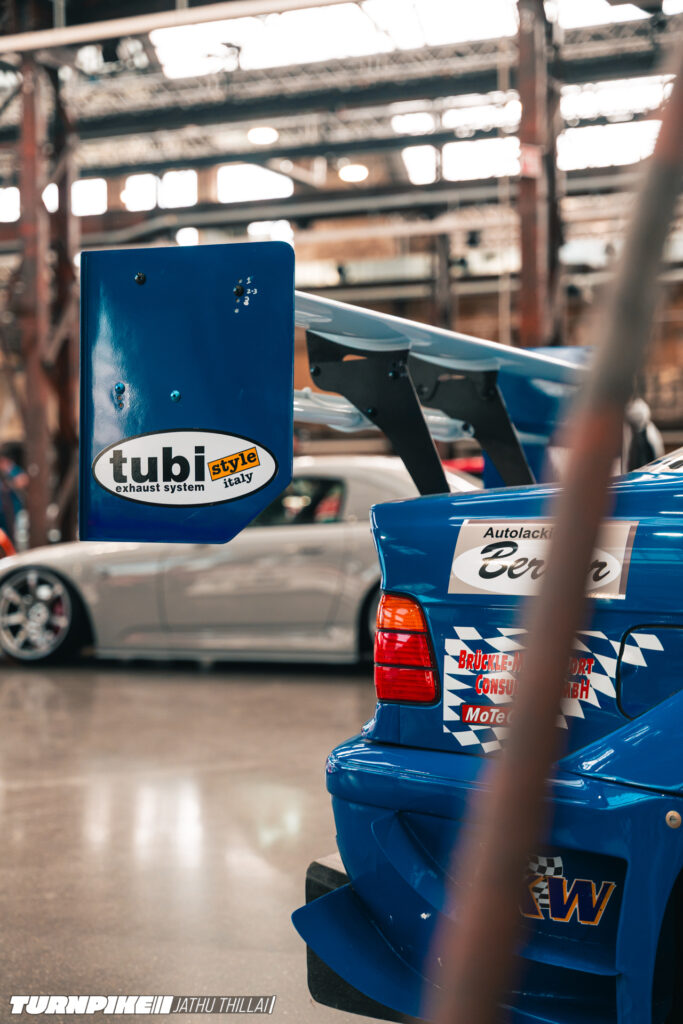
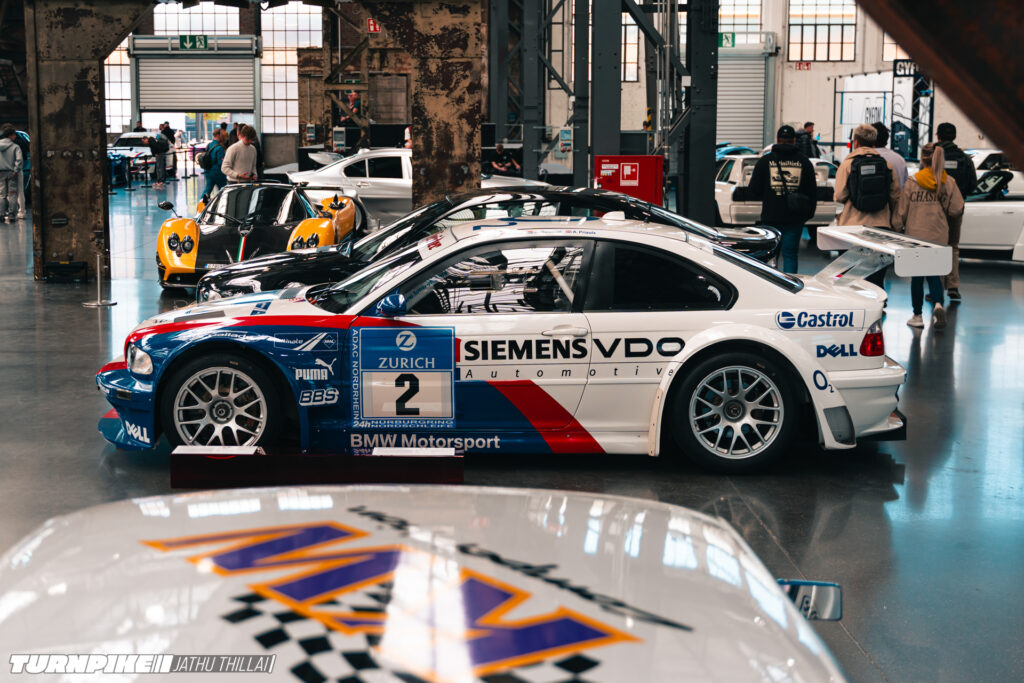
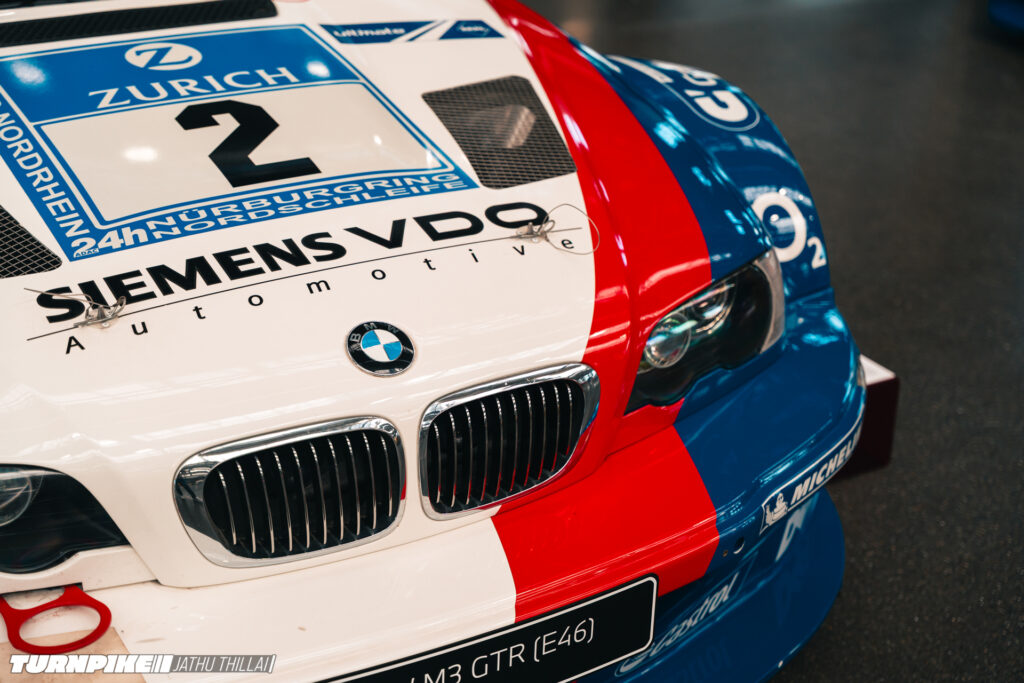
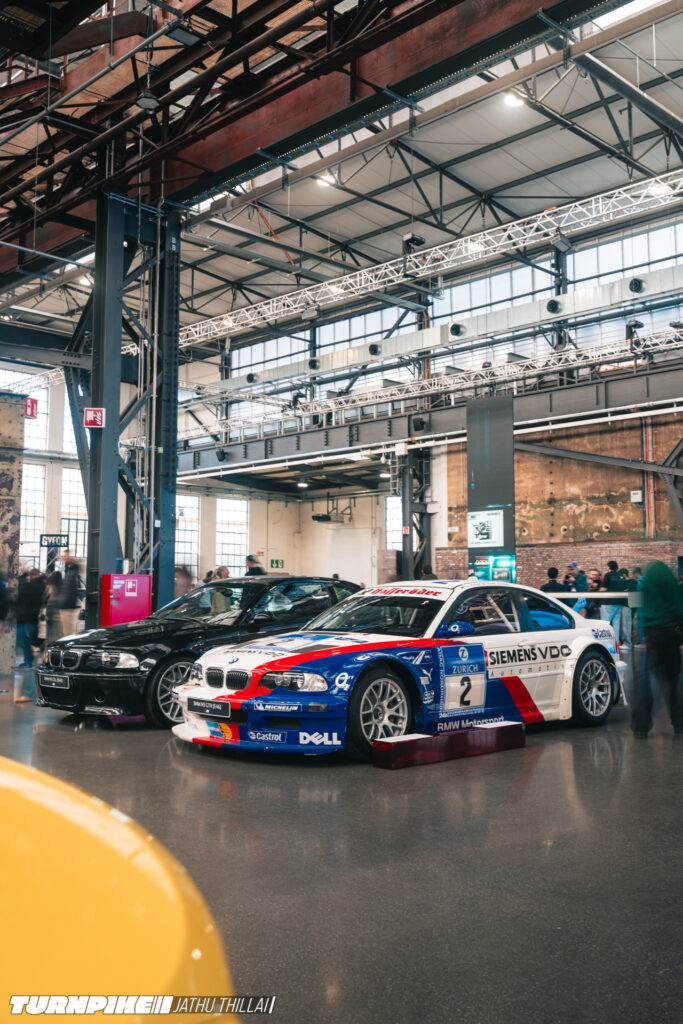
The M3 GTR made its racing debut in the American Le Mans Series (ALMS) in 2001. Series regulations required air restrictors, reducing output to around 450bhp, but that was not the only rule BMW had to satisfy. Homologation requirements meant 10 road-going Straßenversion models also had to be produced. These cars would feature a detuned P60B40 V8 engine and a manual gearbox. As a side, it’s rumoured that just three of these M3 GTR homologation cars still exist today.
Schnitzer Motorsport was the first to run the M3 GTR race car, followed shortly after by the BMW team PTG. By the back half of the season, the competition was no longer Porsche, but the BMWs themselves. At the end of the 2001 season, M3 GTRs had won seven of the 10 races, securing the manufacturers’, teams’, and drivers’ championships for BMW.
Despite its dominance, the M3 GTR’s time in ALMS only lasted for the 2001 season. Porsche protested the car, prompting a regulation change for the following year. The new homologation rules required 100 road cars and 1,000 engines to be produced, ultimately forcing the M3 GTR into an early retirement from the series.
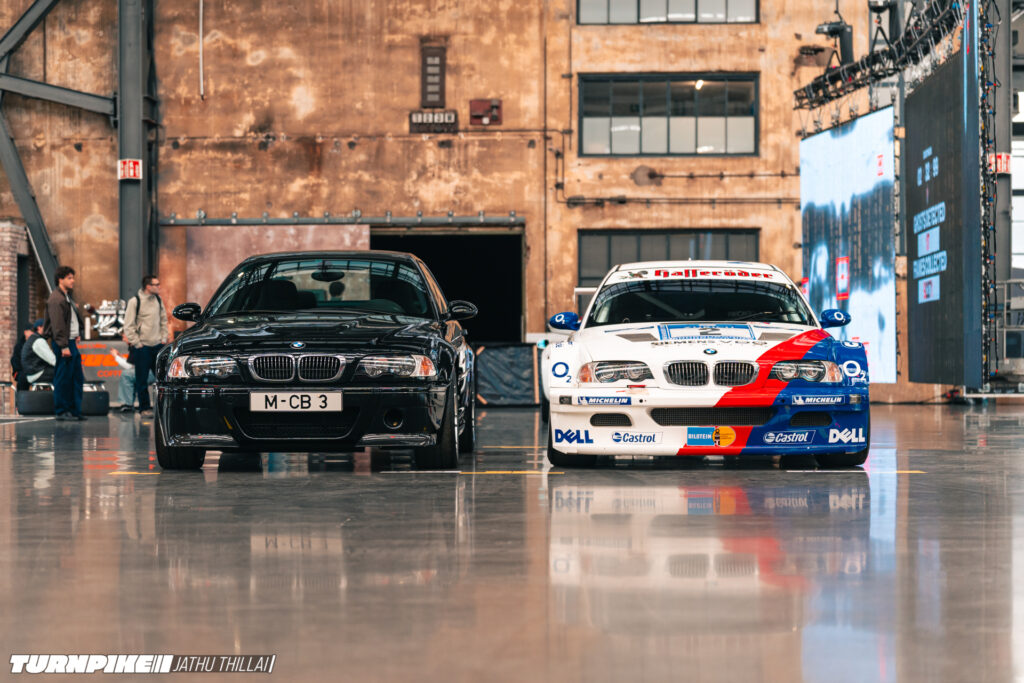
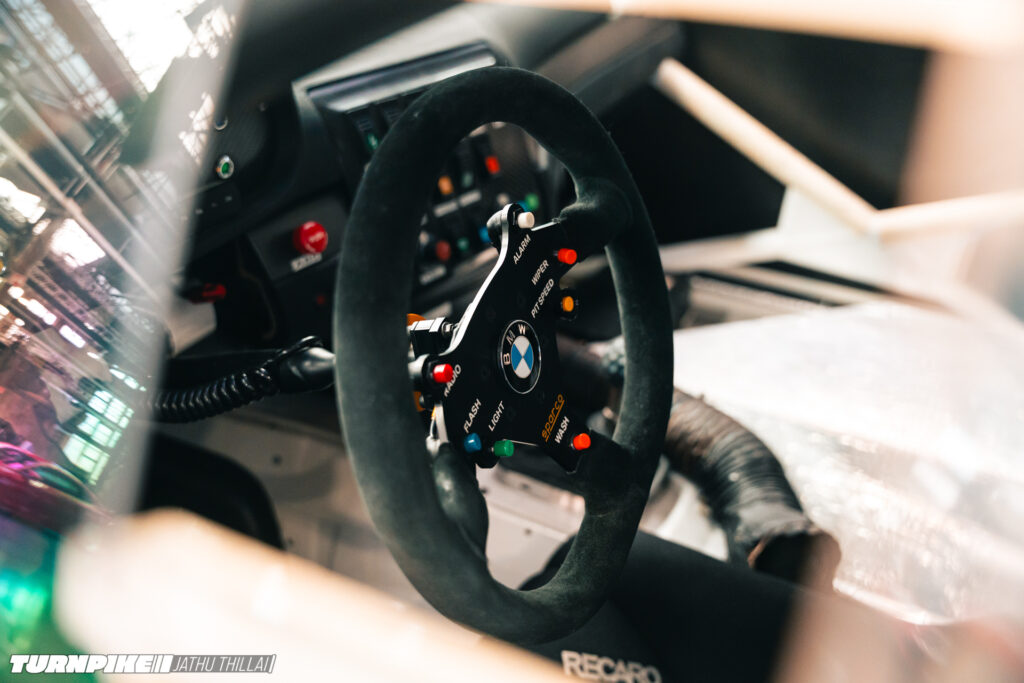
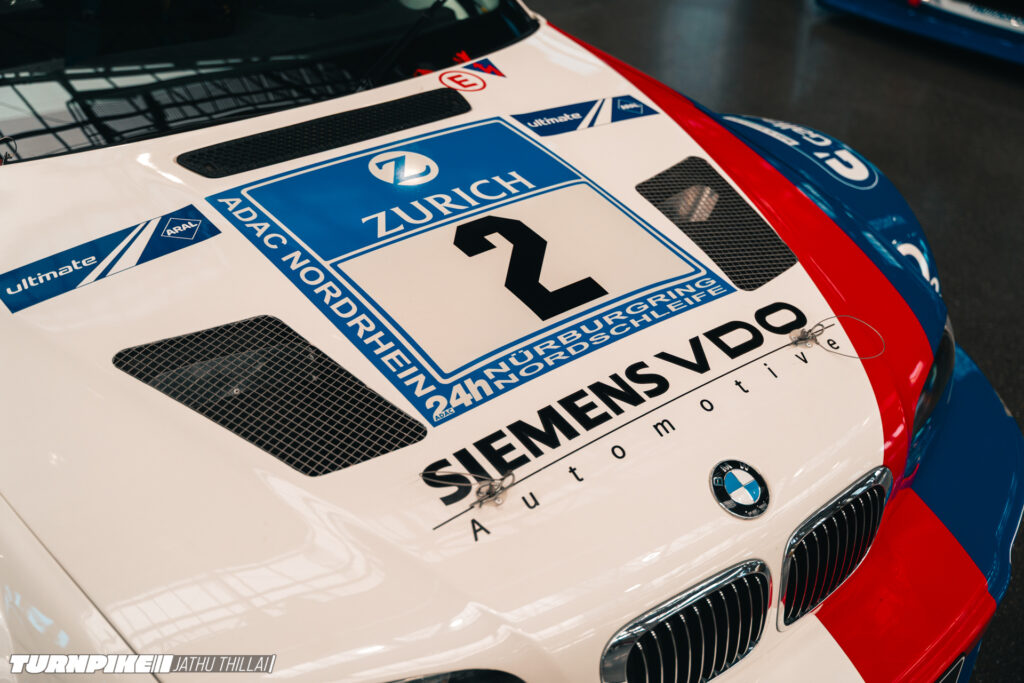
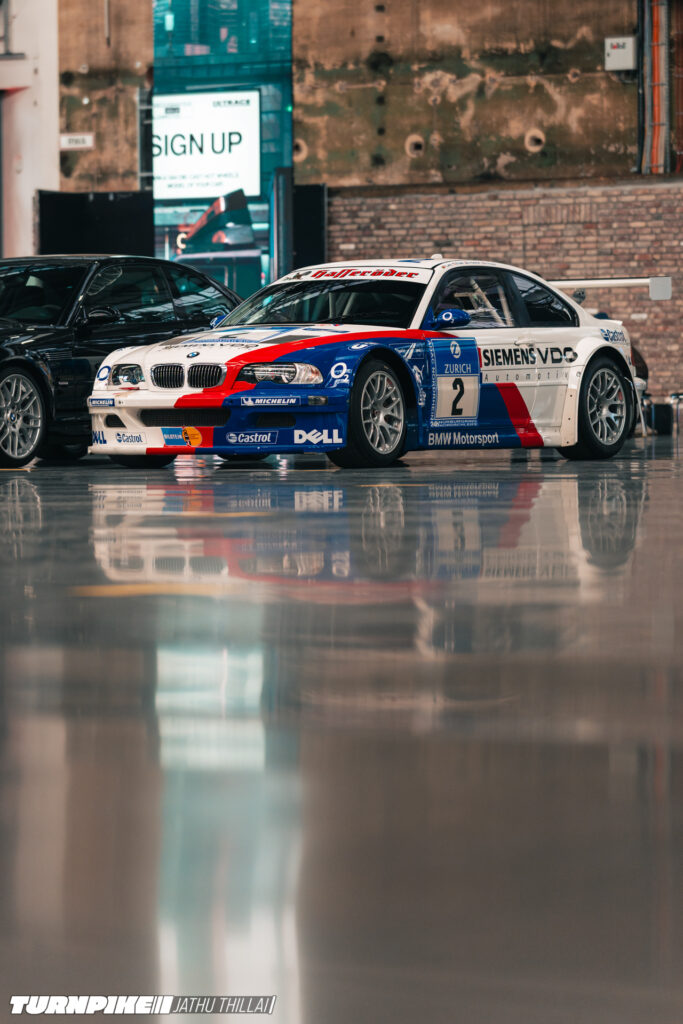
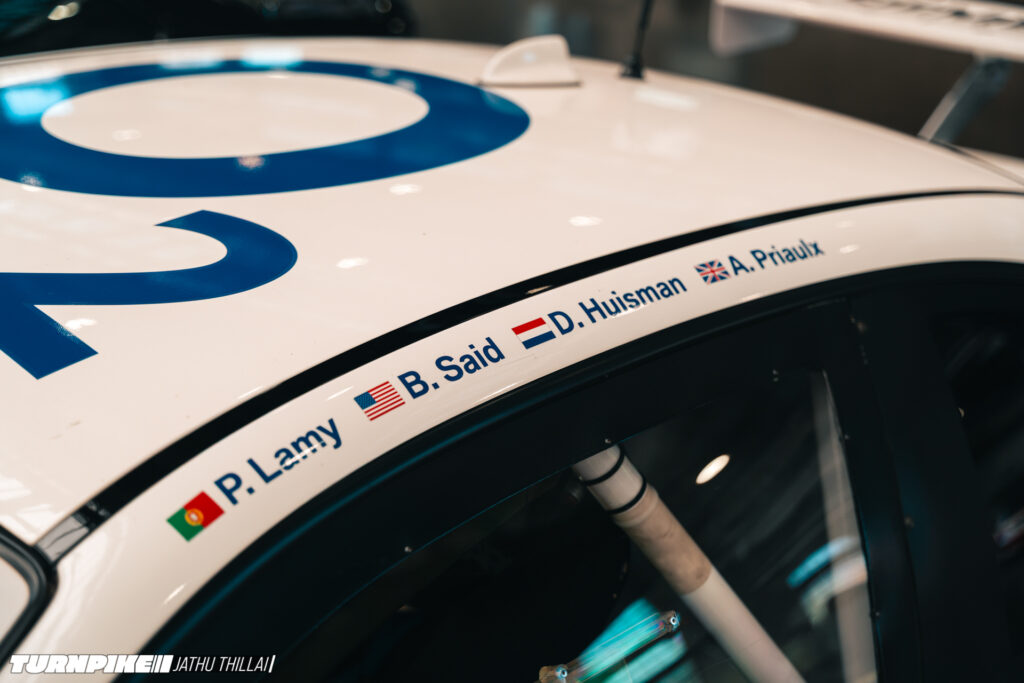
But the legacy did not end there. The M3 GTR returned to the track, competing in the 24 Hours of Nürburgring from 2003 to 2005, and claiming overall victories in both its second and third years.
2005 also cemented the M3 GTR’s place in popular culture, thanks to Need for Speed: Most Wanted. The video game title featured a modified M3 GTR Straßenversion as the hero car, taking the V8-powered E46 beyond race tracks and into living rooms around the world.
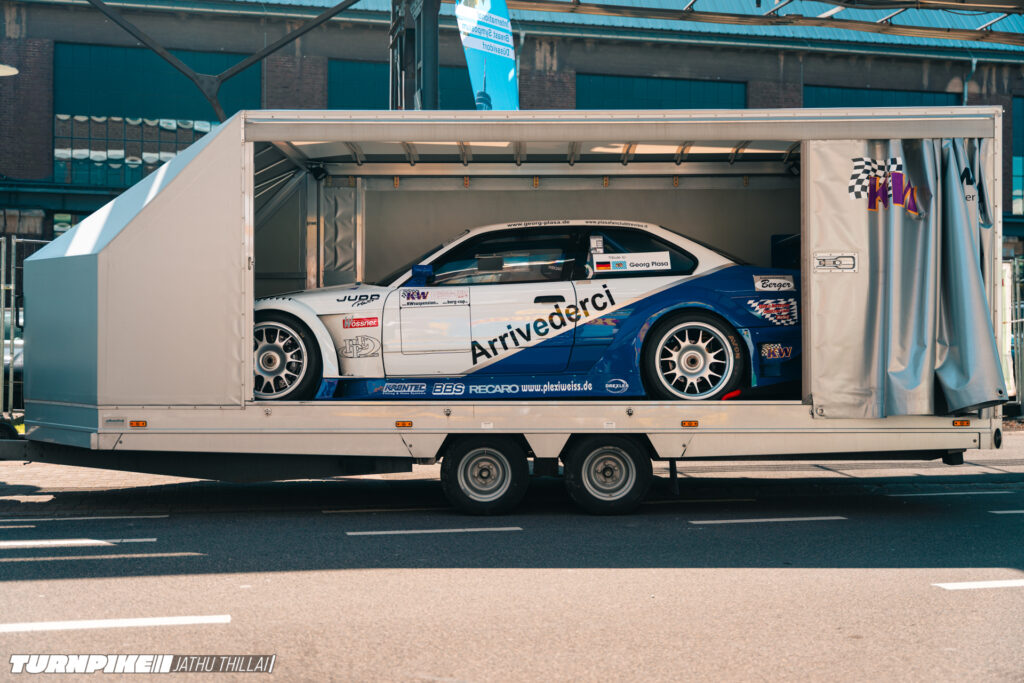
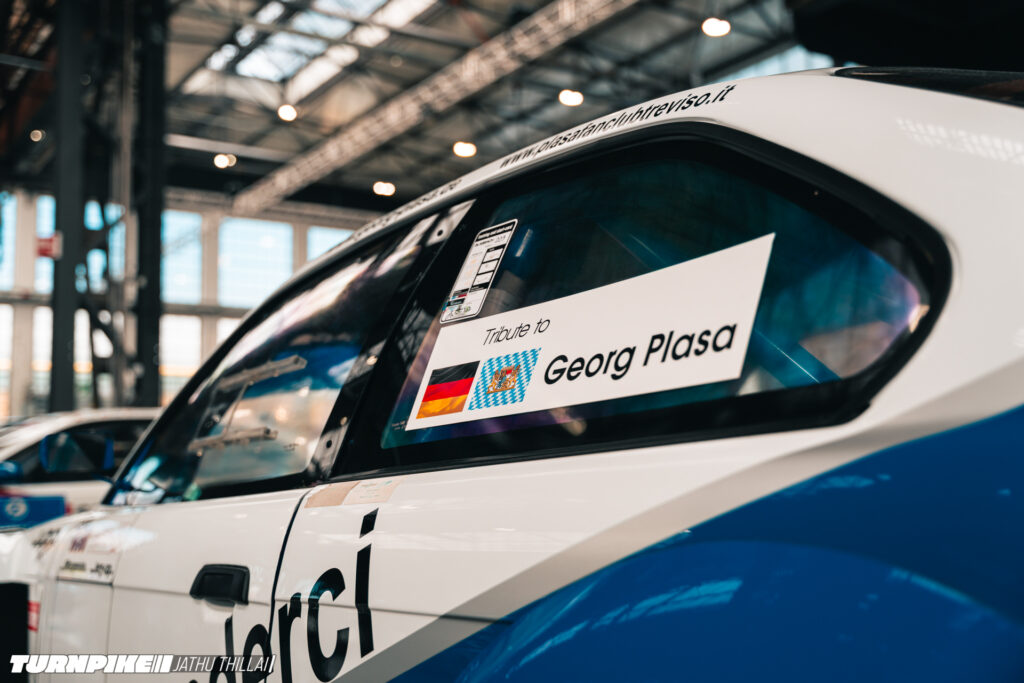
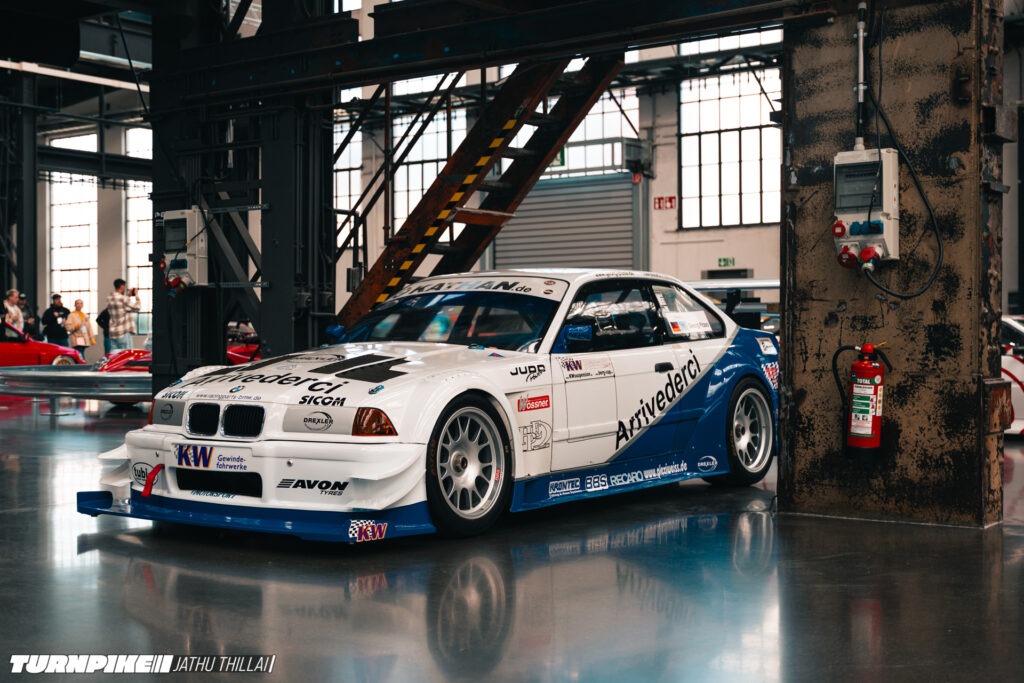
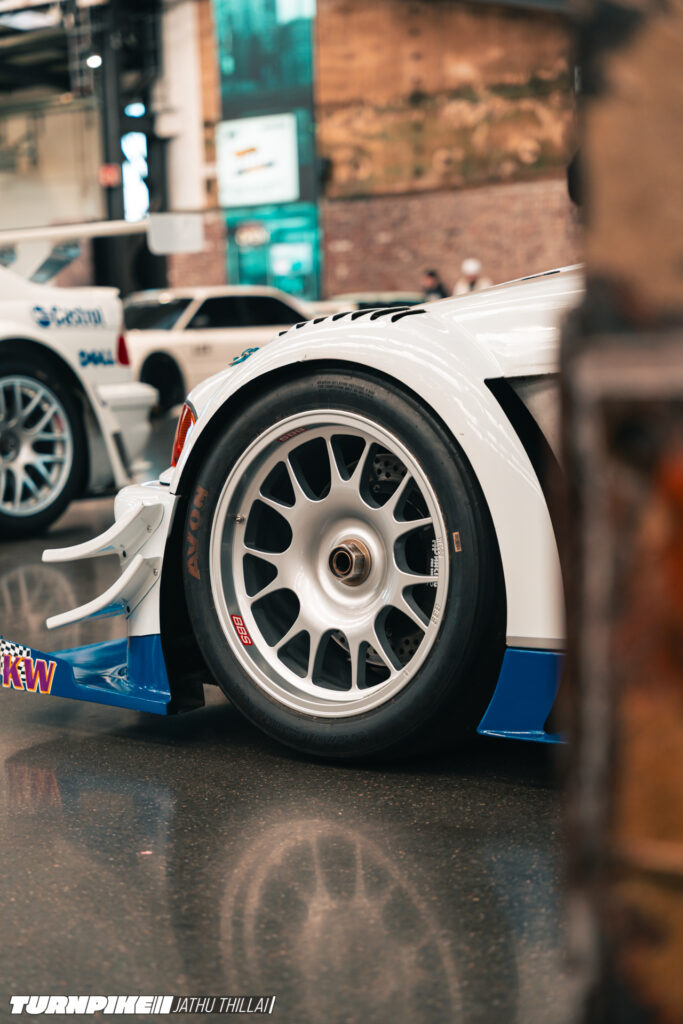
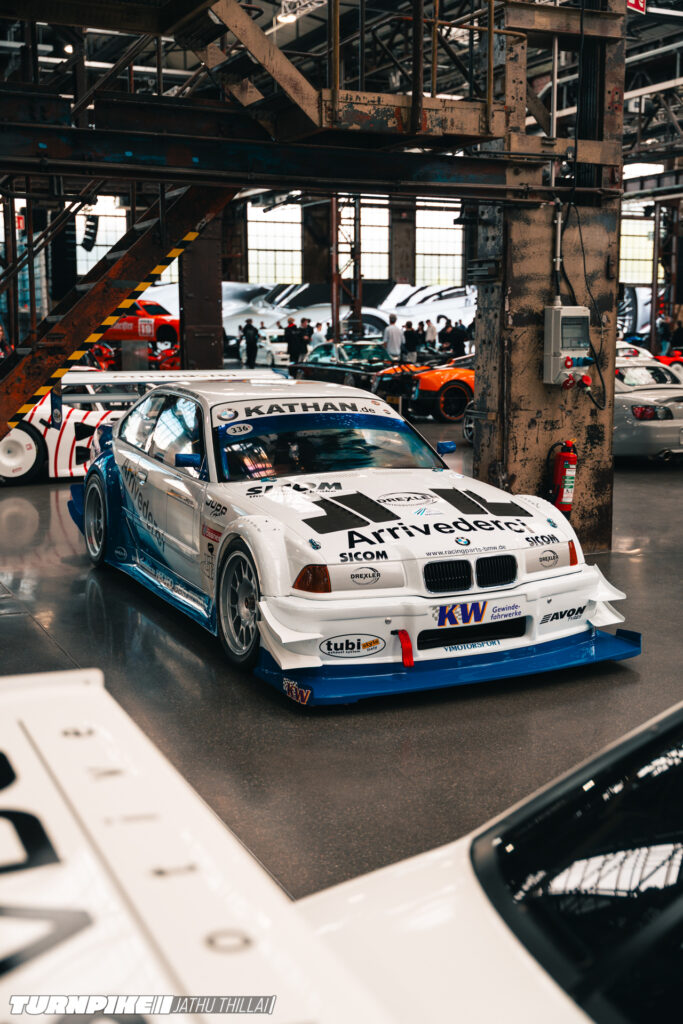
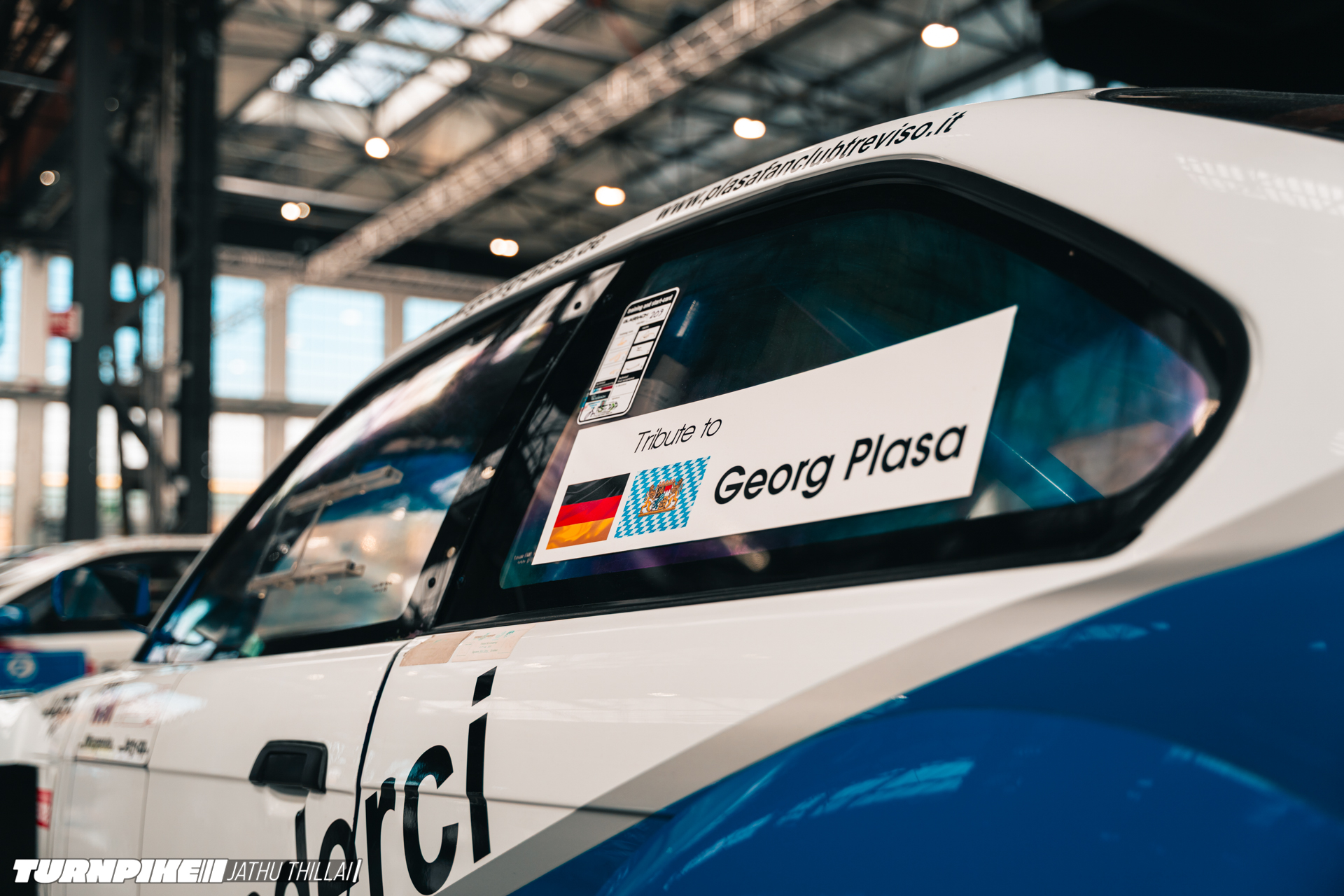
Before I tell you about the second V8 BMW race car on show at Ultrace this year, I need to introduce Georg Plasa. A talented engineer from Bavaria, Georg grew up in a family entrenched in the aeronautical industry. When he decided to compete in motorsports, he chose hill climb racing over other disciplines, drawn by the freedom it offered to build the kind of car he truly wanted. Over more than two decades of competing, Georg earned a reputation not only as a winner but also as a prolific race car designer and builder. He was also well known for his willingness to help fellow competitors with their cars.
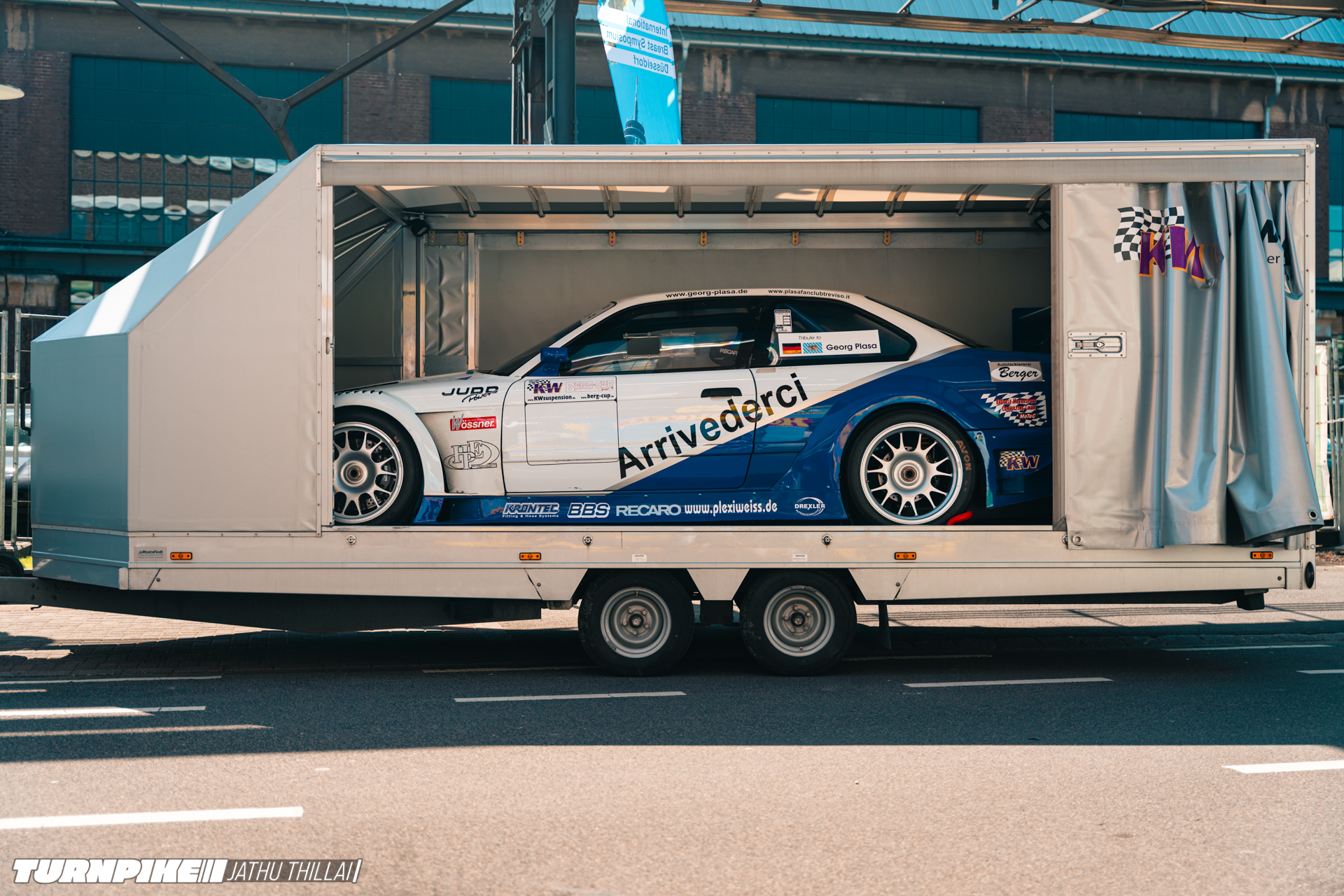
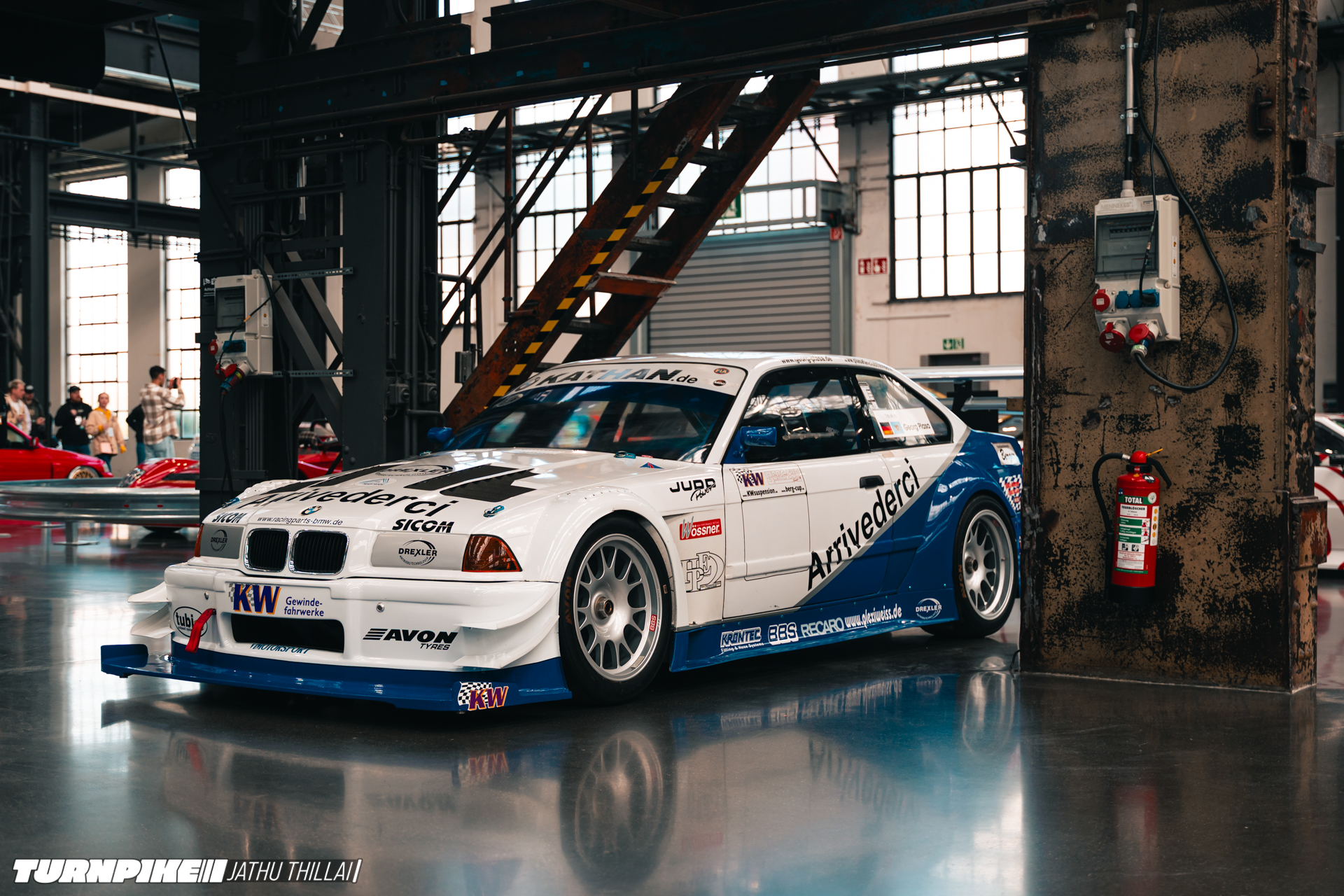
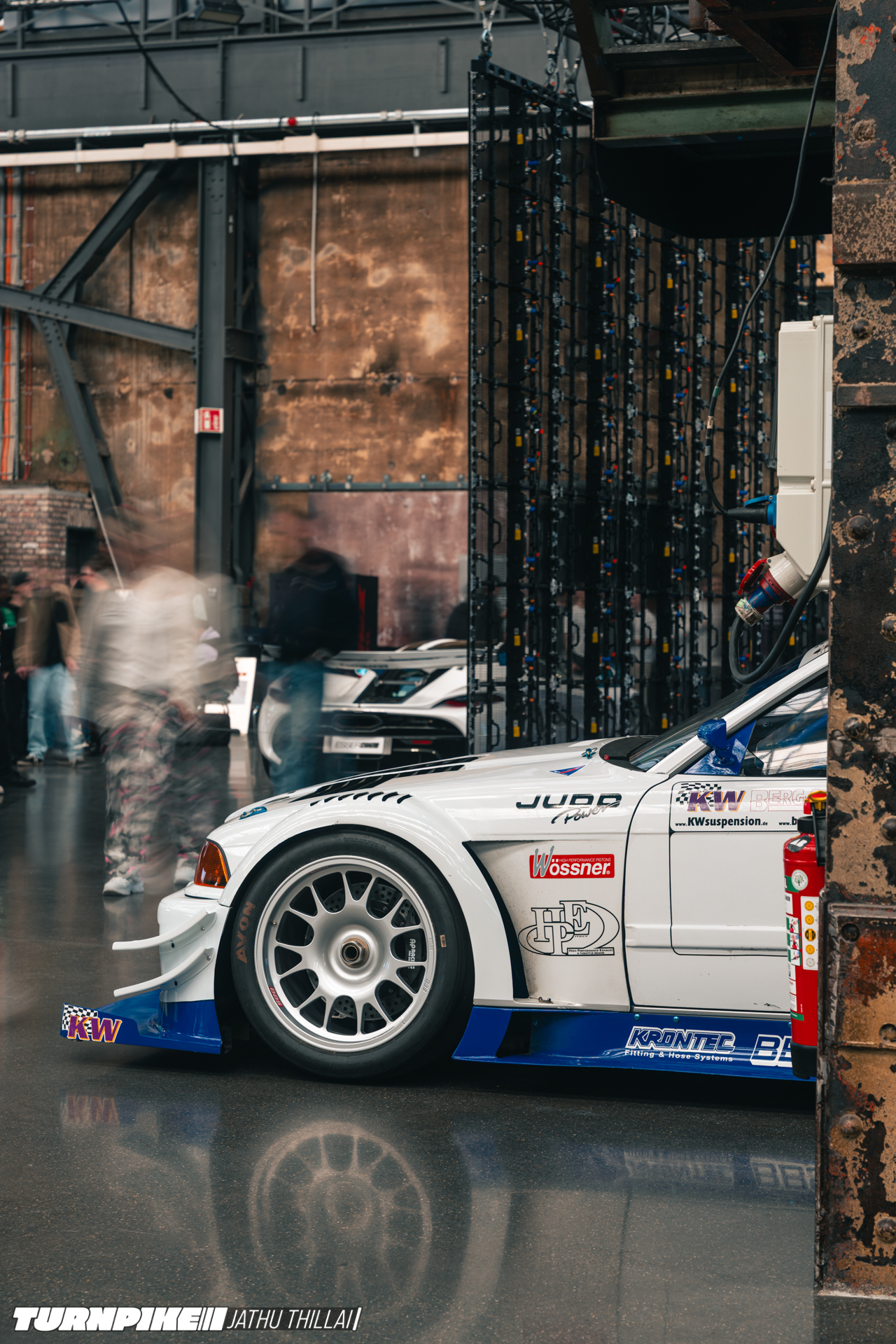
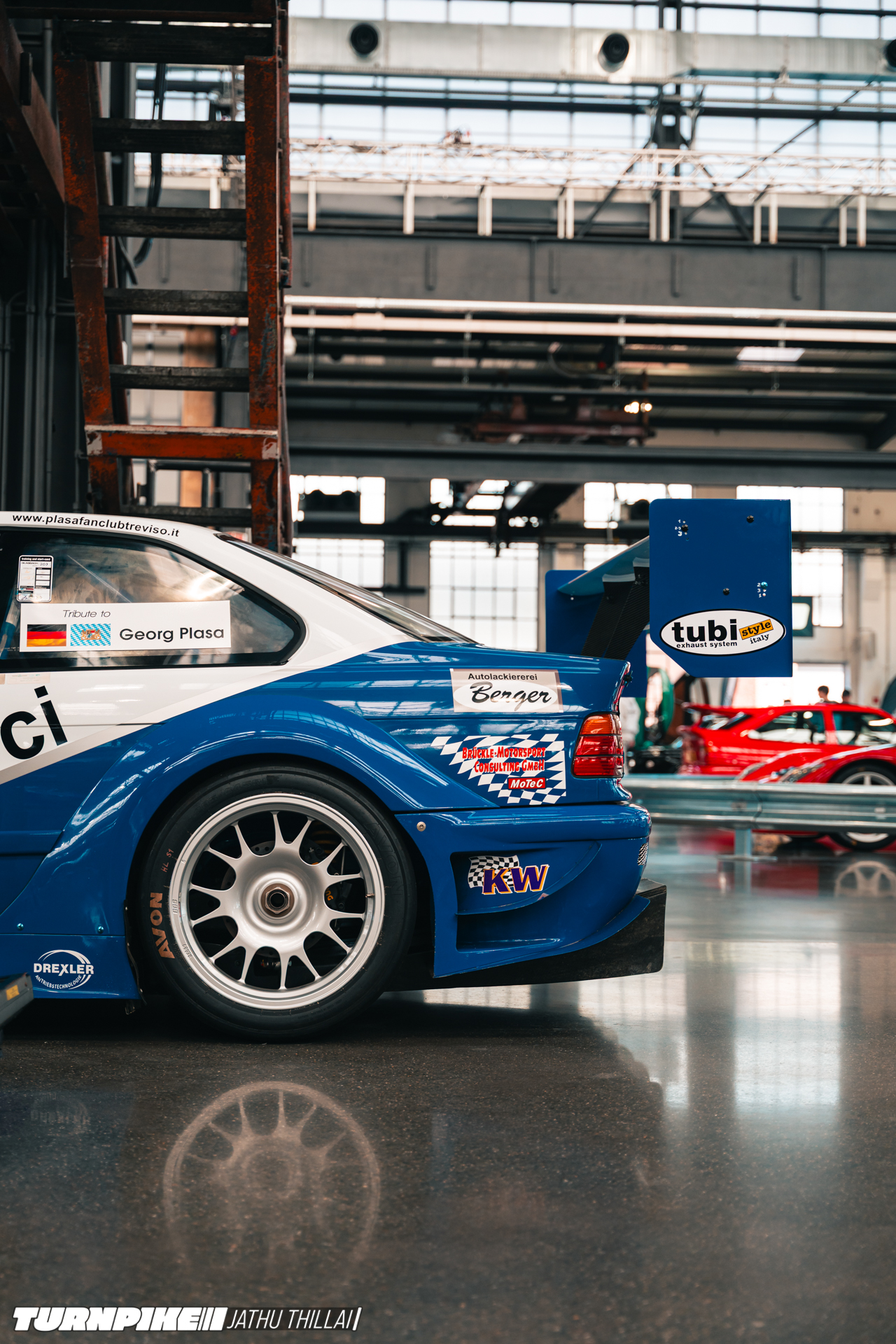
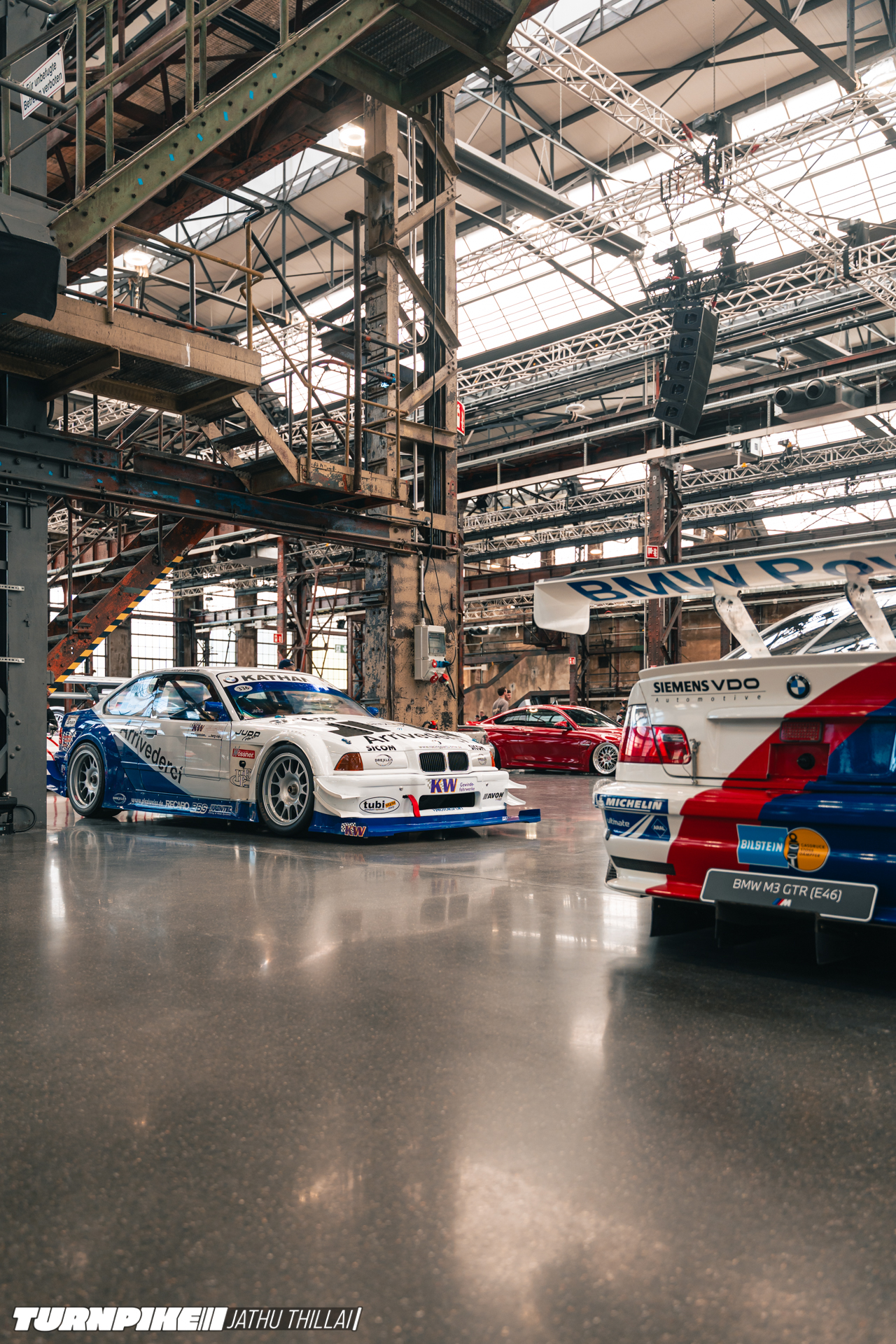
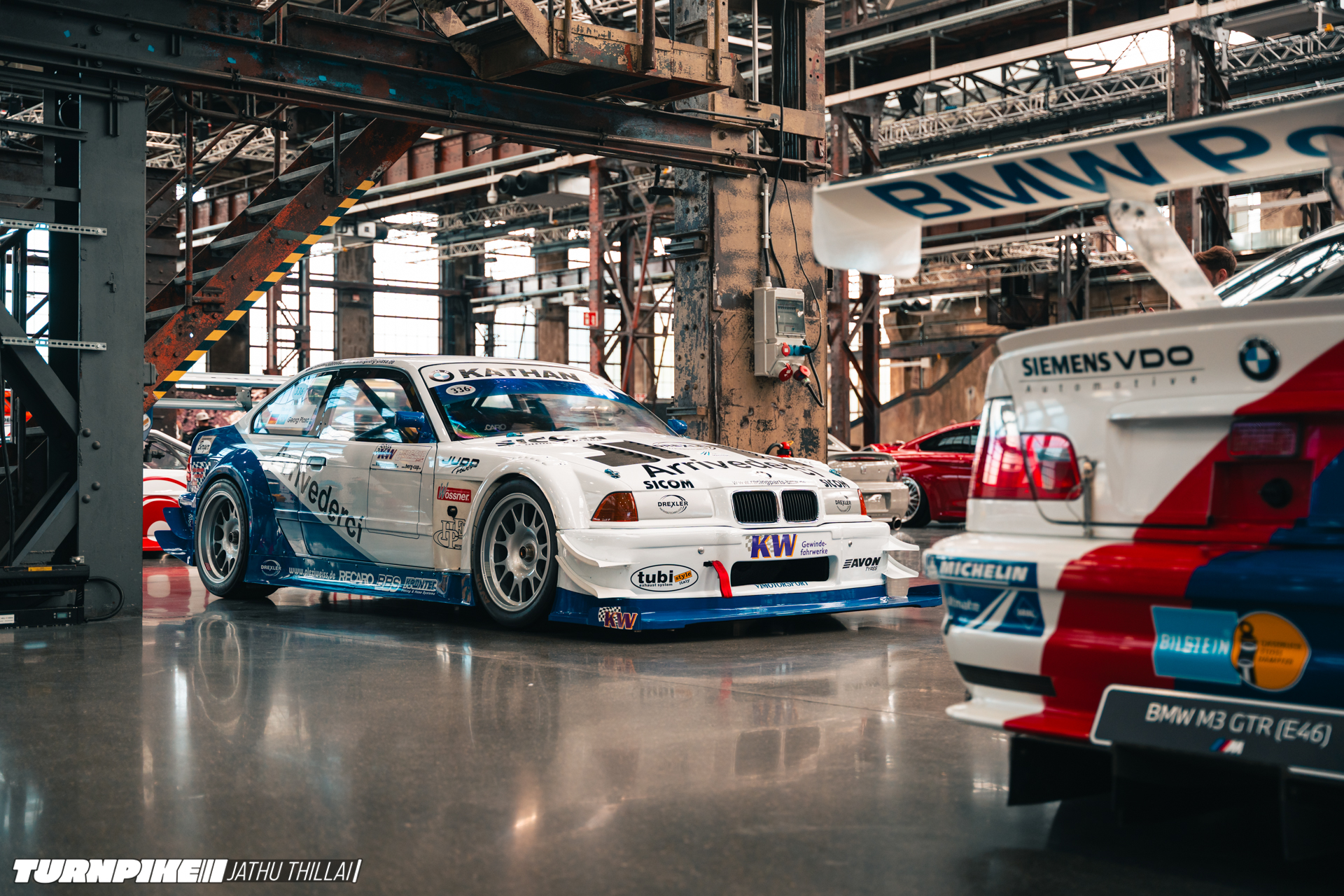
For the 1999 season, Plasa took an E36 320i and fitted it with a BMW four-cylinder S14 engine tuned to nearly 400bhp. The car worked and won occasionally, but there was a problem: it needed to be stripped and rebuilt after almost every event. By 2003, Georg had another idea. He sourced a Judd V8 from a sports prototype and shoehorned it into the 320i. The new setup was an instant hit, and the 320i quickly became one of the fastest cars in the European hill climb scene. The engine, a KV675, was a 3.3-litre naturally aspirated 90-degree V8 capable of around 550bhp. However, its best attribute was the sound. Variants of the same engine had powered early-2000s Formula 1 cars, meaning the Plasa BMW brought a genuine F1 soundtrack to Alpine mountain roads.
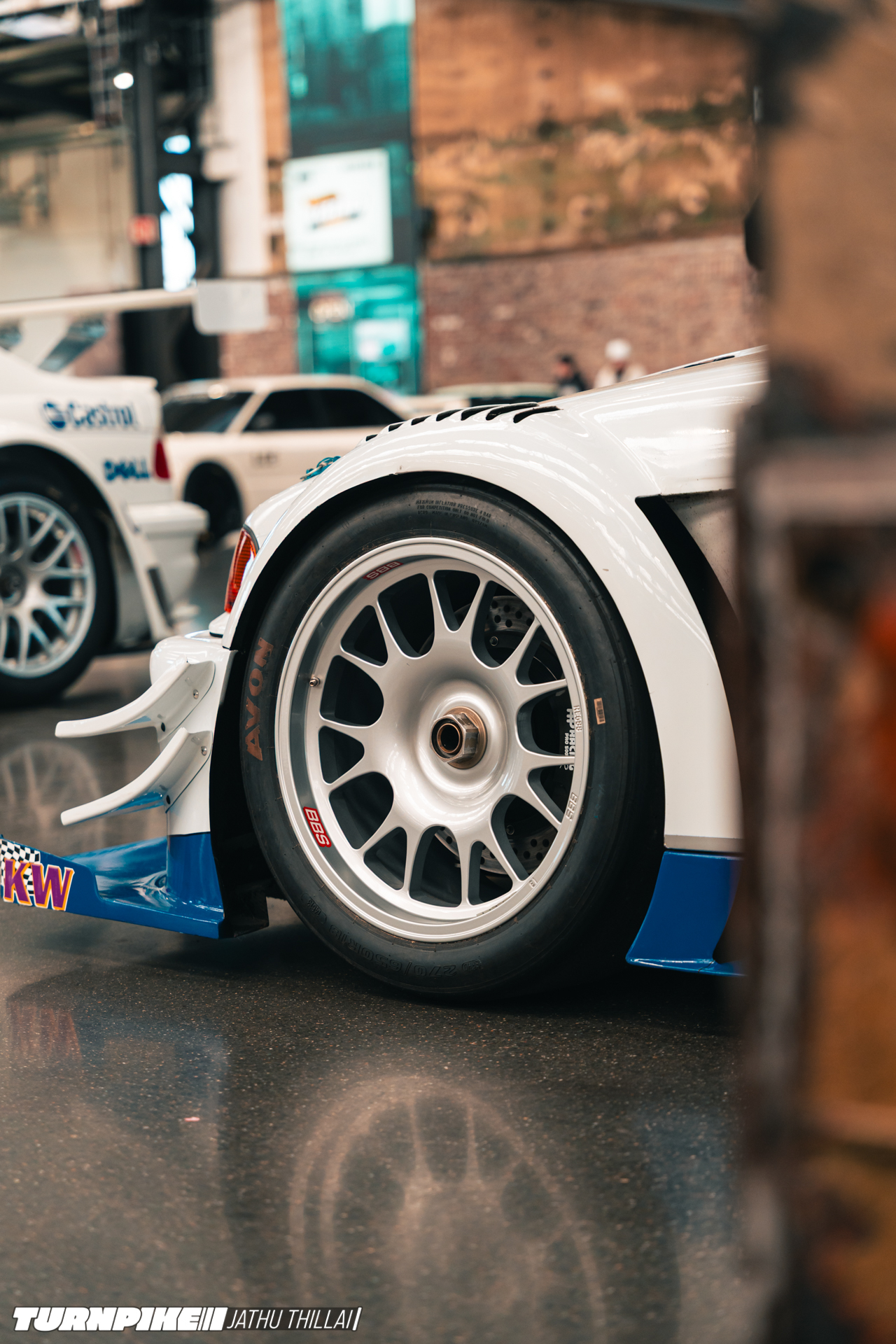
The build was not as straightforward as simply sticking a V8 into a compact 320i body shell. The regulations only specified that the original steel structure and suspension turrets be retained, giving Georg free rein over the rest of the car. Avon tyres wrapped around lightweight BBS magnesium wheels, and the suspension could only come from one source: KW. That was no coincidence, as KW founder Klaus Wohlfarth was both a close friend and backer of Georg.
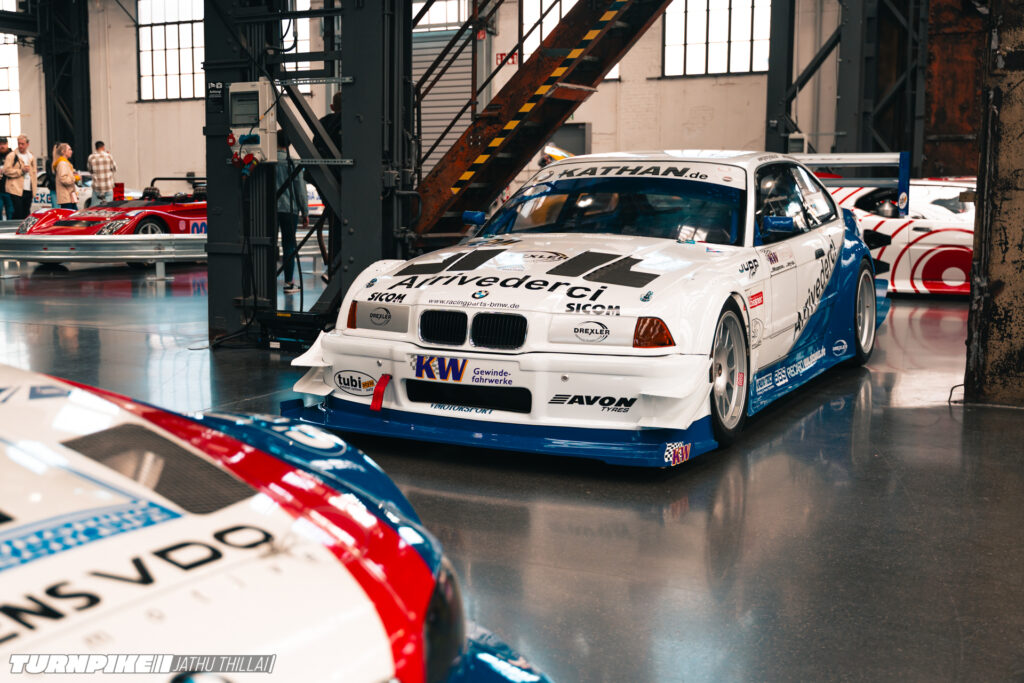
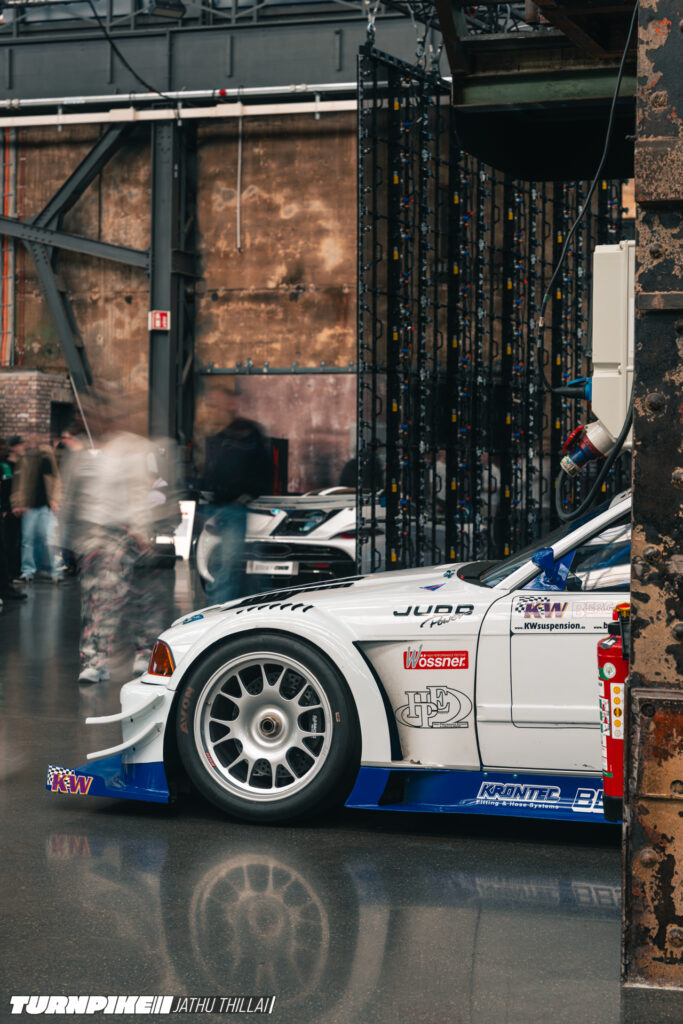
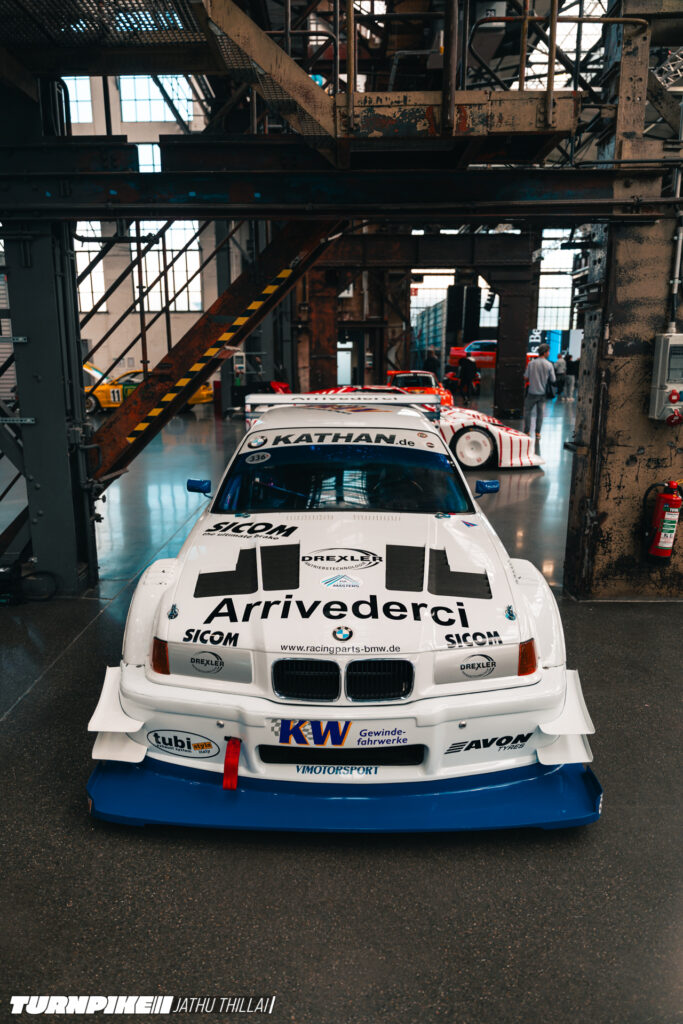
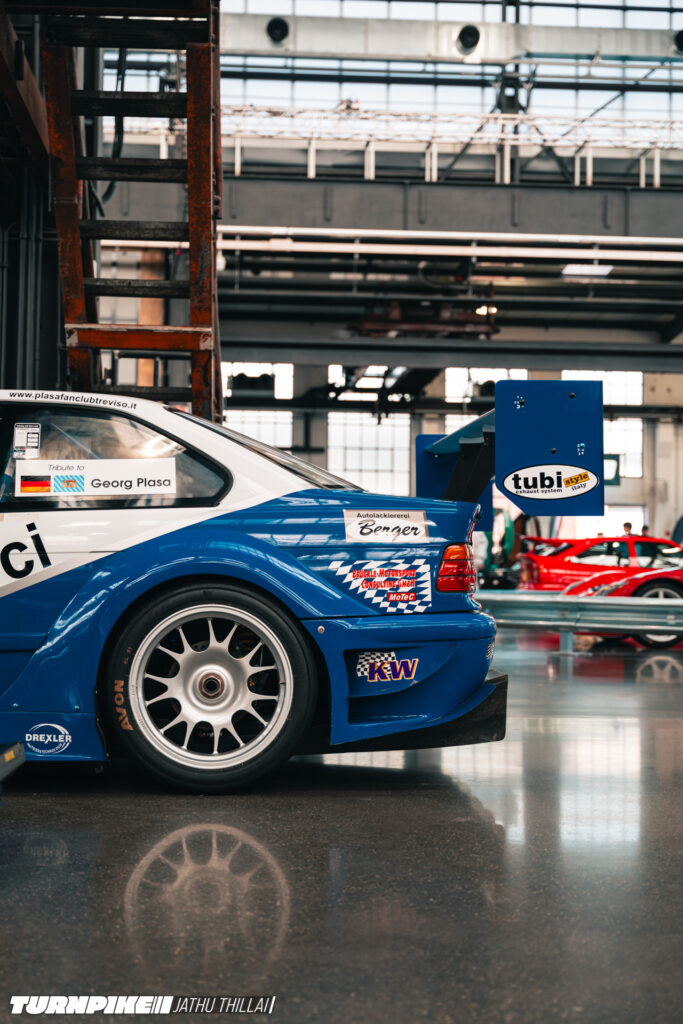
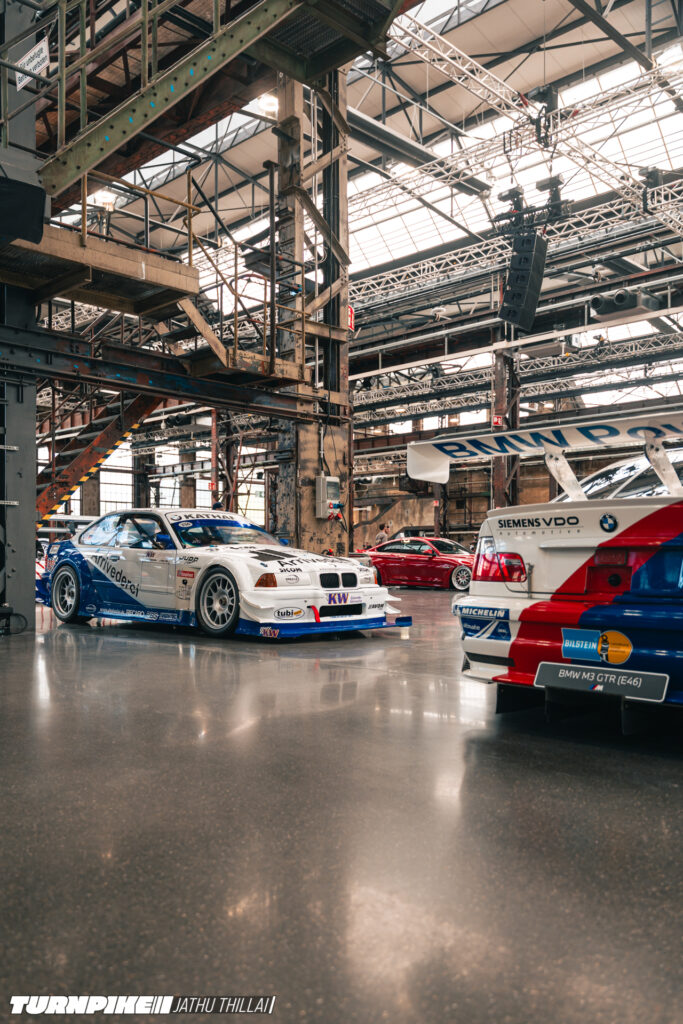
Throughout the 2000s, Plasa dominated the European Hill Climb Championship, winning it six times. By 2009, he retired the E36 and turned his attention to a 1 Series build.
On 10 July 2011, at the Coppa Bruno Carotti in Italy, Plasa was competing in the Judd-powered 1 Series when, during a fast section of the hill climb course, the car went off the road and struck a rock face. Georg was just 51 years old. Motorsport lost not only a great driver but also one of its most innovative engineers.
Following his passing, the E36 remained in Plasa’s workshop, and his family began receiving offers to buy it for parts. Instead, Klaus stepped in and purchased the car, ensuring it was preserved and restored to its former glory as a tribute to his friend.
The BMW was rebuilt throughout 2017 by Georg’s friends, colleagues, and KW employees. In 2018, it appeared at the Goodwood Festival of Speed, where it set a time of 46.43 seconds – good enough for third outright, ahead of sports prototypes and even an M4 DTM car.
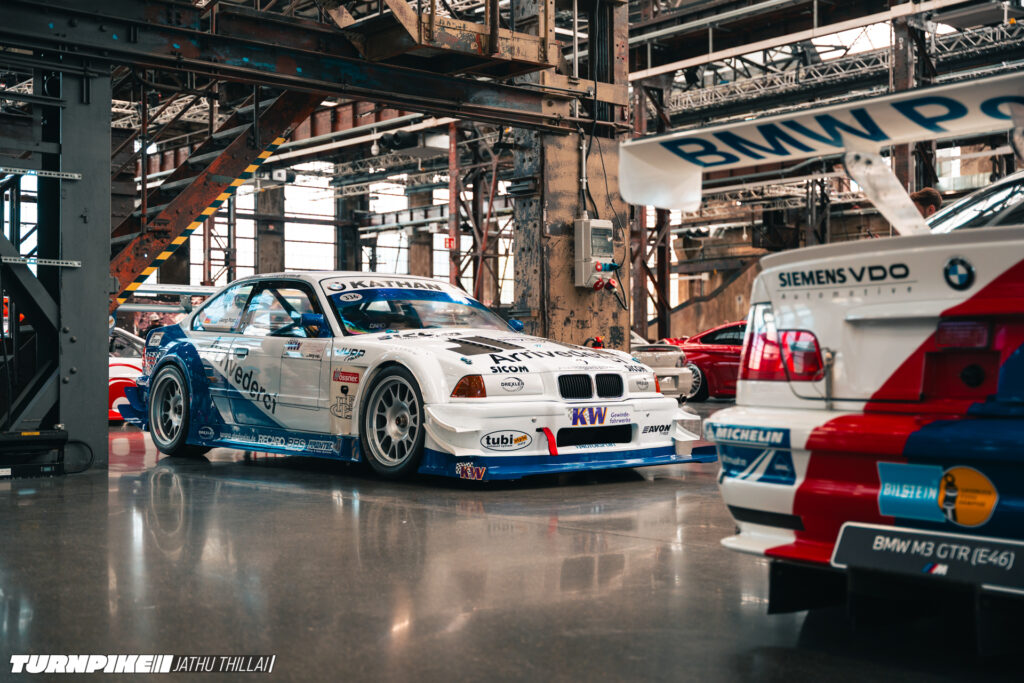
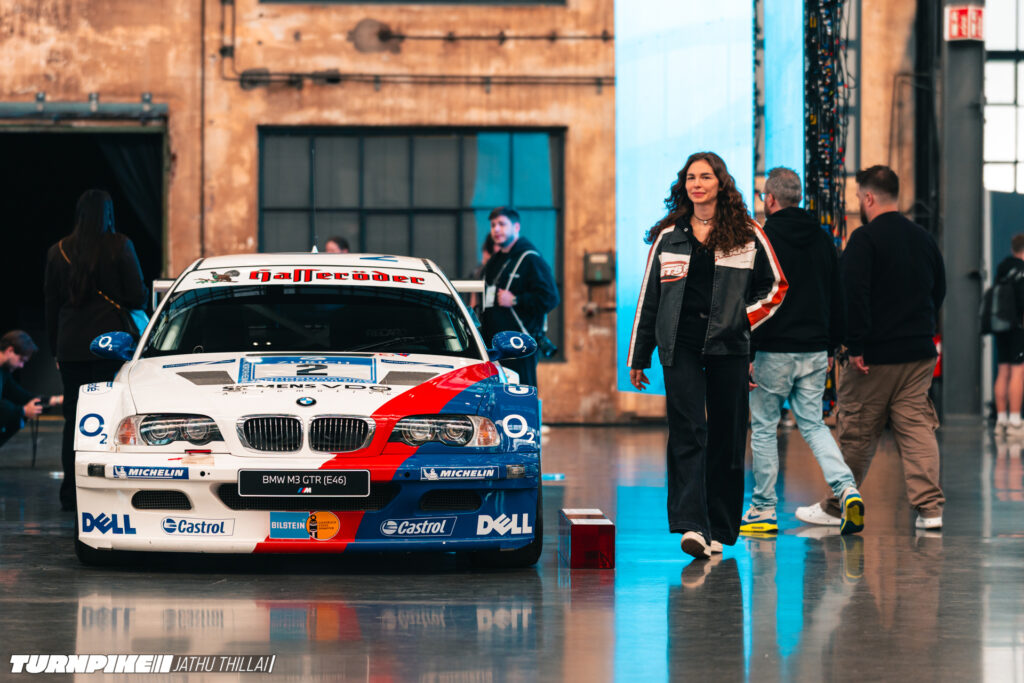
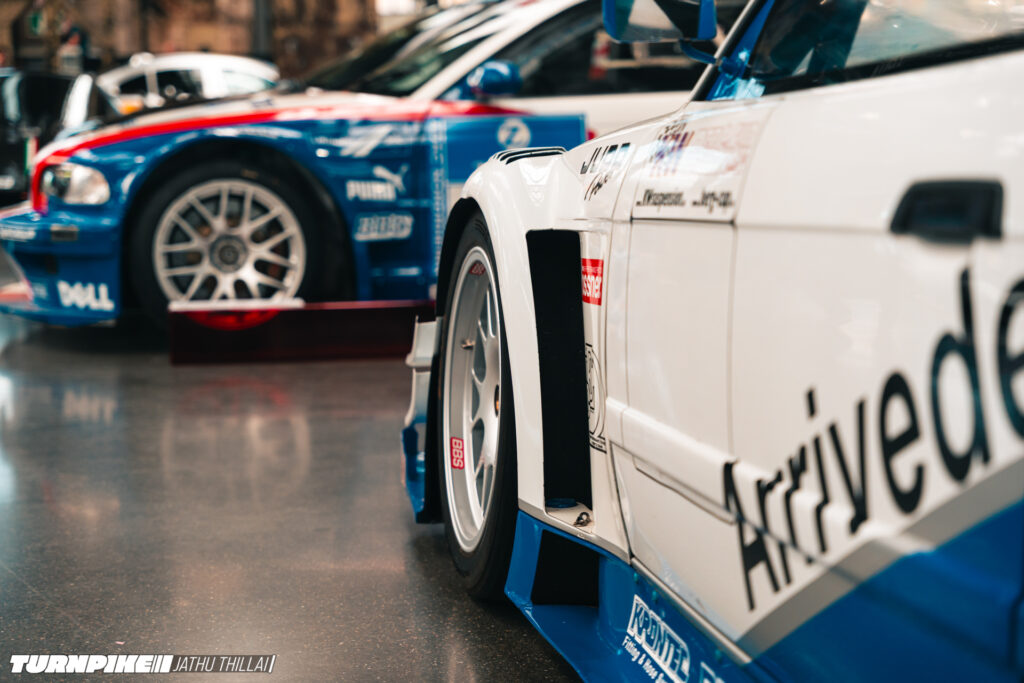
Although the two cars we’ve looked at today were built in the same era, their approaches could not have been more different.
The E46 M3 GTR was developed by engineers from one of Germany’s most renowned motorsport divisions. They designed an entirely new V8 engine to take on Porsche, and the competition quite literally disappeared in the BMW’s mirrors. Its 2001 ALMS season was so dominant that the car was carried over for the next season, which never eventuated – before taking on the 24 Hours of Nürburgring a couple of years later and winning outright, back-to-back.
On the other side stood the E36 built by Georg Plasa. He was one man in a garage, attempting to build the ultimate hill climb machine. With not even a fraction of the resources available to BMW’s factory effort, Georg still managed to create one of the best cars to ever compete in the European Hill Climb Championship.
Both cars stepped beyond their intended worlds and went on to dominate their respective motorsport disciplines. Standing in front of them at Ultrace Düsseldorf, it was hard not to appreciate just how far outside the box each idea had gone.