
I have an admission: I’m guilty of impulsively buying cars, with little to no thought of what to do with them or how to pick them up. In fact, I’ve built a business around this very addiction. But a recent personal car purchase topped them all.
One evening, I was performing my daily ritual of searching the online car classifieds when I stumbled across an Alfa Romeo 105 Giulia 1300TI saloon – a car that I’ve always had a soft spot for, having previously owned one. This was no ordinary listing, though.
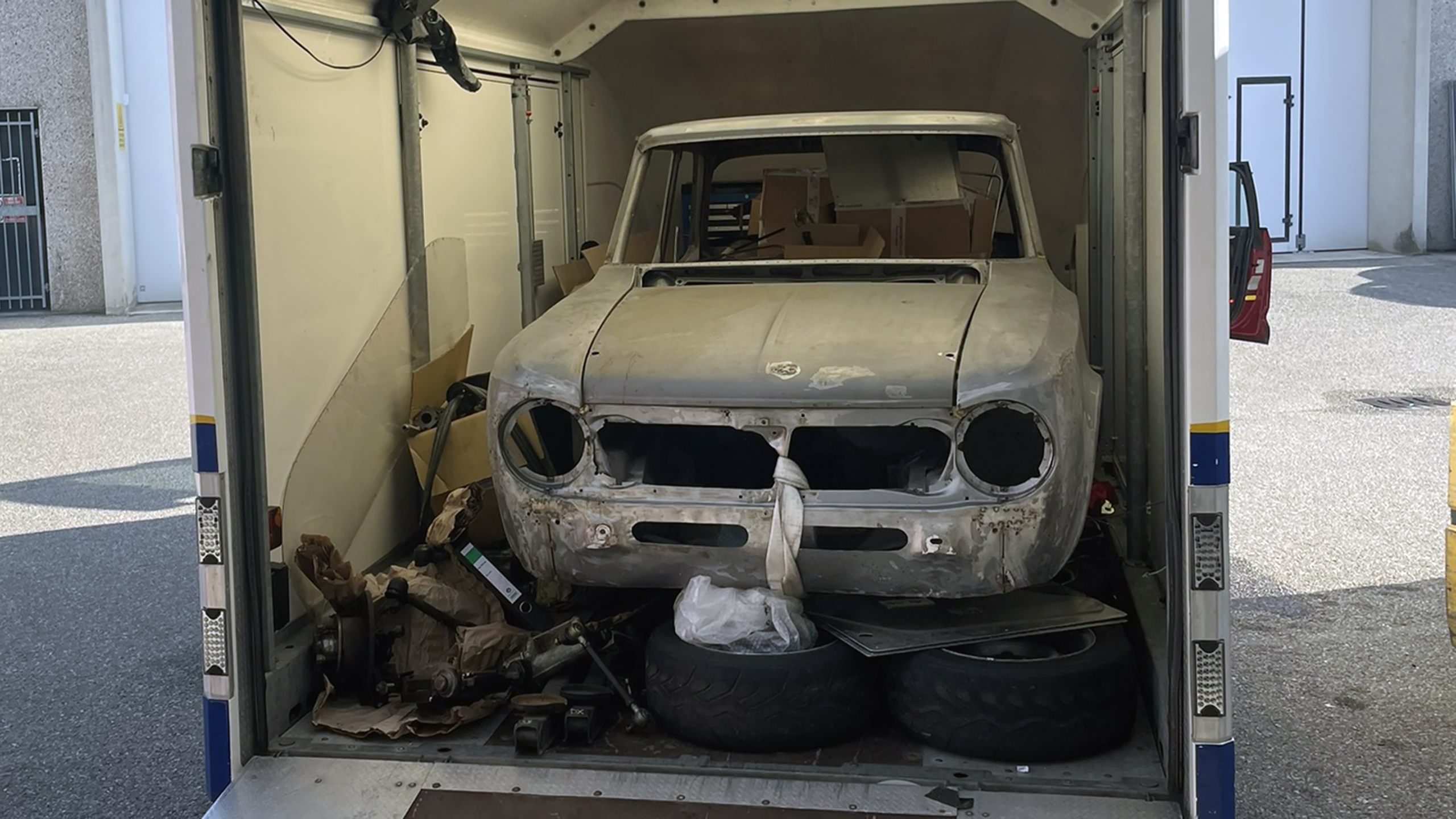
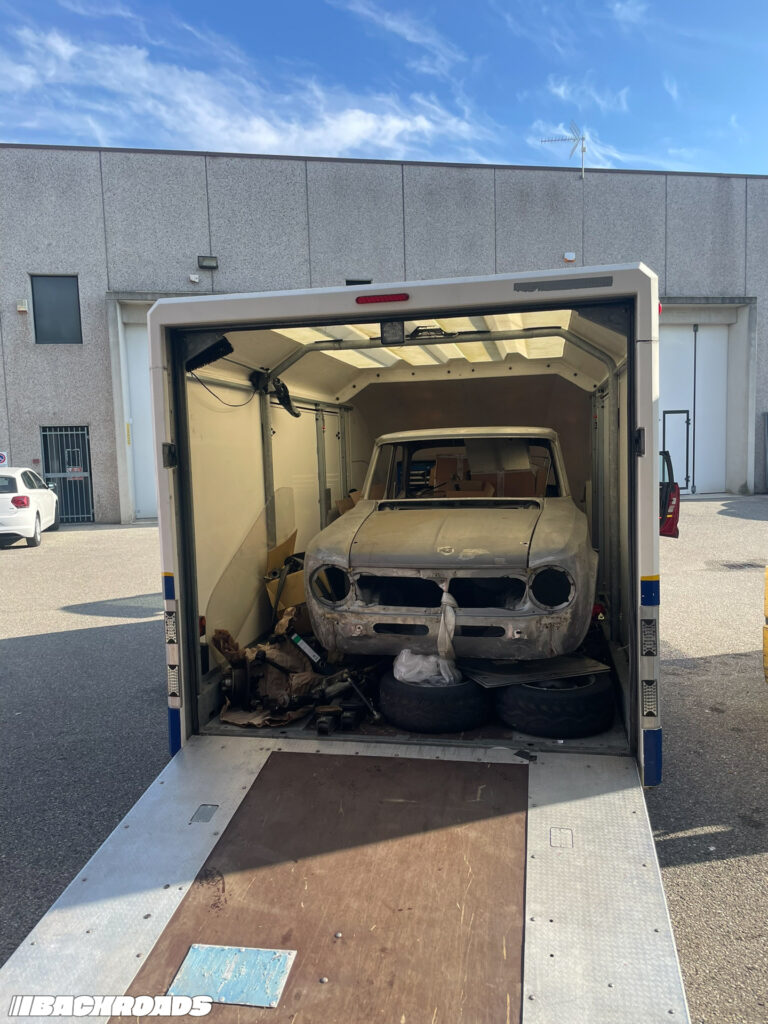
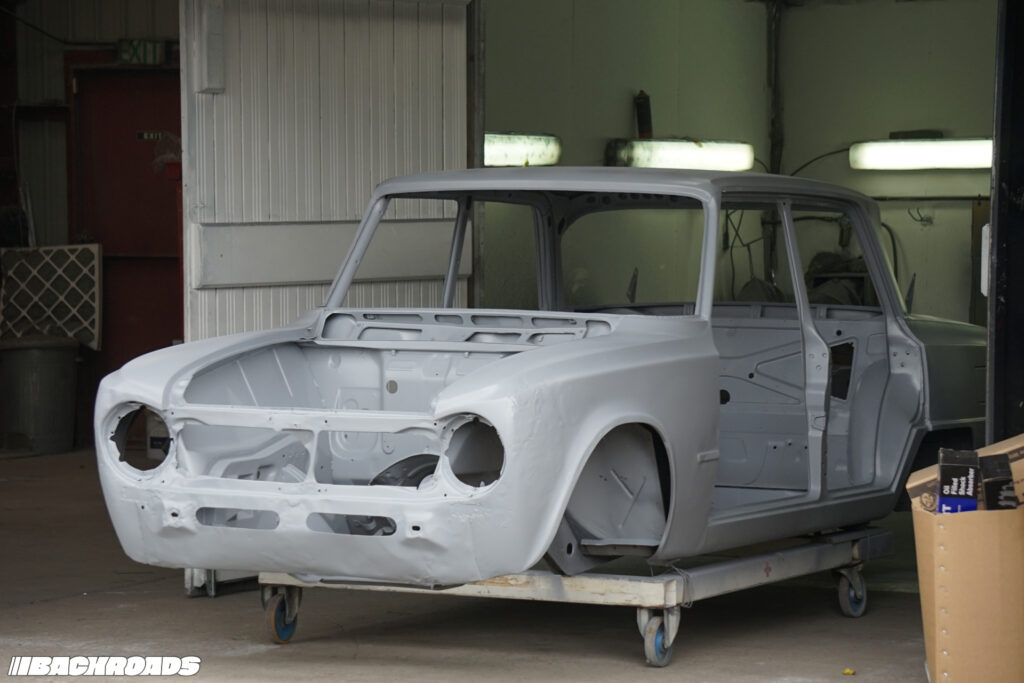
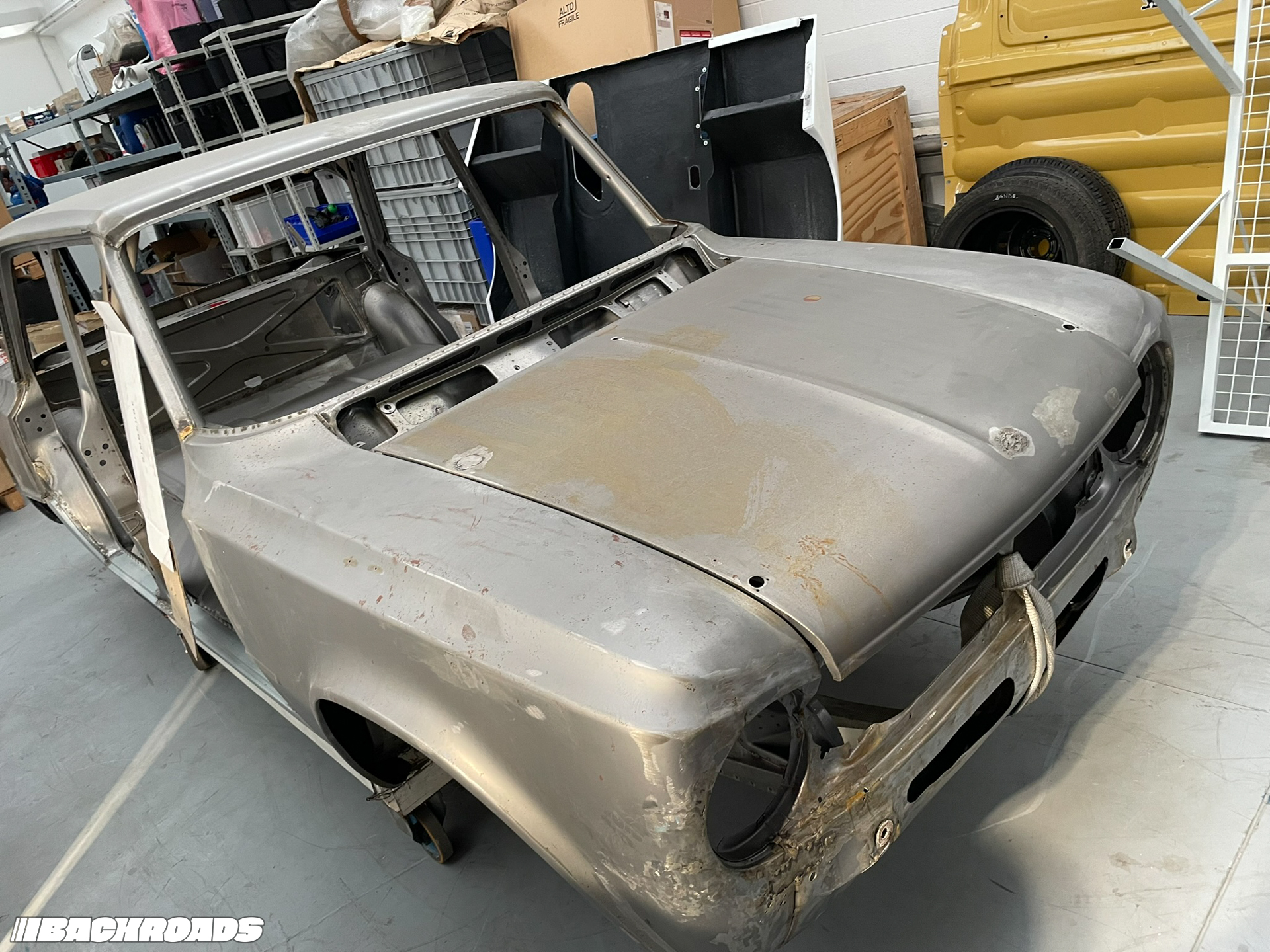
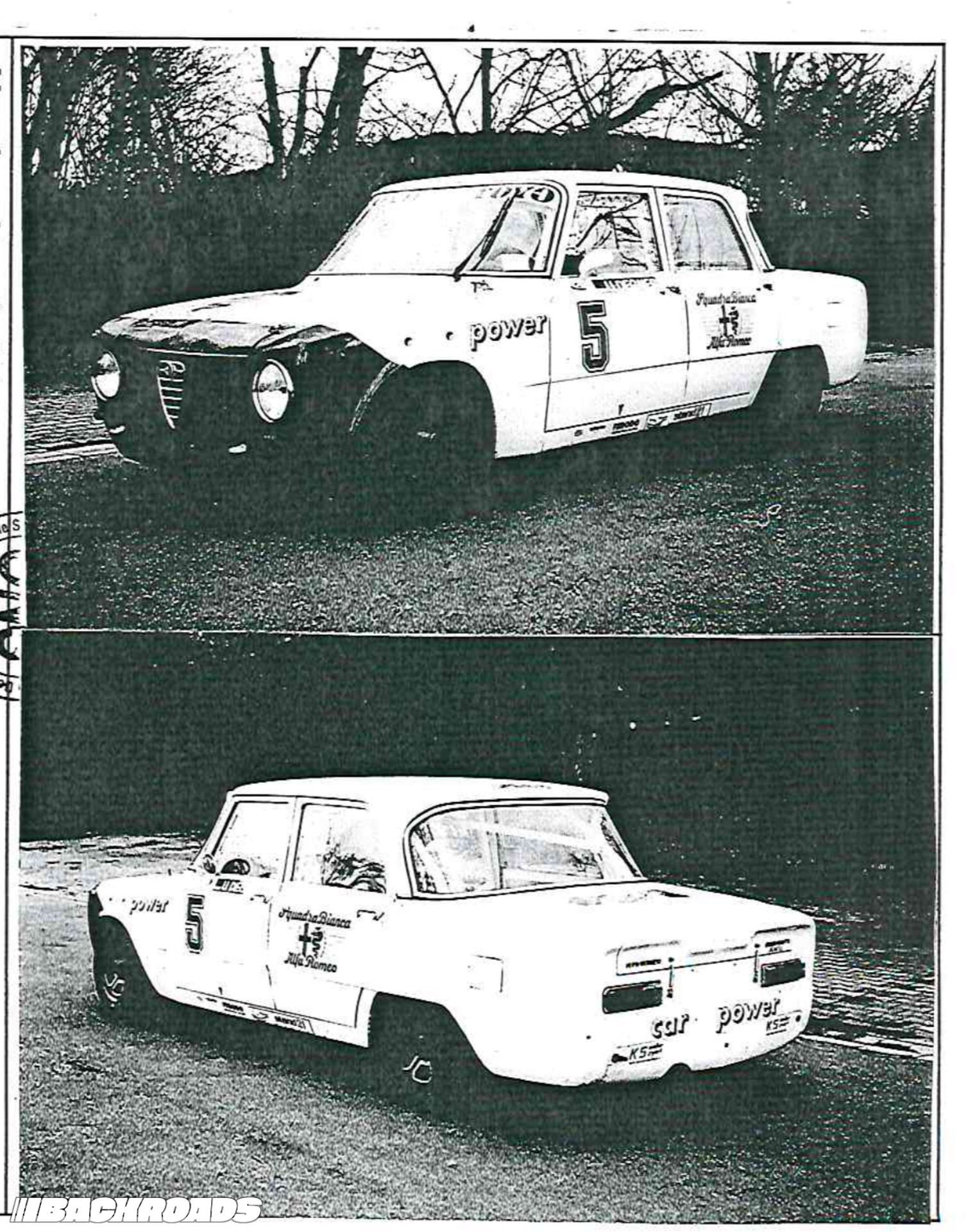
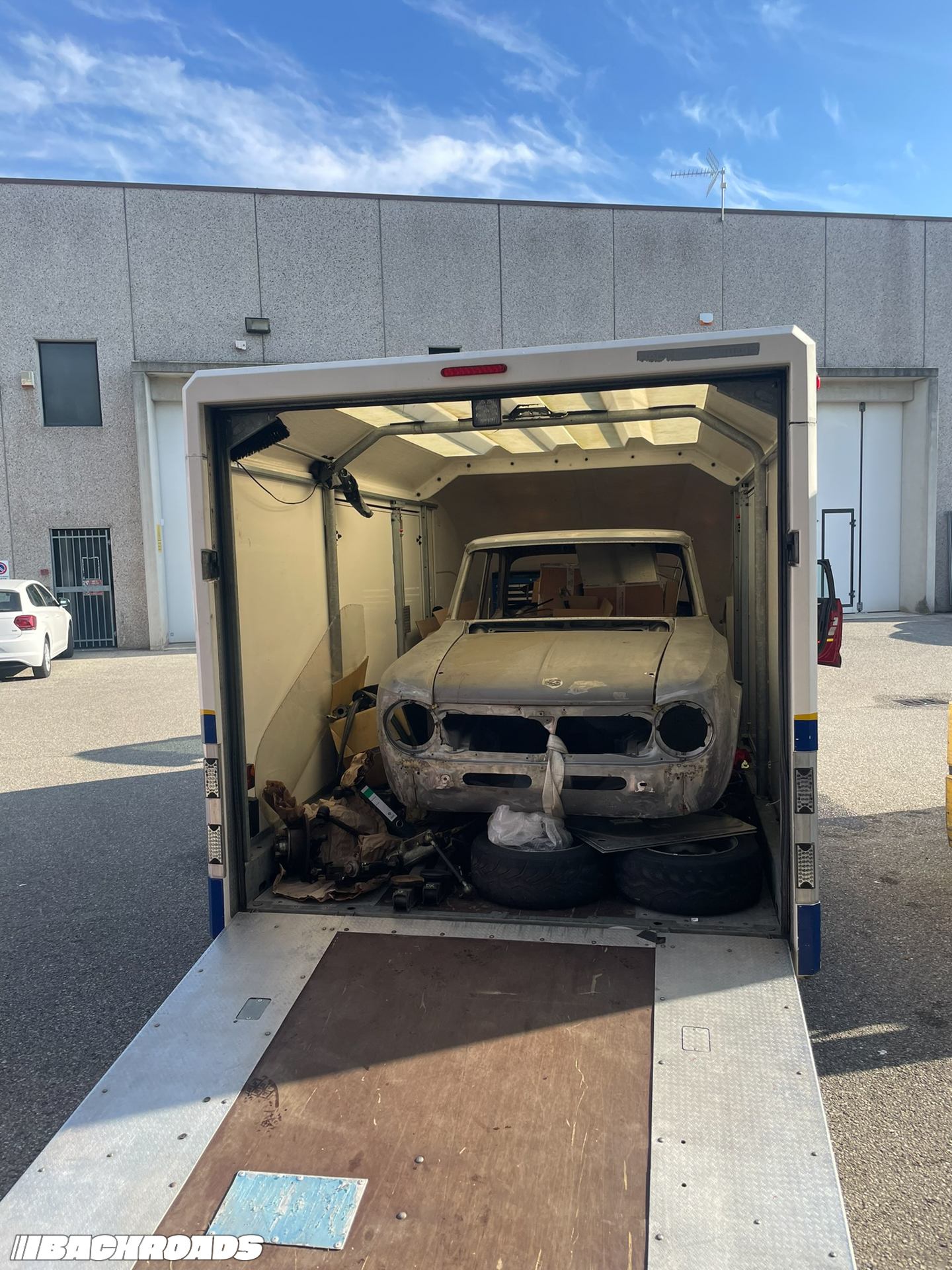
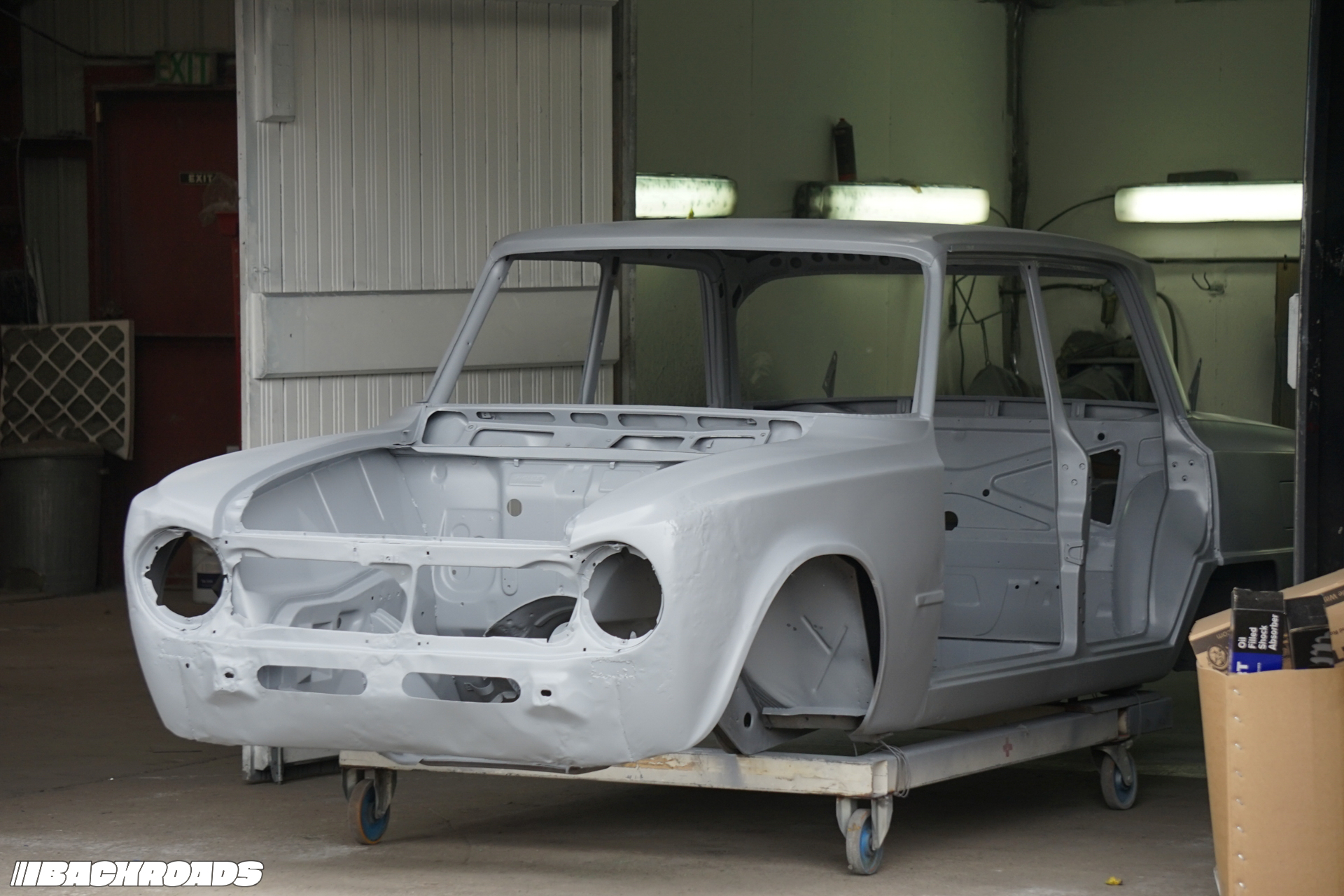
With very little information and only a couple of pictures, which showed the Giula as nothing more than a bare shell, I determined that it was an ex-competition car that had previously been campaigned in the famous Squadra Bianca series, as well as multiple other historic endurance races. It had the battle scars to prove it, too.
Assuming everything to put the car back together was included, it seemed like a very reasonable deal, but because the listing was six months old, I was sure the Giulia had already been snapped up. Still, I picked up the phone and rang the number anyway. A voice answered, “Ciao!” I gave a “Buongiorno!” in return, my 300-day Duolingo streak in Italian having prepared me for this exact moment. “I’m calling about the Giulia that you have for sale. Is it still available?” To my surprise, it was.
I continued to ask about the car, with varying levels of information in return. A privateer racer owned the Giulia, but it was in the care of a professional racing team in Bergamo, Northern Italy, which had stripped it for restoration. Before the restorative work could start, though, the owner had a change of heart – he decided to abandon the Alfa project and purchase something else. The Guilia was for sale in bare-shell form, but I was assured that all the parts needed to put it back together were there.
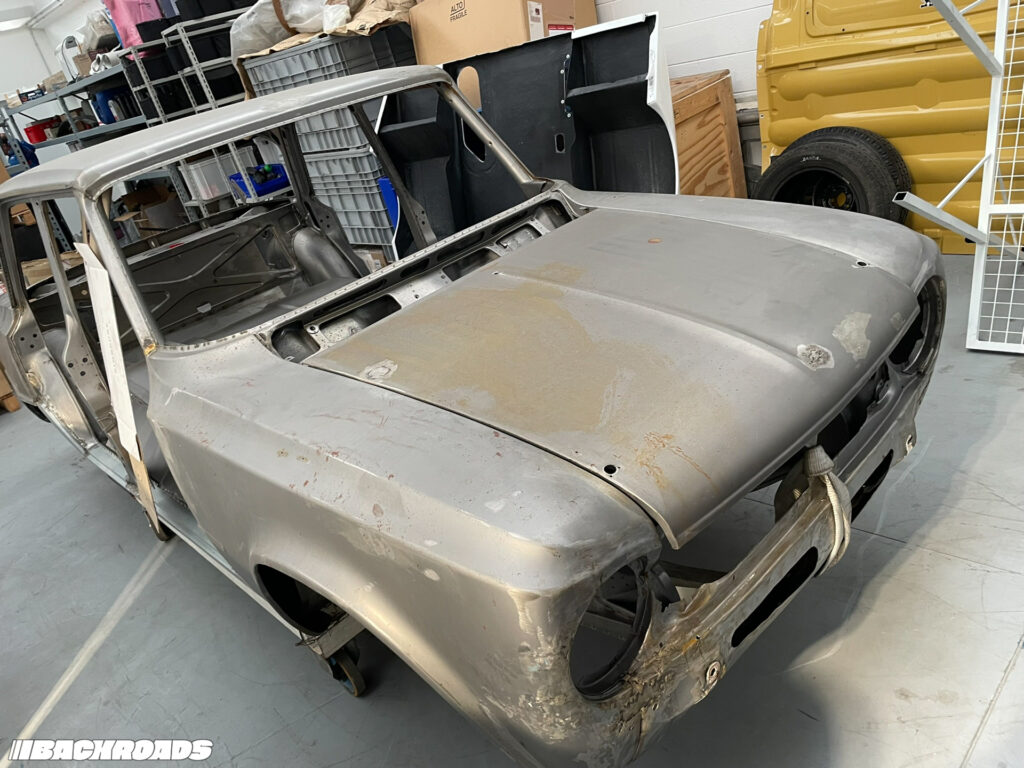
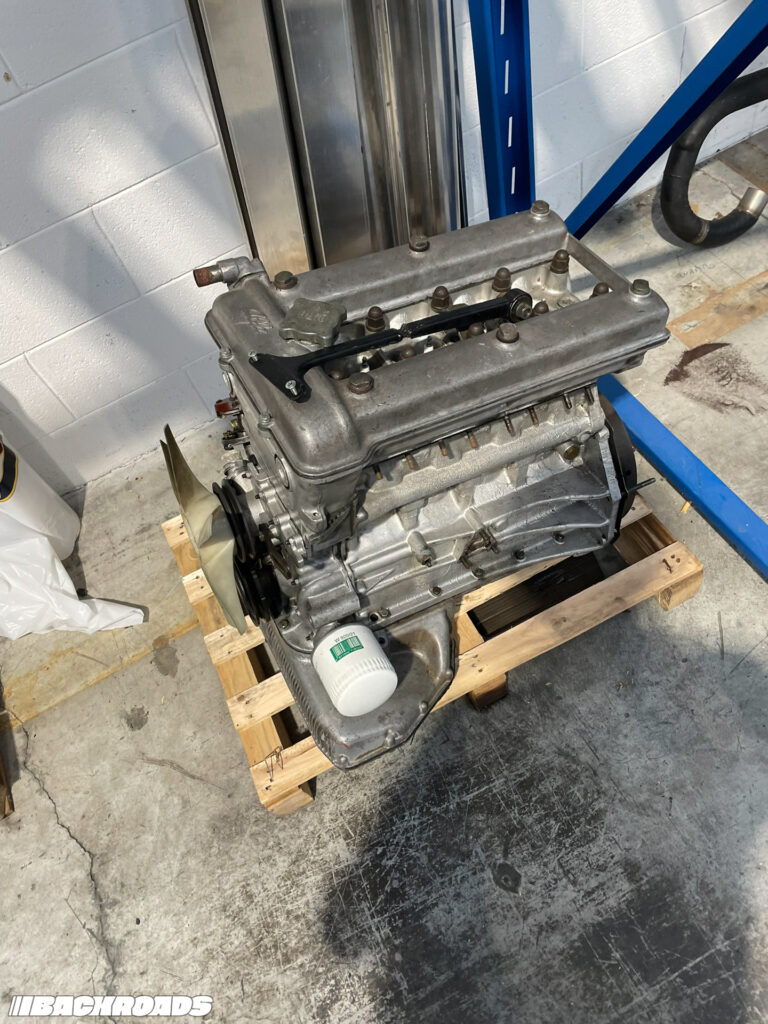
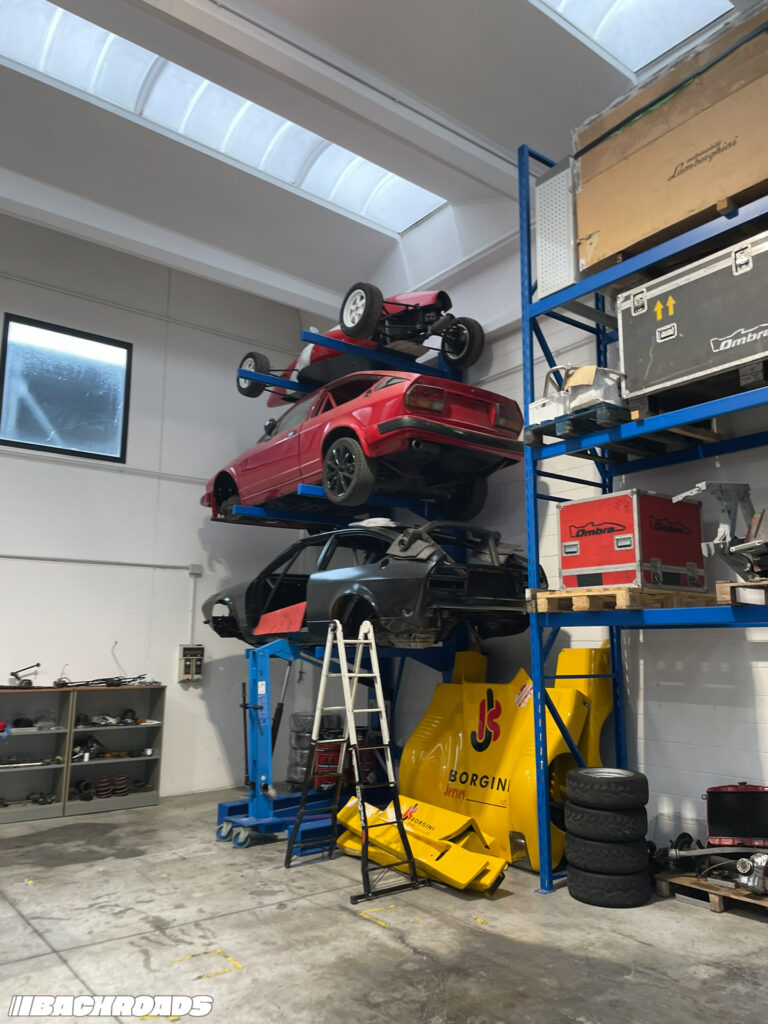
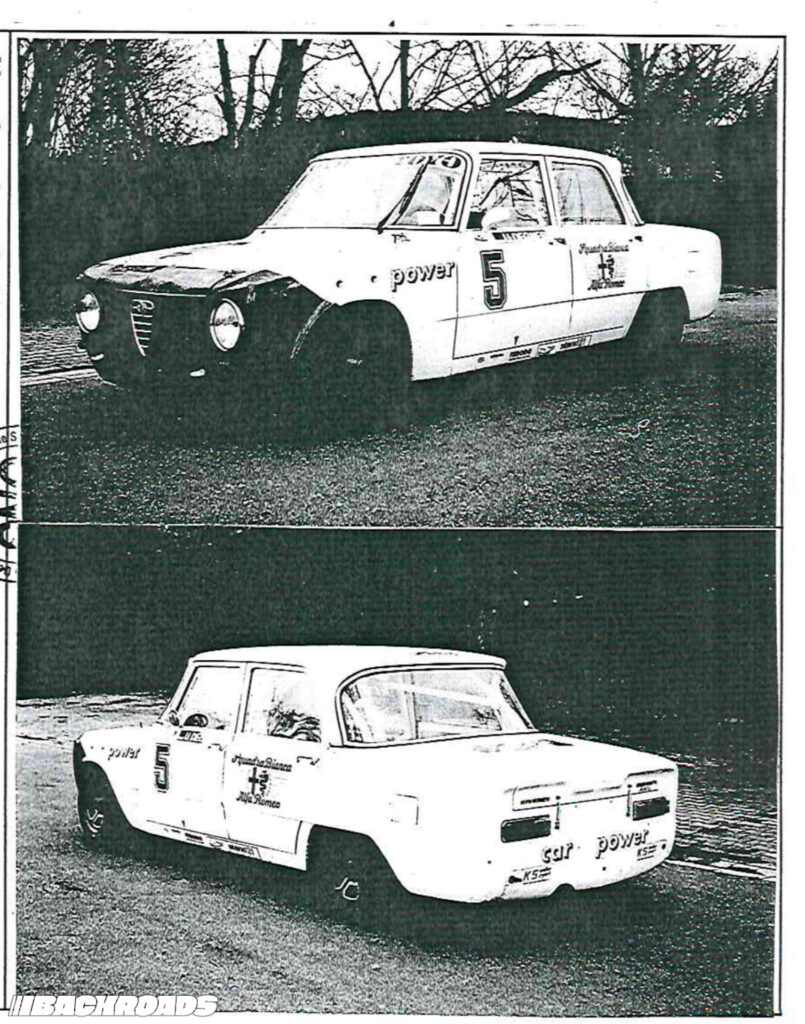
I arranged a cheap flight to Bergamo and two days later, found myself in the race team’s workshop looking at the car. It was indeed real, and I agreed to purchase it there and then. As soon as I arrived back at the airport, I began researching how I’d get it home to Scotland.
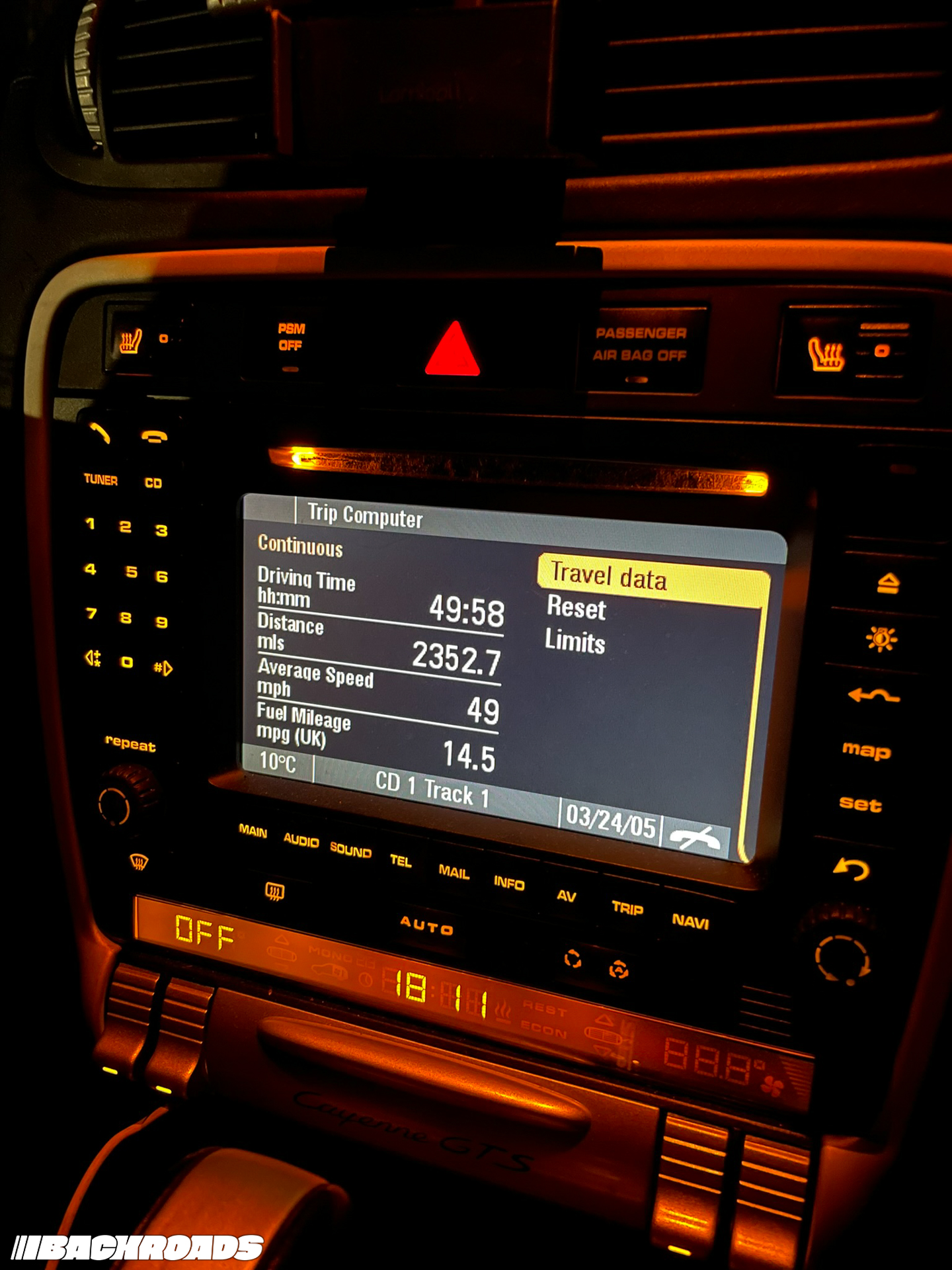
Option one was to employ a professional vehicle shipping company. I have many contacts who work in vehicle logistics, so I made some calls. Initial information suggested it would cost at least £4,000 (approximately US$5,500), and I’d struggle to find a driver willing to do it. That brought me to option two. I opened Google Maps and figured out the driving distance – around 2,400 miles there and back. Between work and family commitments, time was limited, but it was possible…
The cheapest option was to drive from my home in the Scottish Borders to Dover, take a ferry to Calais, travel south through France while avoiding Switzerland, and enter Italy via an Alpine tunnel – choosing the Frejus tunnel since Mont Blanc was closed. From Frejus, I could descend through the Alps on the Italian side, head past Turin, and into Bergamo. After collecting the car, I would turn around and head back the same way. It all seemed rather straightforward.
Of course, I needed a co-pilot for the trip, so I rang my good friend Harry, someone with an automotive addiction matching my own. Harry is always keen for an adventure and, as a bonus, has plenty of experience with trailers. He was in, but immediately said, “We can’t use your trailer.” Harry made a good point. My car trailer is open, and a bare shell exposed to the mid-winter elements for 1,200 miles didn’t stand much hope. “I’ll call you back shortly,” he said.
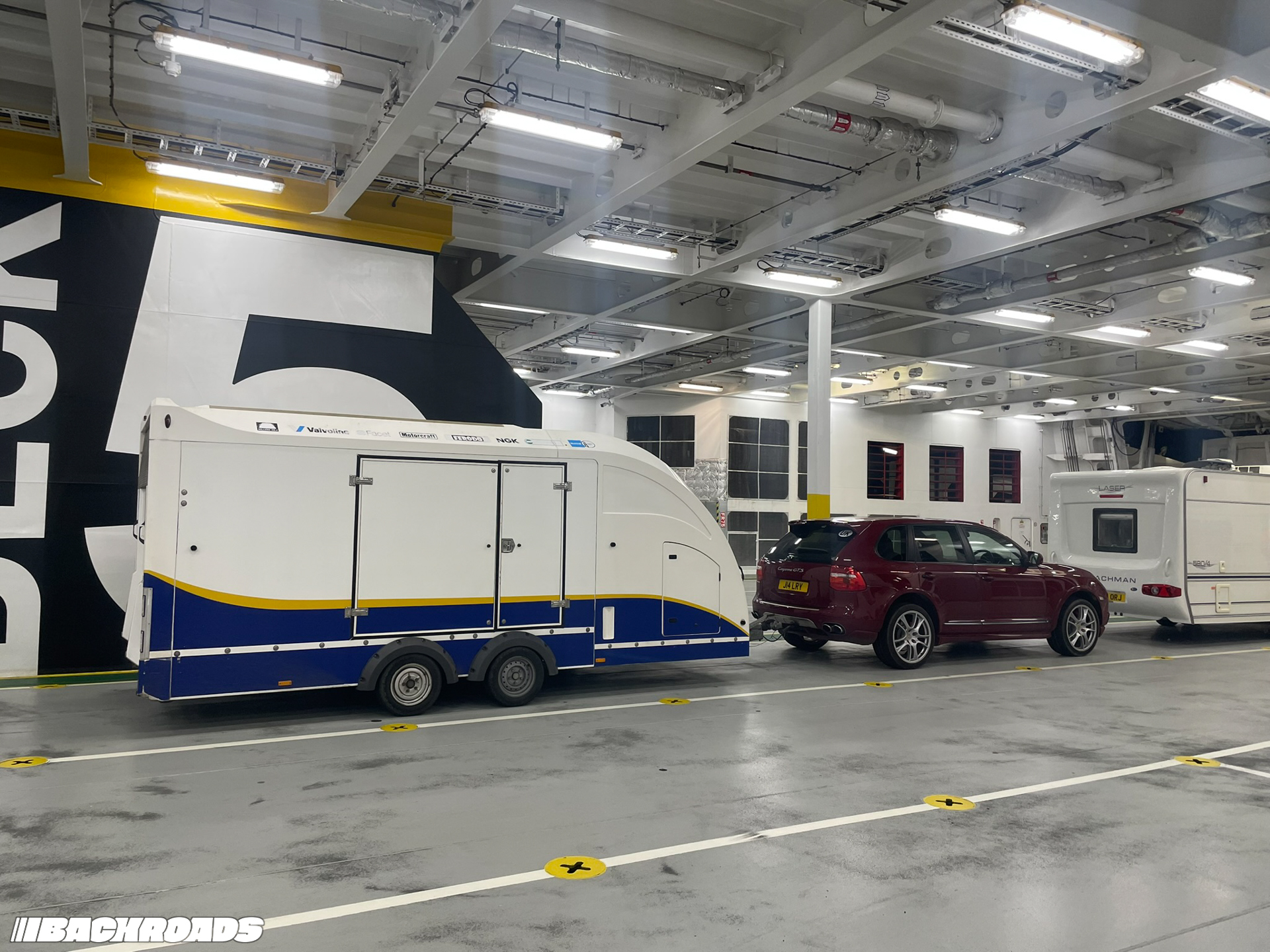
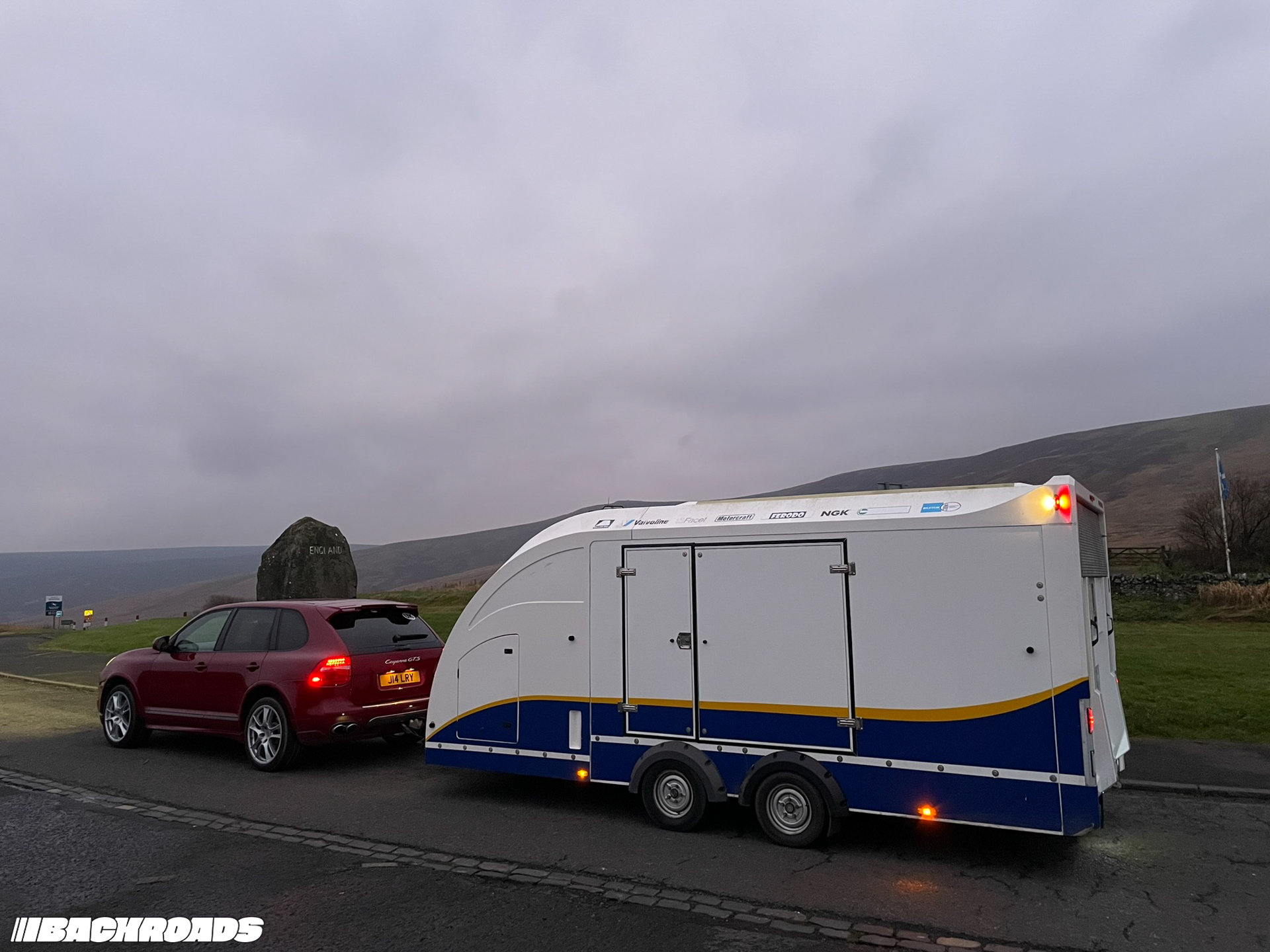
Ten minutes later, Harry had an enclosed trailer for us to use. A friend of a friend liked the idea of our adventure (or respected our commitment/madness) and wanted us to take his Brian James Race Transporter 5. We had the route, the trailer, the tools, and the required tolerance for punishment. We were ready to go.
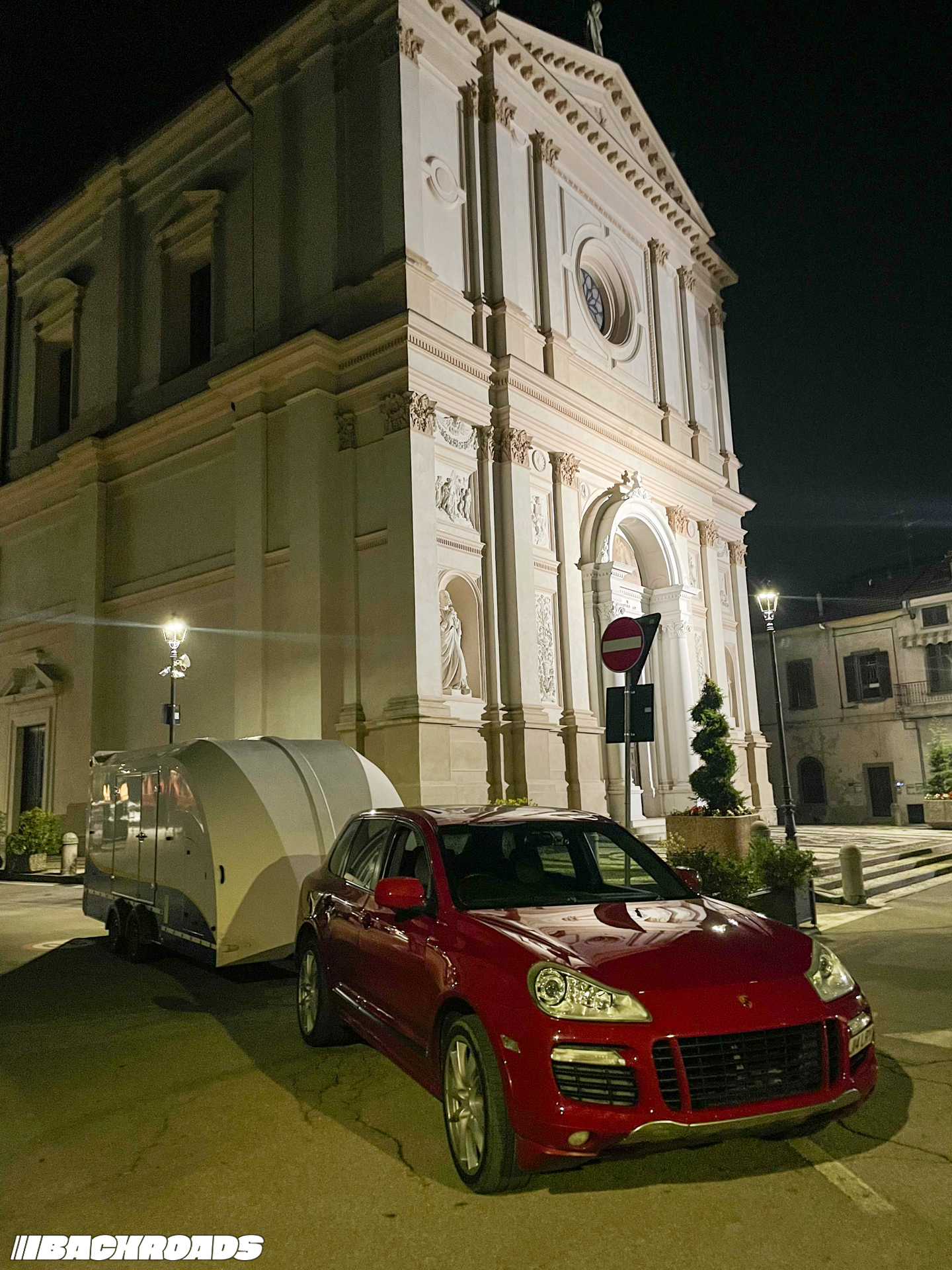
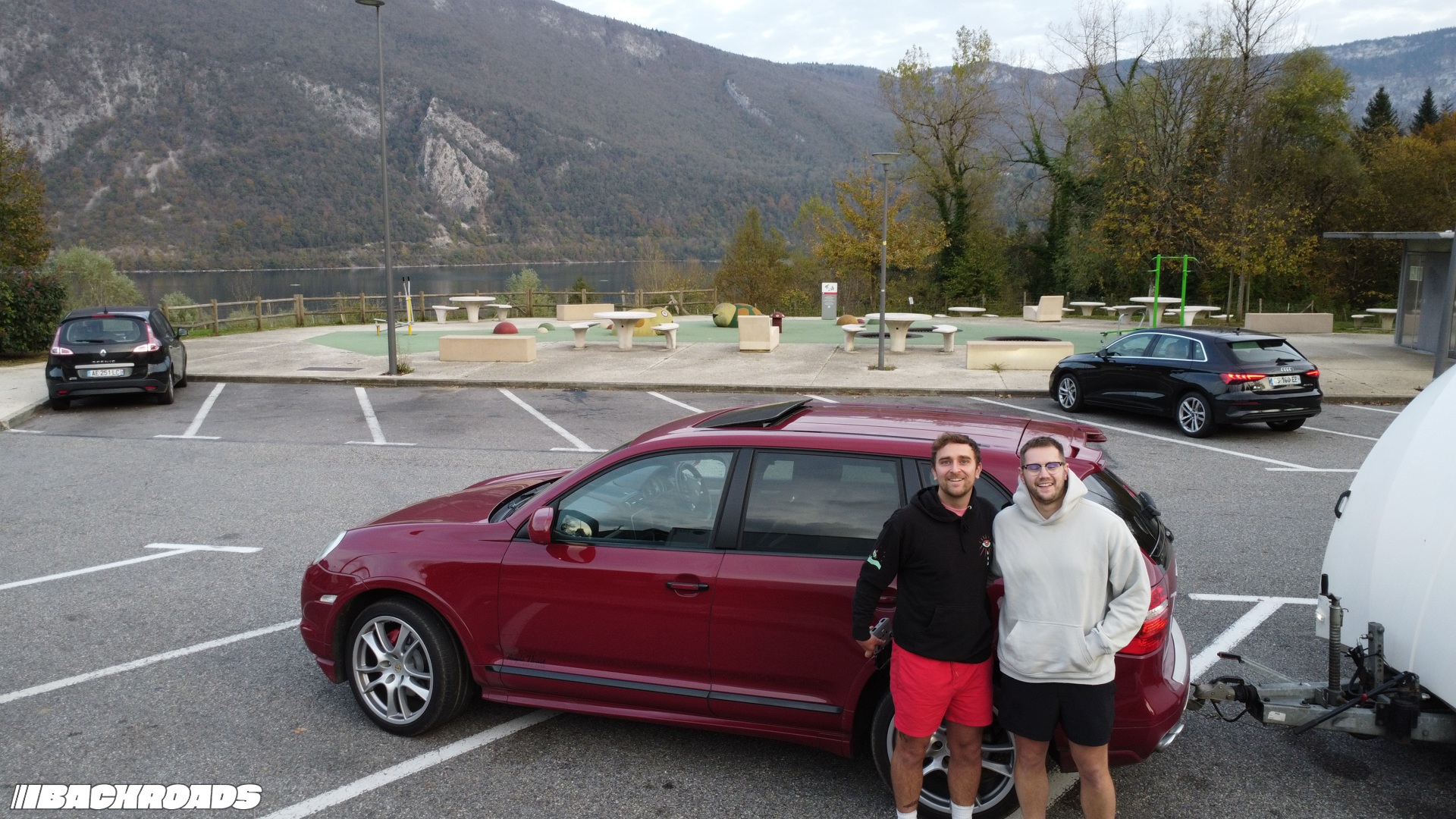
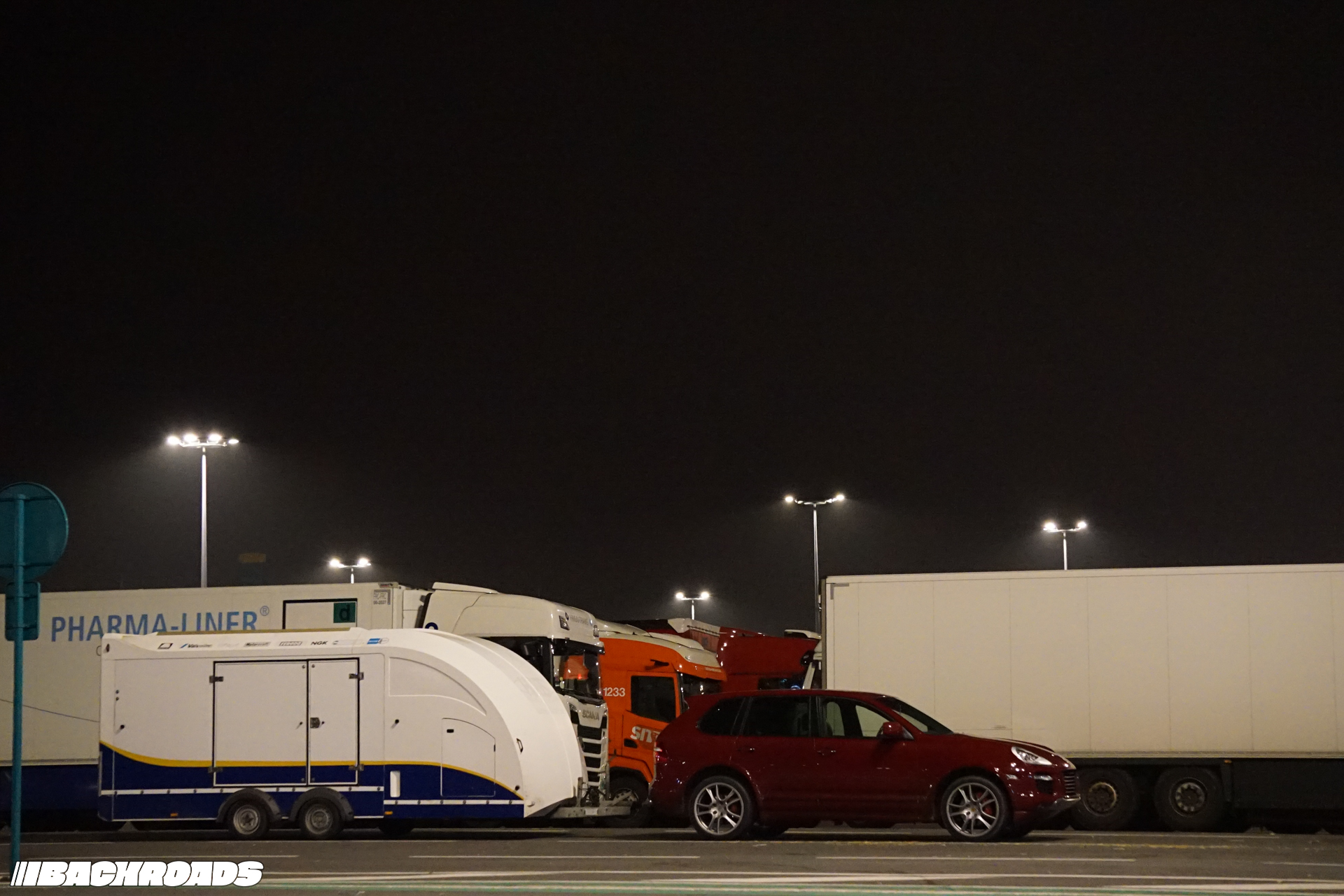
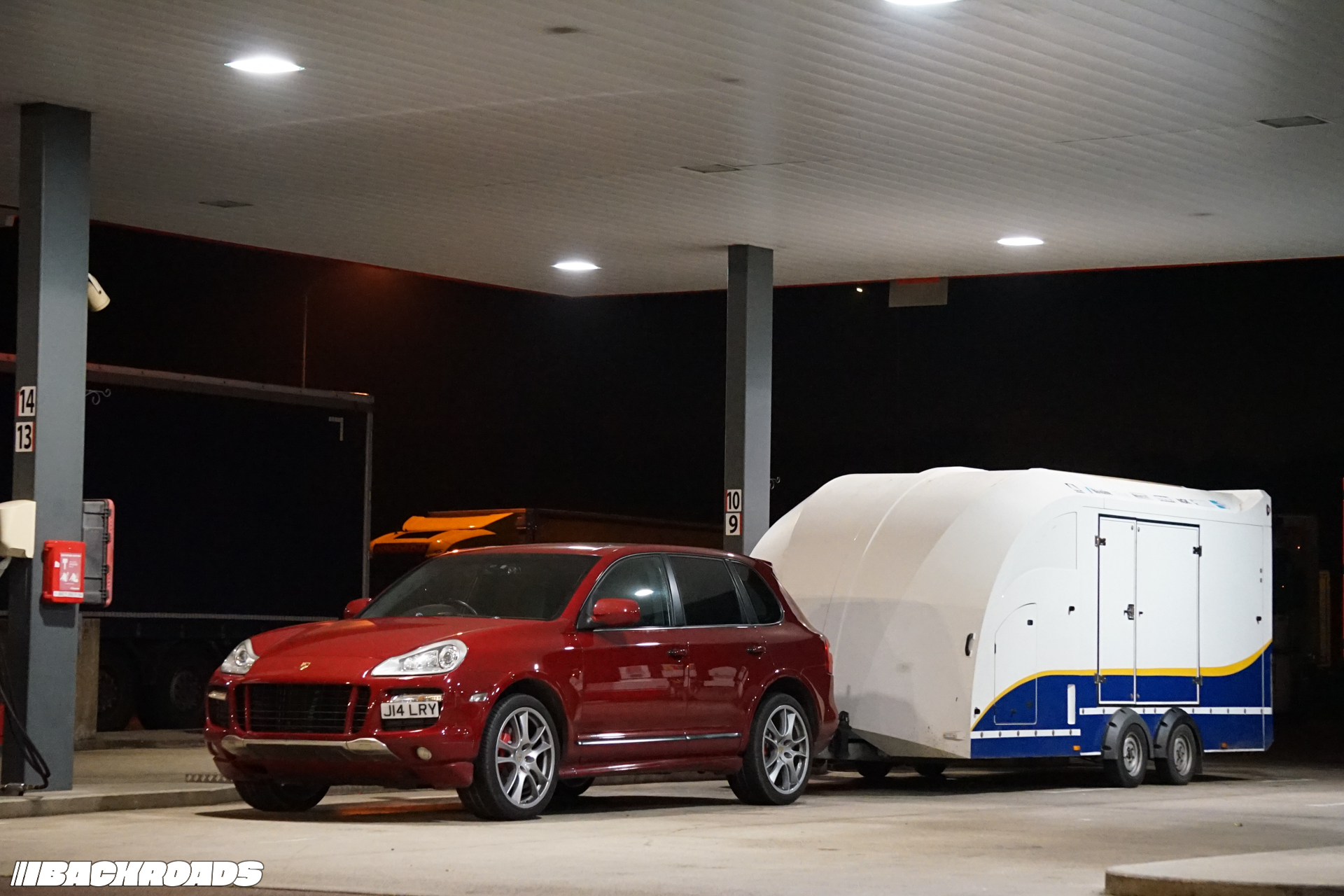
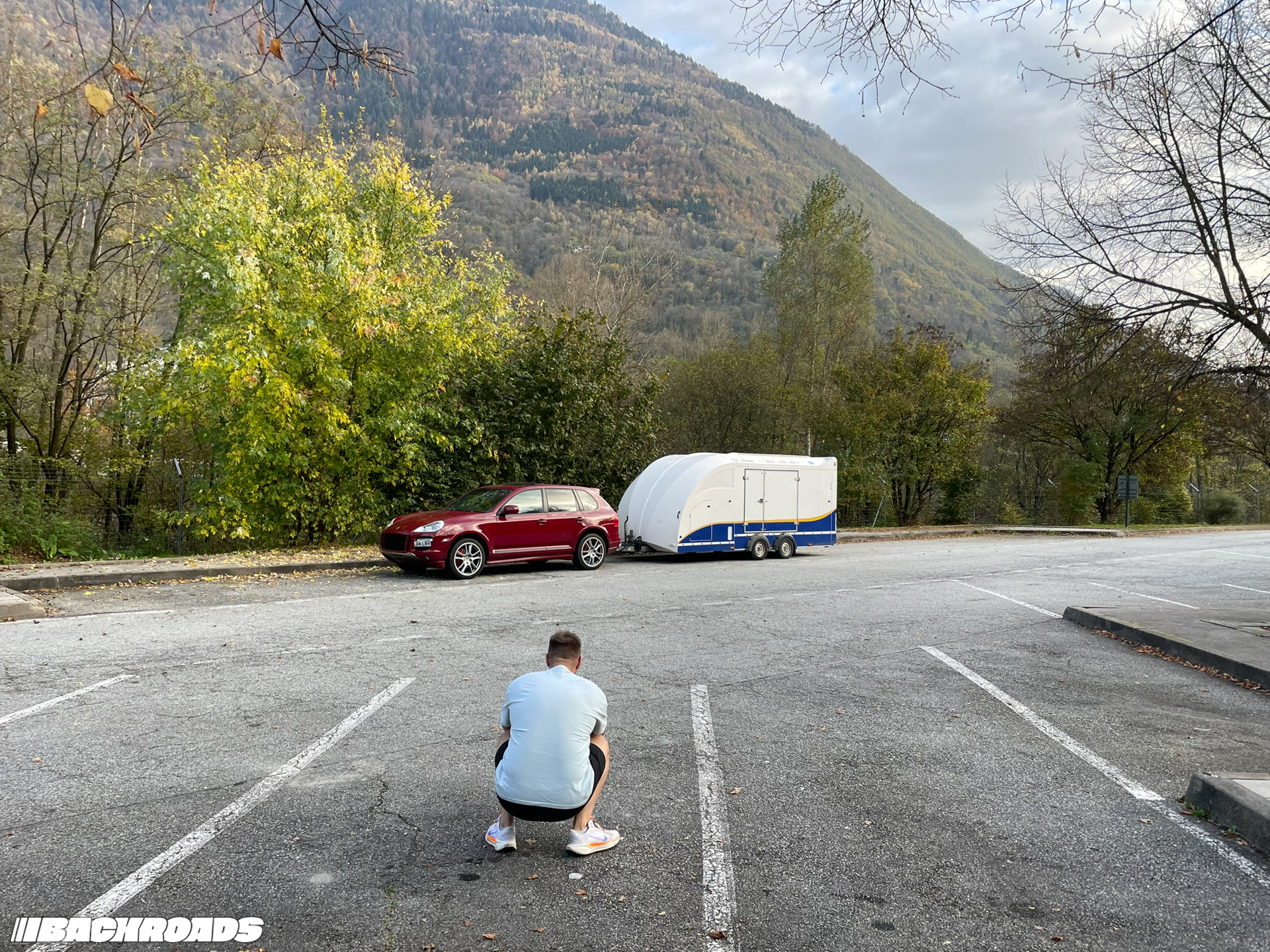
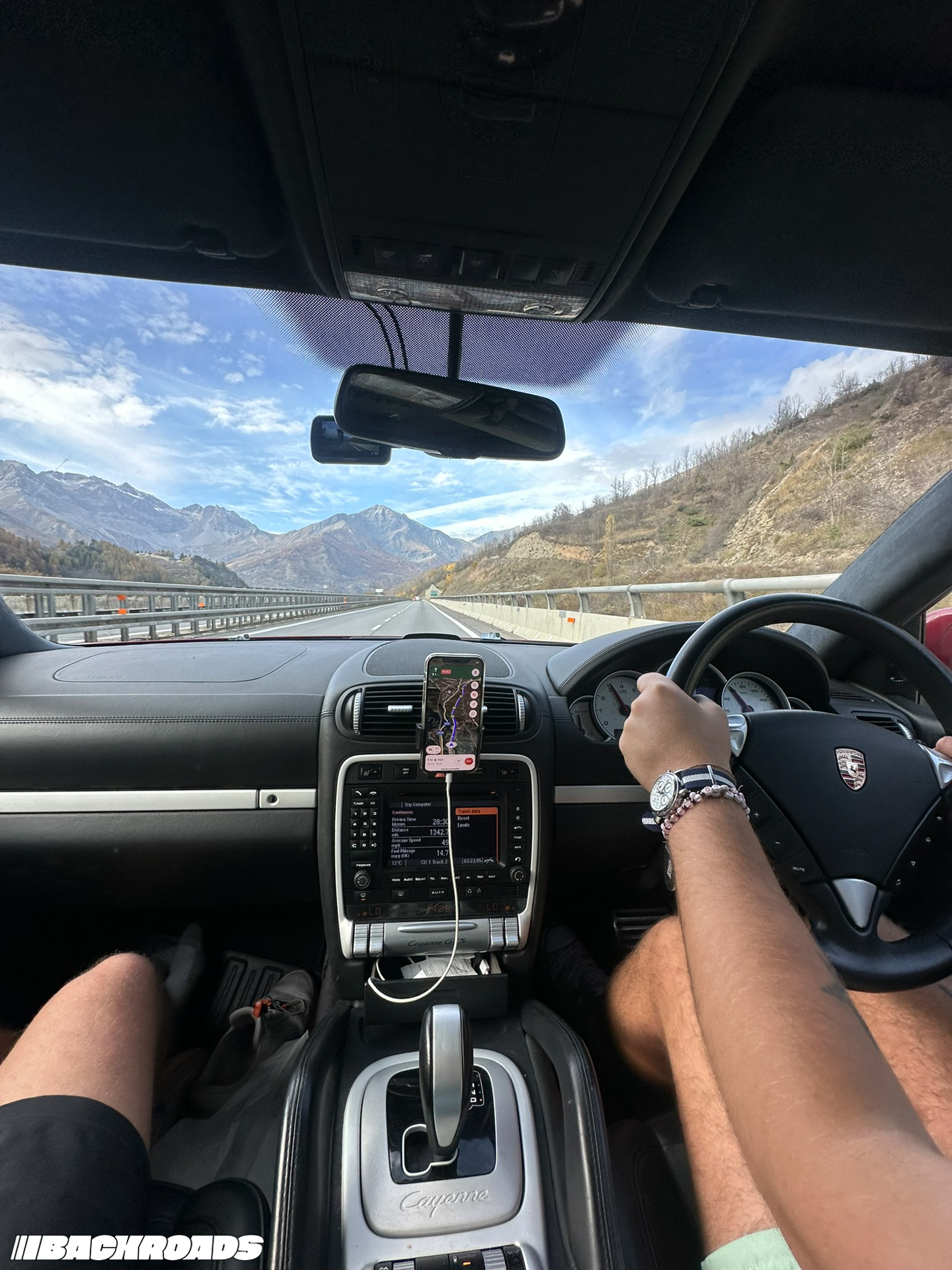
Two weeks later, Harry and I were standing in my driveway, the borrowed Race Transporter 5 hitched to my tow vehicle – a 2008 957 Cayenne GTS – itself loaded with tools, compulsory snow shoes, emergency equipment, diagnostic computers, and snacks. All in, due to other commitments, we had just three days to get there and back. Barring any major issues, that was totally achievable on the smooth Continental tarmac and efficient toll roads through France and Italy.
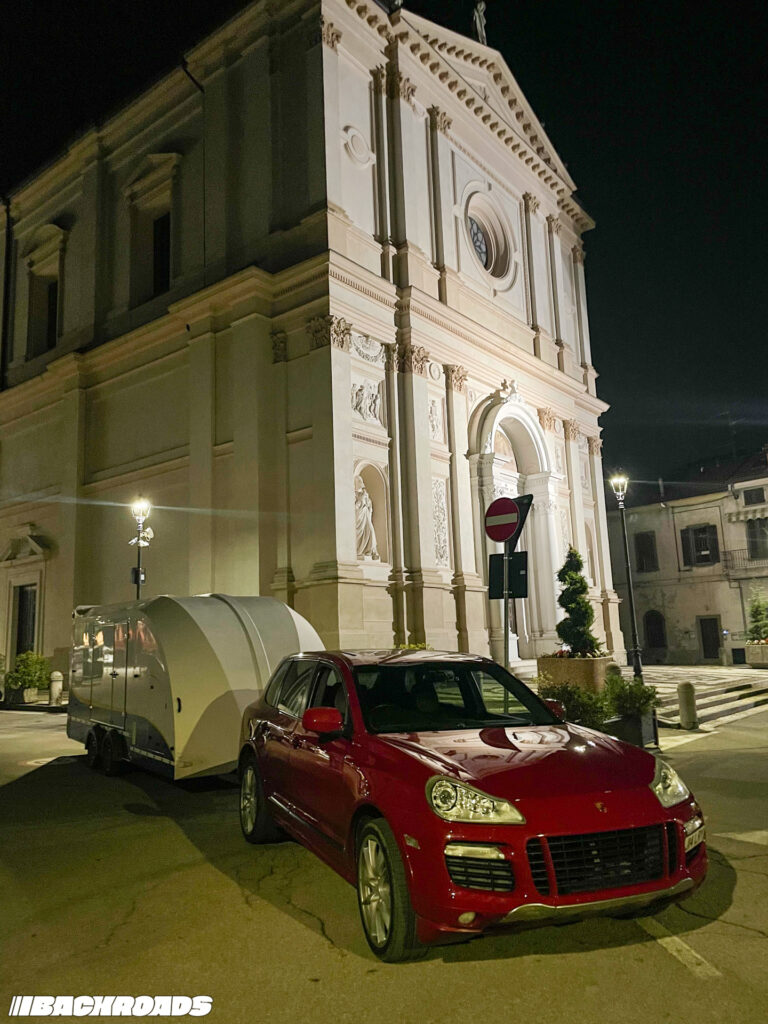
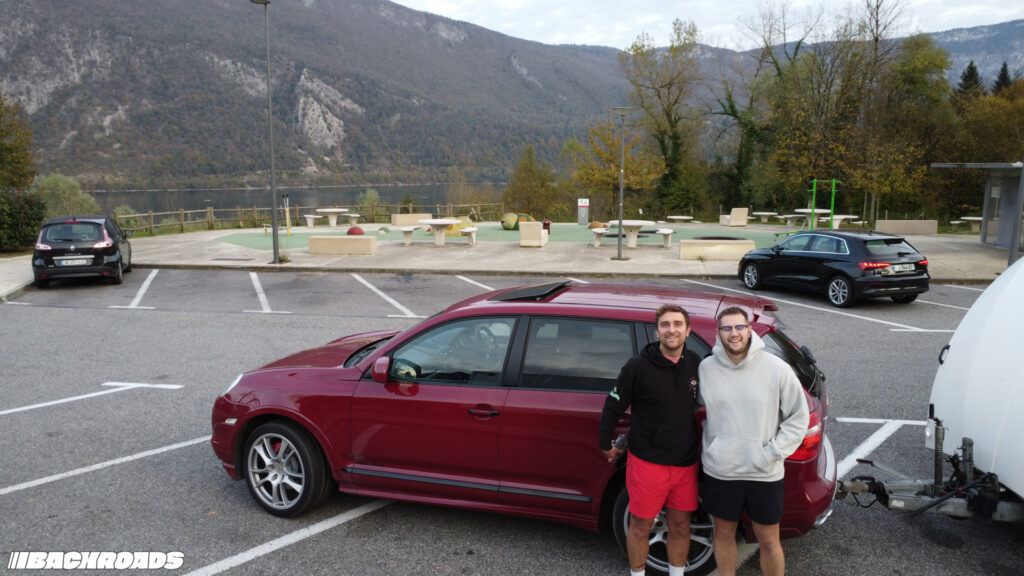
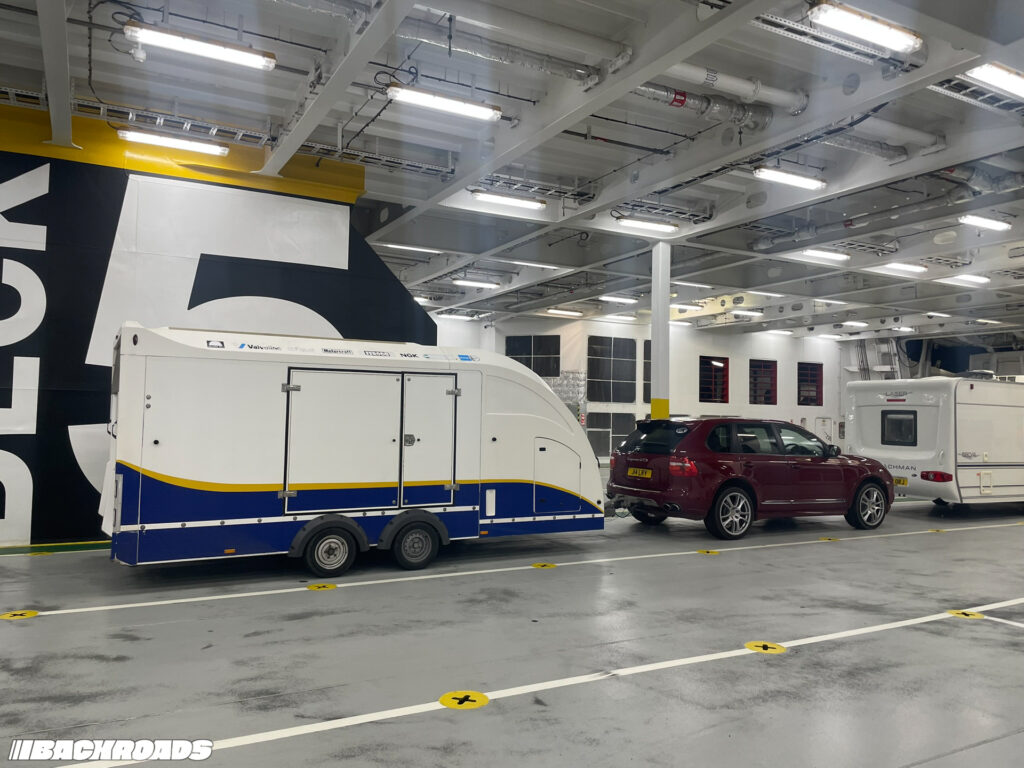
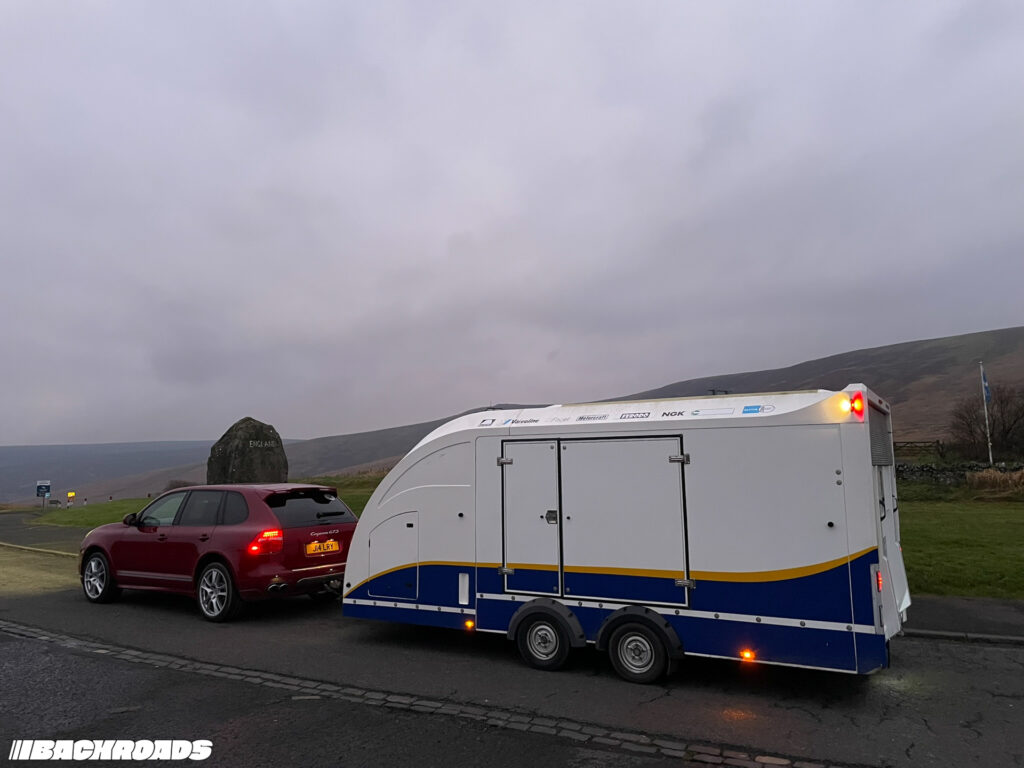
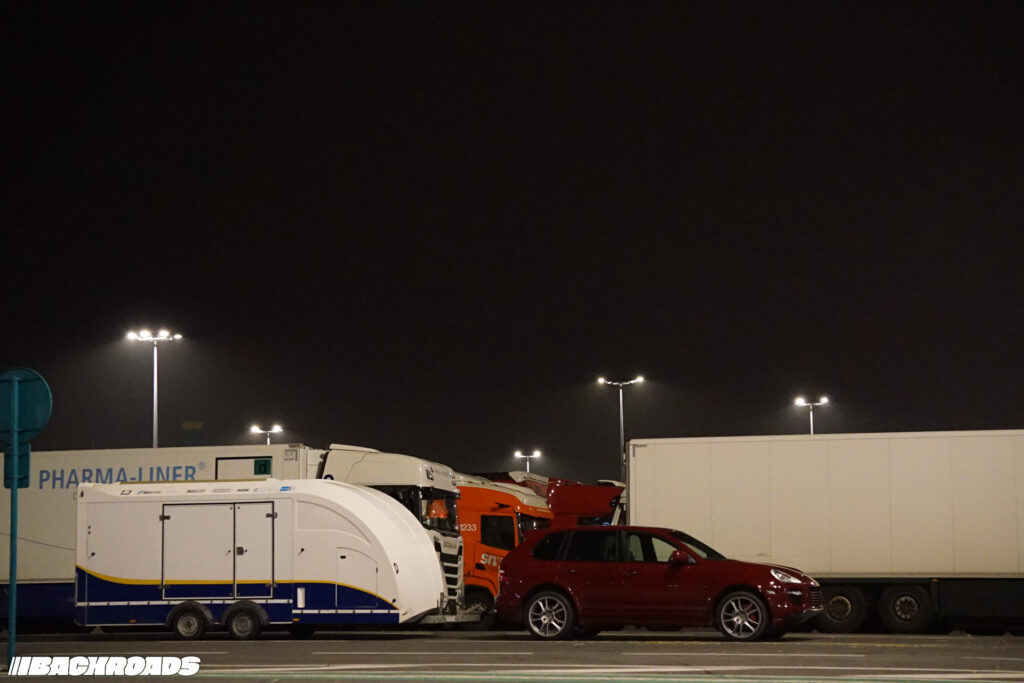
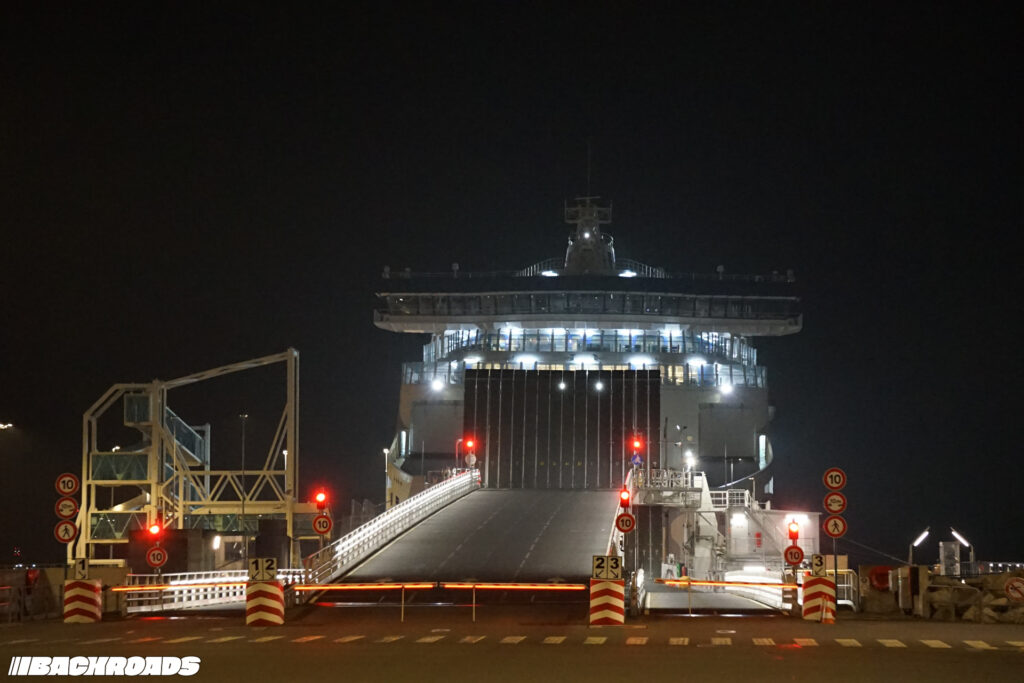
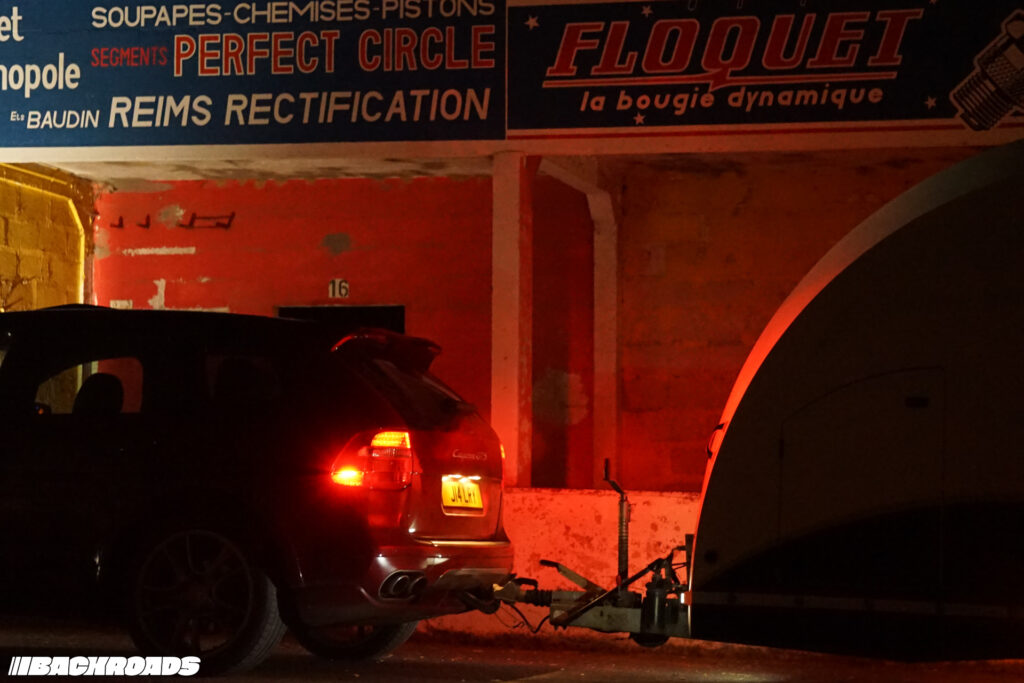
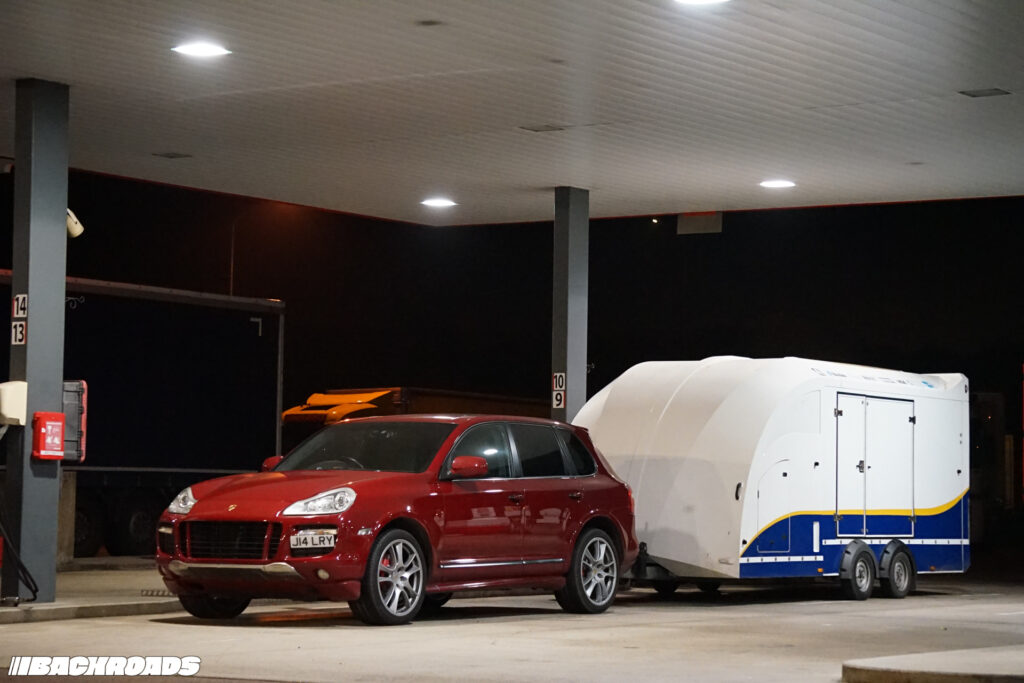
We started the day late, ensuring plenty of rest beforehand. The plan was to complete a tank of fuel each (around 200 miles in a Cayenne GTS pulling an enclosed trailer, it turns out) and alternate driving, aiming to arrive in Dover in the early hours of the morning. We’d then grab some sleep and hit France early in the morning with a view to arriving at our destination by the end of the following day.
We pulled away from my house, getting the twisties out of the way and eventually settling on the A1 heading south.
Two hundred miles passed, and we pulled in for our first fill-up, a motorway services dinner, and a driver swap. It was Harry’s turn in the driver’s seat, and my turn to get some rest. We pulled away from the services, and as we accelerated on the slip road to join the motorway, a loud knocking drummed against the transmission tunnel, vibrating the car and shocking us both into panic. At this point, we had no choice but to join the motorway.
At a constant speed, the knocking stopped. With cruise control on, we discussed possibilities. Did we hit something? Perhaps we lost a wheel weight? We continued to drive on, assuming it had been a temporary problem. It wasn’t.
Getting comfortable again and into our stride, Harry indicated right, disengaged the cruise control, and accelerated to overtake a slow-moving vehicle. BANG! The knocking came back even harder, vibrating through the cabin as if something might punch up through the floor. We slowed and coasted into a truck stop.
Here we were, not having even made it out of the UK, but too far to limp it home, and also 950 miles from our destination.
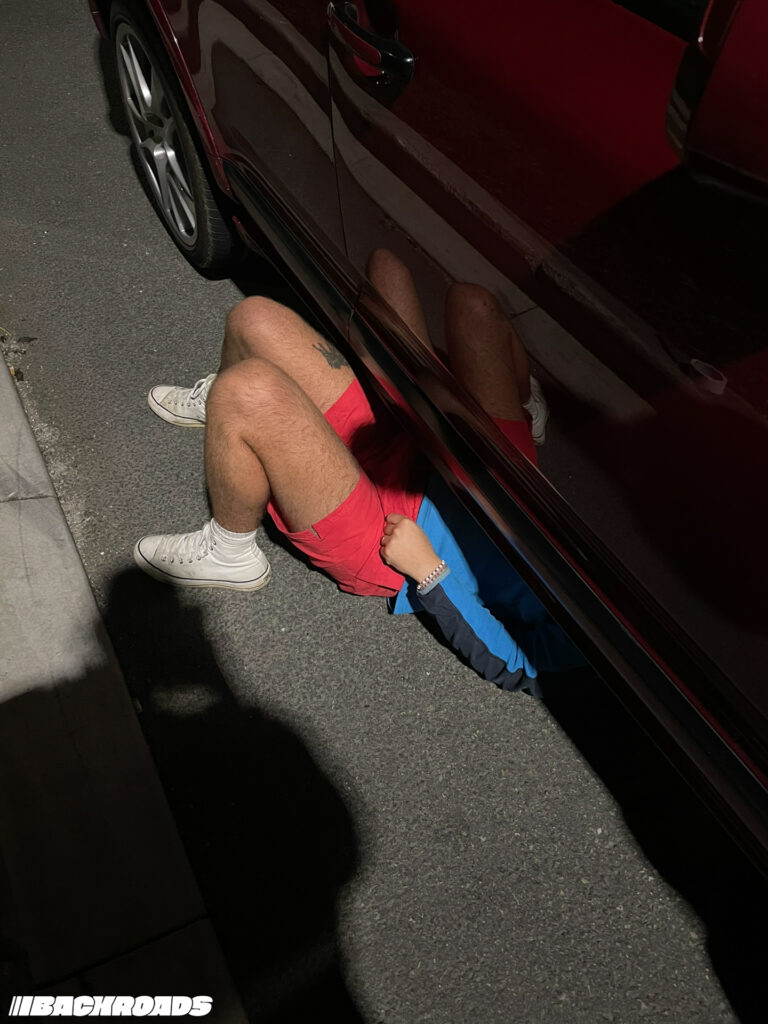
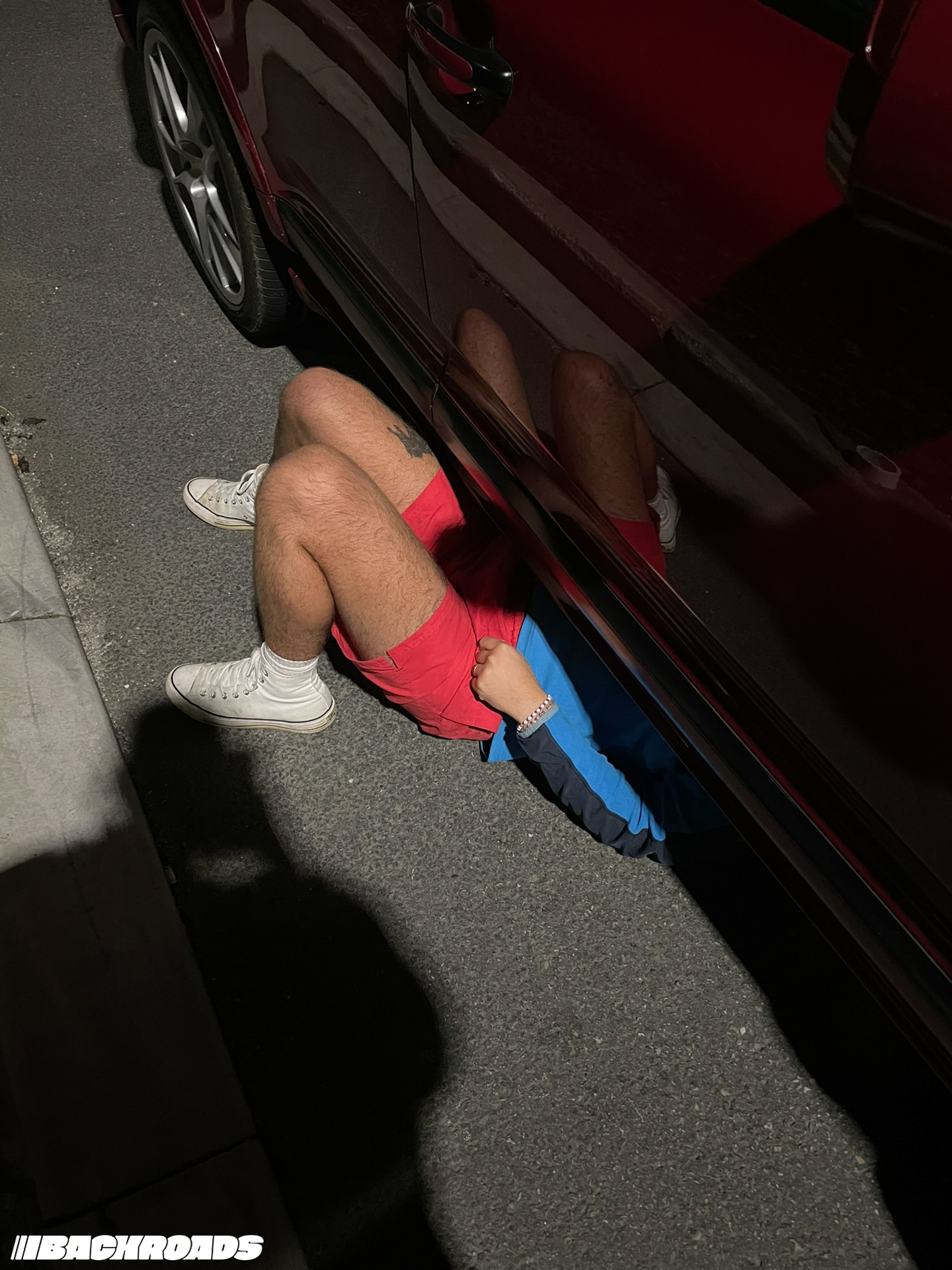
I crawled underneath the Cayenne and immediately saw the problem. The driveshaft support bearing’s primary job is to centre the driveshaft in place with a thin rubber support. That rubber support had disintegrated, resulting in severe driveshaft movement that caused the shaft to make contact with the transmission tunnel.
As Google knows all, I entered the problem into everyone’s favourite search engine, and numerous results came back. As it turned out, this seemed to be a very common problem, and more a case of ‘when’ than ‘if’ with the 957-generation Cayenne. But, being a common problem, there were plenty of fixes, possibly even one that could get us back on the road. The second Google link was an owner’s forum discussion on the problem and the best solution – the ‘Jimmy Fix’. Named after the person who thought of it, Jimmy, this remedy was the one that got the most votes, proving more reliable than even OEM replacement. It consisted of zip-ties and a hosepipe section to realign the driveshaft. We searched the toolbox in the trailer. Zip ties: Check. Hose pipe: Nope. But we did have duct tape. Theorising that the bearing support itself doesn’t need to withstand a large load, as it is purely there to centre things, and armed with the diagram of the ‘Jimmy Fix’, I crawled back under the car, fashioning a new support with zip-ties and duct tape.
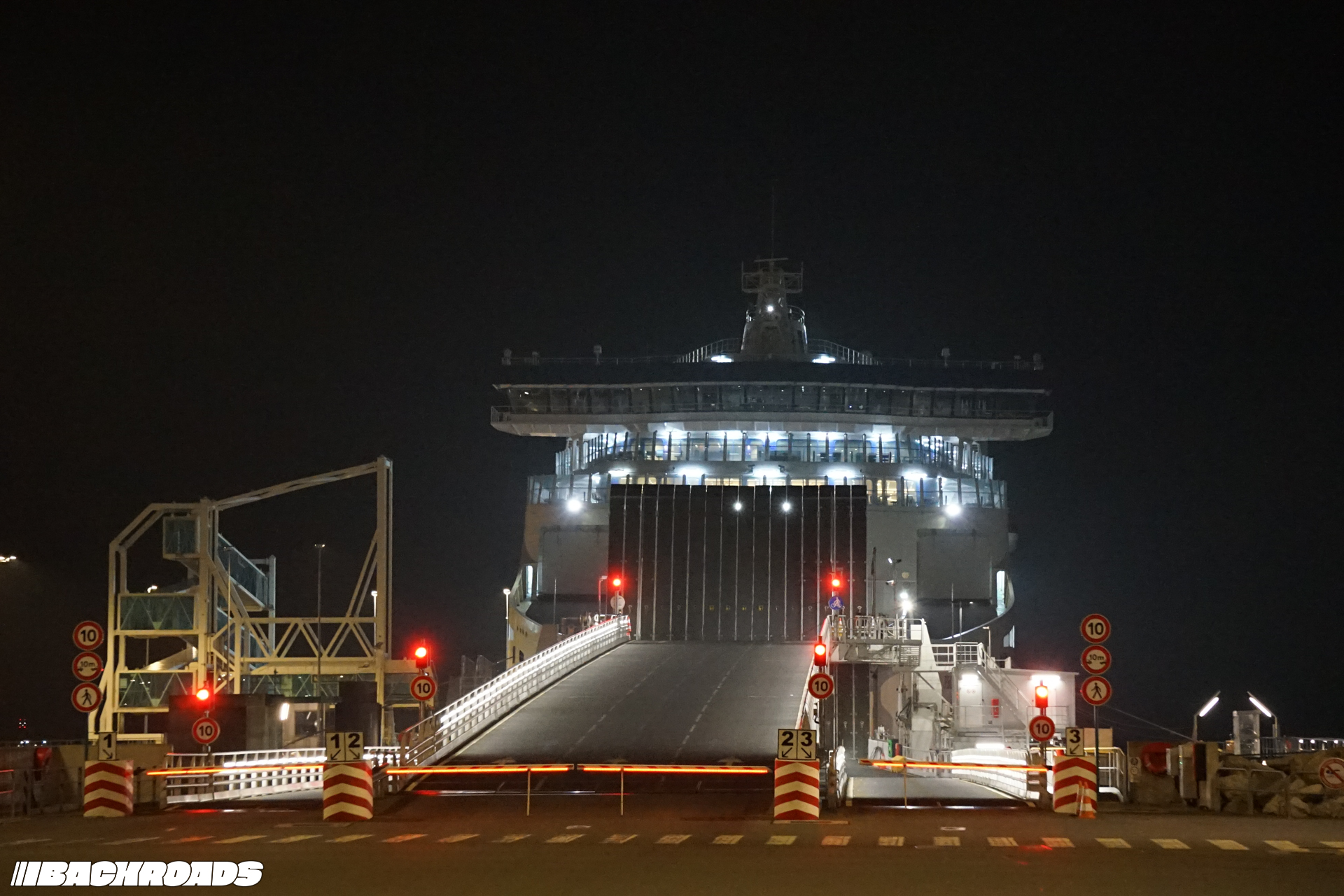
As we pulled away from the truck stop, the knocking sound seemed to have gone. Gaining confidence as we pulled onto the slip road, we built up speed and continued on our journey. Success! Arriving at the Dover ferry with just 15 minutes to spare for check-in, both Harry and I let out sighs of relief. In France, we could find a garage for a more permanent fix for the driveshaft support, but for now, sleep.
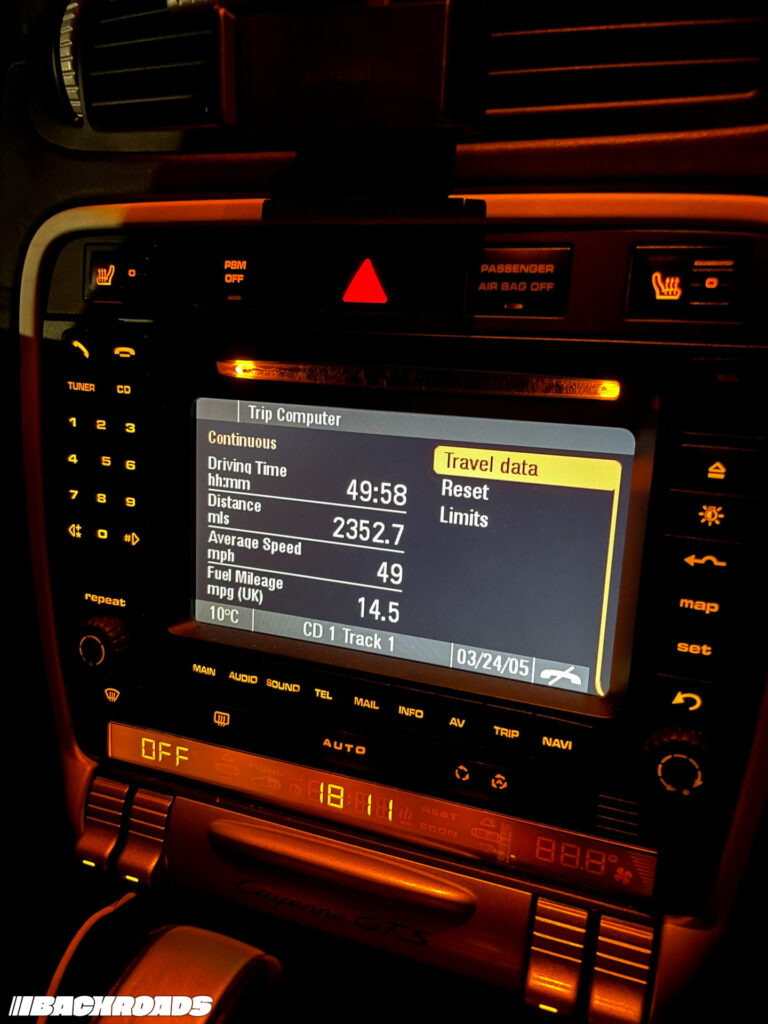
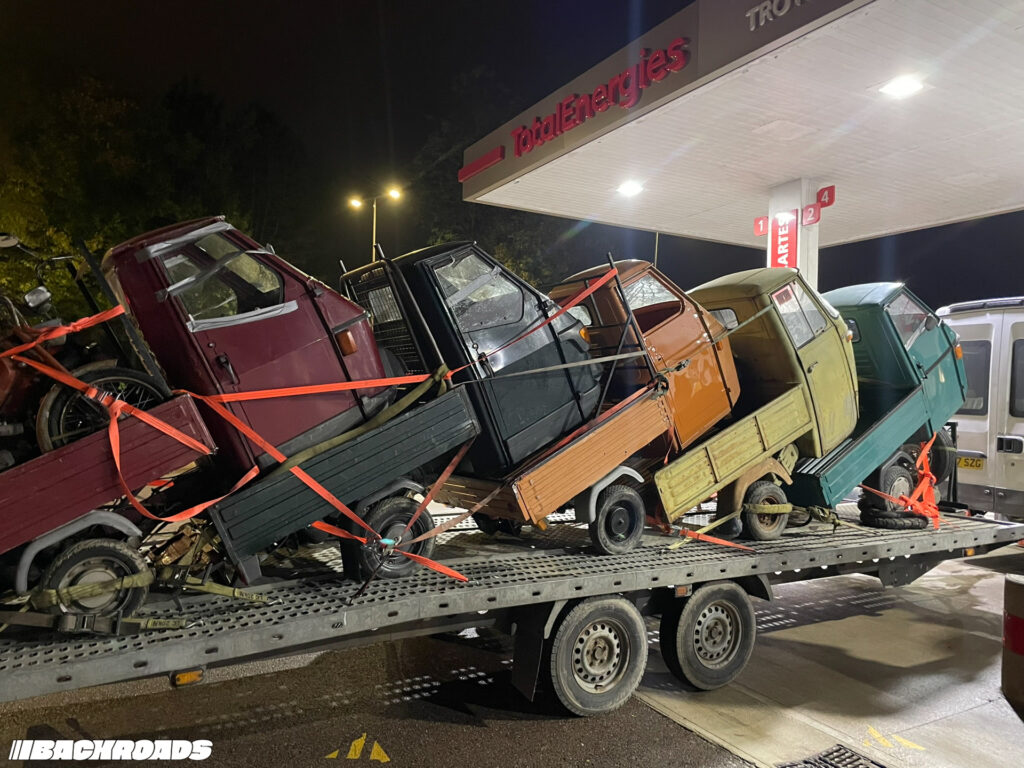
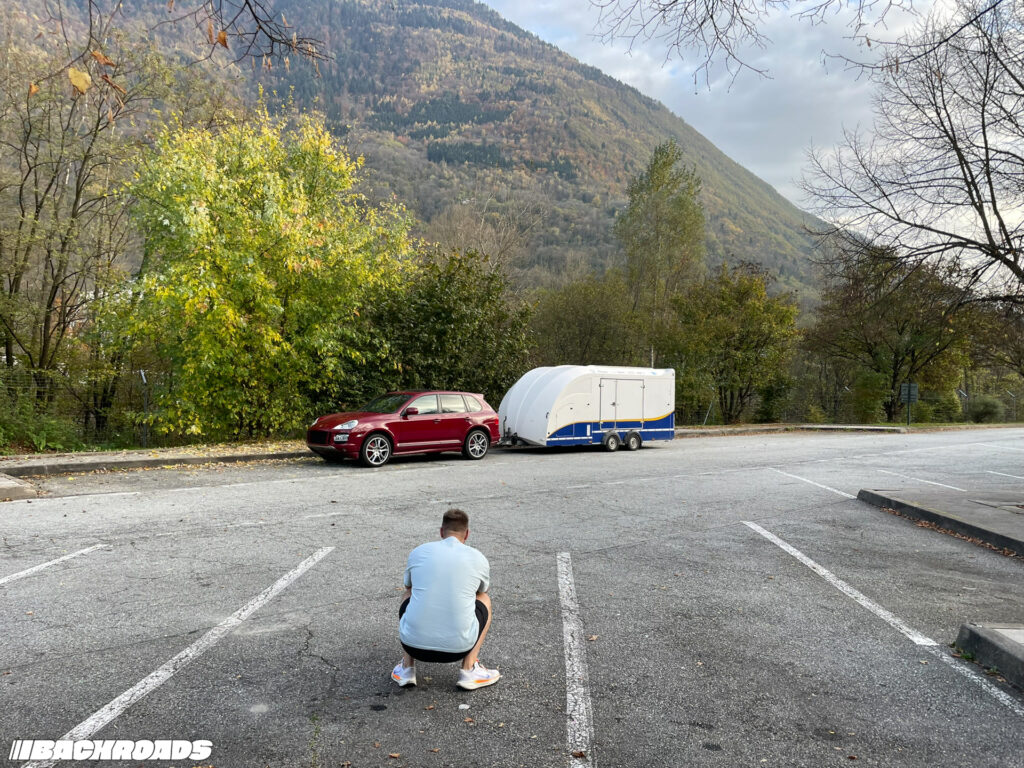
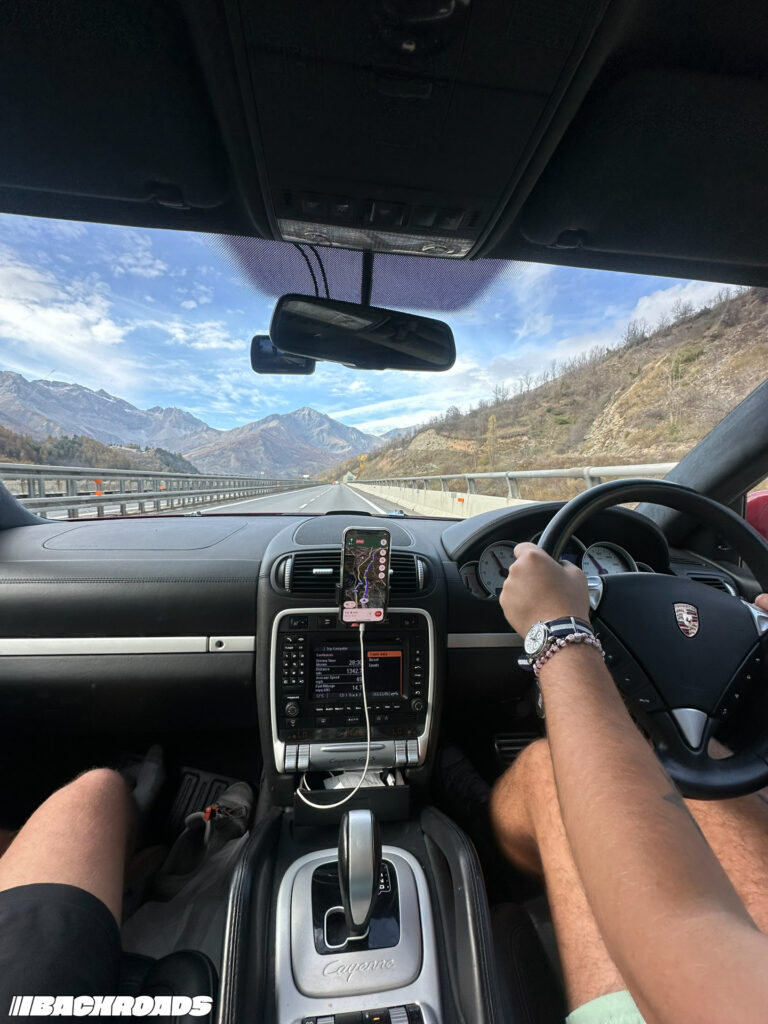
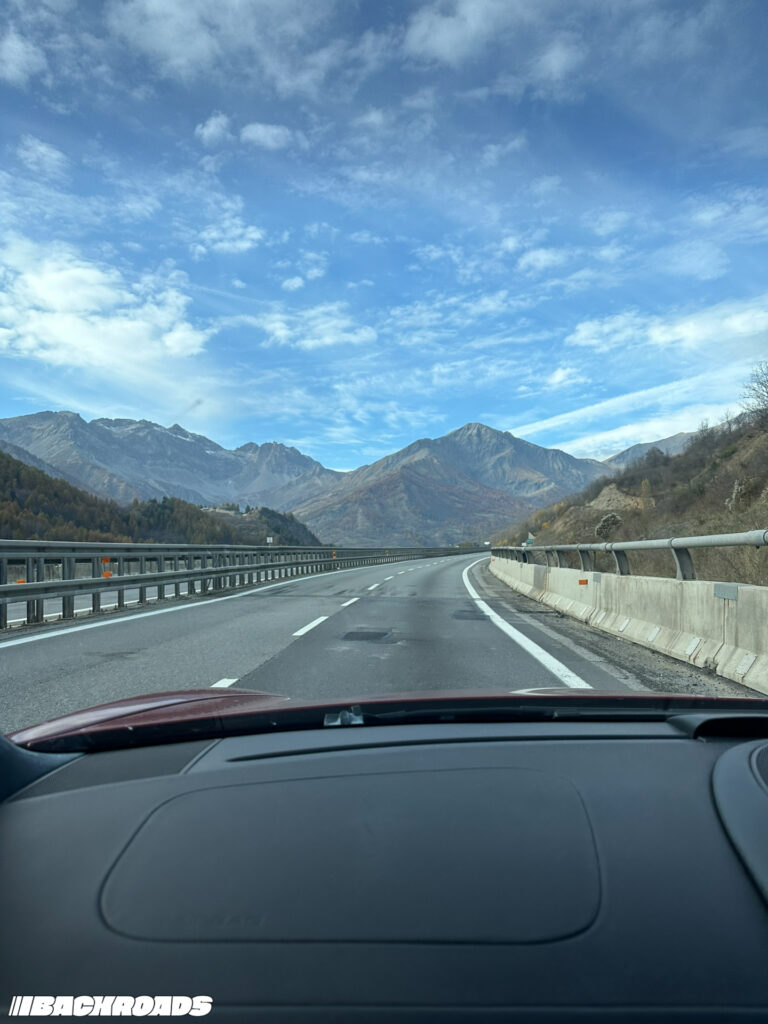
At 6.30am, we rolled off the ferry. I’ve driven plenty of miles on European roads, but today, the long, smooth, straight tarmac of the French toll roads was especially welcome after an eventful night. Except for (quite a few) fuel stops, we made great progress through France.
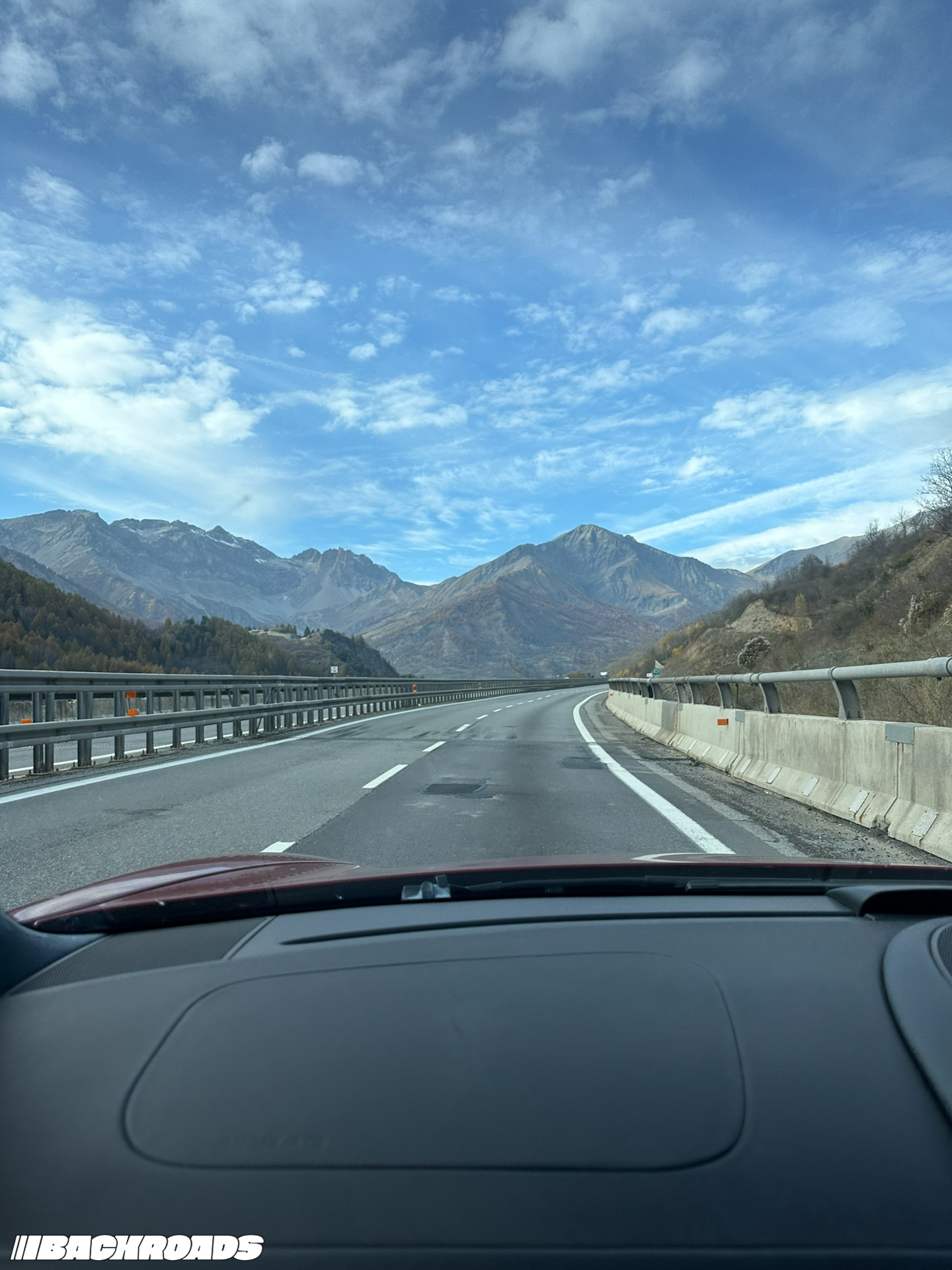
Before we knew it, we were staring at the French Alps, having ignored all garages en route, as the driveshaft showed no issues whatsoever. As we began climbing up the famous mountain range towards the Frejus tunnel, I remember wishing that there wasn’t an eight-meter-long trailer on the back of the car – the road was spectacular. The descent into Italy was smooth, and with a minor detour for pizza that required some careful navigation through tight, historic streets, we arrived at our hotel in Bergamo a few hours later.
We slept as much as we could, eventually waking at around 9:00am. Luckily, the Giulia was stored only two minutes away from the hotel, but as we pulled into the industrial complex, the violent judder from beneath the Cayenne returned. We decided we’d load up and then fashion another fix.
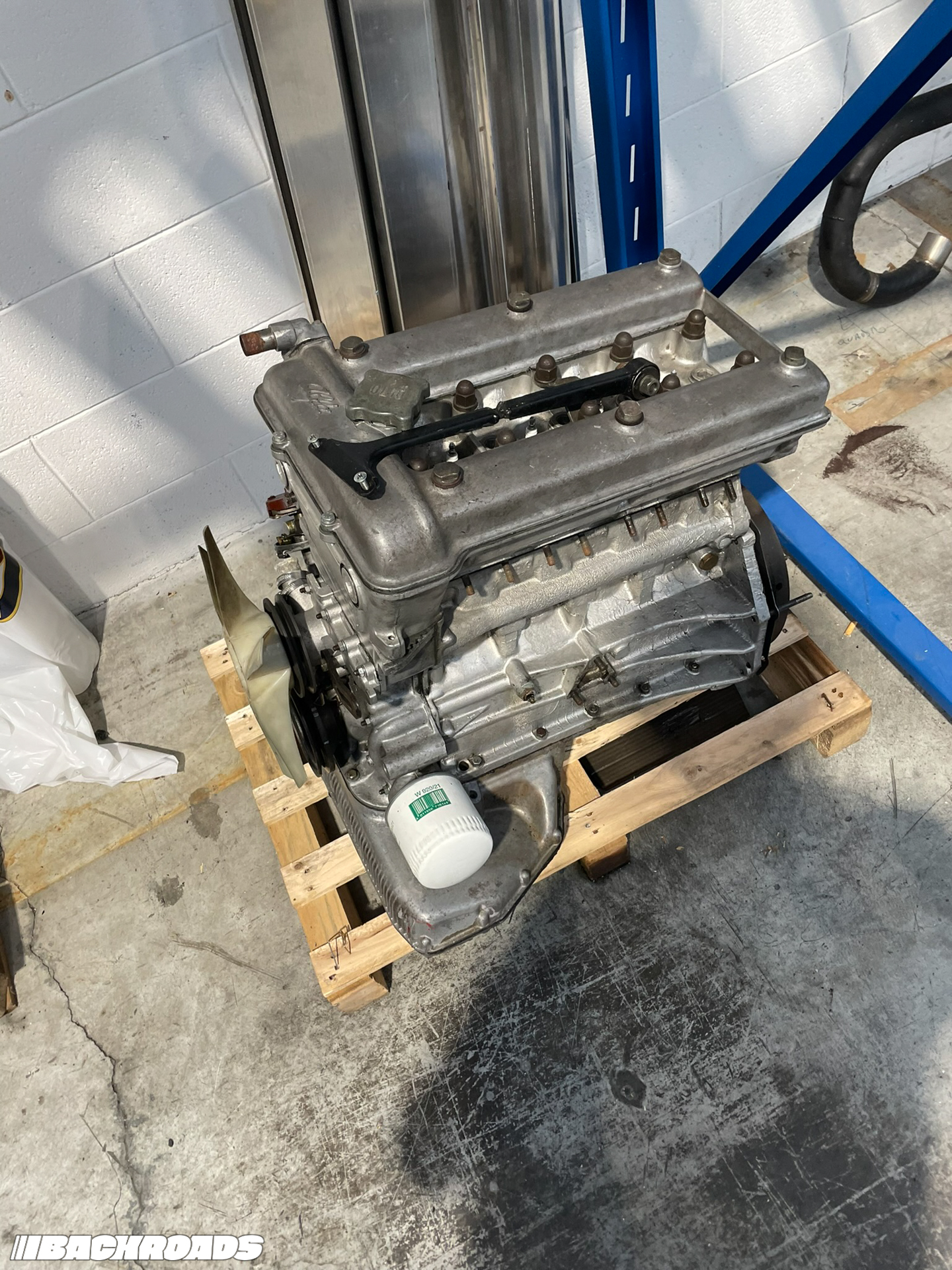
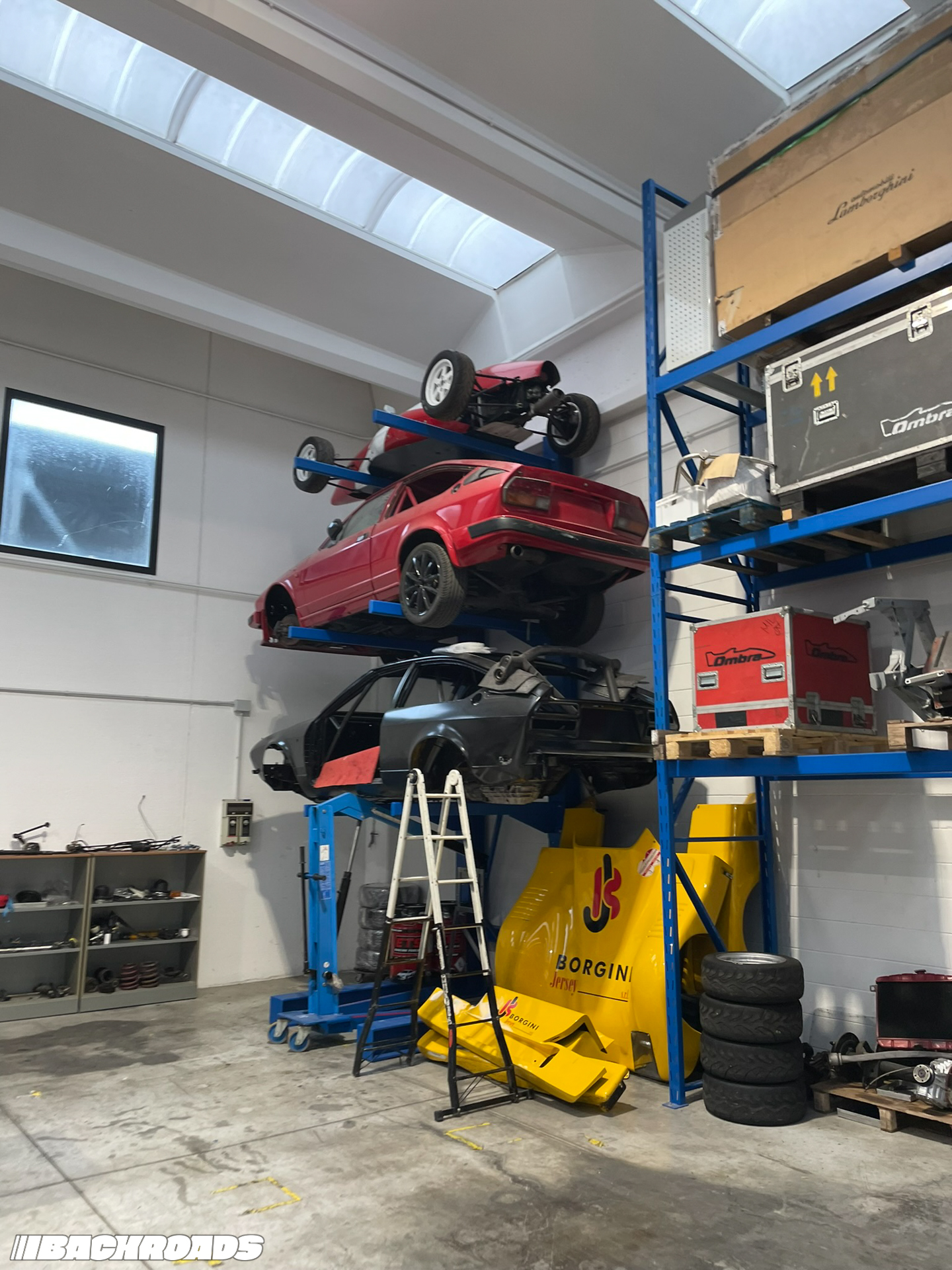
The race team was extremely welcoming. They showed us around the workshop, asked enthusiastically about our adventure from Scotland, and even gave us a look at some of the rarer privateer-owned vehicles in their possession, including a recently restored Alfa Romeo Giulia TZ. Then I saw her – my new ‘build it yourself’ Alfa Romeo Giulia 1300TI race car kit.
We started with the shell itself, and slowly packed the various components around the car inside the trailer. It may come as no surprise to some, but even a competition car with no interior consists of many parts. Rebuild instructions not included…
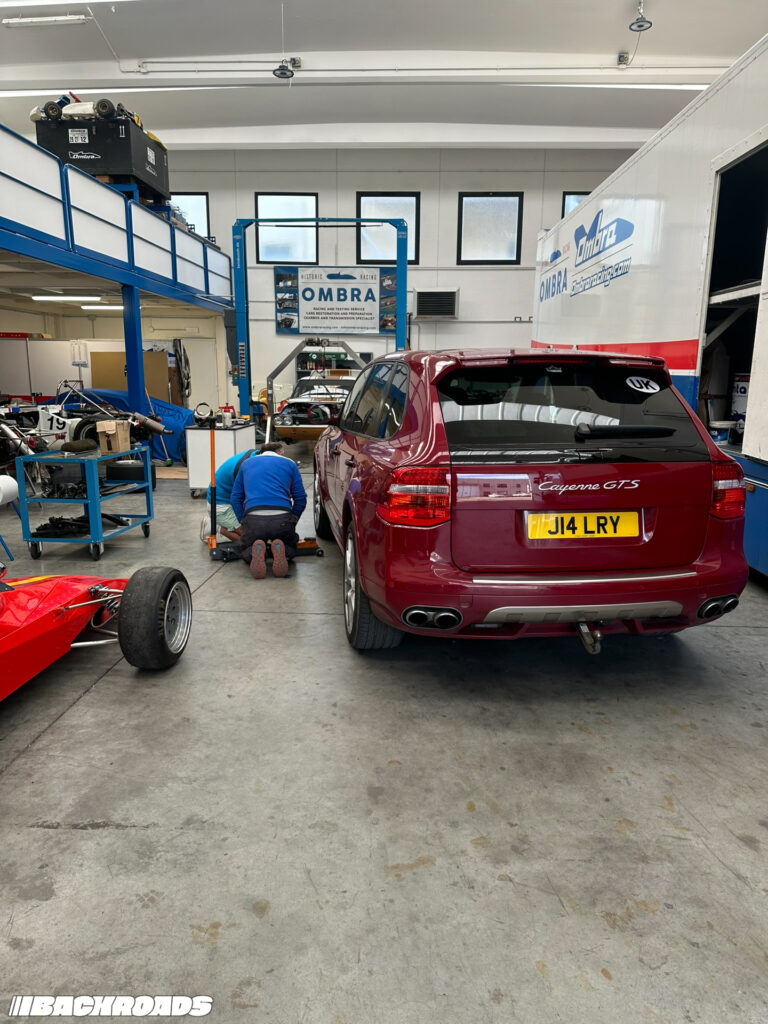
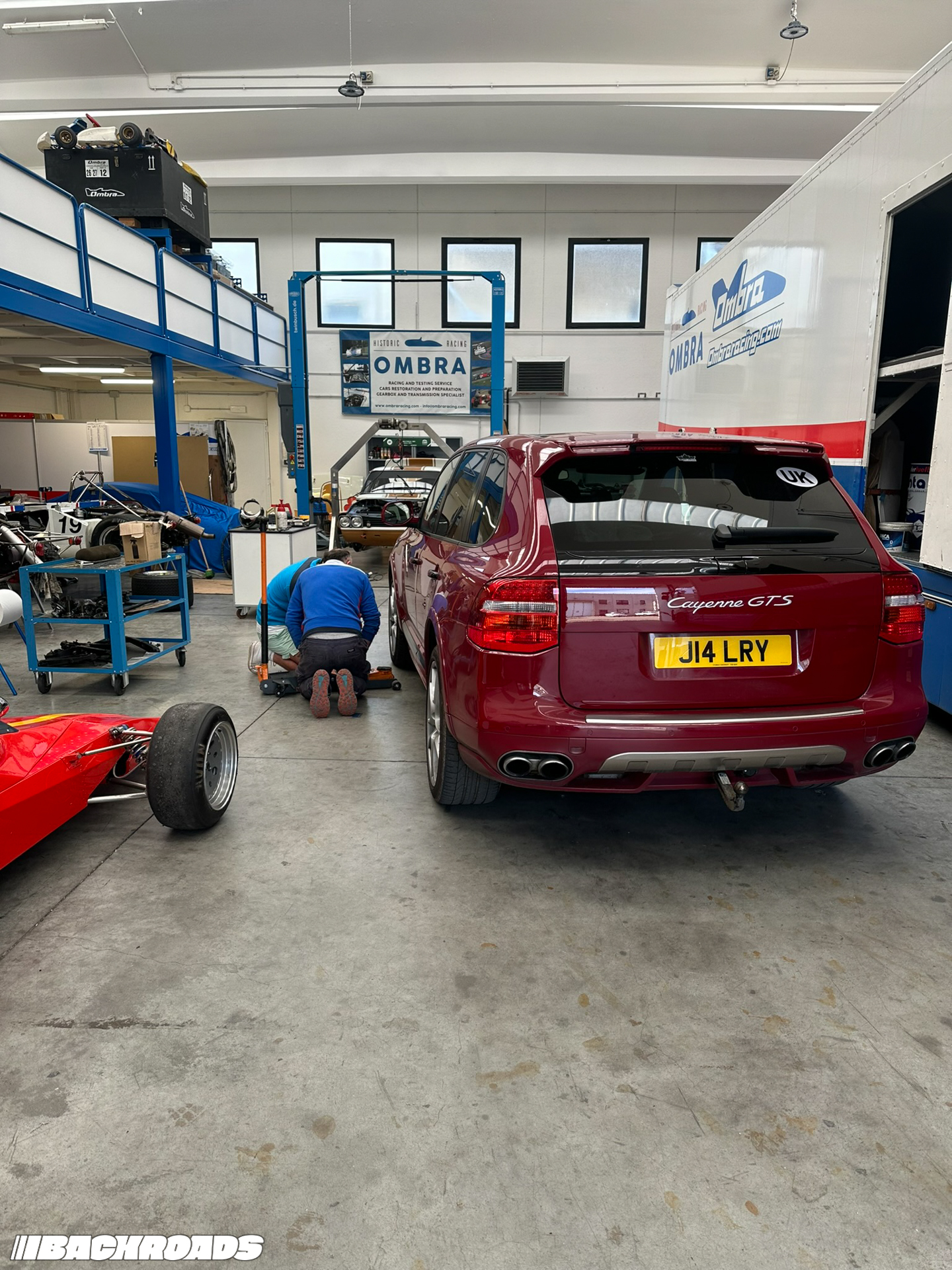
With the trailer packed, we chatted briefly with the team, and the topic of our driveshaft problem came up. I explained that I was confident we could improvise another fix to get us home, but they were keen to take a look themselves. Up went the Cayenne on a lift, and around 15 minutes later, a far more permanent fix had been made. Fashioned from heavy-duty zip ties and high-performance fuel hose, we now had what I considered to be a stronger-than-OEM bushing in place. Coffee courtesy of the race team in hand, Harry and I pulled away from the complex, far more confident in our ability to complete the 1,200-mile journey home.
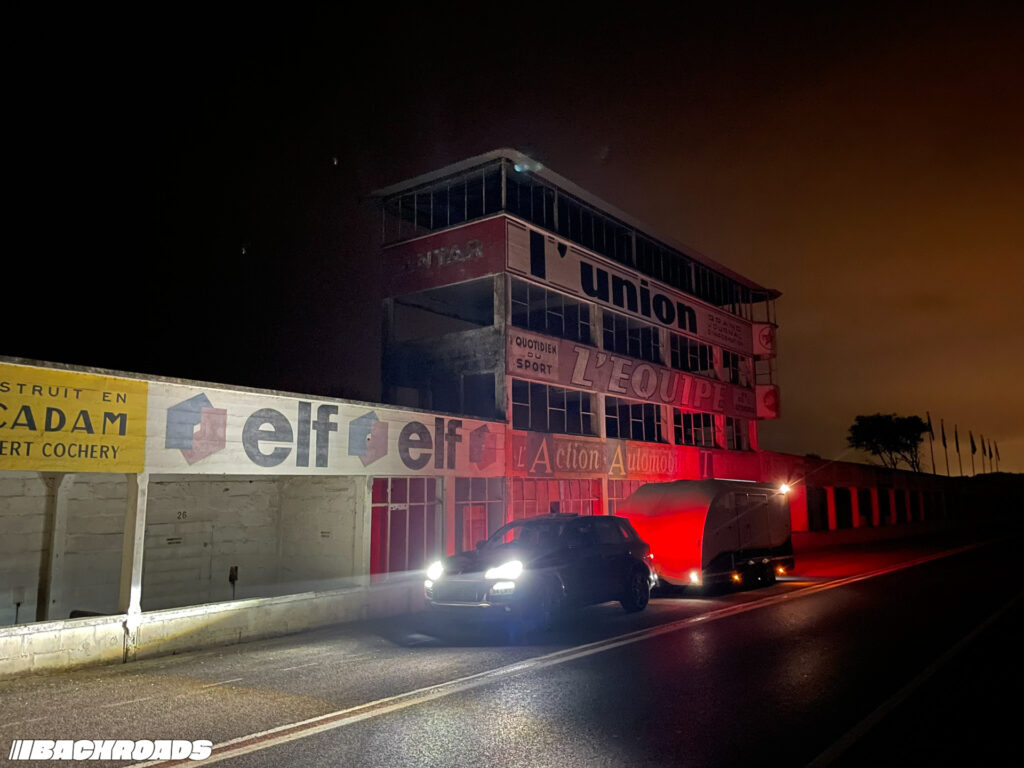
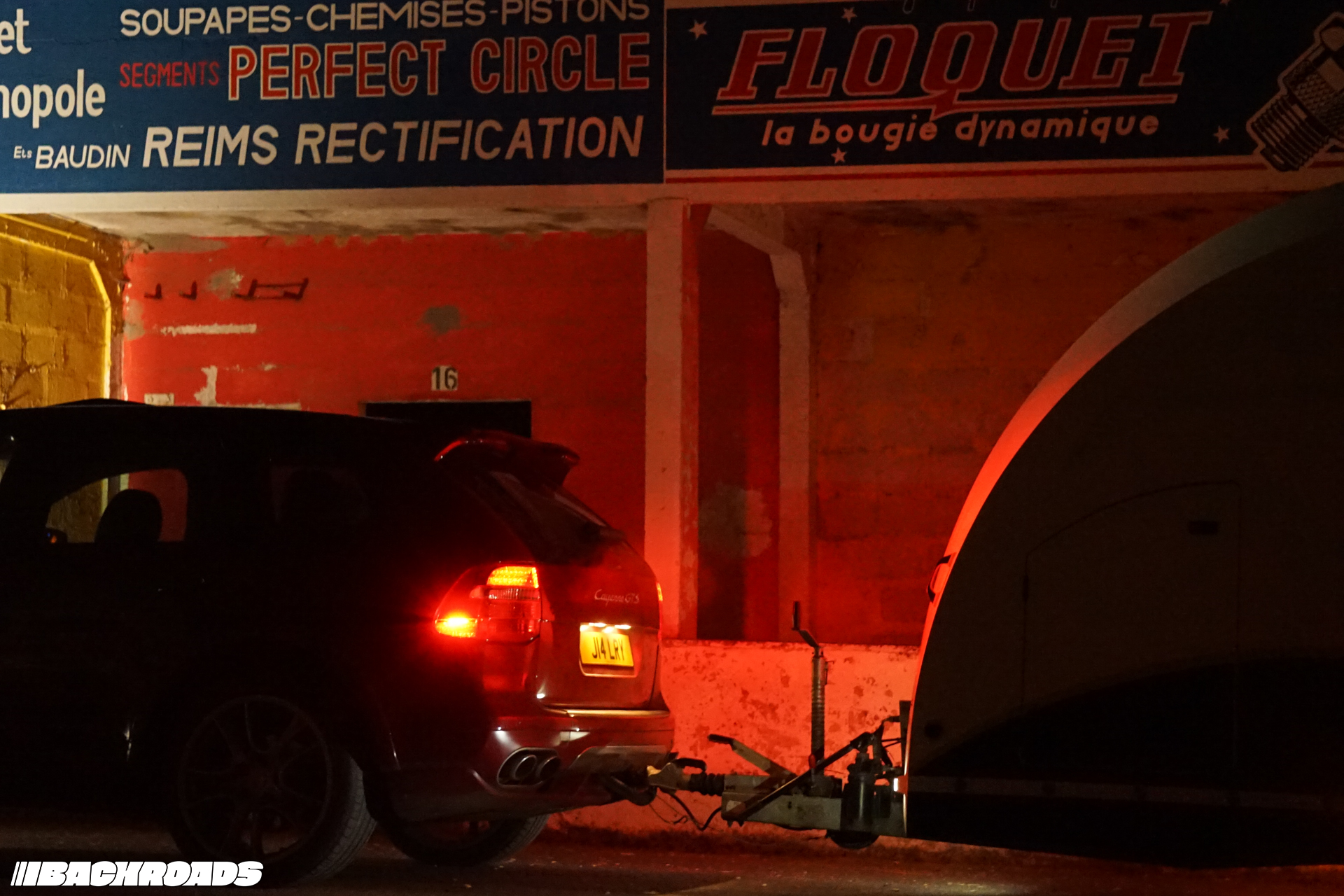
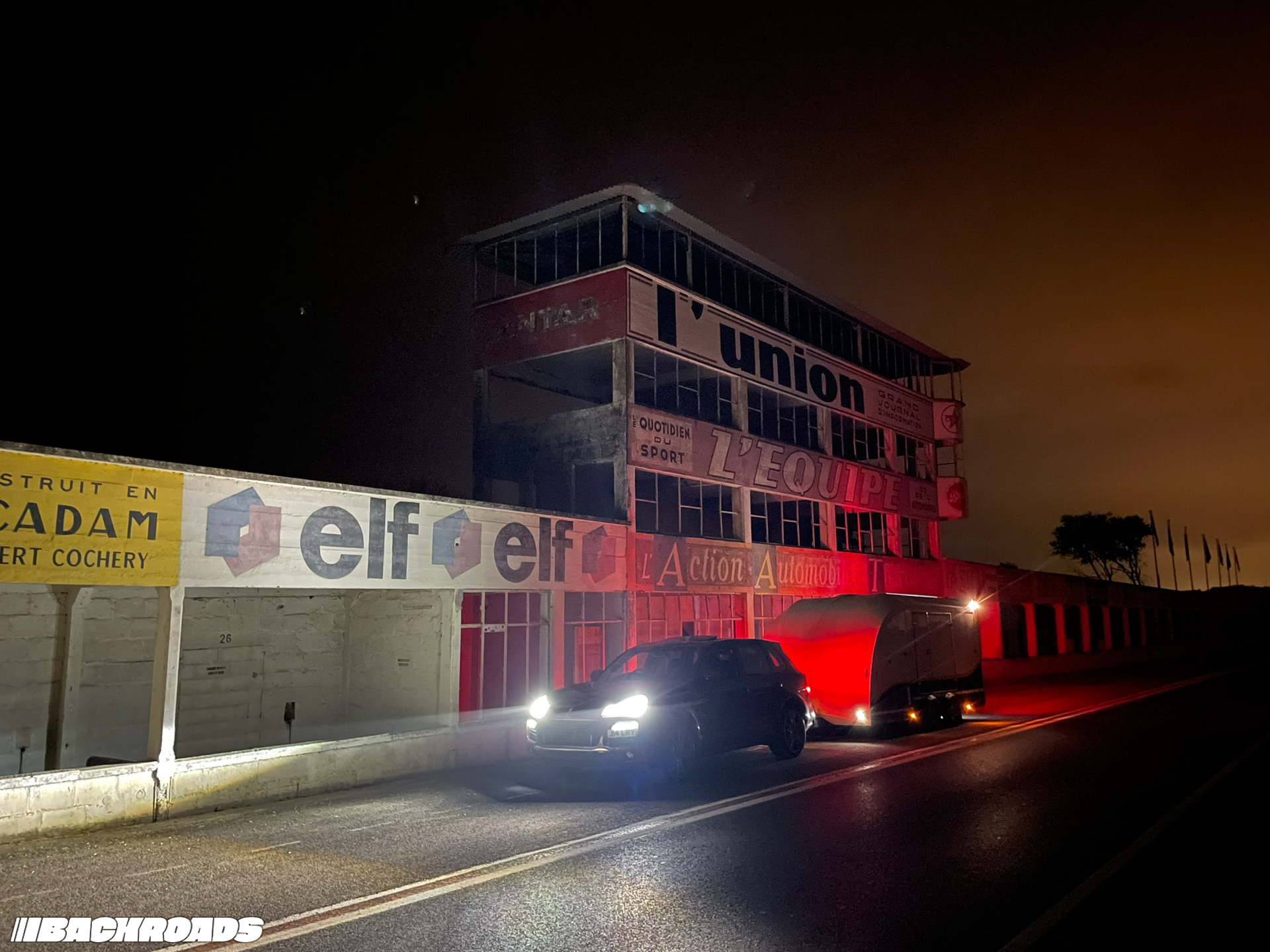
I’m not sure whether it was the excitement of having acquired the Giulia or the renewed confidence in the Cayenne, but the drive back seemed to go by much quicker. France flew past us, and after a brief detour to see the famous Reims-Gueux circuit, we pulled into Calais. After a few hours of sleep, we loaded onto the ferry, slept some more, and arrived in the UK. Pulling into my driveway at home with no other issues to note was a huge sense of relief and achievement. It was an epic journey to add to the history of a storied Giulia.
After unloading the car into my garage, I was finally able to give her a closer inspection. While not quite as ‘perfect’ as I remembered (rose-tinted glasses and all!), it looked like a great base for restoration. Reviewing the paperwork also gave me a chance to reflect on the type of restoration that she deserves. While my original plan was to revert the car to a ‘fast road’ setup, I’ve since decided to keep as many of her original race features as possible. I now plan to use her in regulatory rallies and maybe some historic racing.
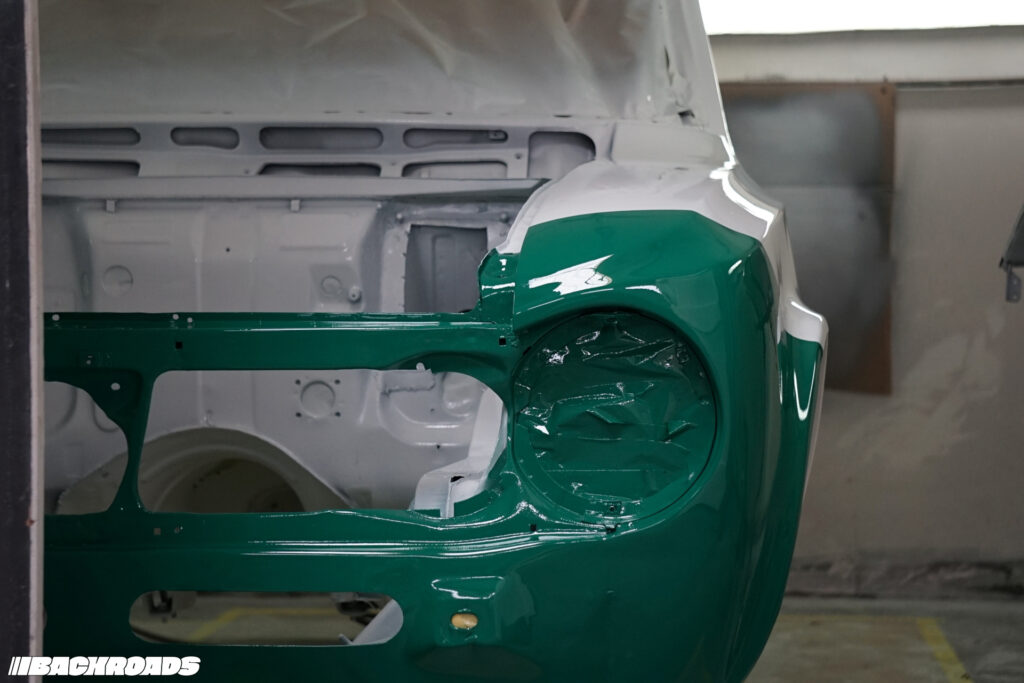
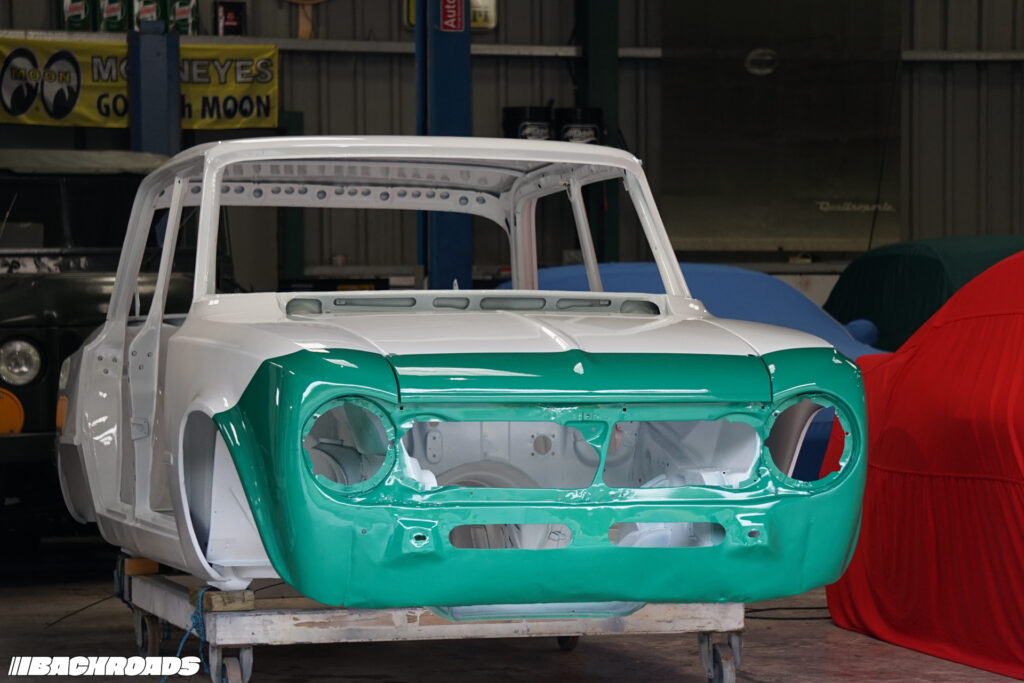
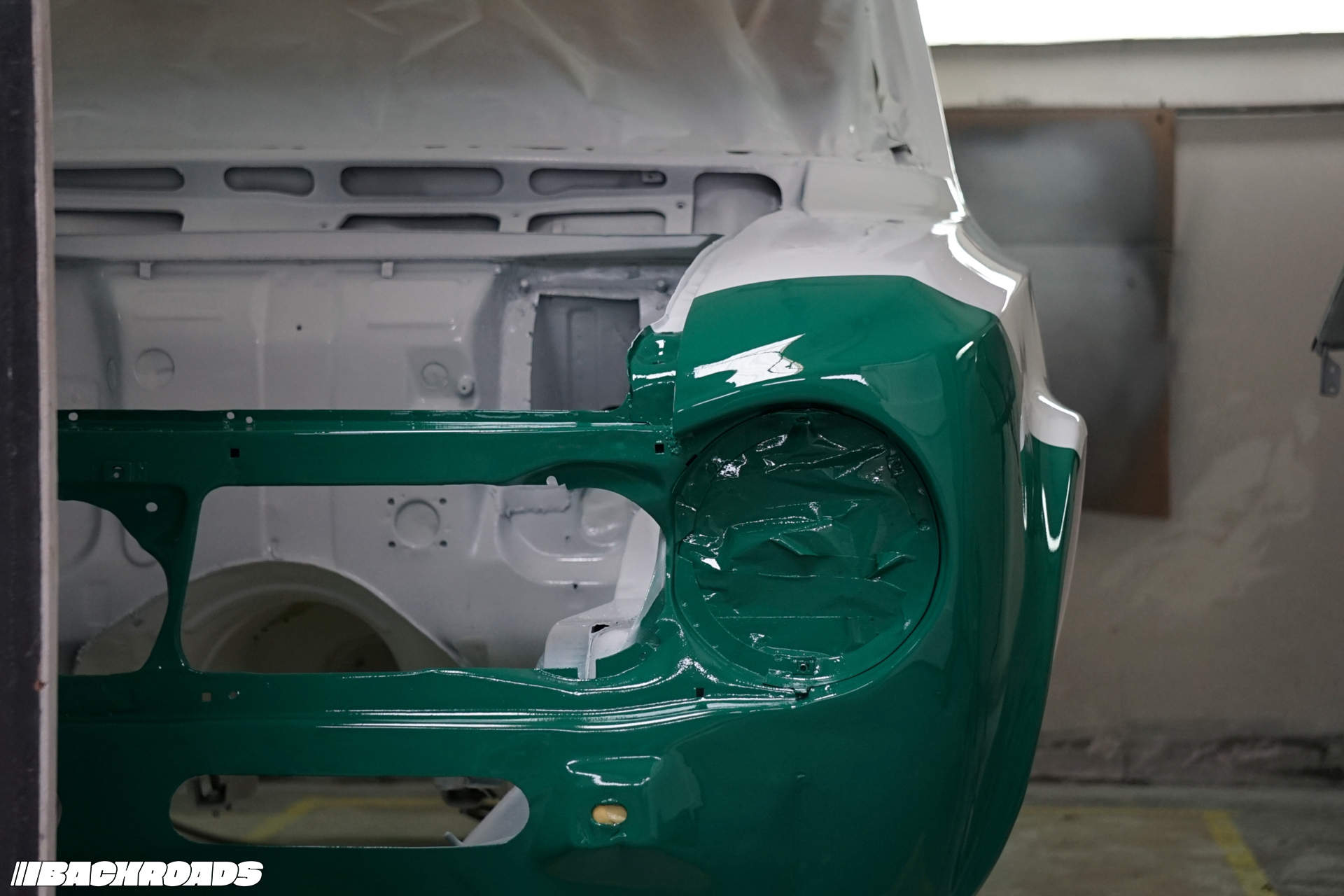
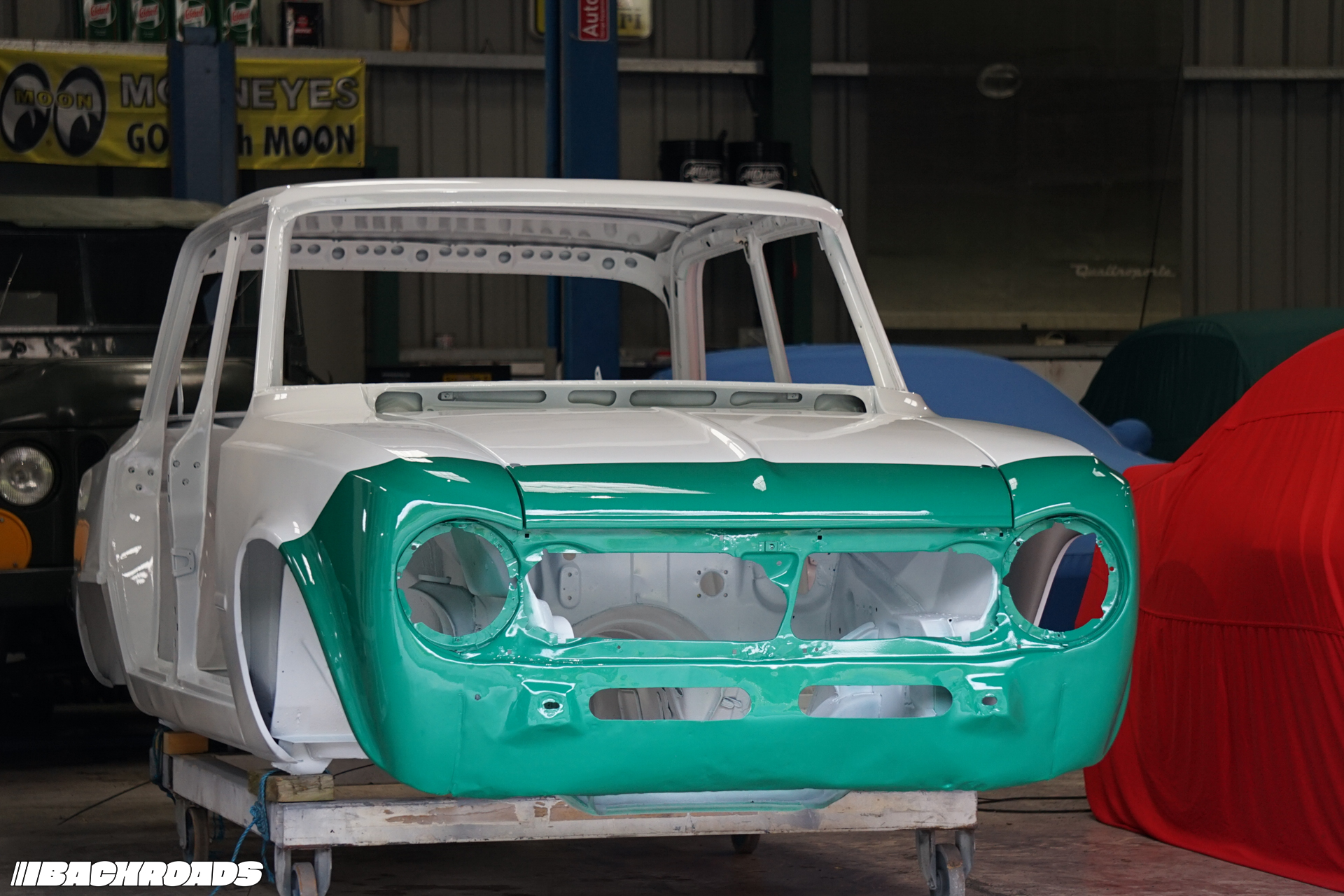
Now, six months into the project, things are really beginning to take shape. The bodywork is complete, and as I write this, I have just finished the paint – a huge milestone in any project. The colour is laid, so the rebuild begins. I’m keen to take part in the upcoming 2027 Winter Marathon, so there is now an added time pressure to the build. But if it can be done, it could be another exciting chapter in this particular little car’s book of adventures.
Follow the restoration of the Giulia on Instagram: @MapleHouseClassics.



Loved this – great read. Please keep the updates coming!
Thanks Ric! Will send across updates as they come 🙂
Jean-Luc @ Maple House Classics
now THIS is the kinda story i love reading. Bad ideas? CHECK. Dodgy repairs? CHECK. Good friends on an adventure to collect a science project of a car??? CHECK CHECK CHECK.