Imagine being a 17-year-old student at an ordinary Russian technical college, studying mechanics. In Russia, to complete a secondary-level technical education, every student must have official work experience. Some classmates went to car service stations or small workshops, and I thought my path would be the same, but one day everything changed.
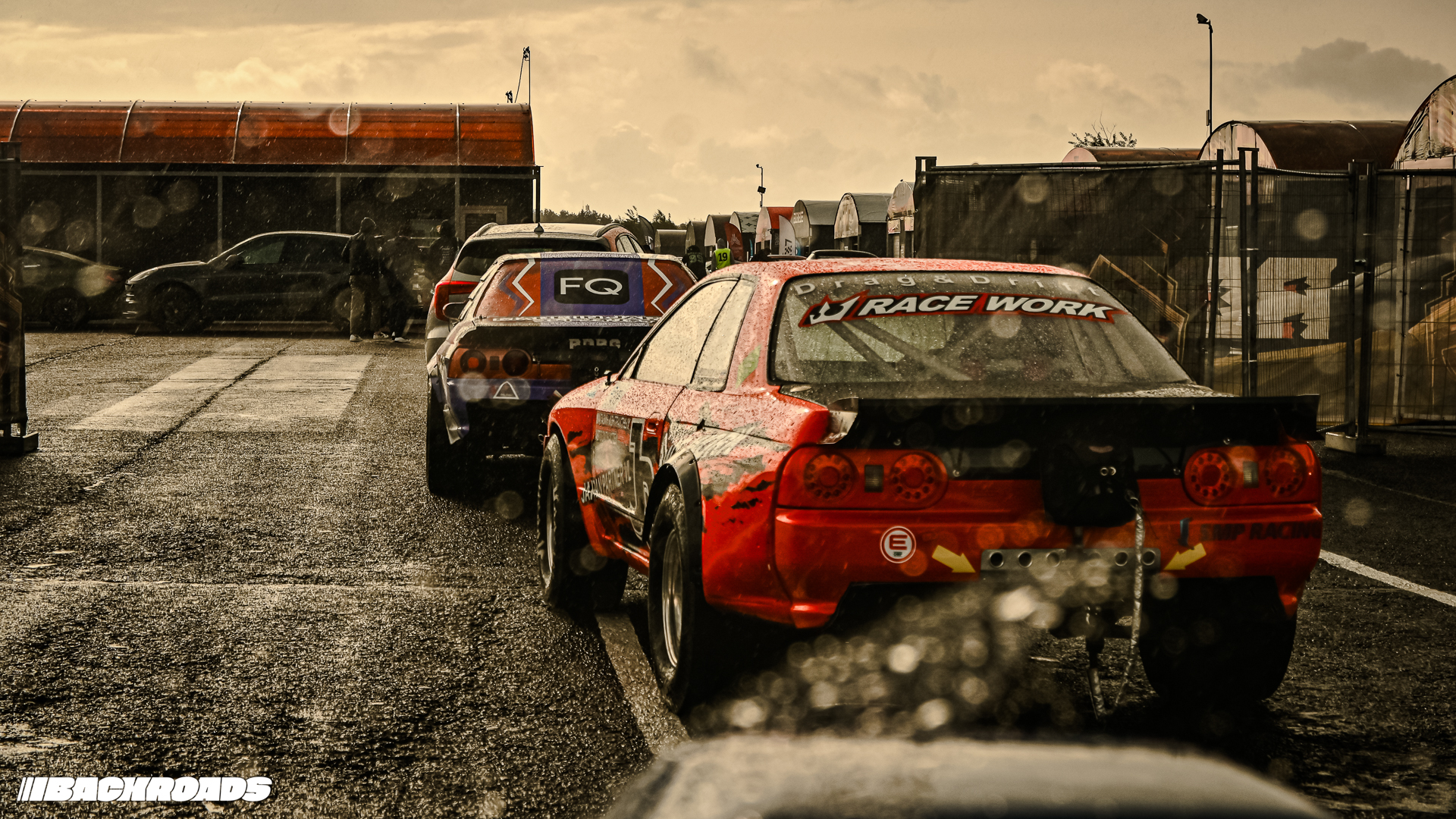
My father asked if I wanted to visit the RDRC Racepark to meet a team for a short talk. From that moment, my journey with RDRC Technology began. The team was founded by Dmitriy Samorukov, the first Russian to compete in the NHRA. Their base is RDRC Racepark, the only prepared dragstrip in Russia, located in a small village near Bykovo.
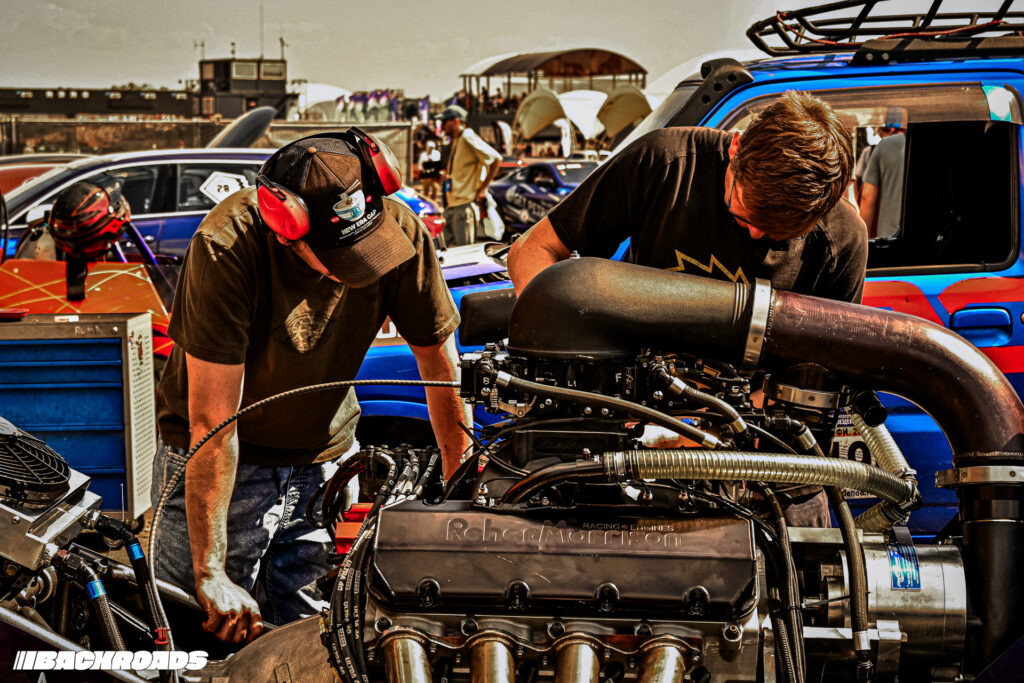
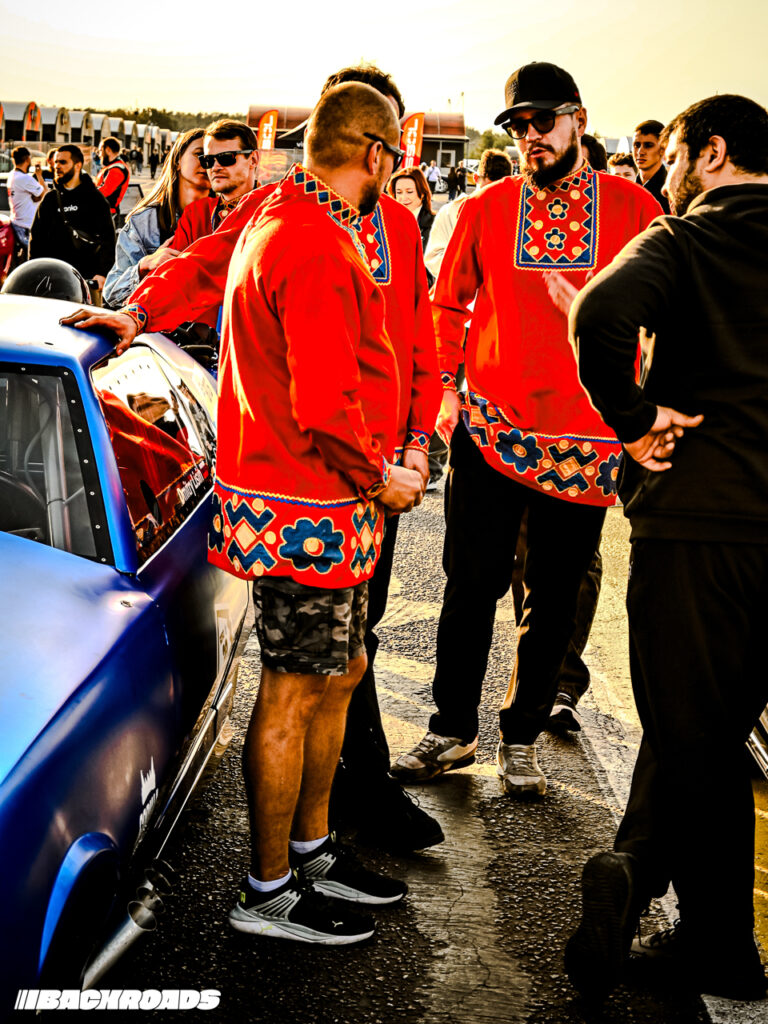


In 2021 and 2022, I worked only as a trainee, without pay. Many classmates were curious about joining the team, but when they saw how hard the work was, they quickly lost interest.
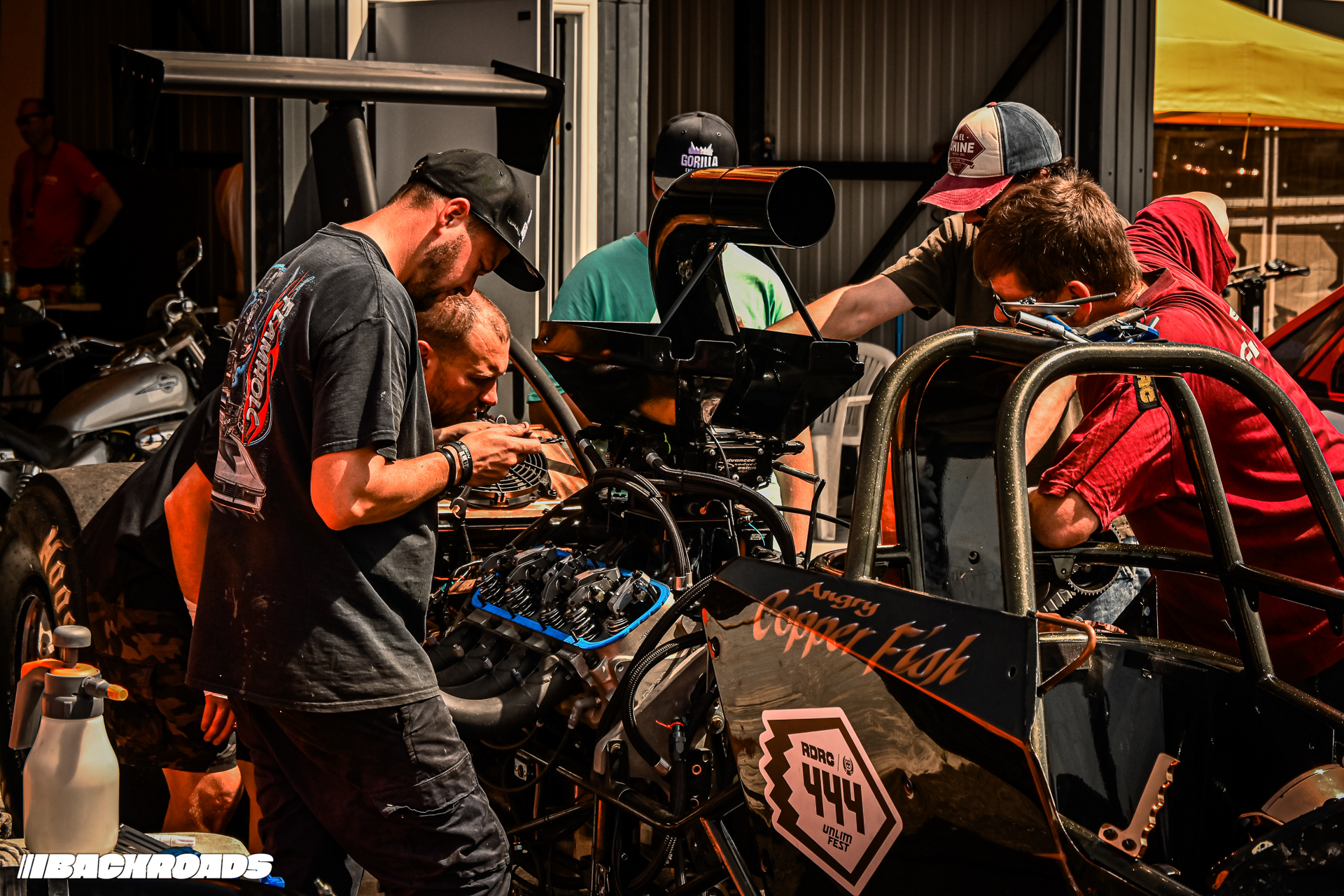
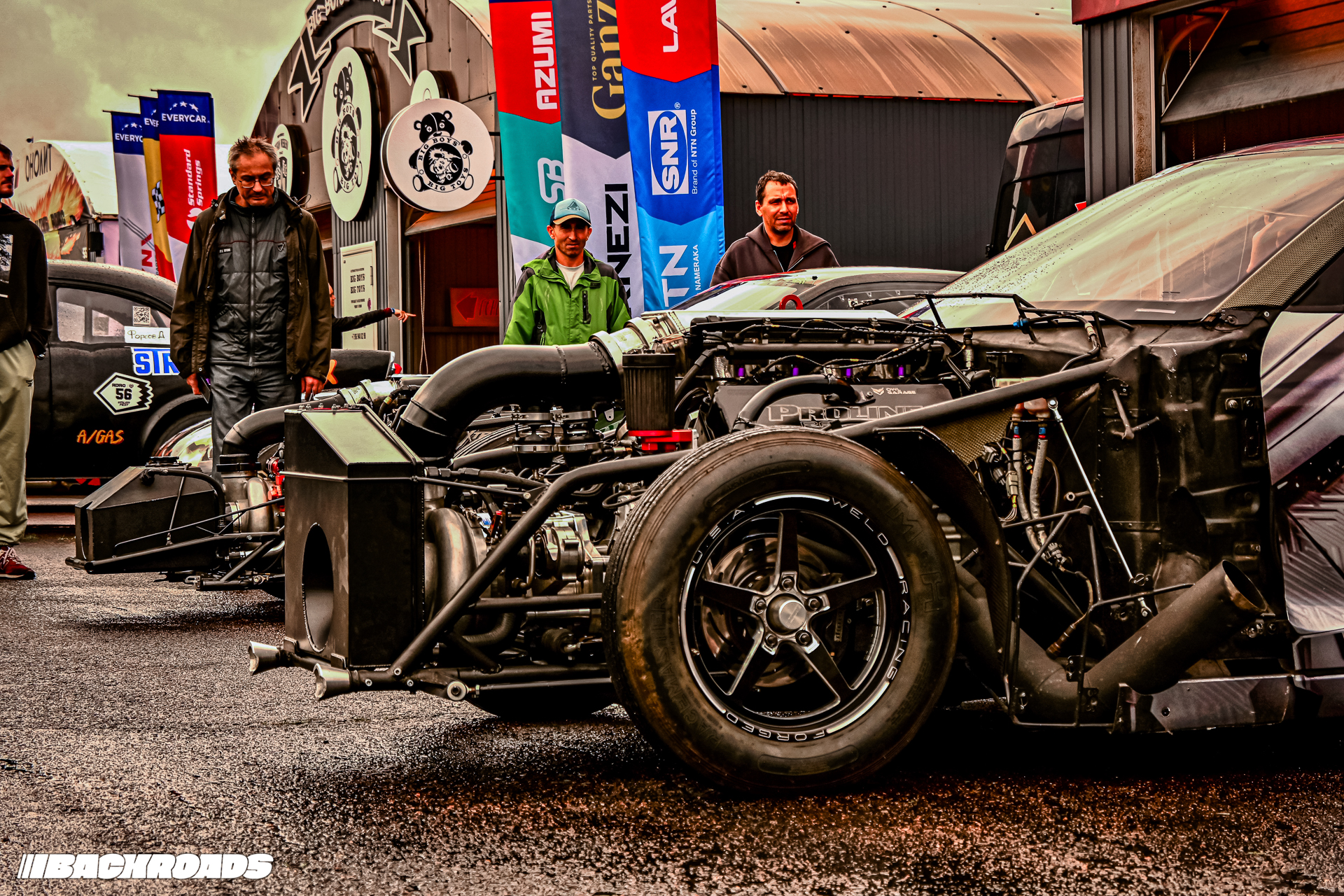
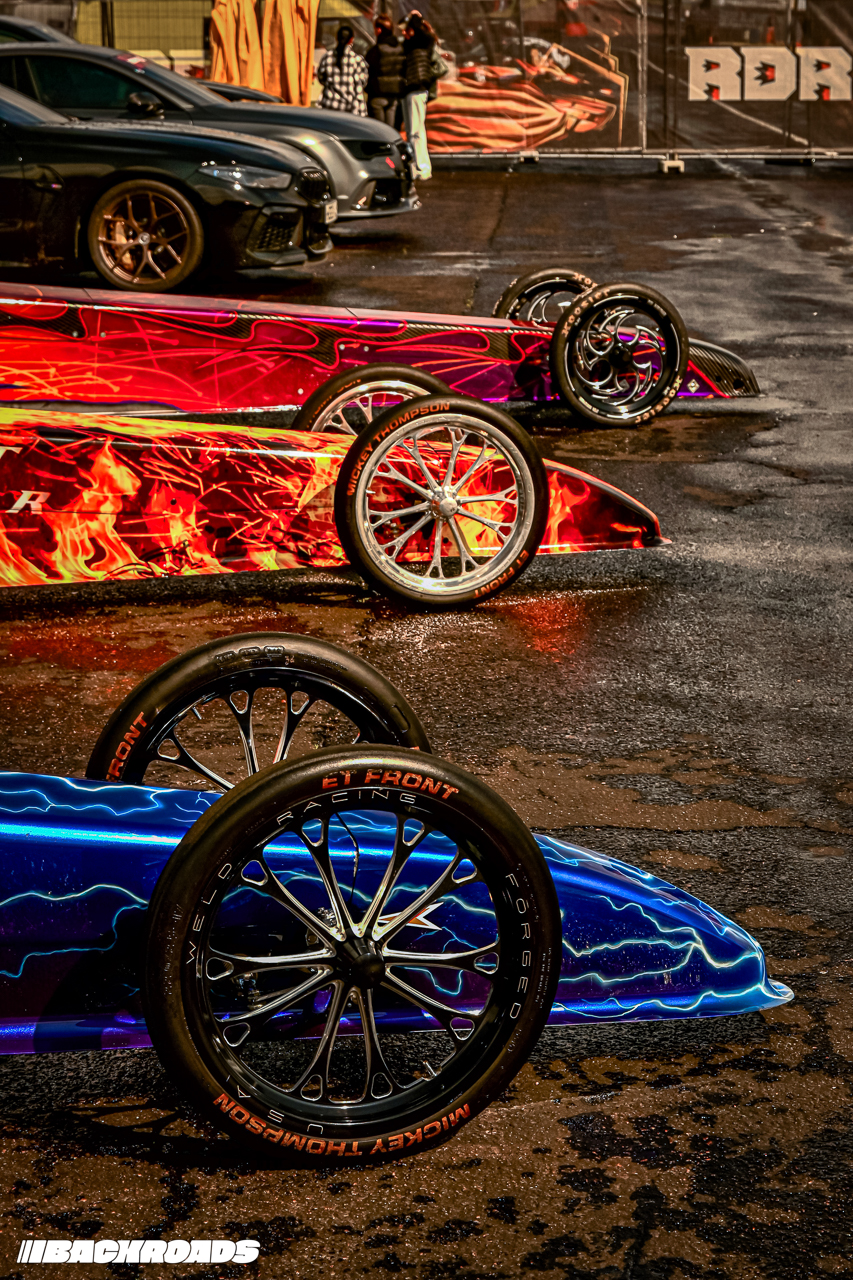
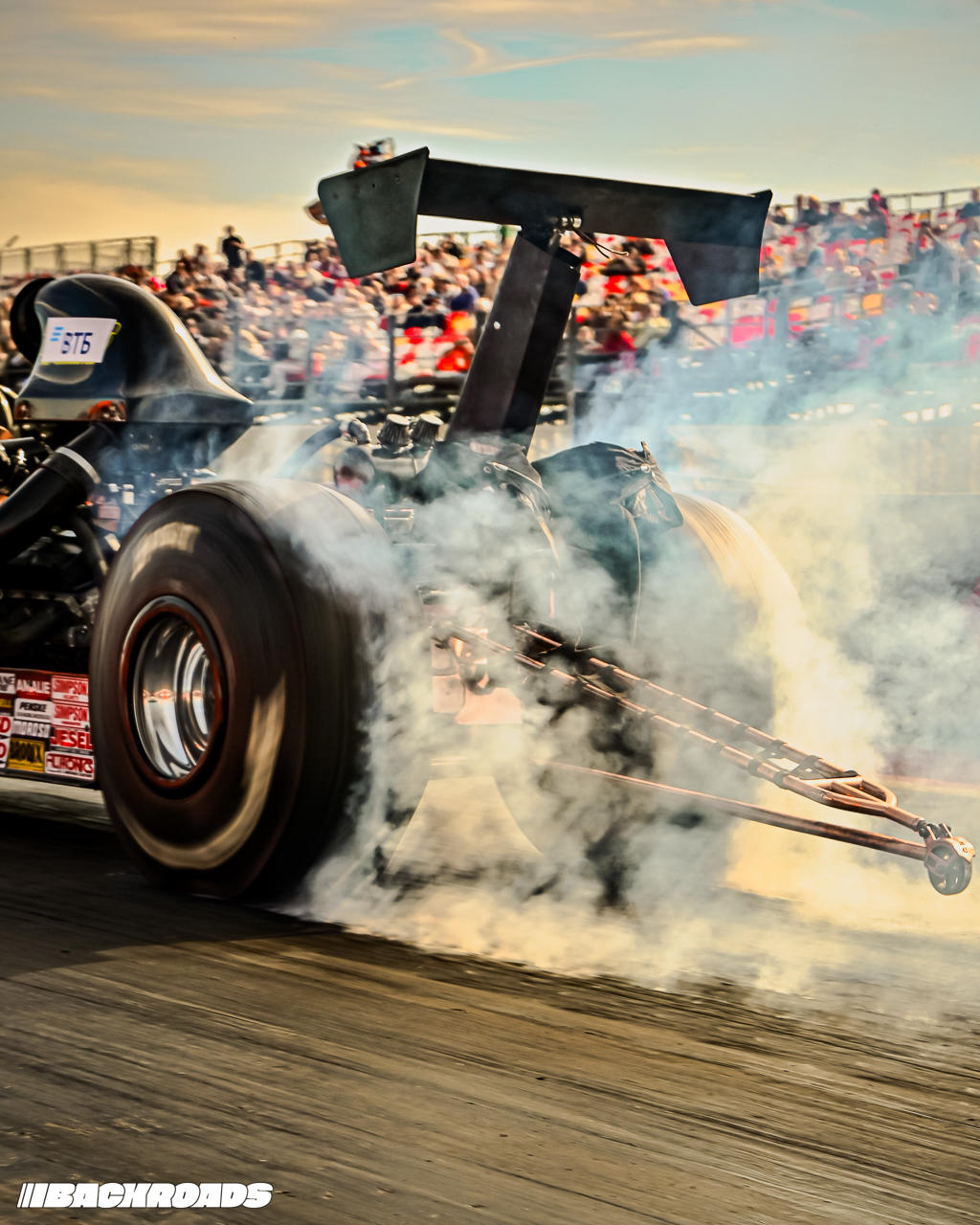
Was it that difficult? Absolutely. There were overheats, scratches, sprains, fractures, and days of nonstop labor. The biggest challenge in Russia is that you can’t easily buy parts for dragsters (we call them ‘arrows’) or pro-mods. Drag racing is not popular here. The reasons include a short season due to weather, high shipping costs, waiting times for parts from the USA and Europe, and a general lag in motorsport development. When something breaks, we often have to find very unusual solutions.
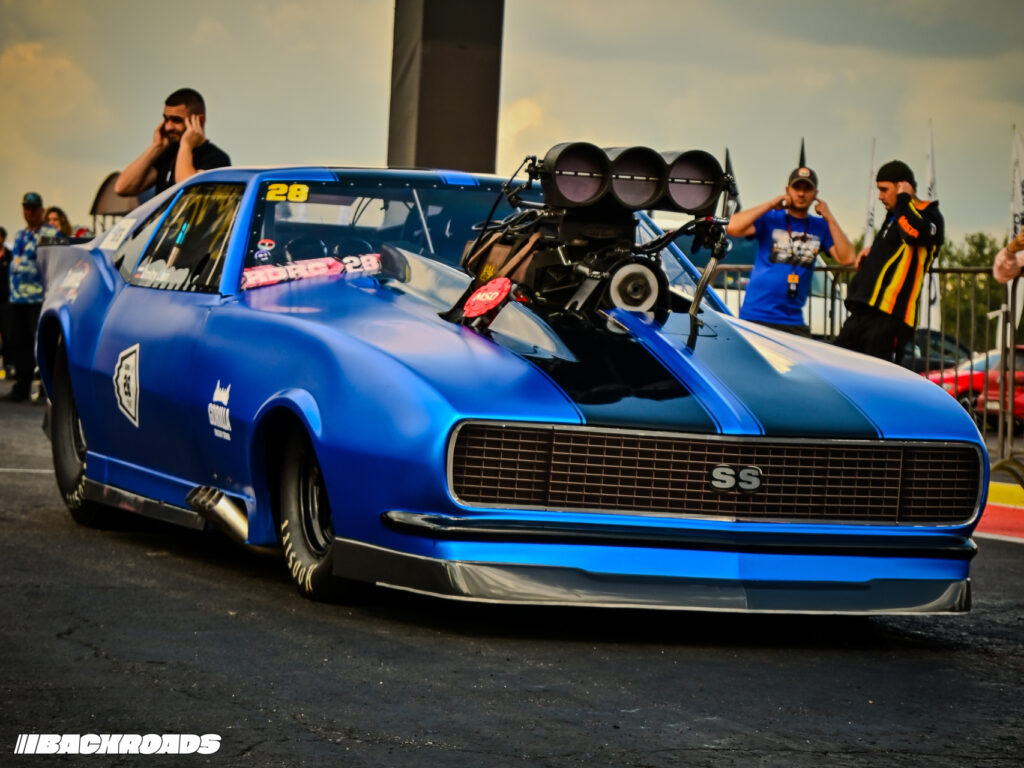
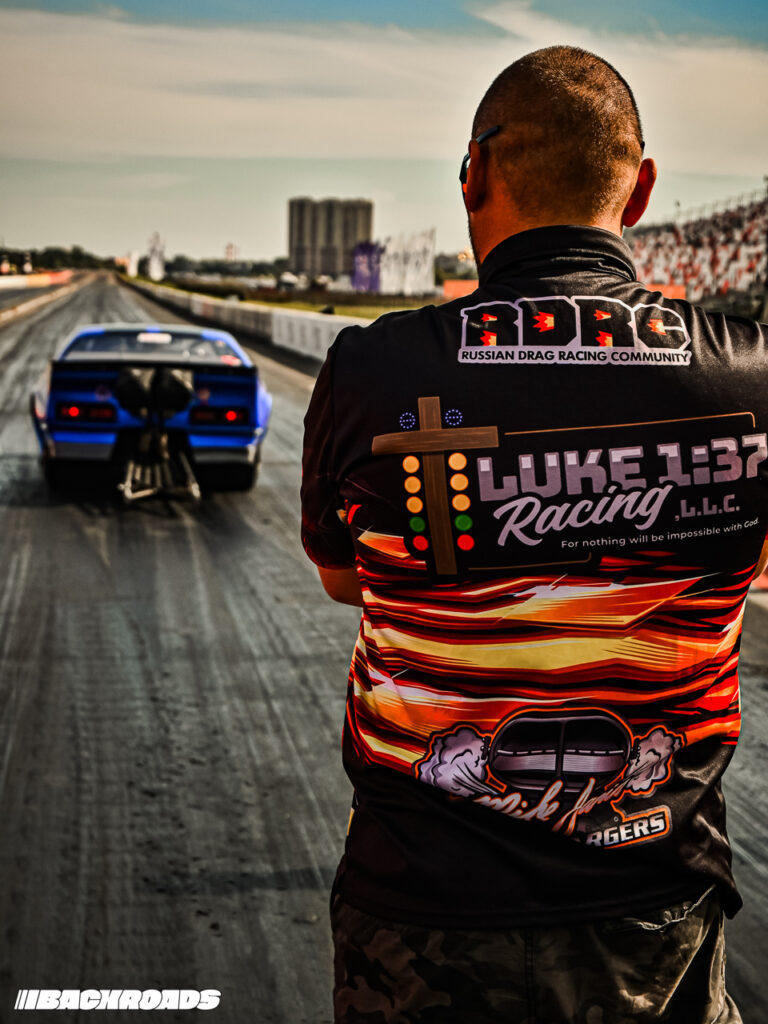


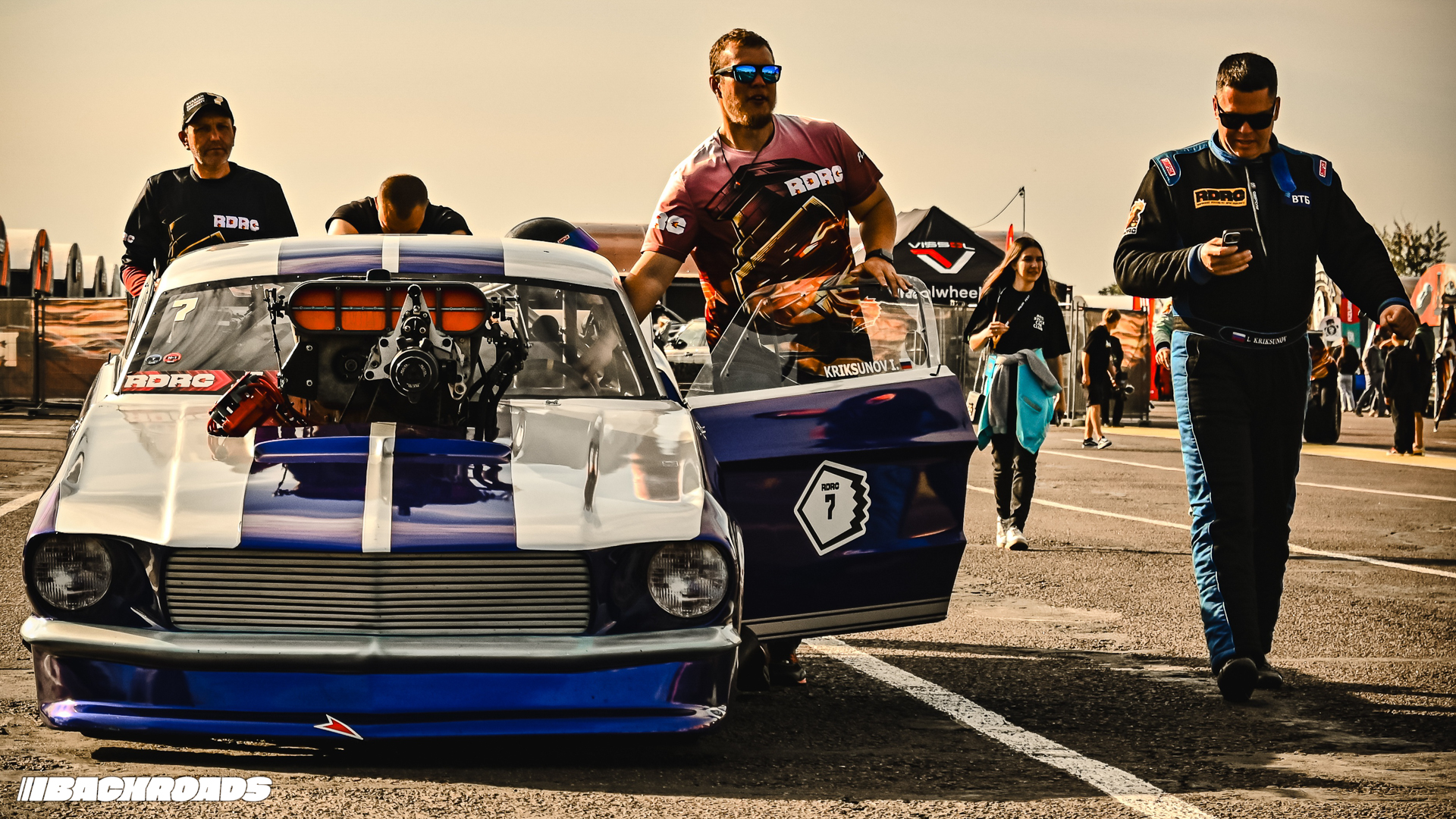
The turning point came with a crash involving the driver I worked with, Dmitriy Lisin. The day before, we found cracks in the front part of the frame and tried to weld them. The reason for the failure was simple: we had made that dragster faster than it was meant to go. We were racing against pro-mods, which were more powerful, and only later did a separate class for slower dragsters appear. The result was predictable. The driver wasn’t hurt, but the dragster was destroyed. At the next stage, Dmitriy was ready to race again – this time in a Mustang pro-mod. That marked the beginning of a new chapter.
In 2023, everything changed again: a new season, new members, new cars, and the introduction of the 4.5 and 3.99 classes. We received five new vehicles – two pro-mods, two top-fuel dragsters, and one nitrous-oxide-powered dragster. Three new racers joined: Sergey Nikitin, Leonid Tsygankov, and Igor Geinrikhs.


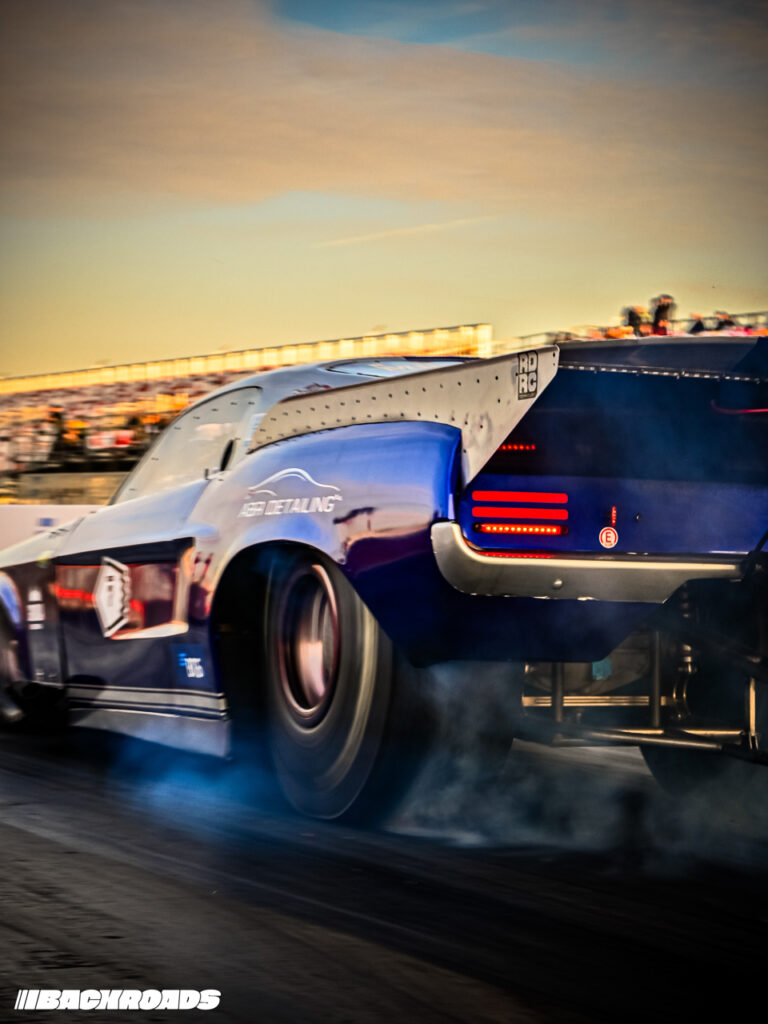

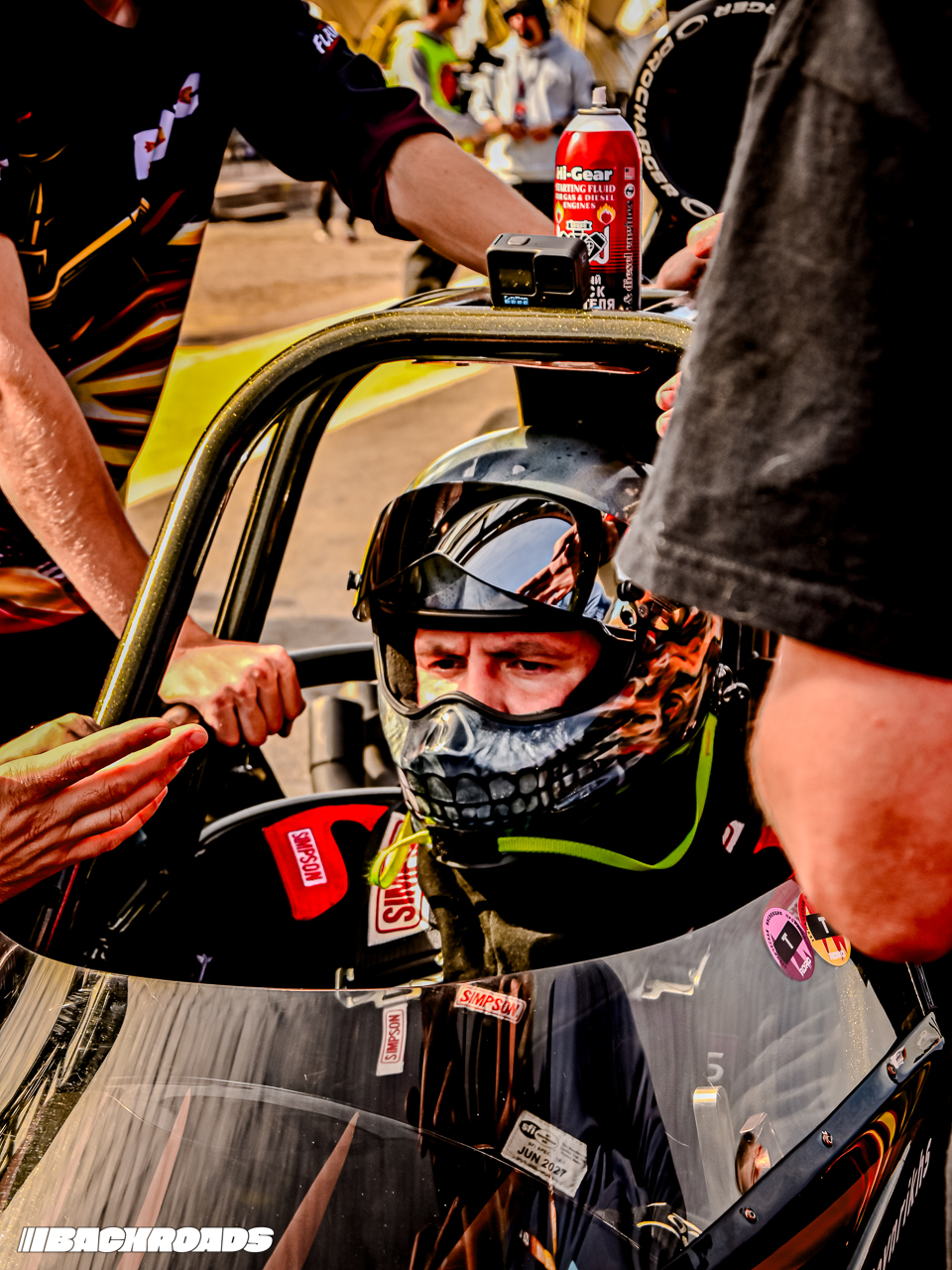
The first stage was a test for everyone. Each driver had to learn the start procedures, emergency rules, and mechanic signals during burnouts (for example, adjustments to the wheelie bar only after a specific sign).
Racing in the 4.5 class brought special challenges. Our team’s cars used classic supercharged V8s or NOS, but the competitors included turbo JZ-powered dragsters and highly modified supercars and imports. However, dragsters and pro-mods can’t compete directly with body-based cars, as their structures behave differently under load.


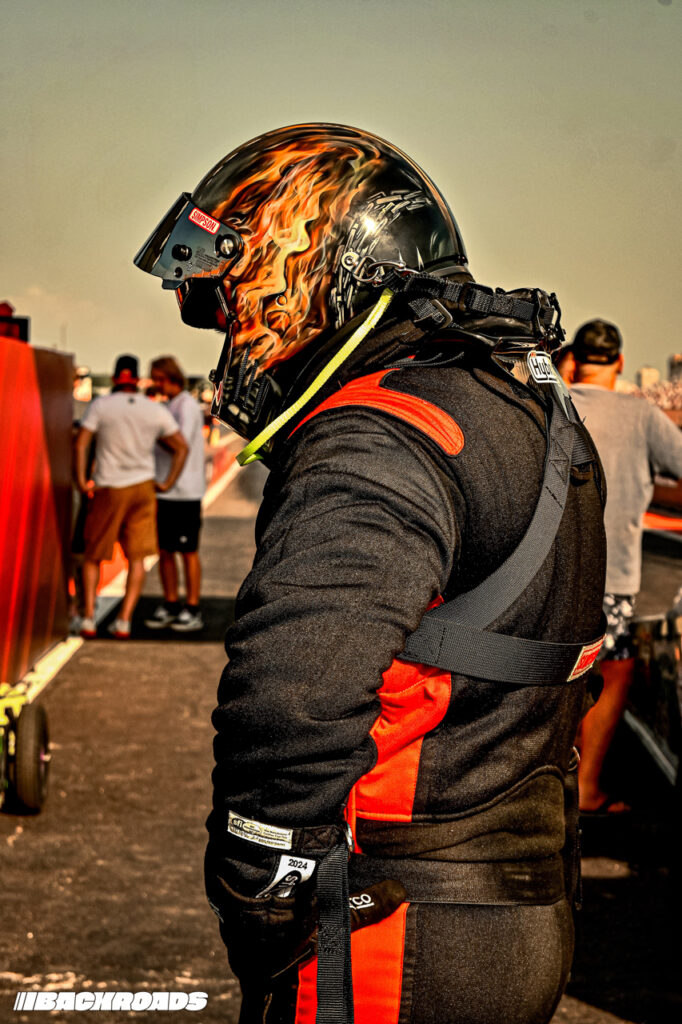
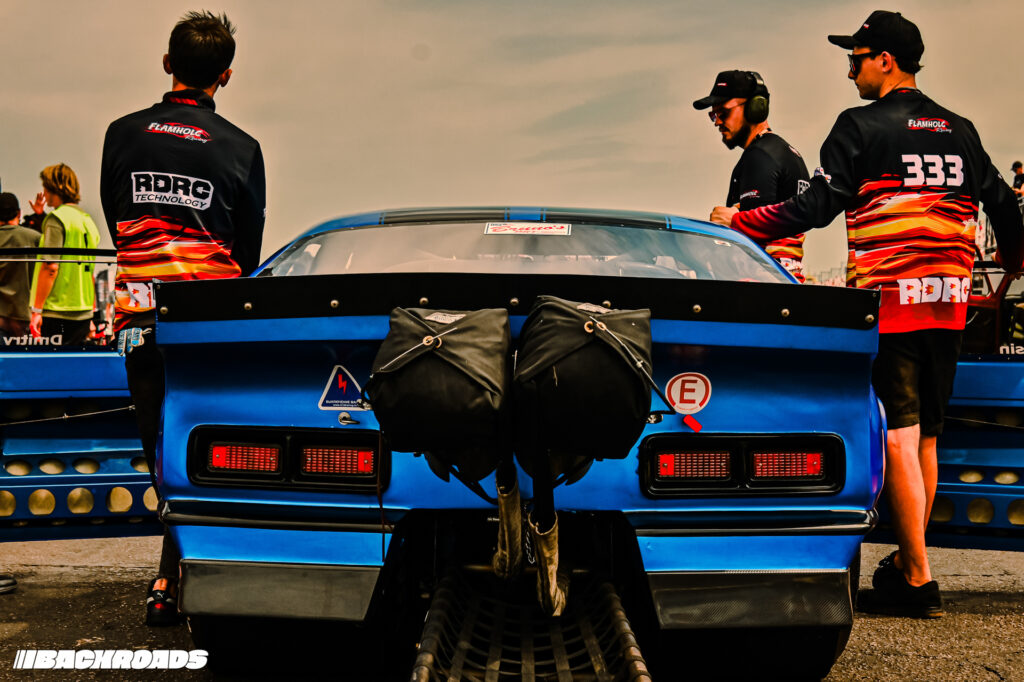
Despite the difficulties, every team driver reached the podium at least once, though not at every stage. In the end, Sergey Nikitin became the 2023 season champion with his dragster called ‘Puncher’. He had made a bet: if he won, he would buy a pro-mod for 2024 – and he did.
In 2024, two more drivers joined: Ilya “Schumacher” and Maxim Vasilyev, bringing two more cars. Nikitin kept his word and bought Samorukov’s Camaro. For him, it was a completely different kind of vehicle.
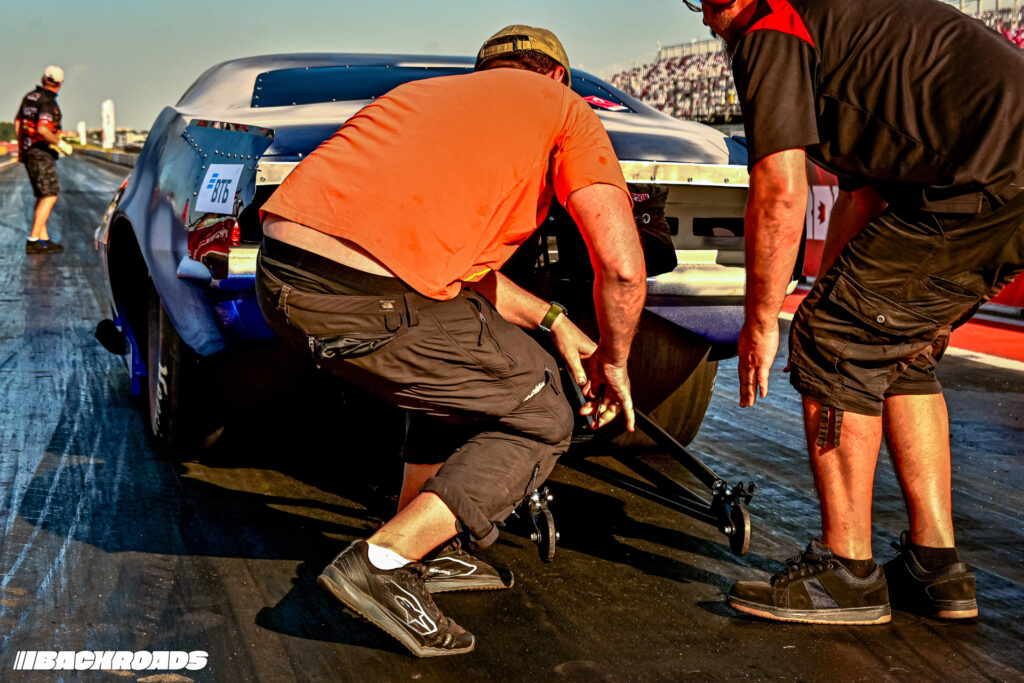


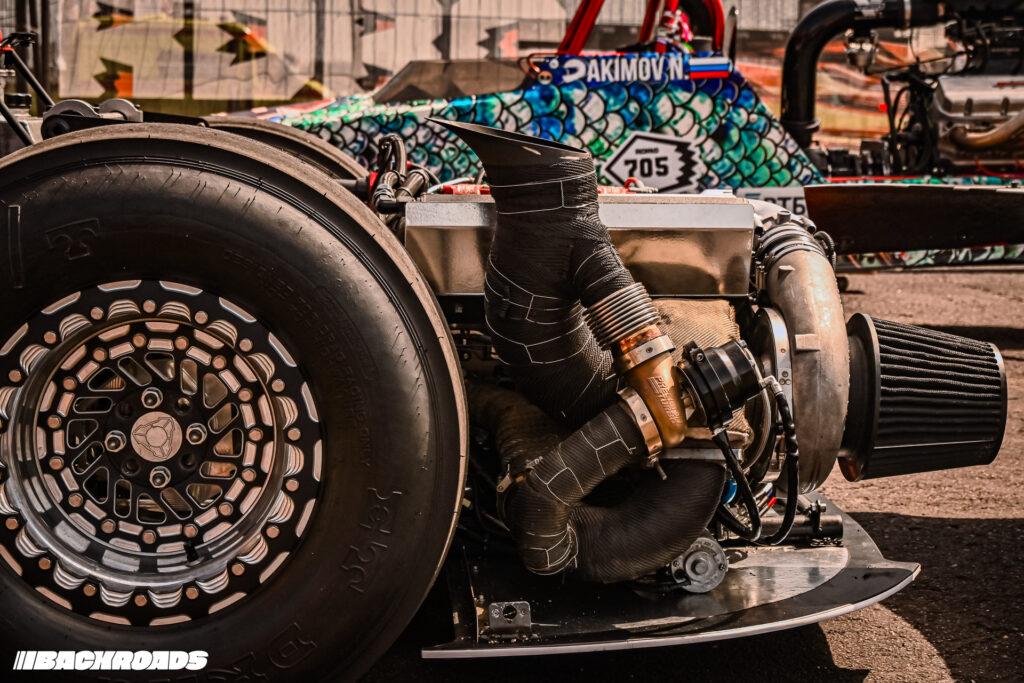
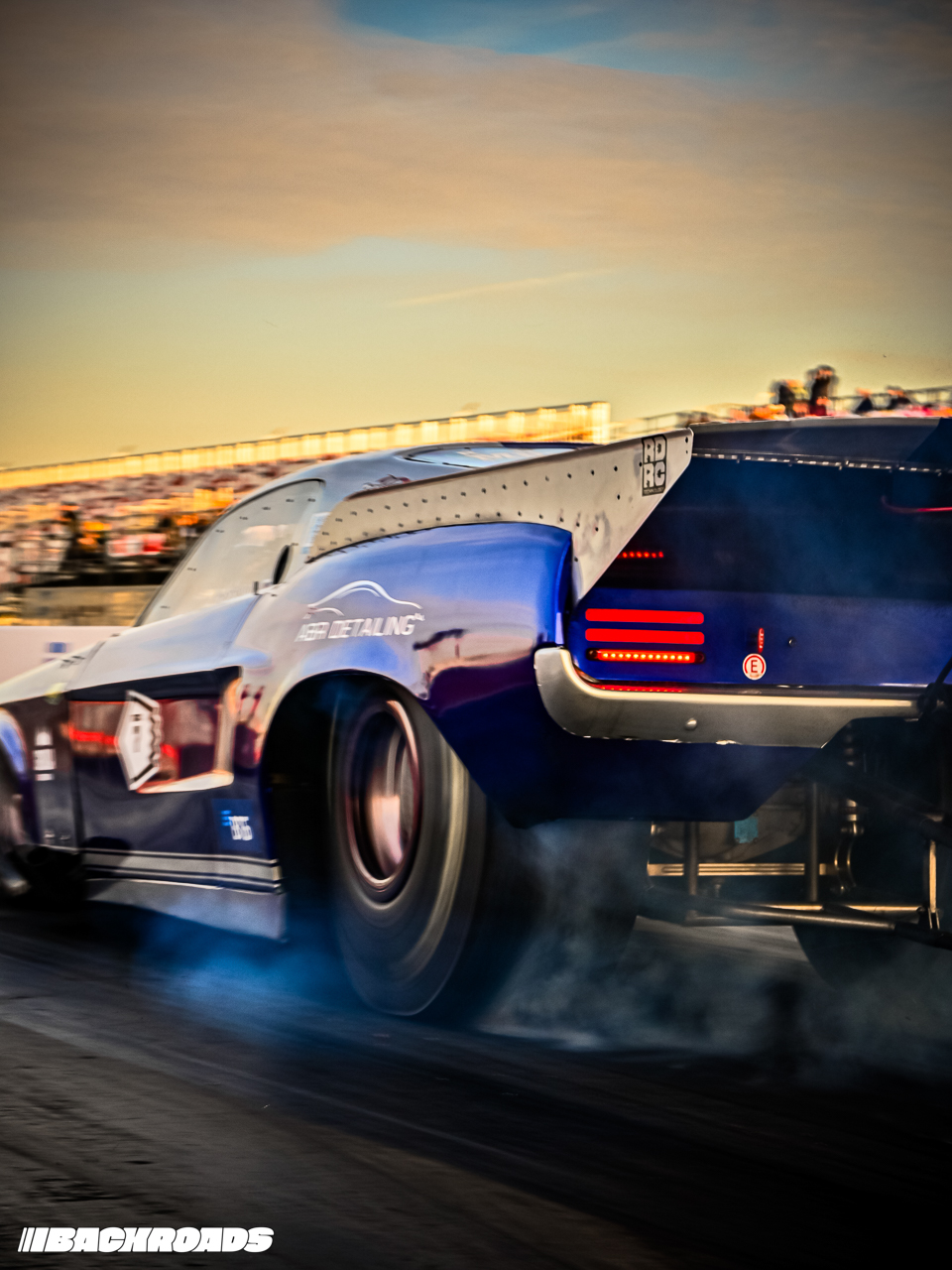
The main difference between a dragster and a pro-mod is stability: dragsters are very grippy, while pro-mods, with their short and wide wheelbase, tend to slide. The front-engine layout also creates a large blind spot. On the first stage, we lost Igor’s new dragster after it crossed the finish line. The driver was fine, but a month of work was lost.
Igor then bought another dragster, which had previously been rented by Ilya. Meanwhile, Schumacher bought a Mustang pro-mod, which had also been a rental car. That was only the beginning.
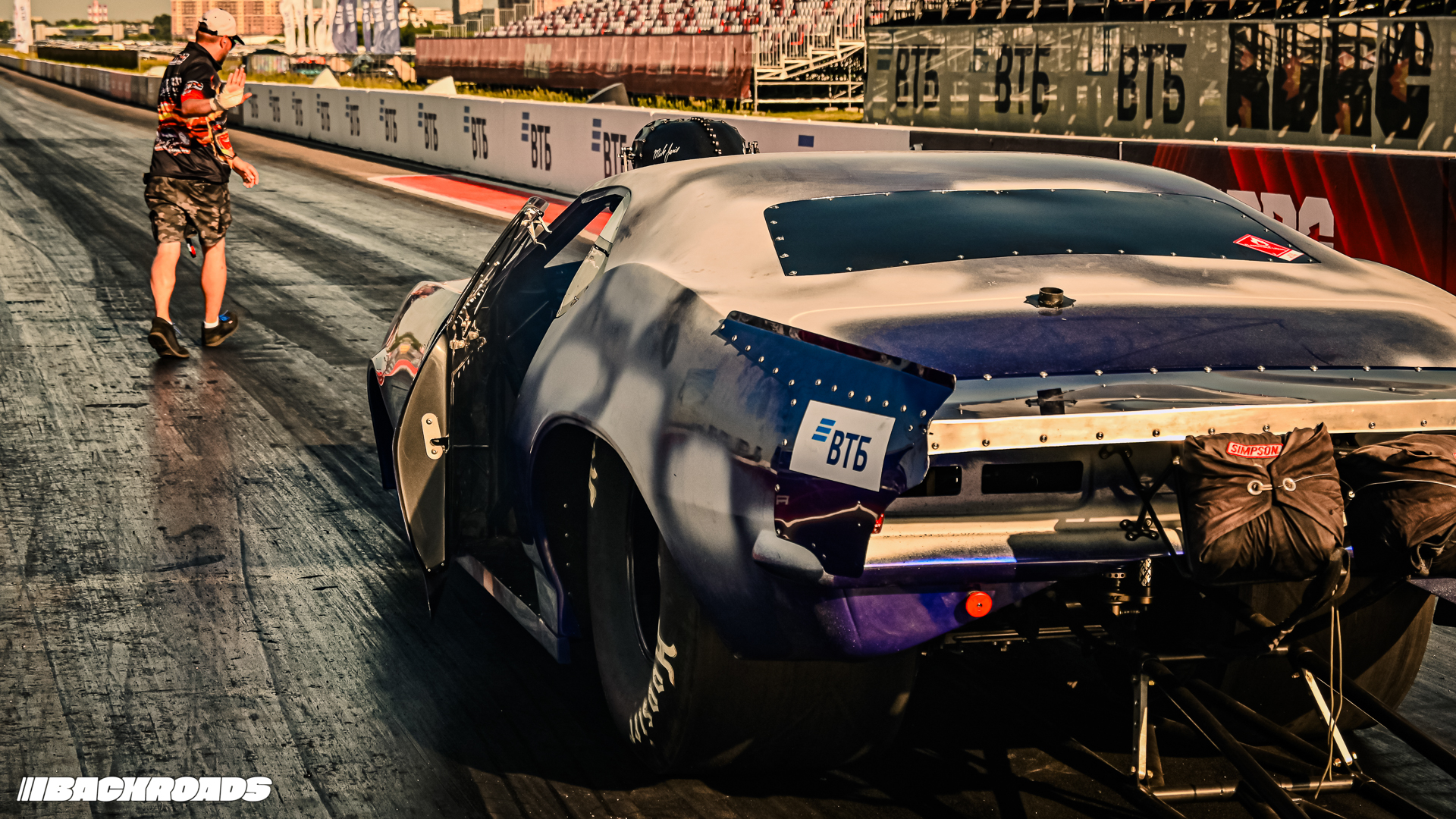
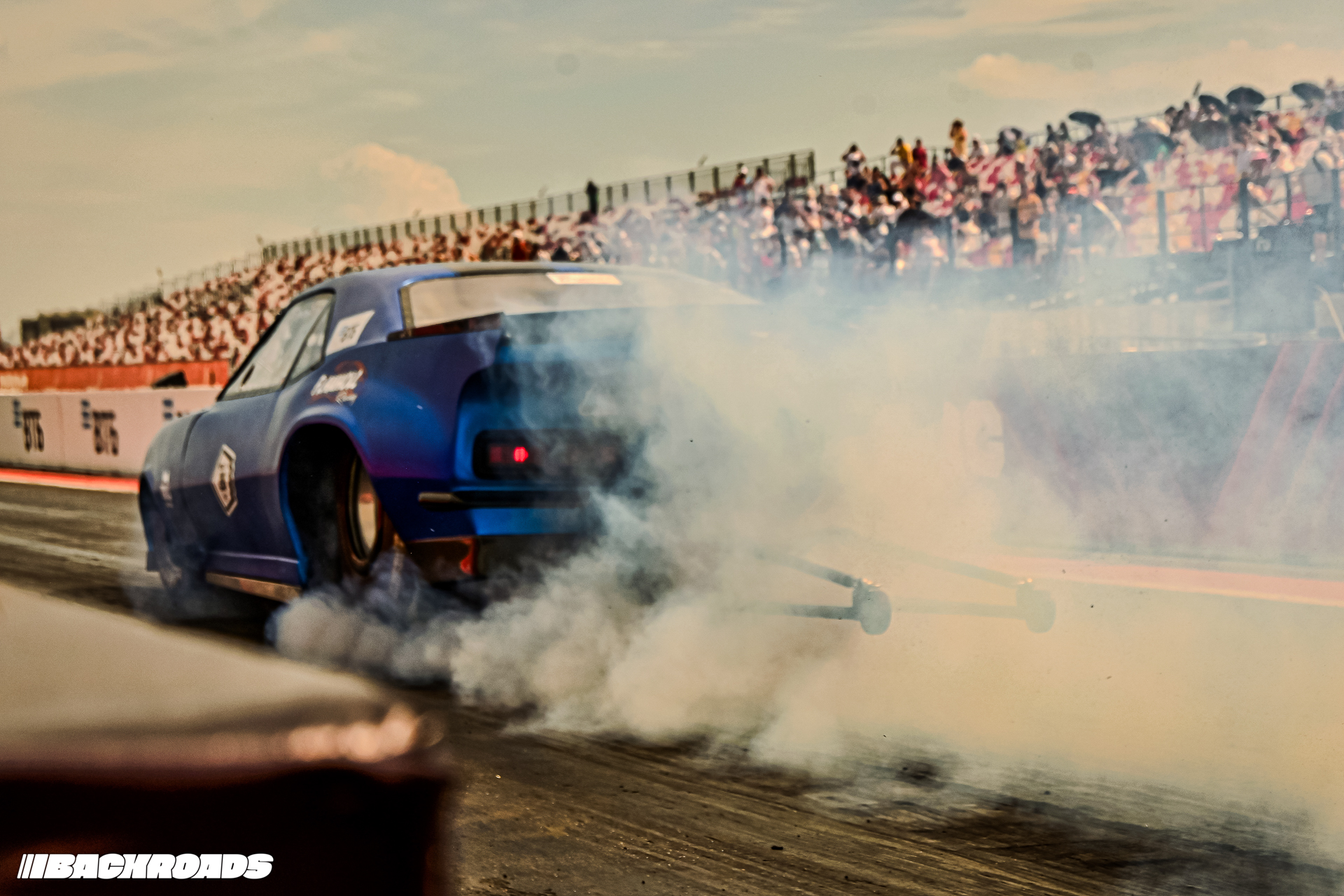
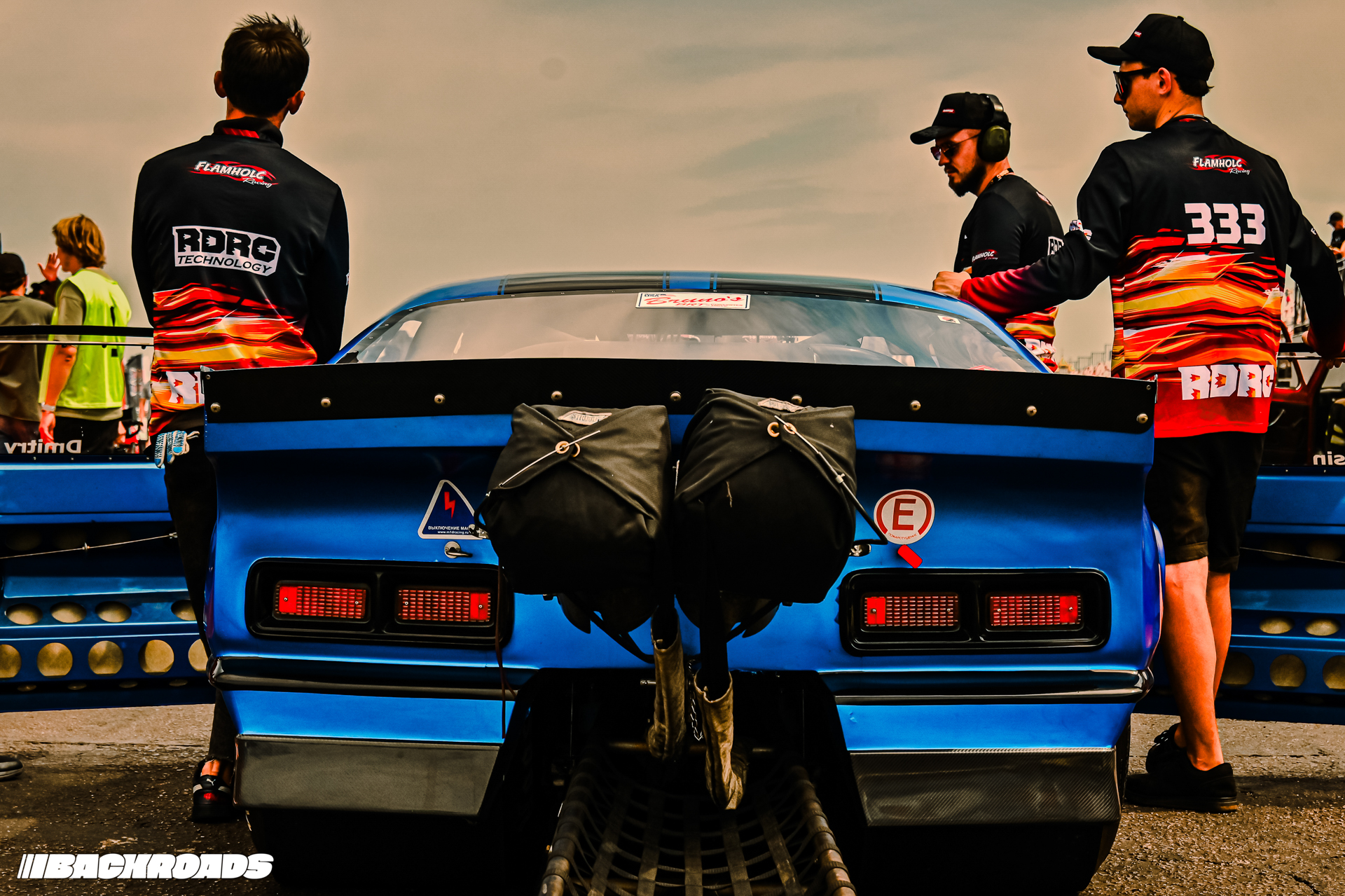
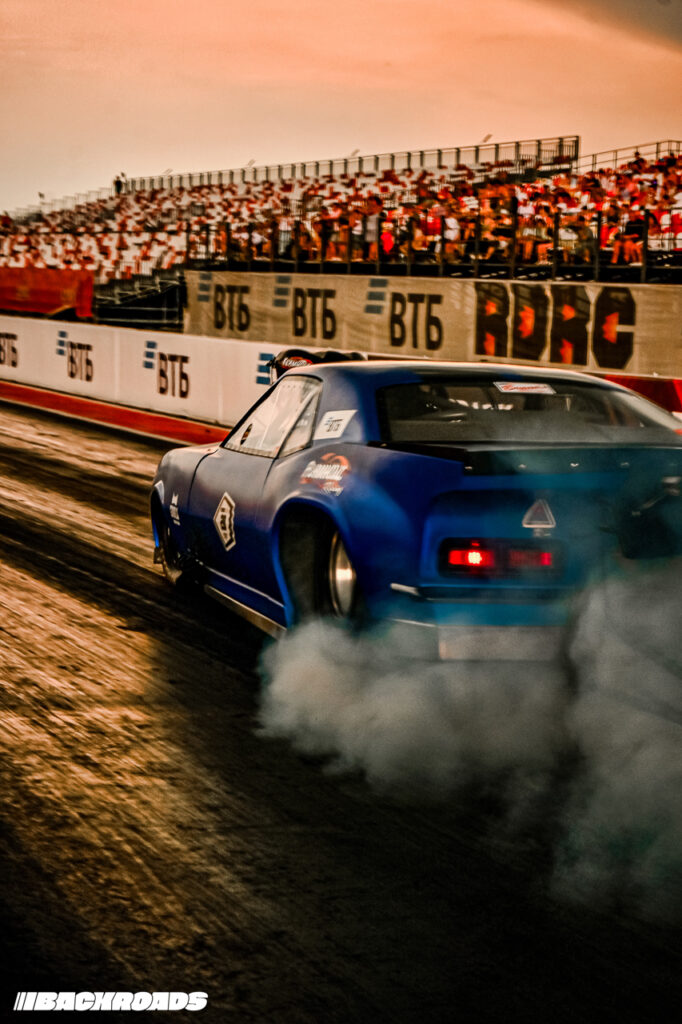
During July tests, the sun was scorching, the tires sticky from heat. The Camaro lined up at the start. The green lights came on – but something went wrong. The car jumped from side to side and hit the wall. The body and frame nose were damaged, though the driver was unharmed. We tried to straighten the frame using two SUVs and chains, but it didn’t work.


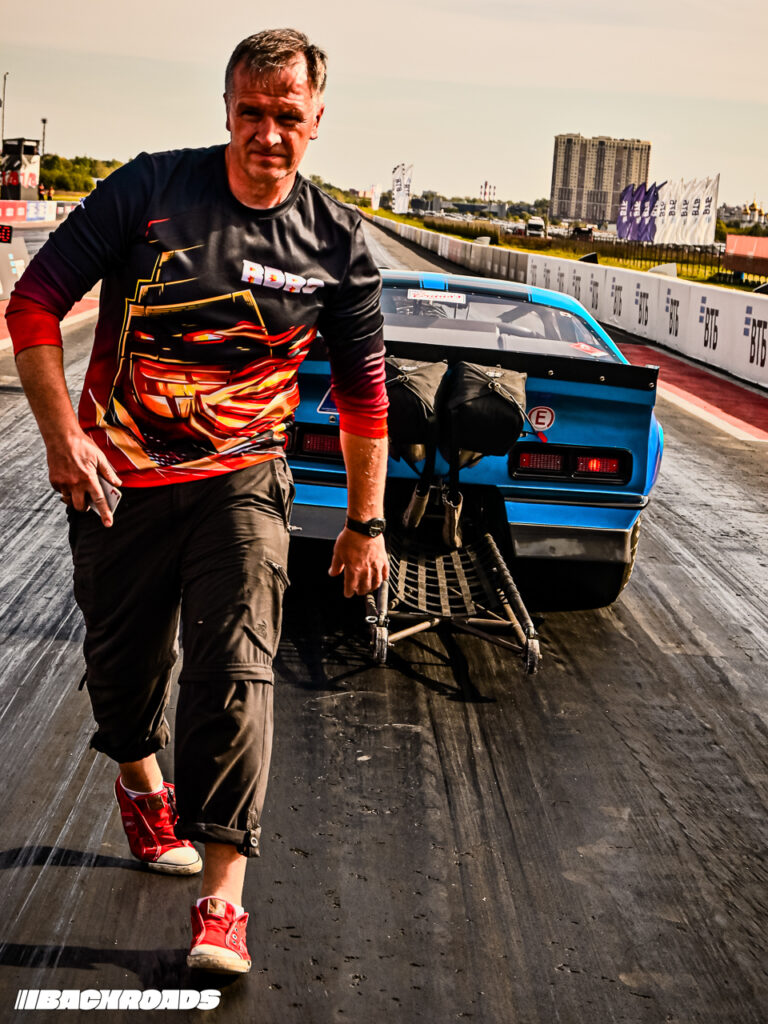

The next day, we went to a slipway an hour from the Racepark. After hours of nonstop repair, we returned and finished the bodywork. The next day, the Camaro was ready again – but it looked like something out of FlatOut 2. Unfortunately, it never drove straight again. Every run ended with the car sliding from side to side. It was a sad moment, especially for the reigning champion.
Throughout 2024, I worked with Leo. The first three stages were a struggle with the dragster; the last two were a struggle with the driver himself. In the semifinals of the final stage, he made a false start and missed the podium. The season’s final winner was Igor Geinrikhs.
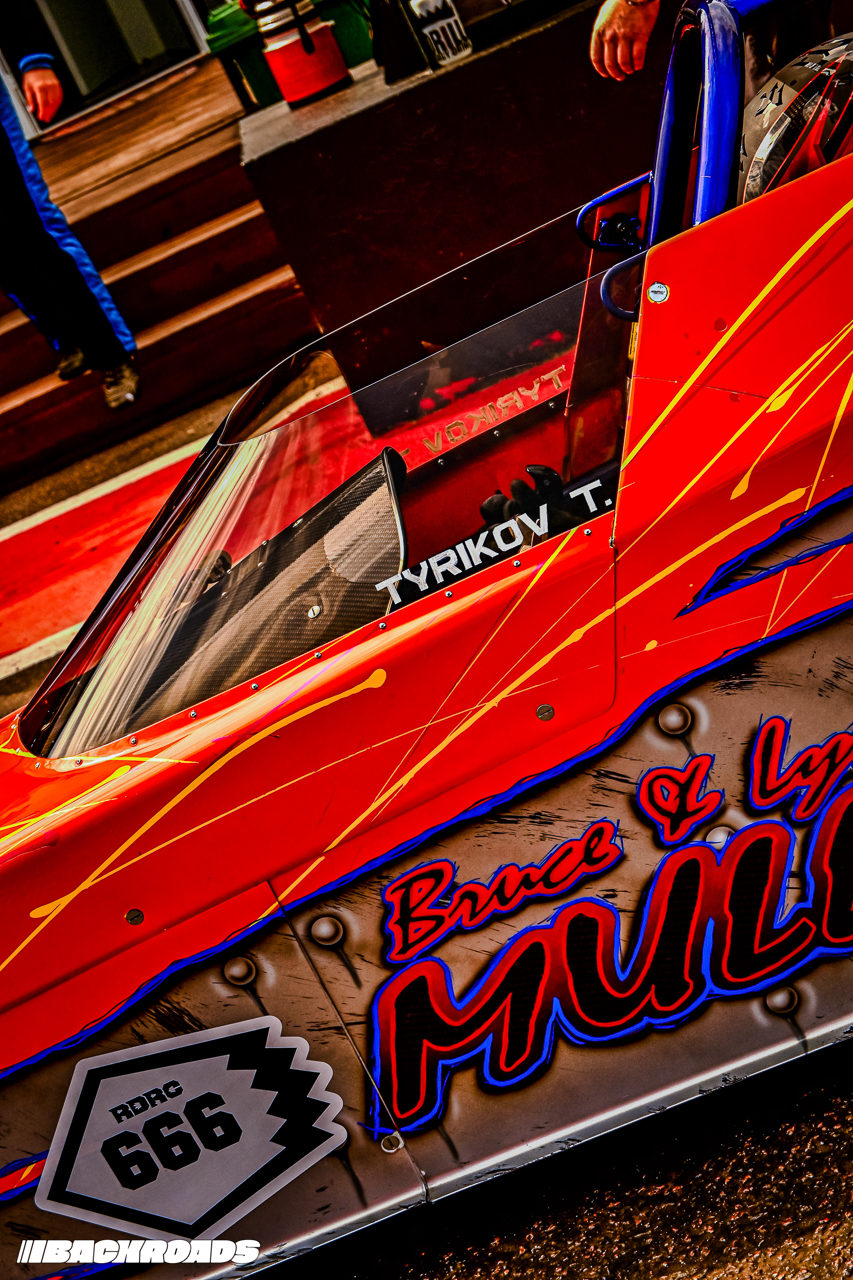
In 2025, a new driver, Taras Tyurikov, joined the 3.99 class. I continued working with Leo, but too many problems eventually cost us his participation – he moved to another team after the second stage. After that, I returned to working with pro-mods.
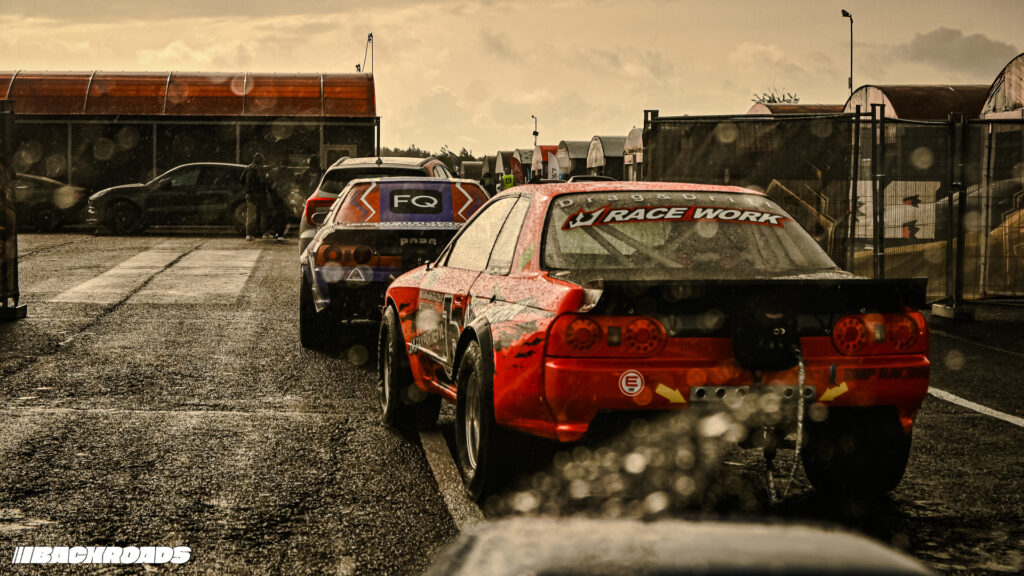
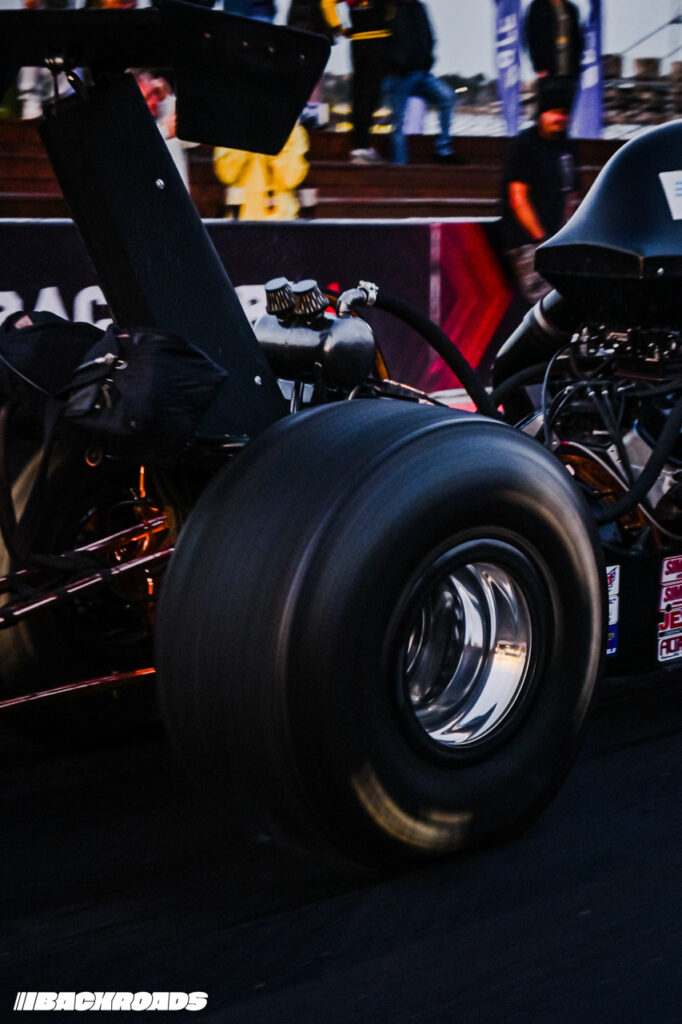
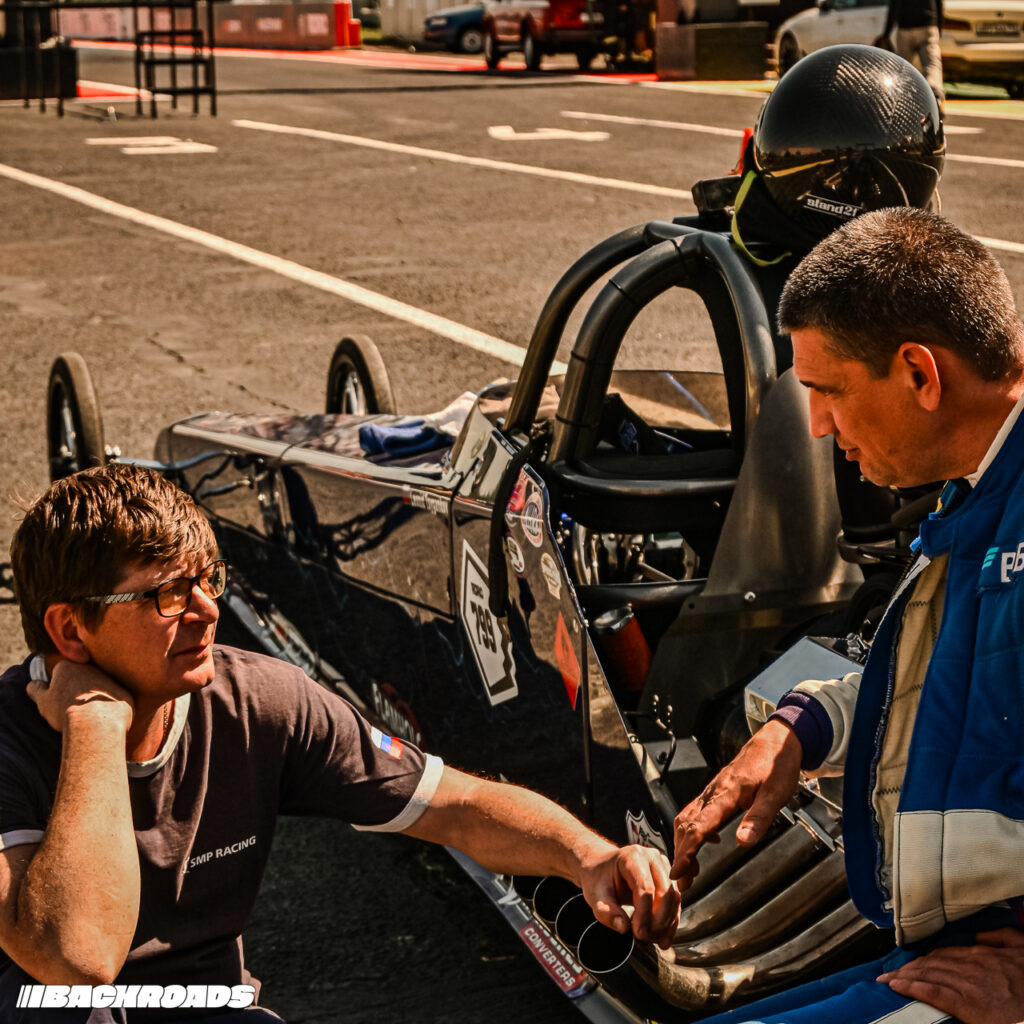
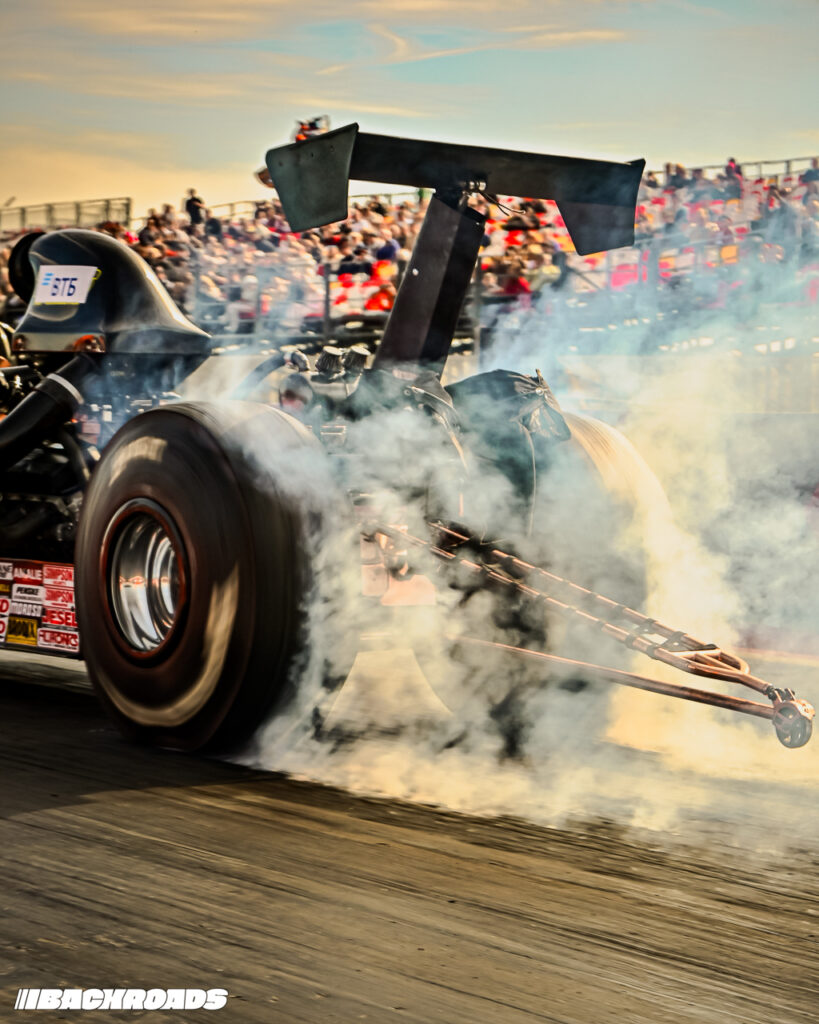
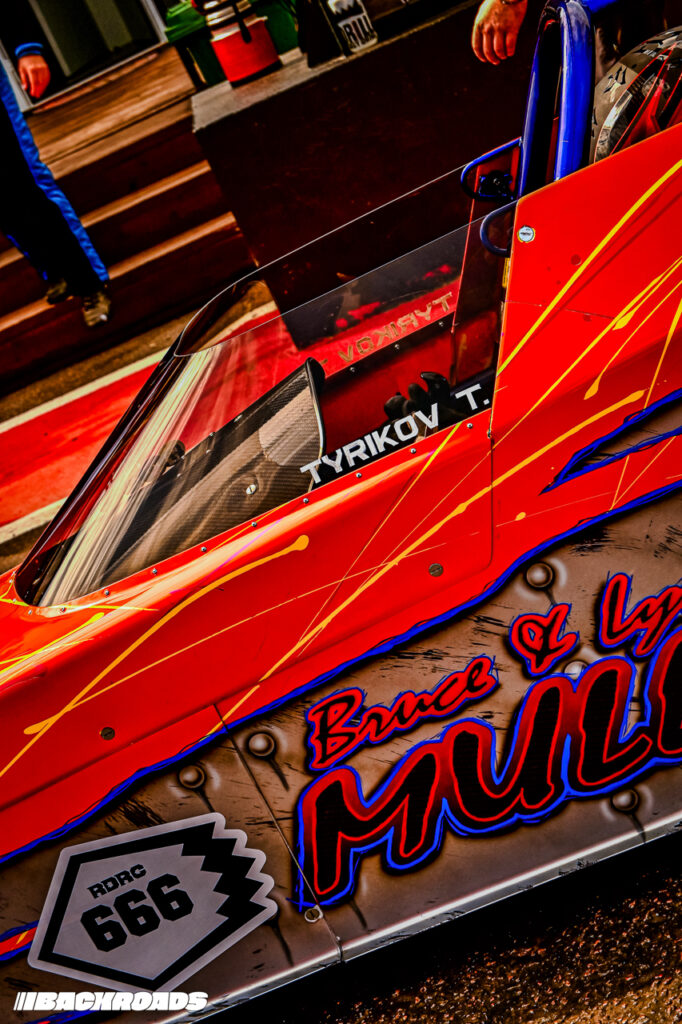
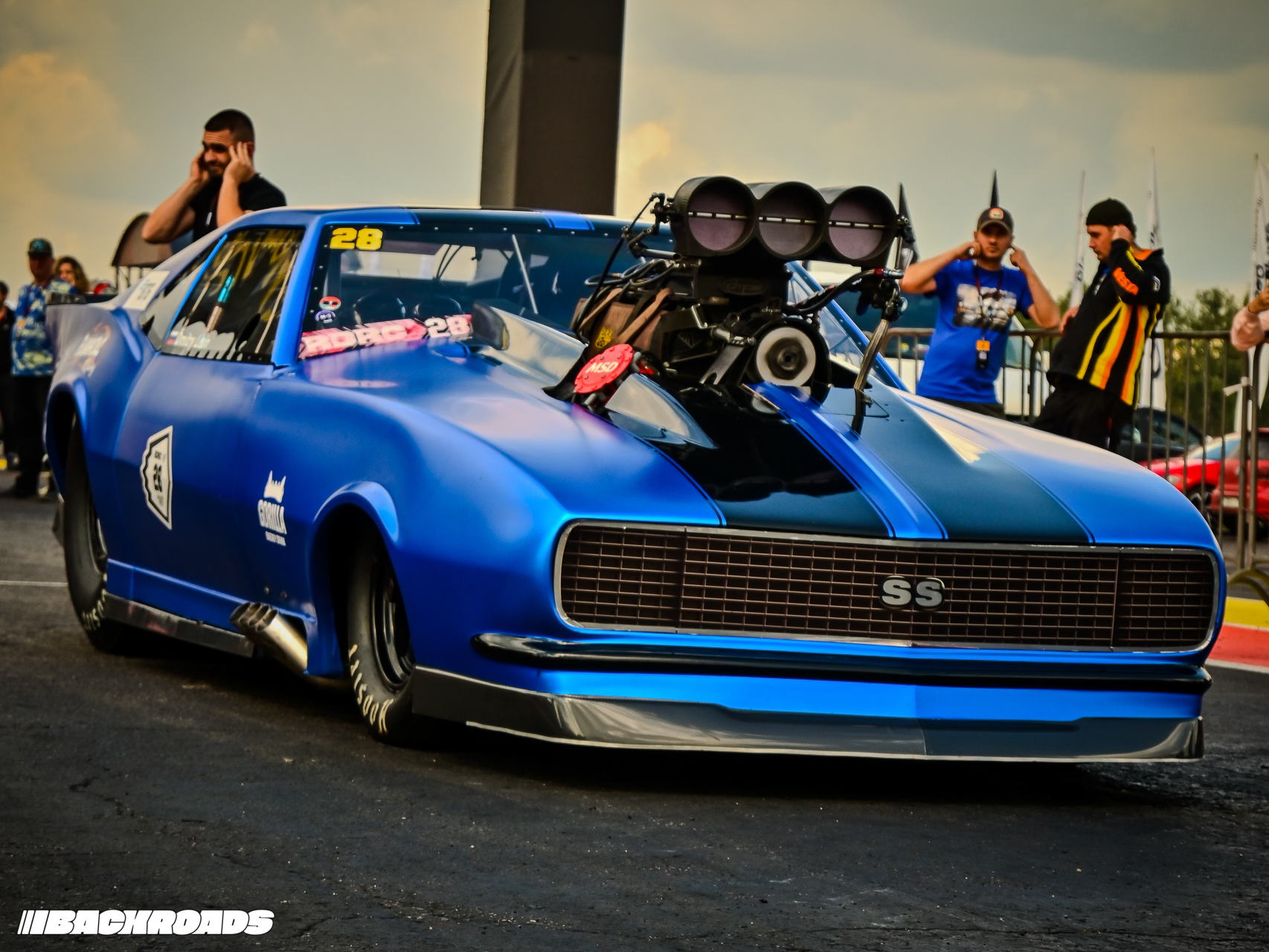
On the third stage, I worked with Lisin’s Camaro again. The car’s main issue was a lack of power. We discovered the gearbox was filled with transmission oil meant for tractors. After every run, we removed the gearbox and changed the oil, no matter how hot it was. Finally, the Camaro began to perform better.
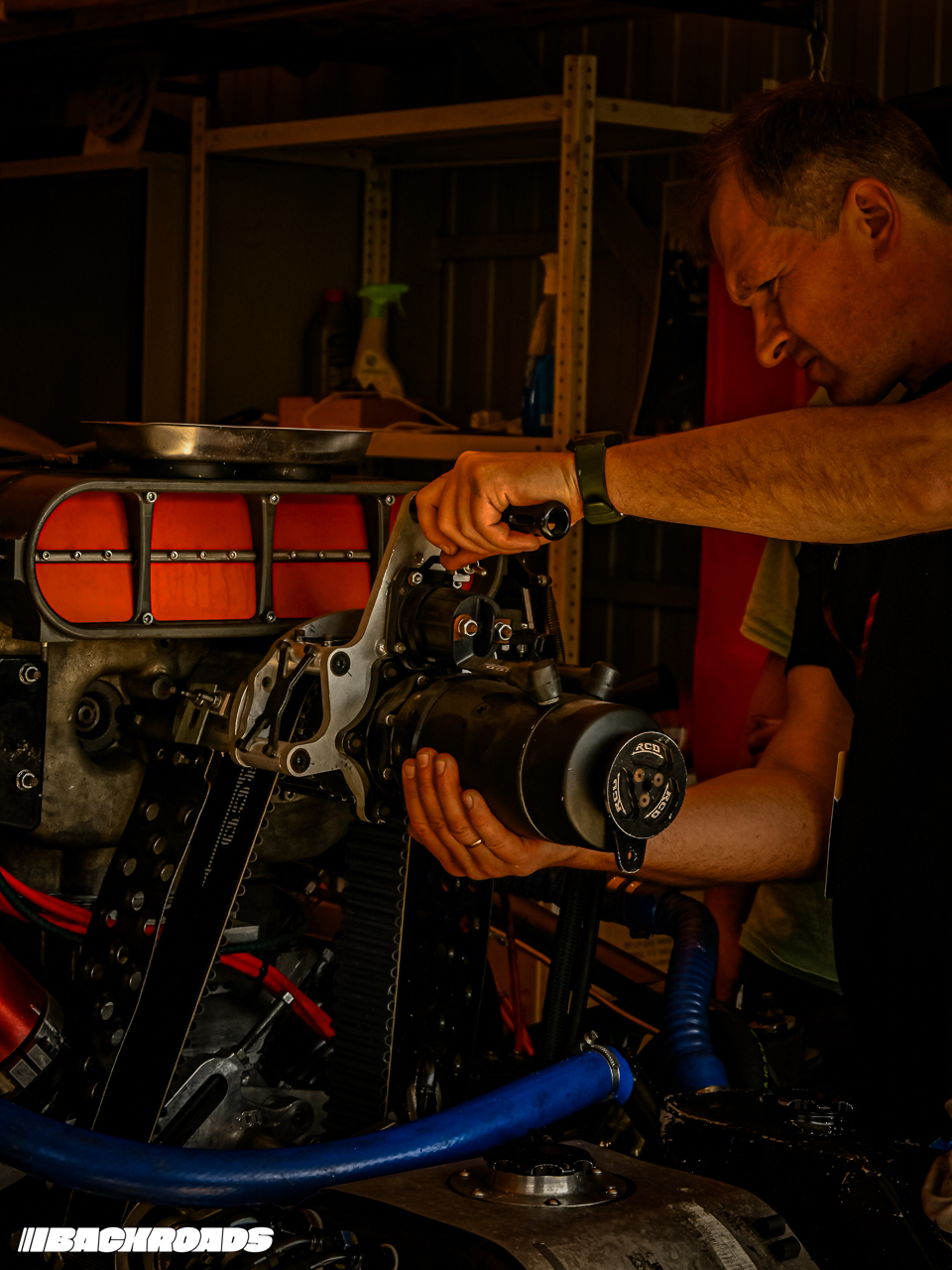
During the last two stages and the Super Final, I worked on Ilya’s Mustang. There were minor problems, including one blown supercharger, but nothing serious. Those were the calmest stages I had as a mechanic.
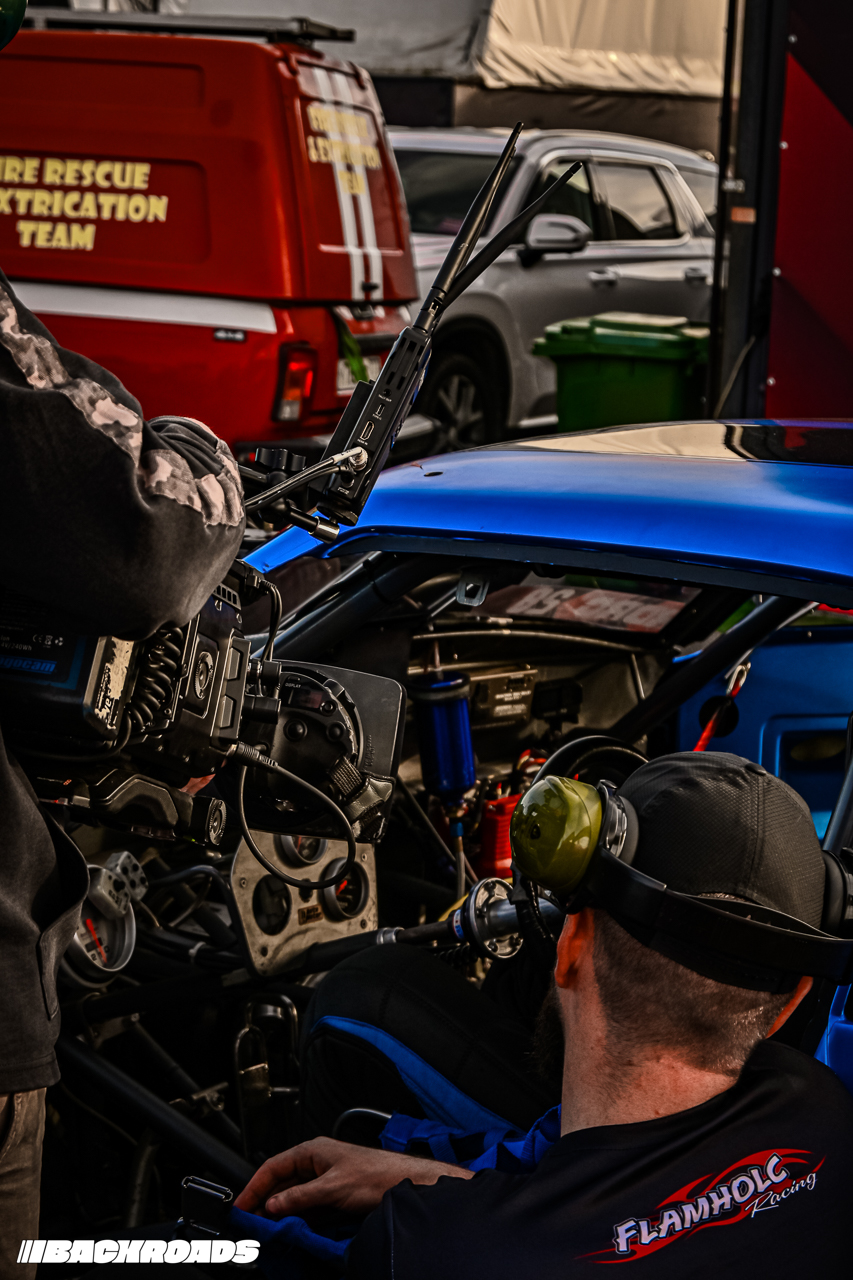
By the end of 2025, I was burned out. To stay motivated as a good mechanic, I began filming every aspect of our work, every team member, and every moment of magic at the Racepark. The result is this short story – and the photos that go with it.